Multiple units in one visit
Two or three containers delivered and positioned in sequence, stacked or set out in a run, without a second vehicle.
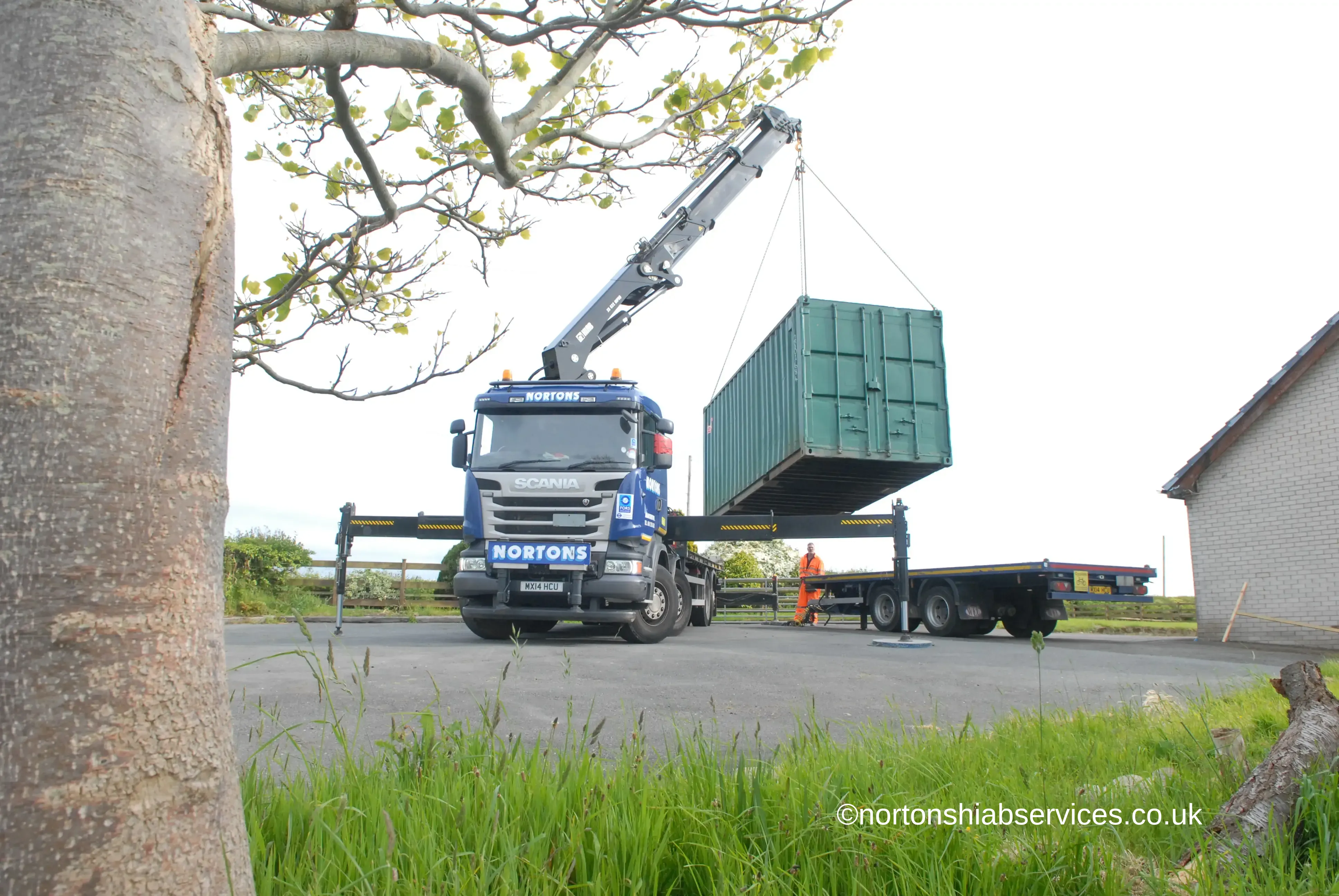
The lorry that carries your container also lifts it off and sets it down where you want it. No forklift, no separate crane, no one waiting on site.
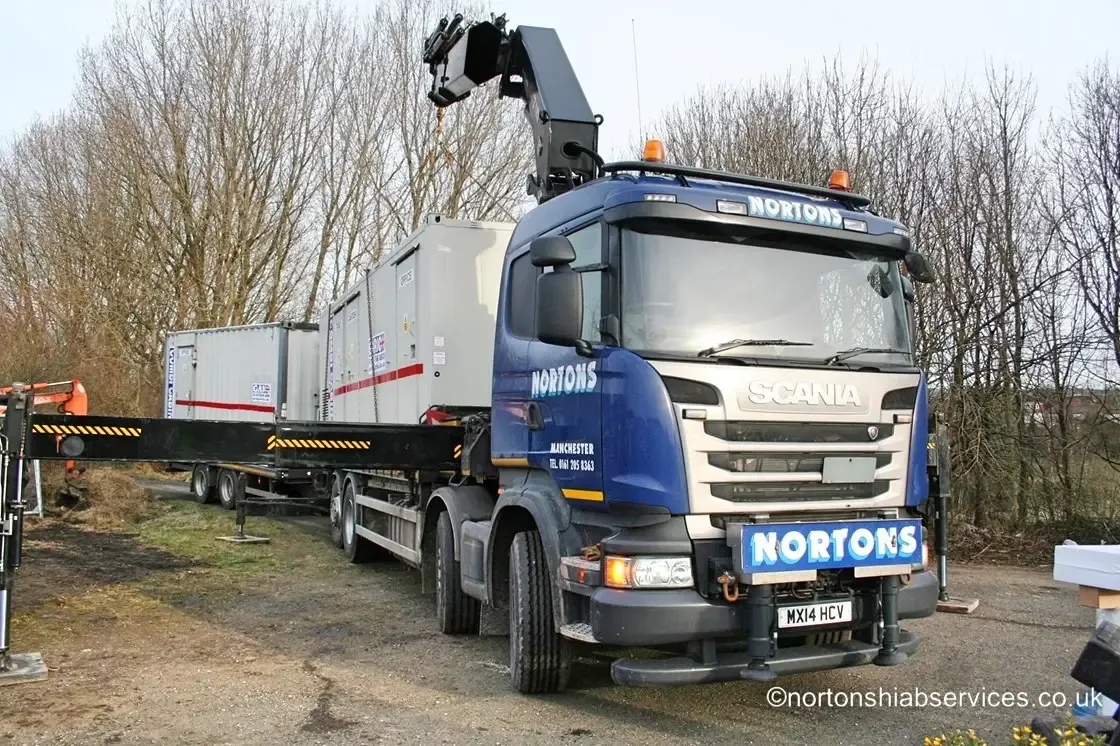
A hiab is a lorry with a hydraulic crane behind the cab, so it loads itself. We collect the container, carry it to you, set the stabiliser legs, lift it off the bed and place it on your bearers — all with one vehicle and one driver / operator.
Compare that with a flatbed and a forklift: two pieces of kit, two costs, and a delivery that fails if the forklift is not there when the lorry arrives. It also means the container can go somewhere a forklift could never reach — over a wall, behind a building, up a bank.
We move containers from ports and depots to sites, between sites, and away again at the end of a job. Empty, part-loaded or full — the only figure we need is the gross weight.
Two or three containers delivered and positioned in sequence, stacked or set out in a run, without a second vehicle.
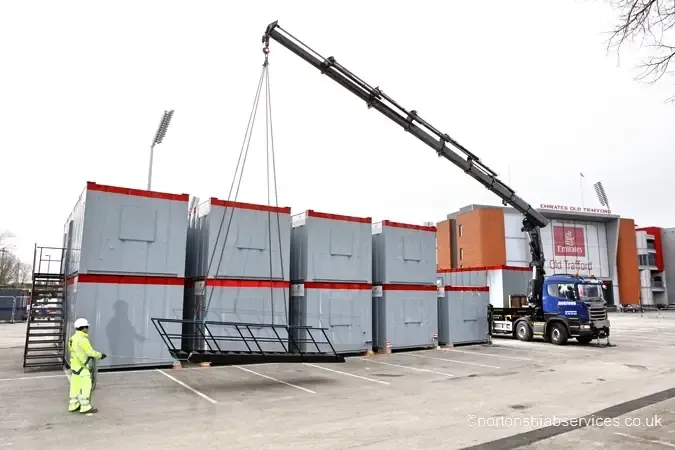
Units placed inside venue footprints where a mobile crane cannot rig, working around the event calendar.
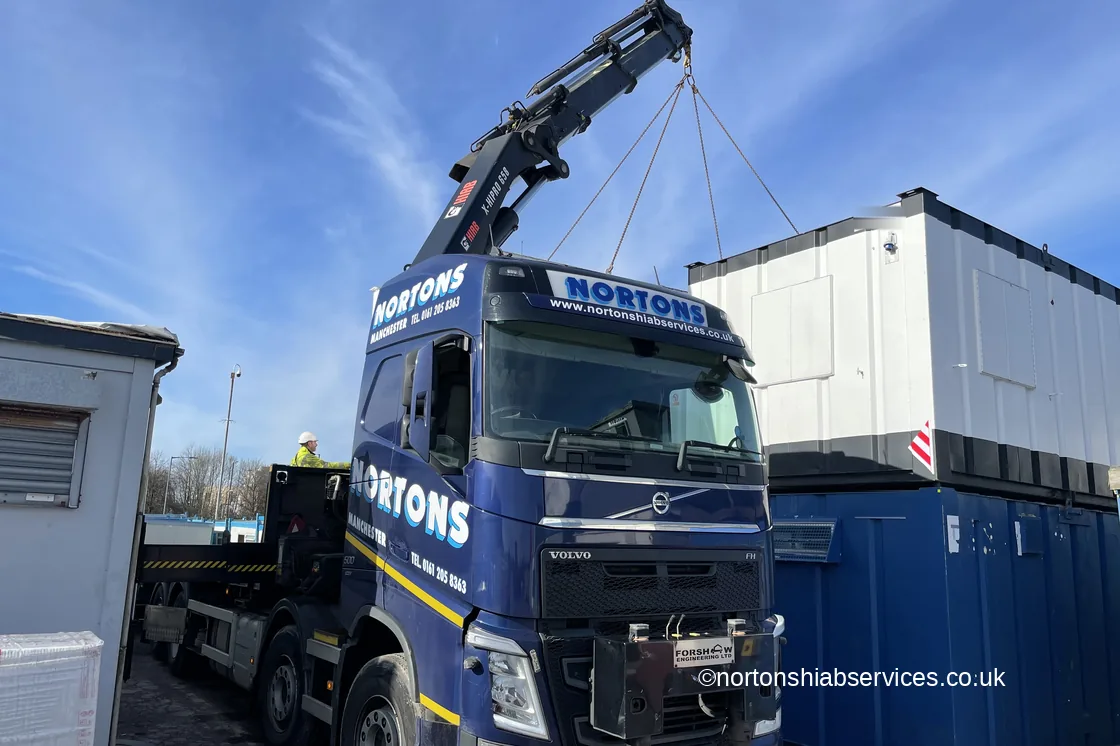
The boom extended out over a hoarding, a hedge or a stacked row, so the lorry never has to enter the space.
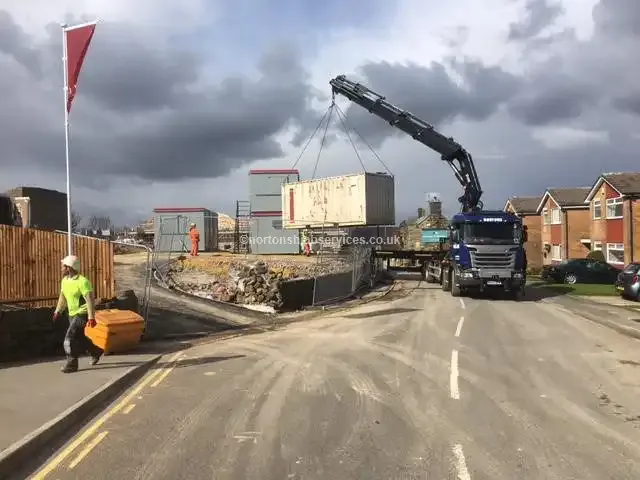
Full and part-loaded units lifted on the corner castings, with the gross weight checked against the chart first.
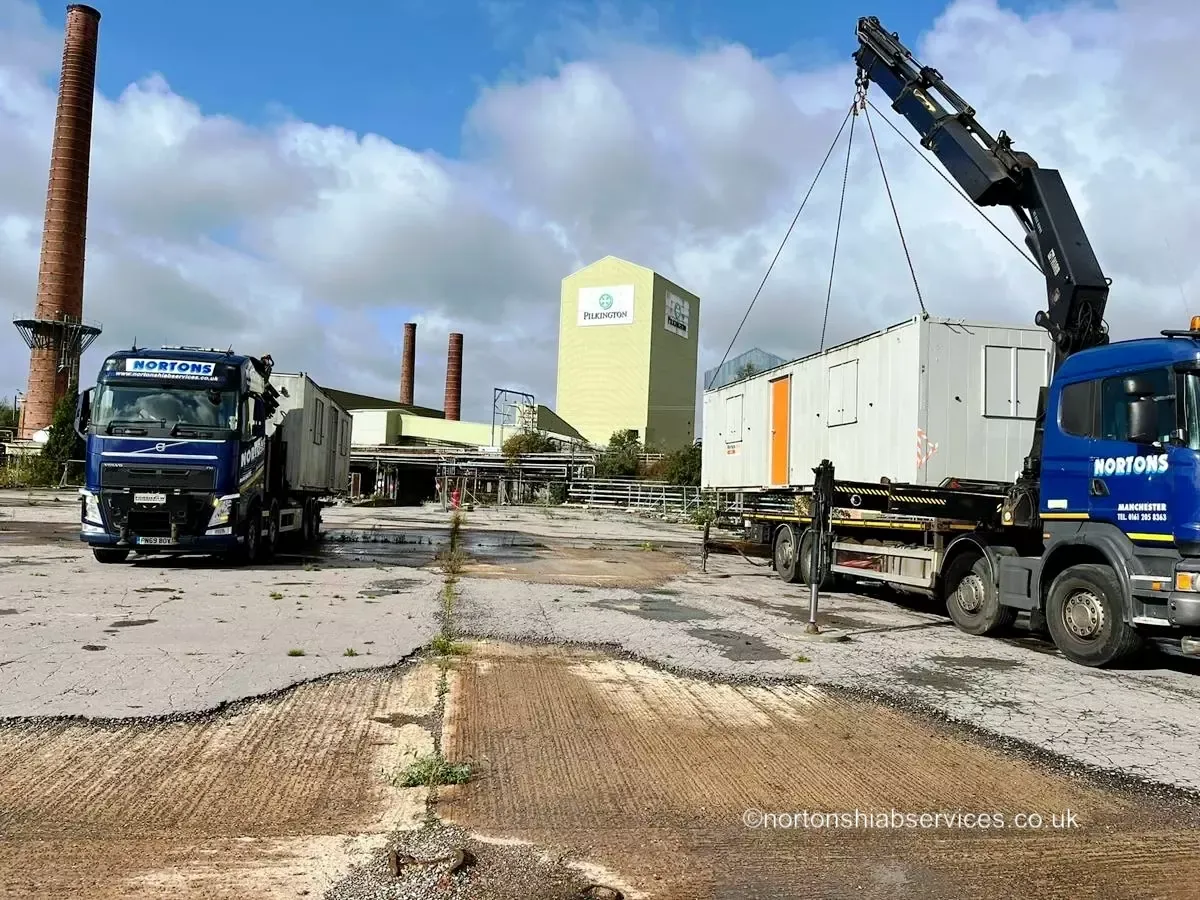
Containers relocated between compounds as a job phases, and taken away when the site closes.
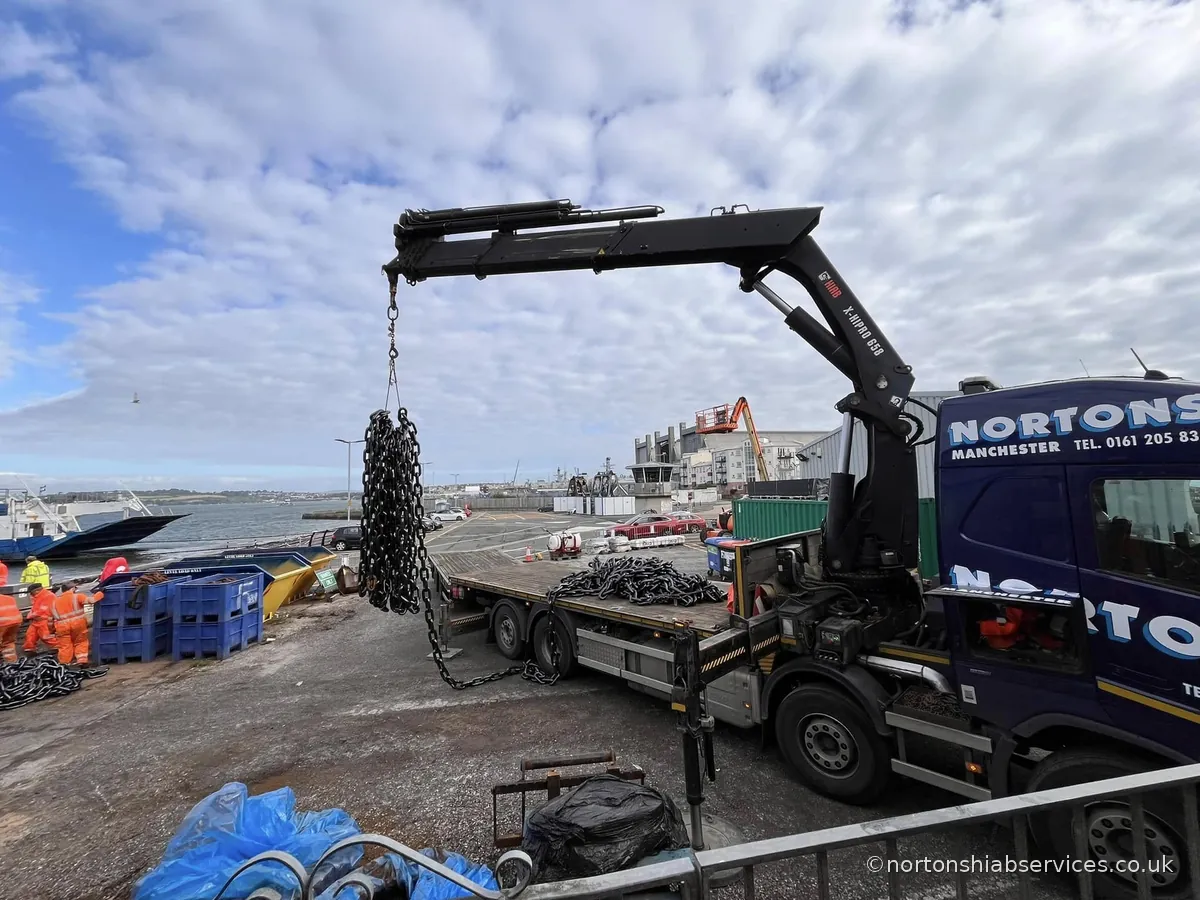
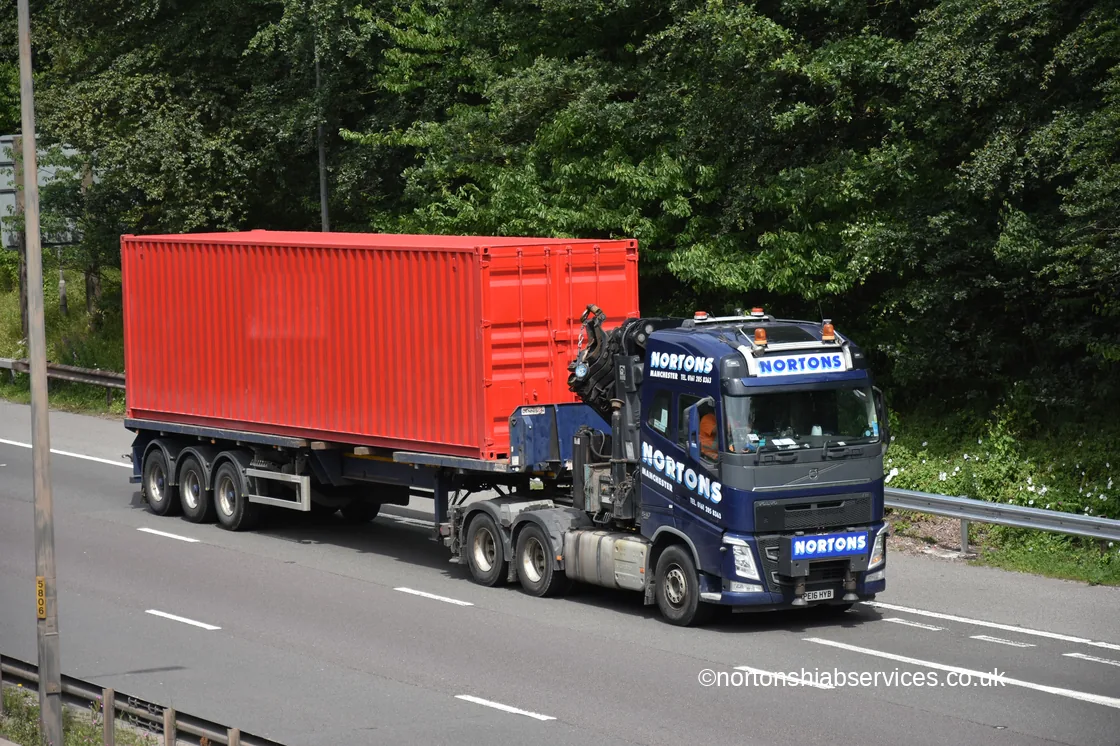
Collected from docks and depots across the UK and delivered straight to site, no double handling.
Two things decide it: how heavy the container is, and how far the crane has to reach to put it down. Here is what our cranes hold at the radii that come up most.
| Crane | Alongside the lorry | Over a wall or fence | Right across a yard | Maximum outreach |
|---|---|---|---|---|
| 858 E-8 | 15,500 kg at 4.6 m | 8,500 kg at 7.8 m | 5,300 kg at 11.4 m | 19.4 m |
| 855 E-8 | 15,500 kg at 4.6 m | 8,400 kg at 7.8 m | 5,300 kg at 11.4 m | 19.4 m |
| 658 EP-6 | 10,900 kg at 5.1 m | 6,000 kg at 8.6 m | 3,850 kg at 12.7 m | 16.9 m |
| 622 E-6 | 11,300 kg at 4.8 m | 6,200 kg at 8.1 m | 4,100 kg at 11.7 m | 15.8 m |
| 558 EP-5 | 10,800 kg at 4.6 m | 5,700 kg at 8.3 m | 3,750 kg at 12.3 m | 14.5 m |
Figures are safe working loads read from the manufacturer data sheets, with the crane correctly set up on firm, level ground. An empty 20ft container is around 2,200 kg and an empty 40ft around 3,800 kg, so an empty container is inside every crane in the table at every radius shown. The full charts and the source PDFs are on the lifting capacity page.
Tell us about the approach and the drop point with the enquiry. If we need to see it we will ask, and it means we arrive with the right vehicle.
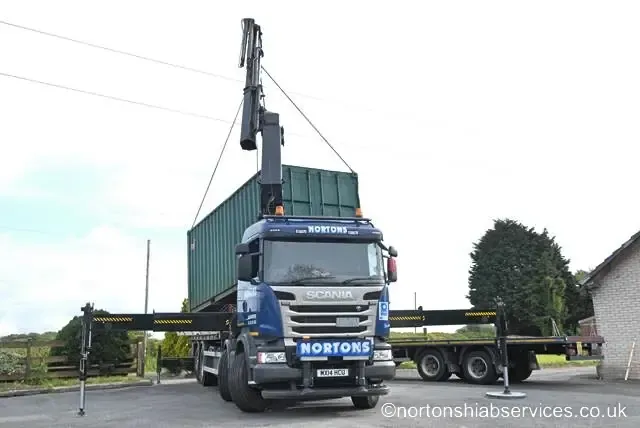
It needs a firm, level position within reach of the landing point, and enough width to put its legs down on both sides. A driveway that a car fits down is not automatically one a rigid fits down. If you are unsure, just say so with the enquiry and describe the approach in your own words — we will ask for anything else we need.
The legs concentrate a great deal of force into four small areas. Block paving, new tarmac, a lawn over made ground, a manhole, a service duct or a recently backfilled trench are all worth mentioning. We carry spreader pads and we plan around soft ground routinely; what we cannot plan around is not being told.
Whether it will reach. How heavy the unit is when it is empty. Which of our vehicles it takes. What the swing radius is. All of that is our side of the job, and we would far rather work it out from a description and a postcode than have you trying to establish it from a chart.
Tell us that first rather than last. Awkward is normal here — over a wall into a back garden, between two buildings, behind a boundary fence, into a compound with one gate. Knowing at the enquiry means the right vehicle turns up.
No. That is the whole point of a hiab. The crane is on the lorry, so the same vehicle that brings the container lifts it off and sets it down where you want it. You do not need to hire anything else or have anyone waiting.
Standard 10ft, 20ft and 40ft shipping containers, and the in-between sizes too — 16ft, 24ft and 32ft — plus non-standard and modified units. A 20ft container sits exactly on a draw-bar trailer, which is why our wagon-and-drag units do a lot of this work.
An empty 20ft container is around 2,200 kg and an empty 40ft around 3,800 kg, both comfortably inside every crane we run. A loaded one is the interesting case. Our 858 rigid lifts over 8 tonnes and carries up to 5.5 tonnes, so tell us what is in the container and where it has to go, and we will confirm the vehicle.
Somewhere firm and level for the lorry to stand with its stabiliser legs out, clear headroom above the drop point, and ground that will take the container.
Yes, and we do it often. With up to 19.6 metres of hydraulic outreach the container can be set down well away from where the lorry stands — over a wall, a fence or a hedge and down the side of a property. We do not lift over houses, so the way in has to be round the building rather than across it. Tell us where it has to end up and we will tell you straight away.
Yes. We collect from ports, docks and depots across the UK and deliver direct to site. Our transport team arranges nationwide movement orders for wide loads as required.
Yes. Shipping container transport, container haulage and container delivery are all the same job for us. The box travels on the lorry and the lorry's own crane sets it down where it has to go — no forklift at either end, no separate crane to book, and no need for a hard standing big enough to reverse a trailer onto.
The crane. A flatbed can carry a container but it cannot place one, so you still need lifting equipment at the delivery. Ours arrives with the lift already on the vehicle, which on a tight site is often the difference between the container going where you want it and going where the lorry can reach.
Usually yes. Hiab container transport around Manchester is everyday work from our yard at Miles Platting, and the vehicles are here overnight, so a same-day or next-morning collection is often possible.
Tell us roughly what size it is and where it has to go. We will confirm the vehicle and the price.





ALLMI trained driver / operators · RAMS, method statements and lift plans · Euro VI clean air zone compliant fleet, renewed by continual investment in new wagons · All our accreditations