Hiab lifting capacity charts
What each crane in the fleet actually holds at every metre of reach. Taken straight from the manufacturer data sheets, not rounded off into a headline.
The short answer
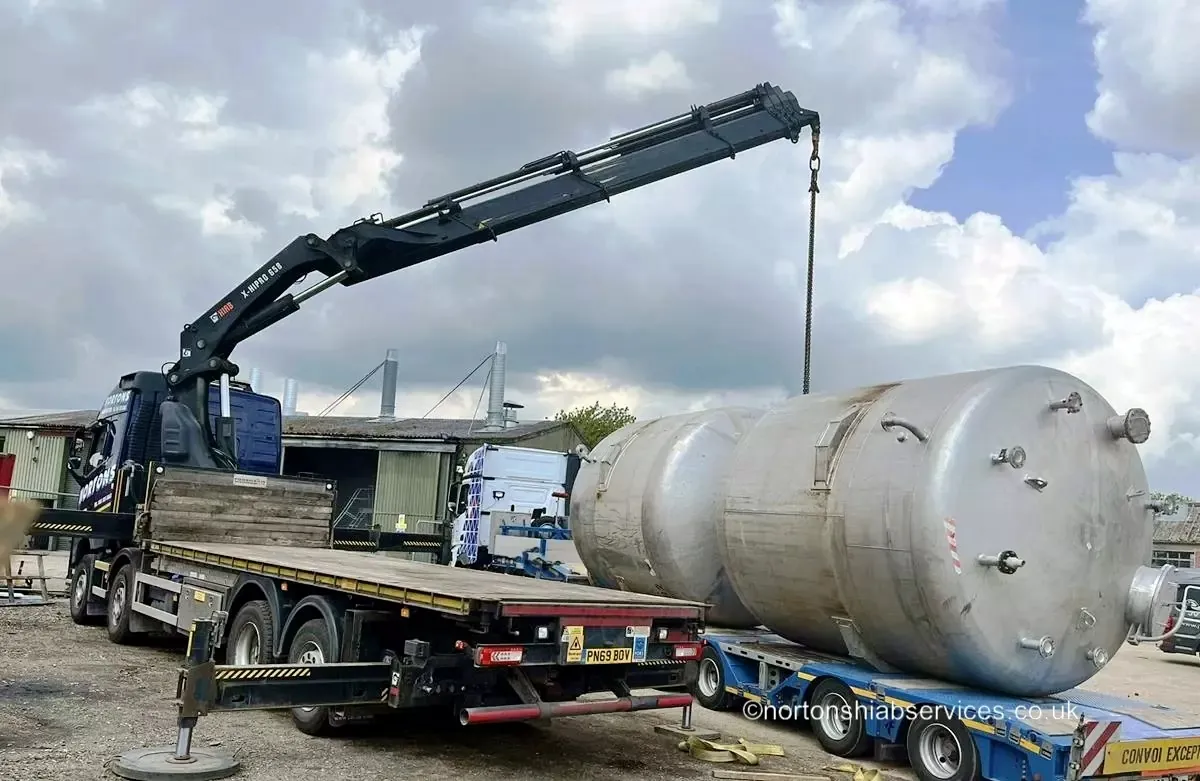
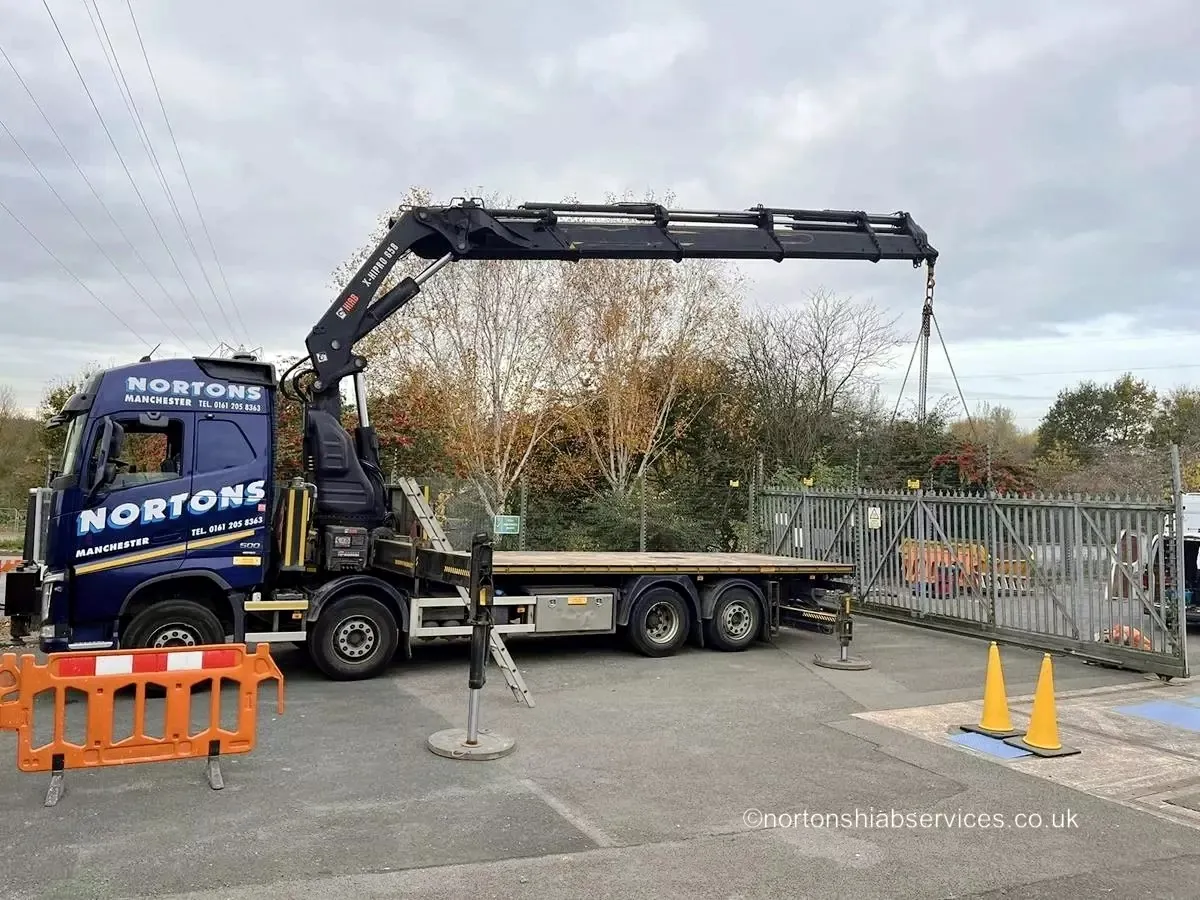
A hiab’s capacity falls sharply as the crane reaches out. Our 858 rigid lifts over 8 tonnes, carries up to 5.5 tonnes and offers a maximum reach of 19.6m — and it does not do all three at the same moment. So the only useful question is not “how much can it lift” but “how much can it lift at the distance I need”.
Every table below is the manufacturer’s own figure for that crane. Tell us what needs lifting and where it has to land and we will confirm the chart for the vehicle that would actually come out to you.
Three limits, in the order they bite
People quote the tonne-metre rating, but it is usually the last limit you actually meet. In practice a lift is decided further up this list.
Stability
Whether the vehicle stays down. Set by the outrigger spread and by what the ground beneath them will take.
Structure
What the boom and column will carry without overstress, whatever the vehicle underneath is doing.
Moment
The crane’s rated lifting moment. The figure in the brochure.
The tonne-metre figure is not the model number. It is a common assumption and it is wrong. Our 858 is a 66.1 tonne-metre crane (71.5 with ADC), not an 85 tonne-metre one. Always work from the chart.
Capacity at radius, crane by crane
Radius is measured from the centre of the crane column to the centre of the load. Figures are safe working loads with the crane correctly set up on firm, level ground.
HIAB X-HiPro 858 E-8
| Radius | 3.8 m | 4.6 m | 6.1 m | 7.8 m | 9.5 m | 11.4 m | 13.4 m | 15.3 m | 17.4 m | 19.4 m |
|---|---|---|---|---|---|---|---|---|---|---|
| Capacity | 18,000 kg | 15,500 kg | 11,300 kg | 8,500 kg | 6,700 kg | 5,300 kg | 4,400 kg | 3,750 kg | 3,250 kg | 2,900 kg |
Source: manufacturer data sheet
858-E8 X-Hipro.pdf. Crane weight 7,458 kg without support legs.
HIAB 855 E-8 HiPro
| Radius | 3.8 m | 4.6 m | 6.1 m | 7.8 m | 9.5 m | 11.4 m | 13.4 m | 15.3 m | 17.4 m | 19.4 m |
|---|---|---|---|---|---|---|---|---|---|---|
| Capacity | 18,000 kg | 15,500 kg | 11,300 kg | 8,400 kg | 6,700 kg | 5,300 kg | 4,400 kg | 3,750 kg | 3,250 kg | 2,900 kg |
Source: manufacturer data sheet
855E-8HiPro.pdf
HIAB 658 EP-6 HiPro
| Radius | 5.1 m | 6.7 m | 8.6 m | 10.6 m | 12.7 m | 14.7 m | 16.9 m |
|---|---|---|---|---|---|---|---|
| Capacity | 10,900 kg | 8,000 kg | 6,000 kg | 4,750 kg | 3,850 kg | 3,250 kg | 2,820 kg |
Source: manufacturer data sheet
658EP-6HiPro.pdf. Crane weight 5,545 kg without support legs.
HIAB 622 E-6 HiPro
| Radius | 2 m | 4.8 m | 6.4 m | 8.1 m | 9.9 m | 11.7 m | 13.7 m | 15.8 m |
|---|---|---|---|---|---|---|---|---|
| Capacity (ADC) | 22,000 kg | 11,300 kg | 8,200 kg | 6,200 kg | 4,950 kg | 4,100 kg | 3,450 kg | 2,960 kg |
| Without ADC | — | 10,400 kg | 7,500 kg | 5,700 kg | 4,550 kg | 3,750 kg | 3,150 kg | 2,680 kg |
Source: manufacturer data sheet
622E-6-HiPro-Hiab-spec.pdf. Crane weight 5,600 kg without support legs.
HIAB X-HiPro 558 EP-5
| Radius | 4.6 m | 6.4 m | 8.3 m | 10.3 m | 12.3 m | 14.5 m |
|---|---|---|---|---|---|---|
| Capacity (ADC) | 10,800 kg | 7,600 kg | 5,700 kg | 4,500 kg | 3,750 kg | 3,150 kg |
| Without ADC | 10,600 kg | 7,000 kg | 5,300 kg | 4,150 kg | 3,450 kg | 2,900 kg |
Source: manufacturer data sheet
558EP-5 HIAB x-hipro.pdf. Crane weight 4,562 kg without support legs.
The very close-in figures in the manufacturer charts need the right hook. The top of a chart is the crane’s structural maximum, and reaching it needs a heavy-lift hook or block rather than the standard one. It is not what we quote as the working figure — that is the line Nortons publish for each vehicle above. Tell us the weight and we will bring the right gear; it is not something to work out on site.
What the ground under the legs has to take
The limit that stops more lifts than capacity ever does. With a 9.0m stabiliser span, our largest unit puts up to 220 kN through a single leg. These are the pad sizes that load needs on each ground type.
| Ground type | Permissible pressure | Minimum pad area | Minimum square pad |
|---|---|---|---|
| Filled ground, not artificially compacted | 100 kN/m² | 2.20 m² | 1484 × 1484 mm |
| Asphalt | 200 kN/m² | 1.10 m² | 1049 × 1049 mm |
| Fine to medium sand | 150 kN/m² | 1.47 m² | 1211 × 1211 mm |
| Coarse sand to gravel | 200 kN/m² | 1.10 m² | 1049 × 1049 mm |
| Crushed stone, compacted | 250 kN/m² | 0.88 m² | 938 × 938 mm |
| Cohesive ground — soft | 40 kN/m² | 5.50 m² | 2346 × 2346 mm |
| Cohesive ground — firm | 100 kN/m² | 2.20 m² | 1484 × 1484 mm |
| Cohesive ground — half-solid | 200 kN/m² | 1.10 m² | 1049 × 1049 mm |
| Cohesive ground — hard-solid | 300 kN/m² | 0.73 m² | 857 × 857 mm |
| Rock, weathered | 100 kN/m² | 2.20 m² | 1484 × 1484 mm |
| Mud, peat, marshy ground | 0 kN/m² | Not suitable | — |
Permissible ground pressures to DIN 1054. Source: 855-8 GBP data.pdf. Mud, peat and marshy ground carry no permissible load at all — those need the ground making up before a lift can happen.
Look at the soft-ground row. On soft cohesive ground a single leg needs a pad 2346mm square. On asphalt the same leg needs 1049mm. That is the difference between a job that runs and a job that sinks — so if the ground is soft, made up, or sits over a cellar, a basement, a drain or a service duct, tell us before the day.
How to find the radius you need
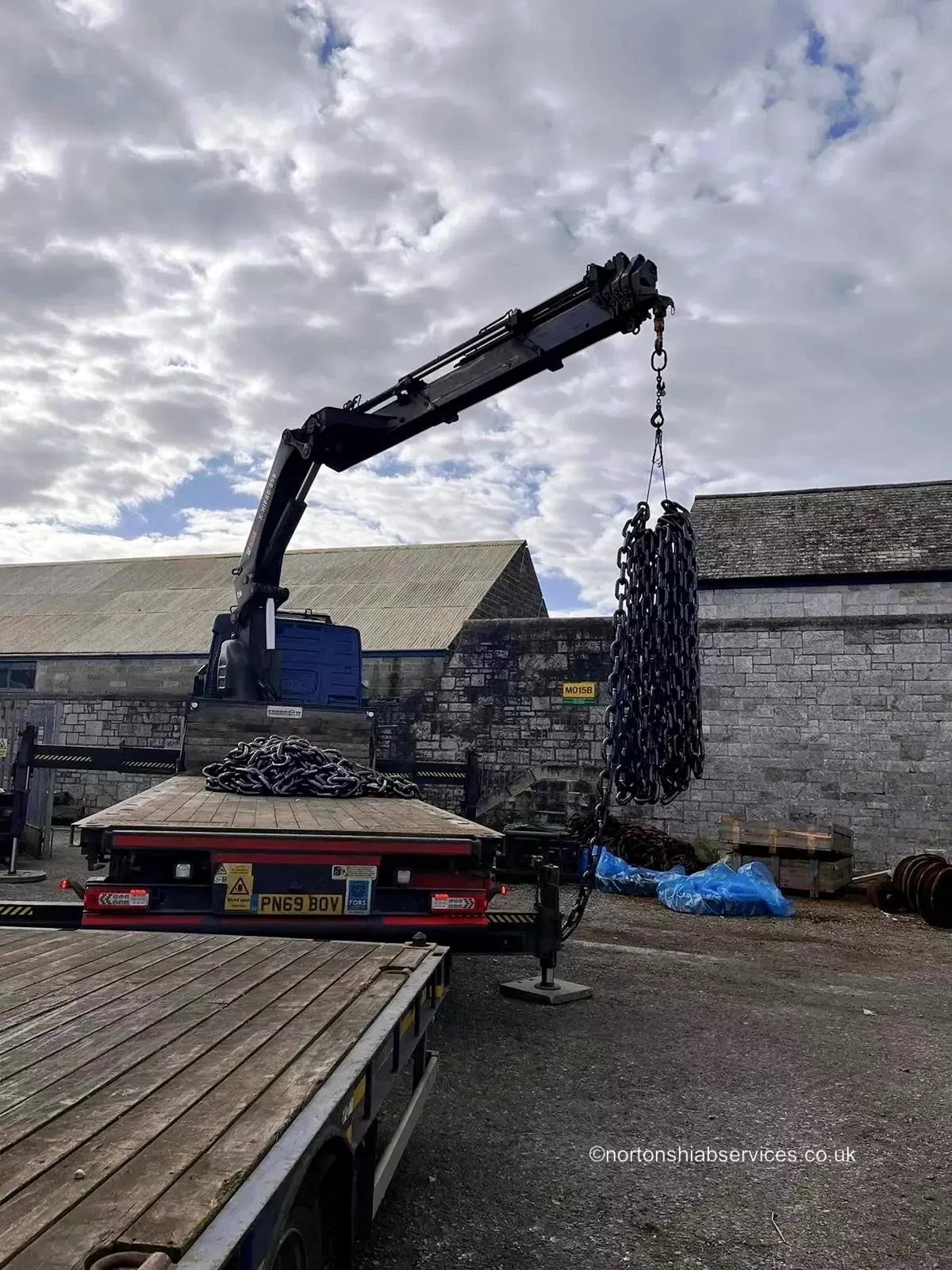
Radius runs from the centre of the crane column to the centre of the load — not from the front of the lorry, and not from the edge of the obstacle.
- Find the closest spot the vehicle can legally and safely stand
- Measure from roughly the back of the cab to where the load has to land
- Add anything the crane must clear on the way — a wall, a hedge, a conservatory
- Check what is overhead. Power lines change the answer completely
- Check what is under the outriggers, and how wide they can spread
Worked example
A 2.1 tonne garden room, 14 metres from where the lorry can stand.
On the 858 E-8 chart, 13.4 m gives 4,400 kg and 15.3 m gives 3,750 kg — so at 14 m there is comfortable margin over 2.1 tonnes. On the 422 EP-5, 13.2 m gives 2,520 kg with ADC: it would do it, but with far less in hand.
What actually decides the job is whether the road is wide enough to get the legs out, what is overhead, and what the ground will take. Those three rule out more lifts than capacity ever does.
Capacity and reach, answered
How much can a hiab lift?
It depends entirely on how far out the crane is working. Our 858 rigid lifts over 8 tonnes and carries up to 5.5 tonnes, with a maximum reach of 19.6 metres — but not all of that at once. That is why the manufacturer charts on this page matter more than a single headline figure.
What is a load chart?
A table or diagram from the crane manufacturer showing the safe working load at each radius. It is the only figure a lift should ever be planned to. Every chart on this page is taken from the data sheet for the crane concerned.
What does the tonne-metre rating mean?
It is the crane's lifting moment — weight multiplied by distance from the column. It is the fairest way to compare two cranes, because a maximum lift quoted without a radius tells you nothing. Note that the tonne-metre figure is not the model number: our 858 is a 66.1 tonne-metre crane.
Why does capacity fall as the crane extends?
Because the load and the crane sit at opposite ends of a lever. The further the load is from the column, the harder it tries to tip the vehicle and the more stress goes through the boom. On our 858 the safe load at full reach is a small fraction of what the same crane holds close in, which is why the chart matters and a headline figure does not.
What is ADC?
Automatic Duty Control. It reads the actual crane and outrigger set-up and allows the extra capacity that set-up genuinely provides, rather than working to one fixed limit. Where a crane has both figures we show them side by side, because the ADC number is only available when the legs can be properly deployed.
Does the ground affect what you can lift?
Yes, and it is the thing most often overlooked. Outrigger loads are concentrated into a small area — up to 220 kN on our largest unit. Soft ground, fresh tarmac, basements, cellars, drains and inspection covers all matter. We publish the pad sizes needed for each ground type further down this page.
Can I have the full data sheet?
Yes. Email us the vehicle or describe the job and we will send the manufacturer data sheet for the unit that would come out.
Not sure it is within reach?
Tell us what the load is and where it has to end up. We will tell you which vehicle does it, or that it needs a mobile crane instead.