The standing position
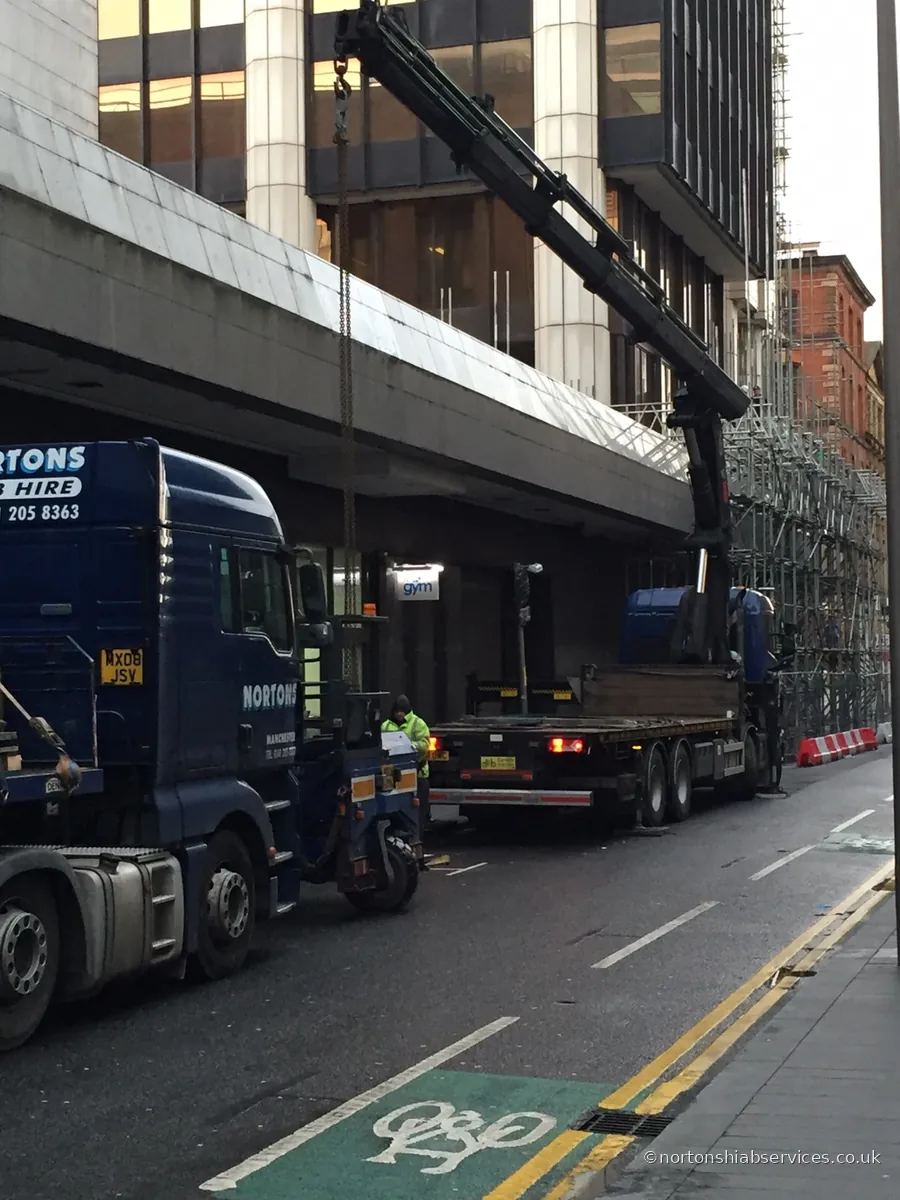
The only place the lorry could stand was the carriageway alongside the building. Everything else about the lift followed from that one constraint.
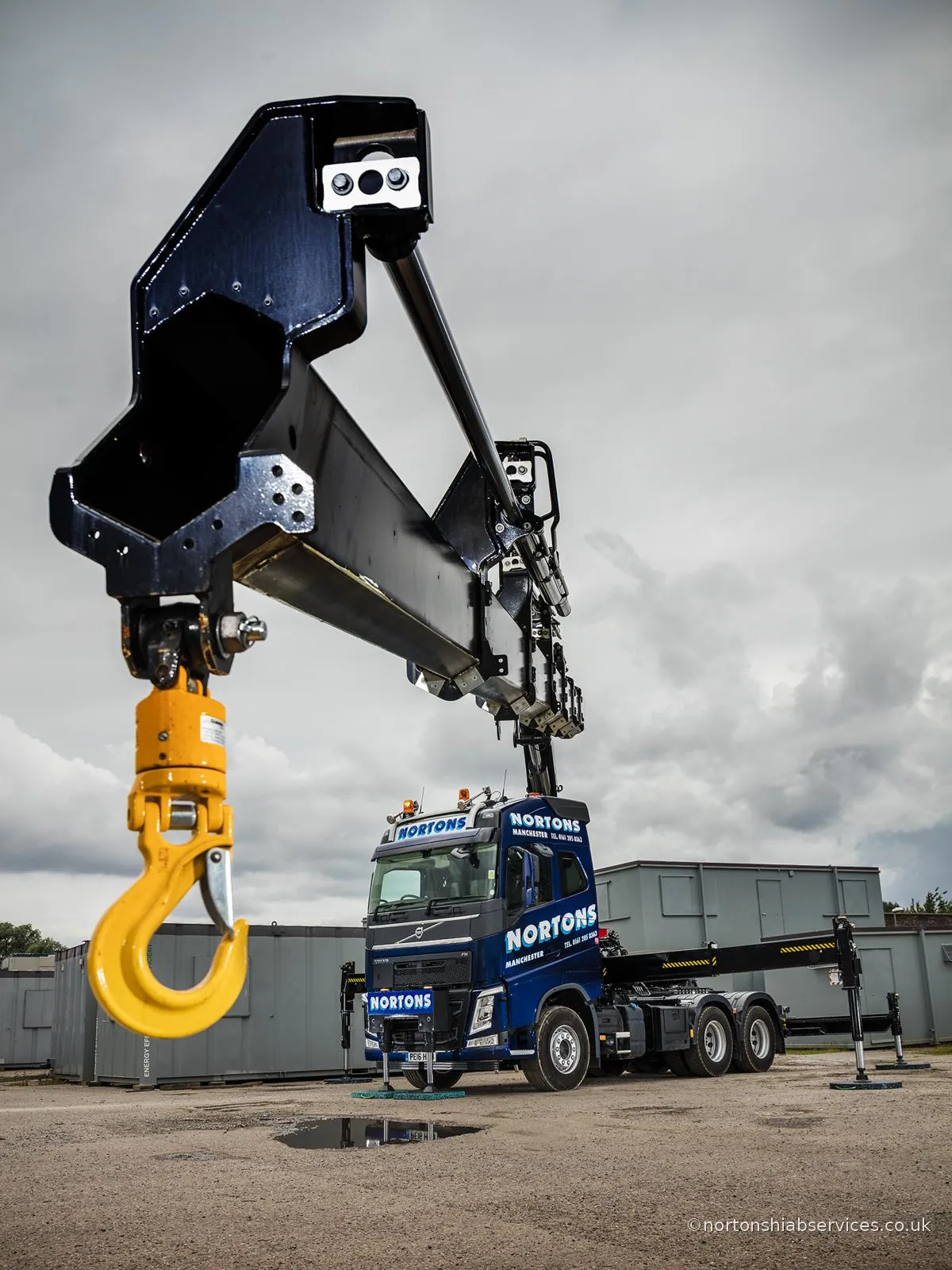
Across a site, over a fence line, into a yard the lorry cannot enter. The reach is only half the answer — here is what the crane will lift once it gets there.
Every loader crane lifts less the further out it goes. A supplier who answers "how far can it reach?" without asking "how heavy is it?" has not yet quoted your job.
Our furthest-reaching crane offers a maximum reach of 19.6 m. Close in it lifts over 8 tonnes. Right out at full reach it lifts a fraction of that. Same crane, same day, same driver / operator — the difference is caused entirely by distance.
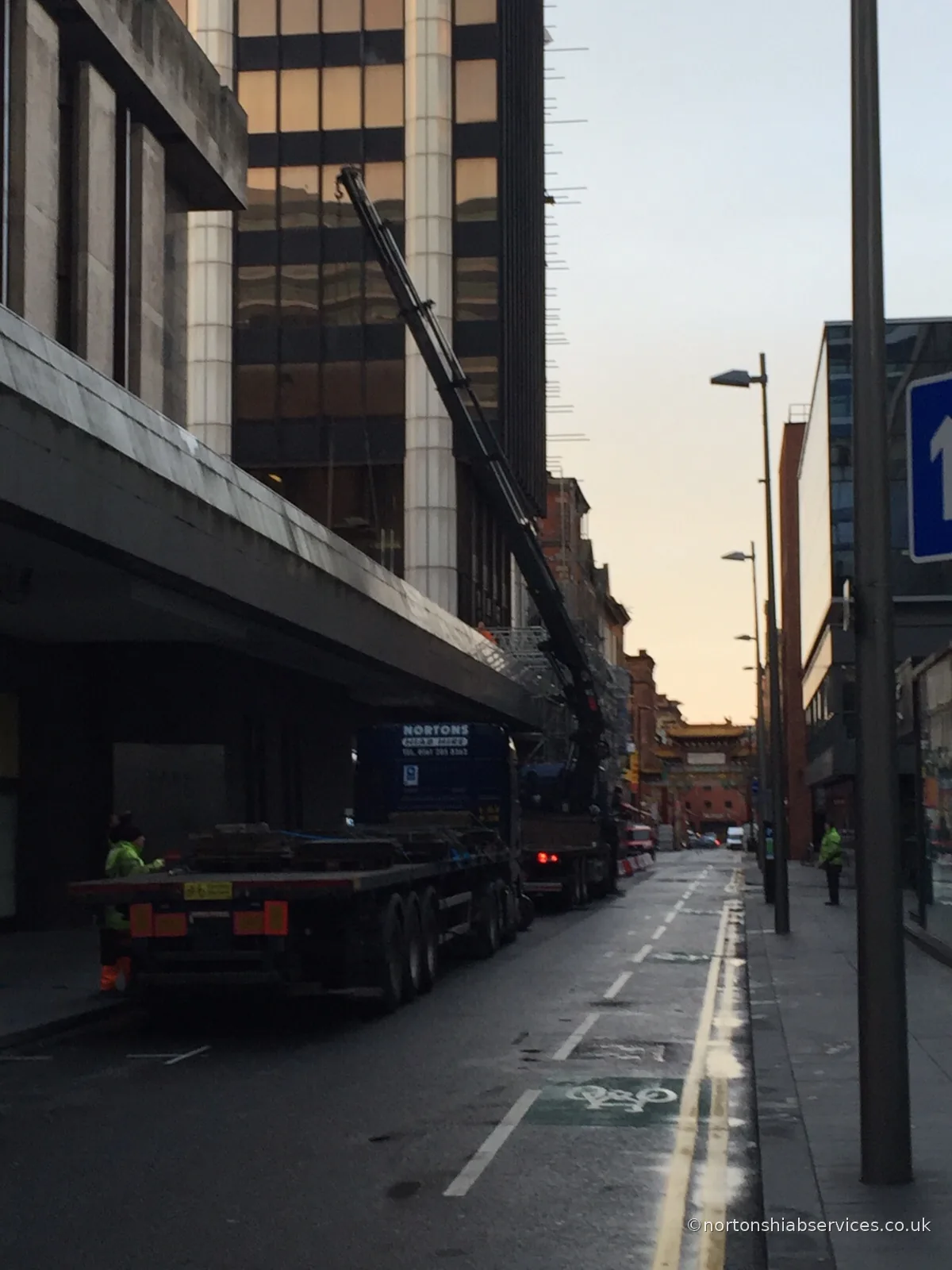
Five frames from one job — paving slabs off a city-centre rooftop, where nothing could be craned conventionally: the load had to come down from a roof, over a live footway, onto a lorry parked in a bus lane. The sixth is a different site, worked from outside the barrier line.
The only place the lorry could stand was the carriageway alongside the building. Everything else about the lift followed from that one constraint.
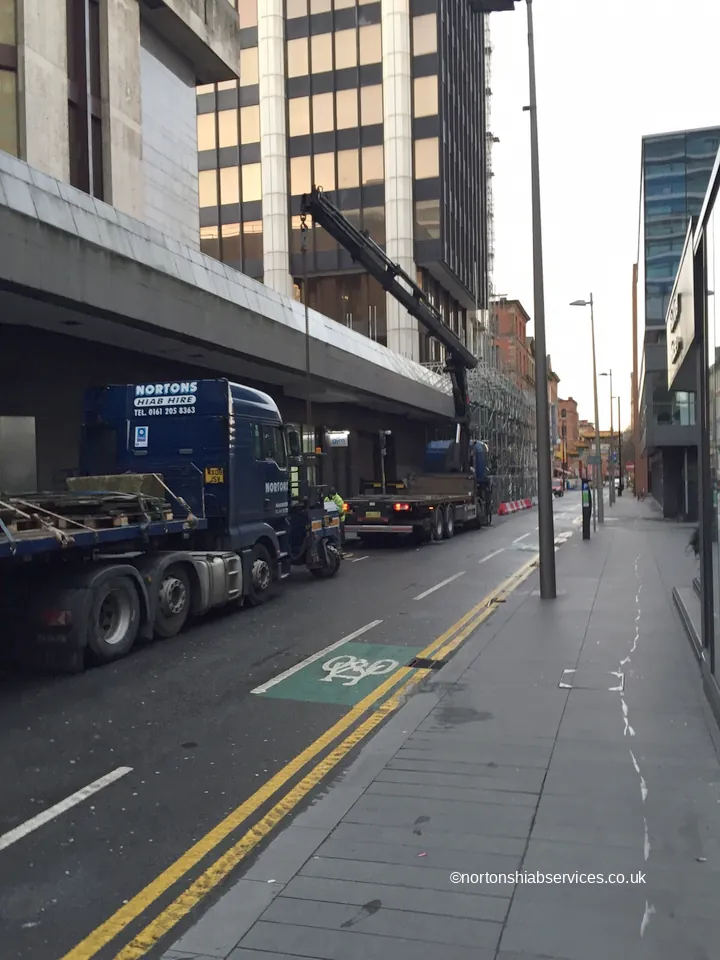
Slabs lifted from roof level in graded loads rather than one heavy pick, because capacity at that radius set the limit, not the total tonnage.
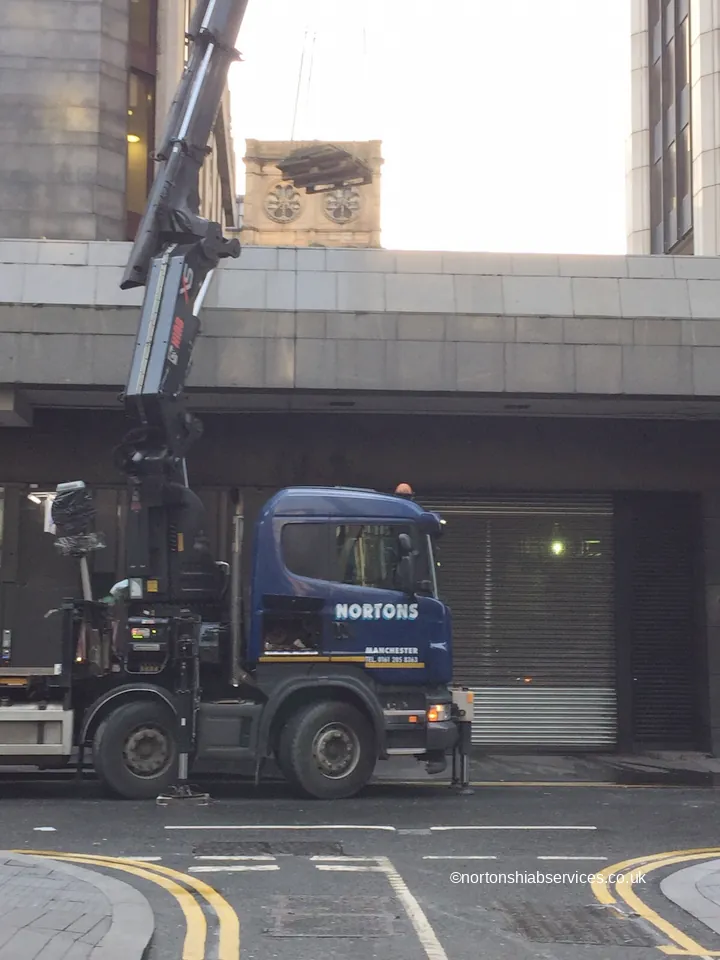
At long radius most of the machine goes through the leg on that side, and that leg was standing on a public footway. Pads sized for the ground rather than for what was in the locker.
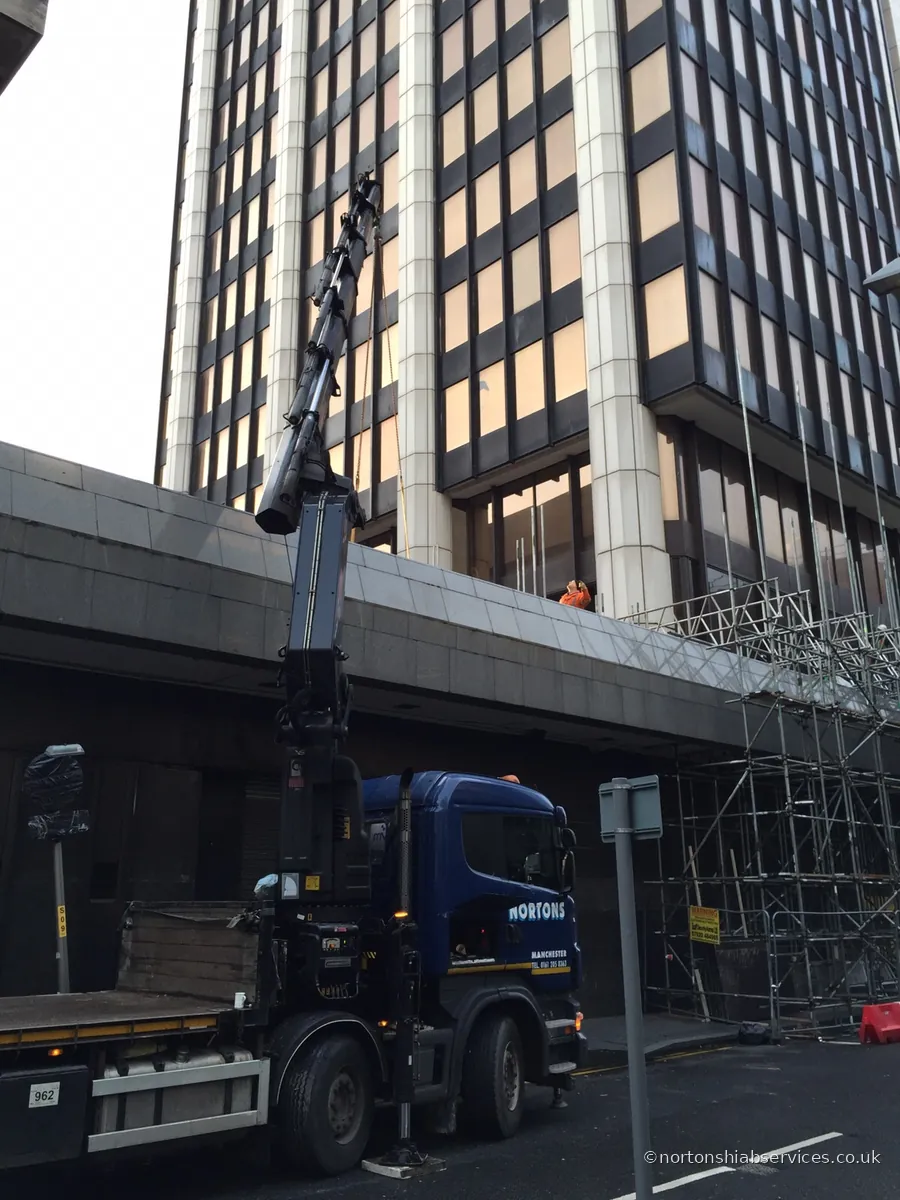
Loads brought down under control and landed on the lorry that would take them away. No second crane, no transfer, no second visit.
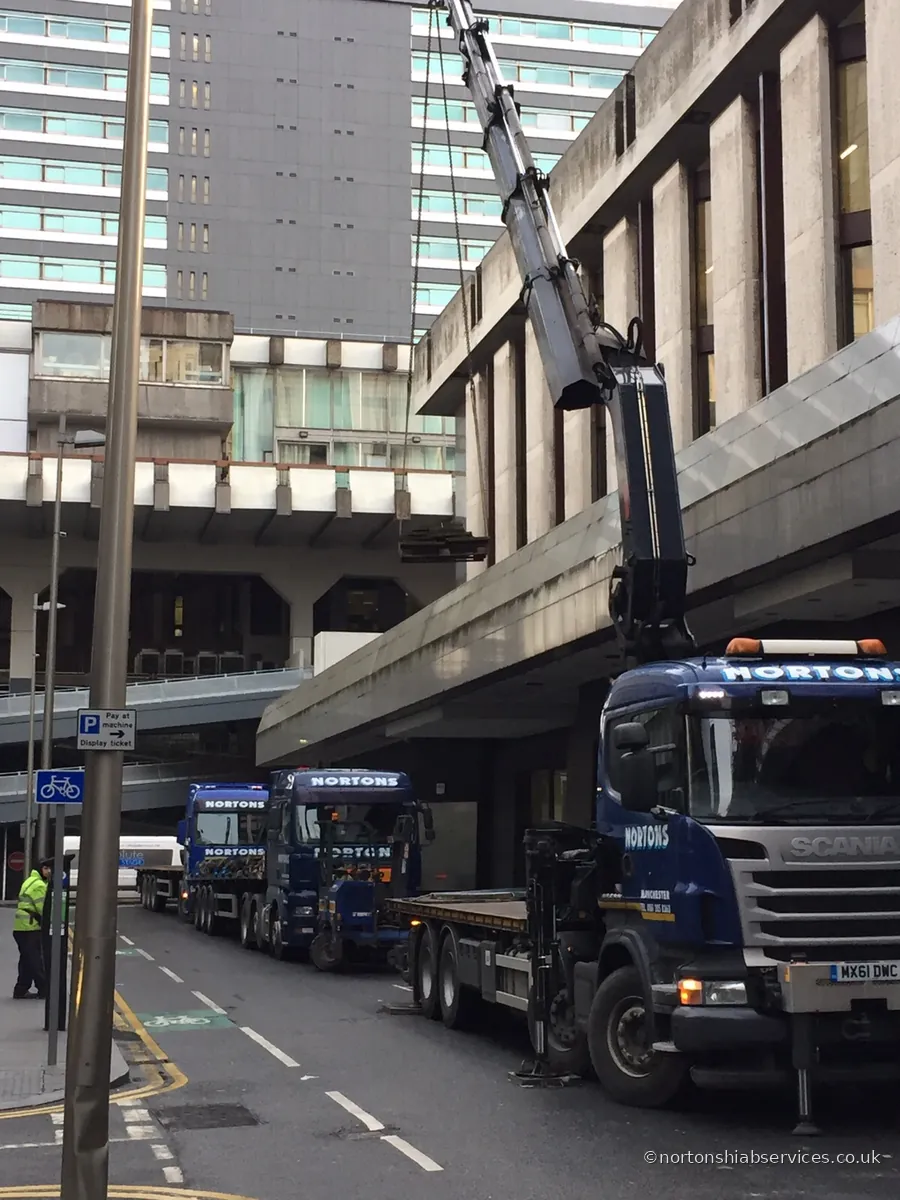
The reason long reach exists: from pavement level the whole operation is one lorry, four legs and a boom that goes where a crane could not be built.
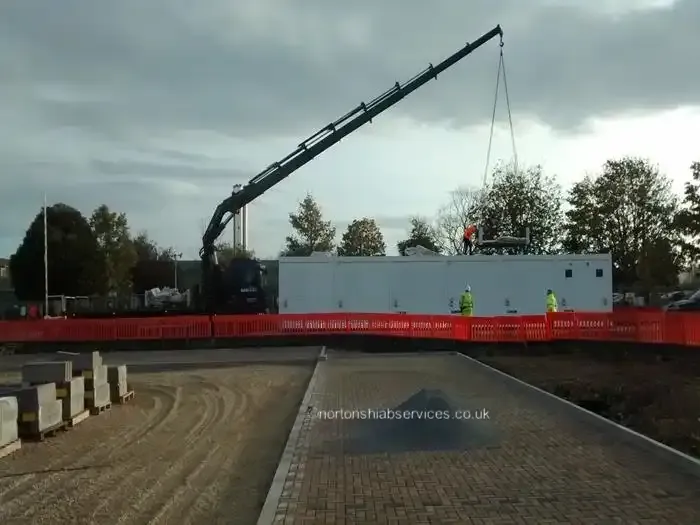
A different site, the same problem. The wagon could get no closer than the barrier line, so the reach did the walking and nothing had to be moved to let it in.
On almost every long reach enquiry, the limiting factor turns out to be the standing position rather than the boom. A crane that reaches nineteen metres is no use if the only place the lorry can stop is twenty-five metres from the drop.
The second constraint is the ground under the outriggers. At long radius, most of the machine's weight goes through one leg, so what the surface will take matters as much as what the boom will do.
Both are answerable before anyone travels. Tell us where the lorry would have to stop, how far it is from there to the drop point, and what the ground is made of, and we will tell you whether it works.
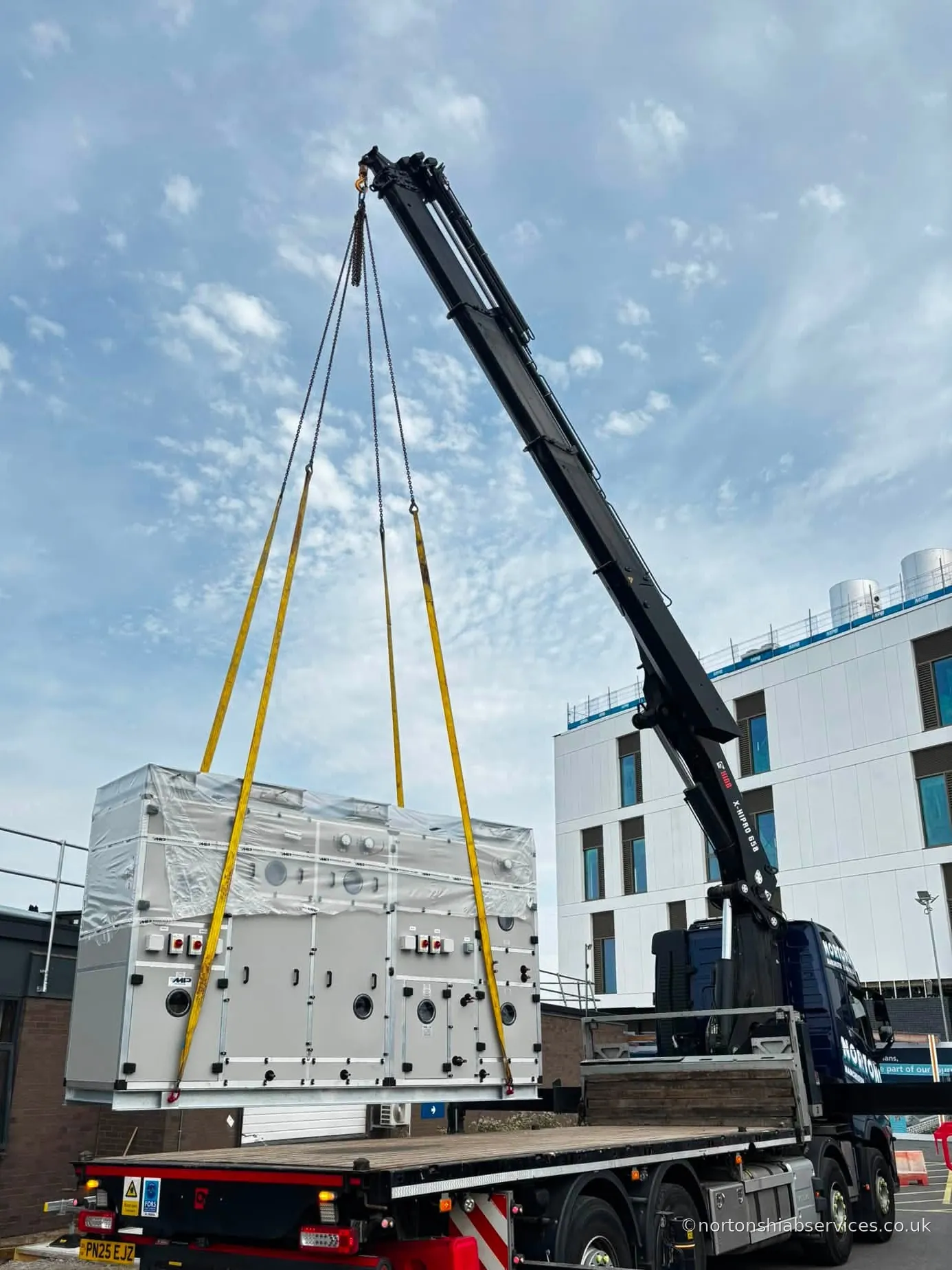
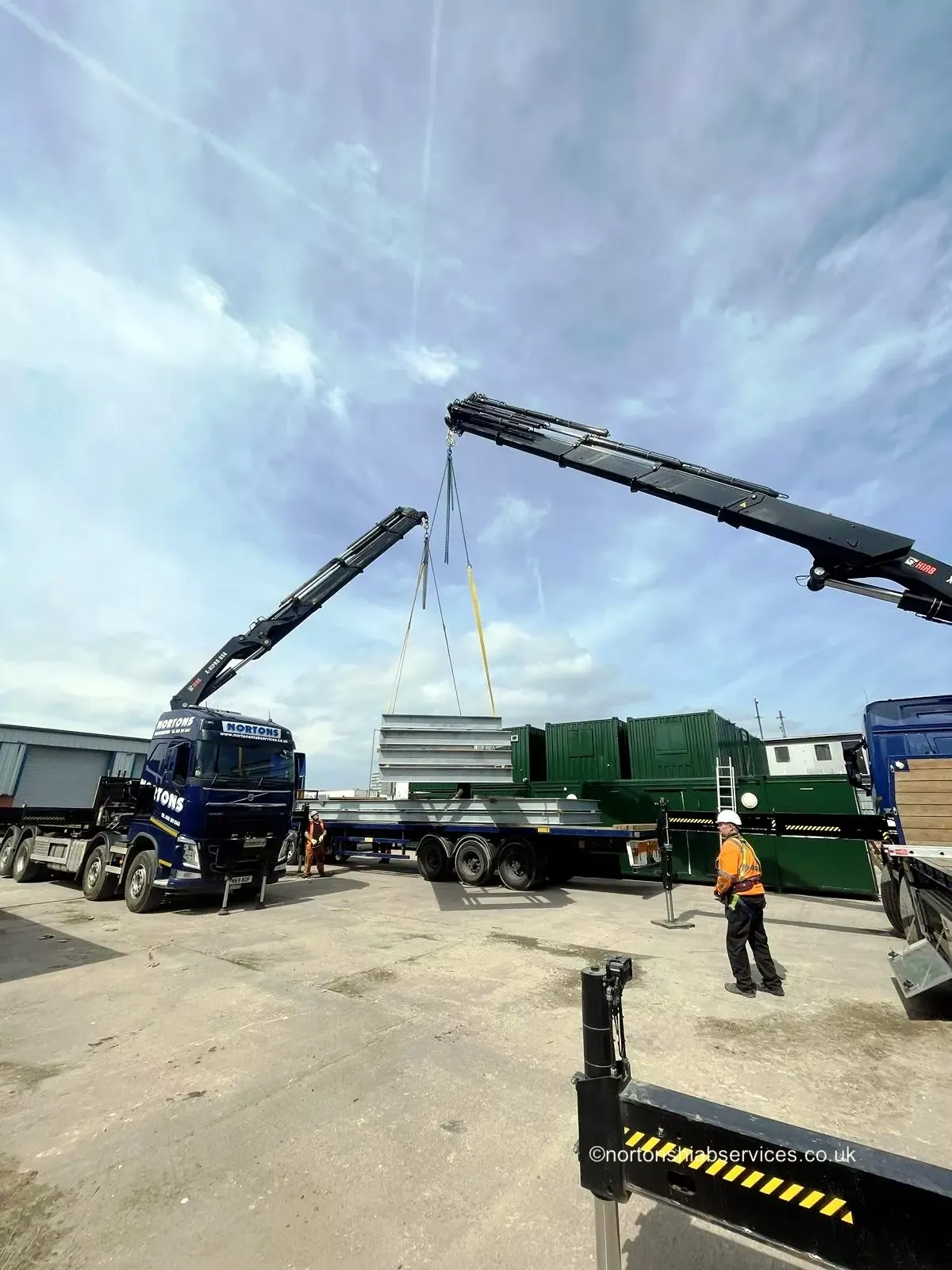
Long panels, frames and glazing units are often not heavy, but they are unbalanced — and holding a six-metre panel level on one hook at long radius is how they get damaged.
A dual lift puts a crane on each end. It runs to one lift plan, with one appointed person and one banksman controlling both machines, and it usually places the load faster than a single crane working at the edge of its chart.
It is also the answer when the drop point can be approached from two sides but neither side alone gives enough radius.
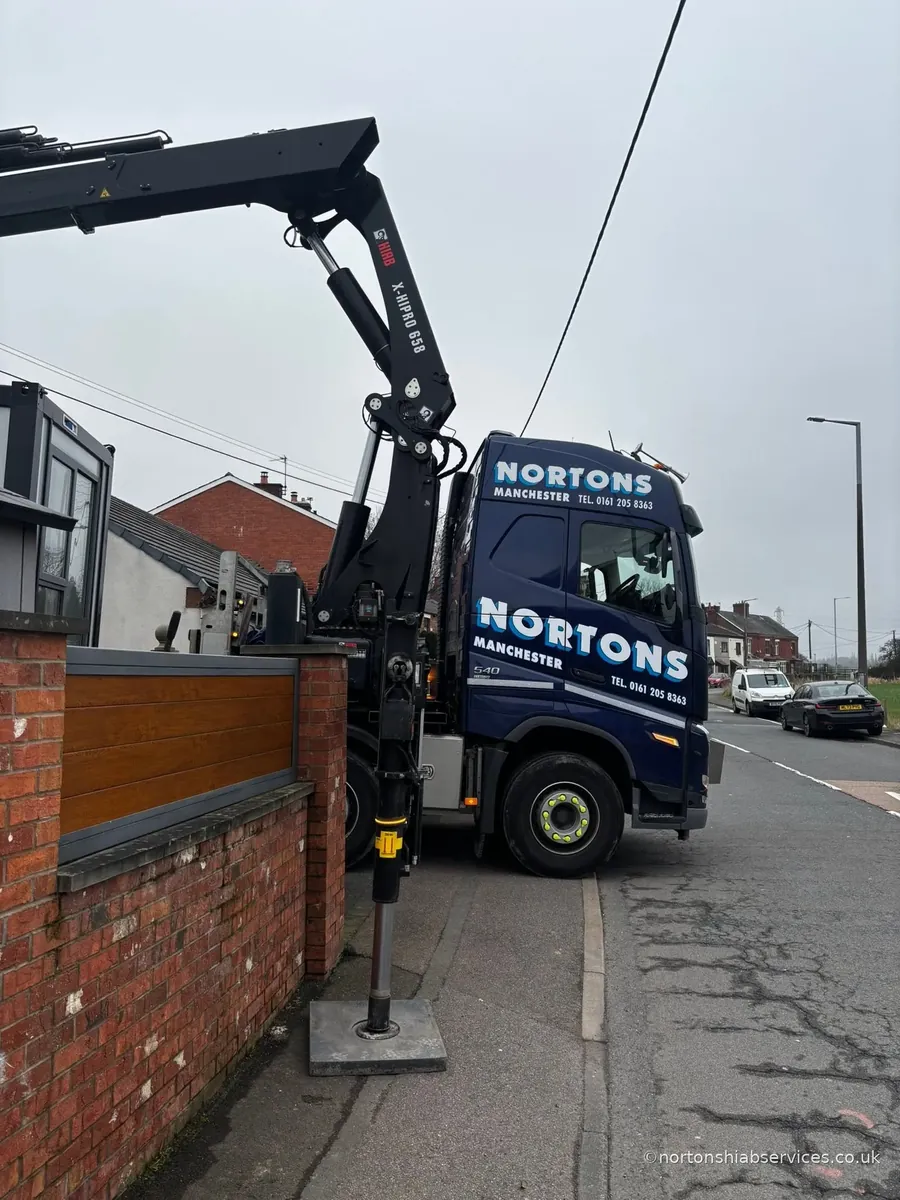
On a long reach job the standing position decides everything else. A street like this one gives you one place to put the vehicle, one width to put the legs out into, and one surface to put them down on.
Everything after that is arithmetic. From that standing position, how far out is the landing point, and what does the load weigh at that radius? Capacity falls steeply the further the boom goes, so a job that is straightforward at six metres can be impossible at fifteen.
You do not need to work any of that out. Tell us roughly where the lorry could stop and roughly where the thing has to end up, and a photograph from the road answers most of the rest.
Hydraulic outreach is boom only. Lifting height is measured from the ground. Both come off the manufacturer data sheets.
| Crane | Hydraulic outreach | Lifting height | Capacity at max radius |
|---|---|---|---|
| HIAB X-HiPro 858 E-8 | 19.6 m | 22.1 m | 2,900 kg at 19.4 m |
| HIAB 855 E-8 HiPro | 19.4 m | — | 2,900 kg at 19.4 m |
| HIAB 658 EP-6 HiPro | 17 m | 19.5 m | 2,820 kg at 16.9 m |
| HIAB 622 E-6 HiPro | 15.8 m | 18.5 m | 2,960 kg at 15.8 m |
| HIAB X-HiPro 558 EP-5 | 14.5 m | — | 3,150 kg at 14.5 m |
Our furthest-reaching crane, the 858 rigid, offers a maximum reach of 19.6 metres. What matters more than the headline is what it will lift out there, because reach and capacity trade against each other on every loader crane ever built. The 858 lifts over 8 tonnes and carries up to 5.5 tonnes, so the honest question is always "how much, how far?" rather than "how far?".
As far out as the chart allows for that weight, and that is the honest limit rather than the headline reach. In practice the limiting factor is not the crane at all, it is where the lorry can stand and get its stabiliser legs down. Tell us the standing position and the distance to the drop point and we can answer before anyone travels.
The weight of the load, the distance from where the lorry can stand to where the load has to land, and what is in between — a fence line, a boundary wall, parked cars, overhead cables. Describe those in words and we can usually settle it there and then; where it is borderline we come and look before anyone commits.
For a delivery, usually, because the crane arrives with the load already on it and there is nothing separate to hire. Where a mobile crane wins is height above roughly twenty metres, very heavy loads at long radius, or a lift that has to stand on site for days. We will tell you which one your job is.
Yes, and for long panels or frames a dual lift is often better than one crane at maximum radius. It runs to a single lift plan with one appointed person and one banksman controlling both machines.
The further the load goes out, the more load goes through the outrigger on that side, so what the ground will take matters as much as what the boom will do. The minimum spreader pad sizes by ground type are published on the lifting capacity page. On mud, peat or marsh there is no permissible load at all — the pads do not fix that, and no reputable driver / operator will pretend otherwise.
Anywhere in mainland Britain. The long reach vehicles live at the Manchester yard with the rest of the fleet, so the North West is usually same day or next morning and the rest of the country next day. Reach is the reason people ring rather than the distance, so tell us what is in the way and we will tell you whether it works.
No. A rough idea helps but a description works just as well - where the lorry can stand, what is between it and the landing point, and whether that is a wall, a fence, a hedge or a row of parked cars. We would rather work it out from a sentence and a photograph than have you climbing about with a tape measure.
The 858 — our longest reach · Load charts · Truck-mounted crane hire
A sentence about the load and where it has to end up is enough. Working out the reach is our job, not yours.





ALLMI trained driver / operators · RAMS, method statements and lift plans · Euro VI clean air zone compliant fleet, renewed by continual investment in new wagons · All our accreditations