Structures lifted whole
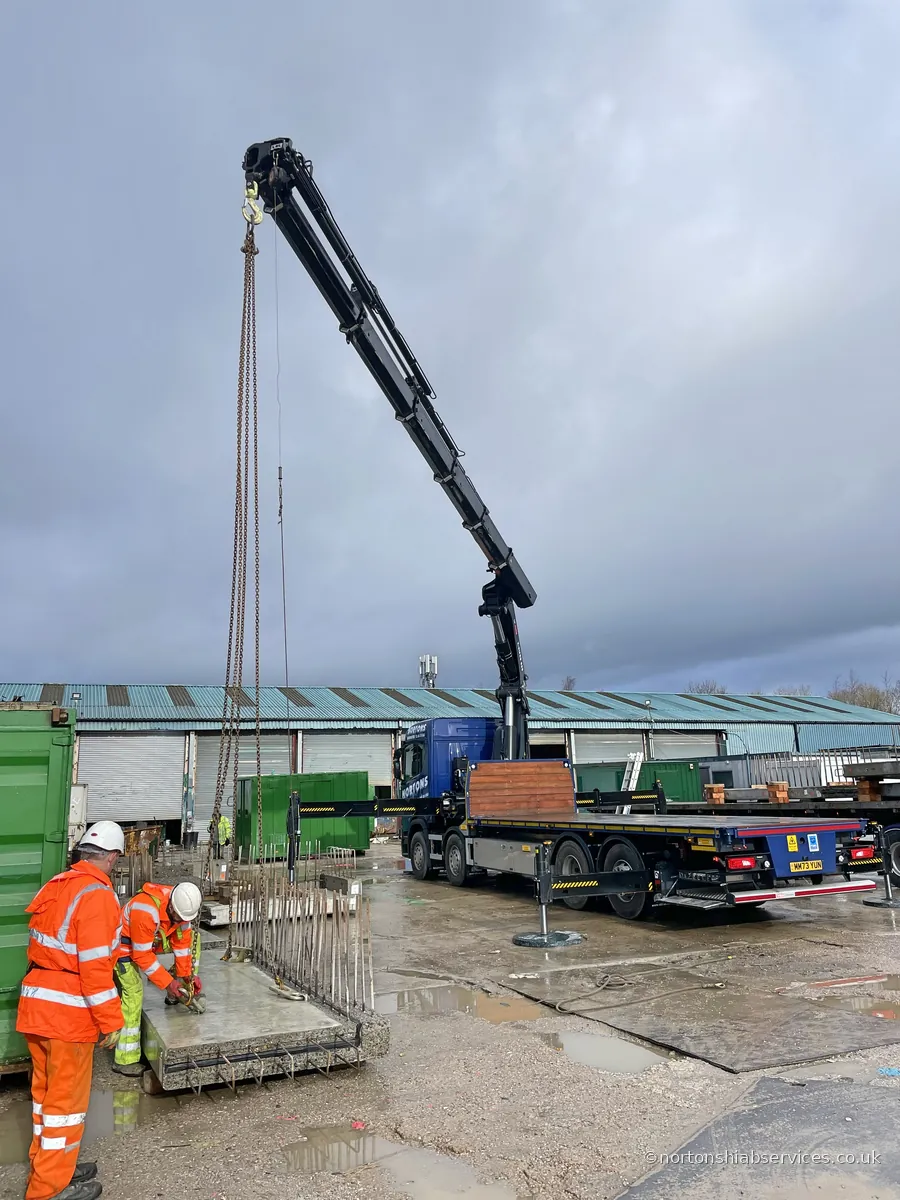
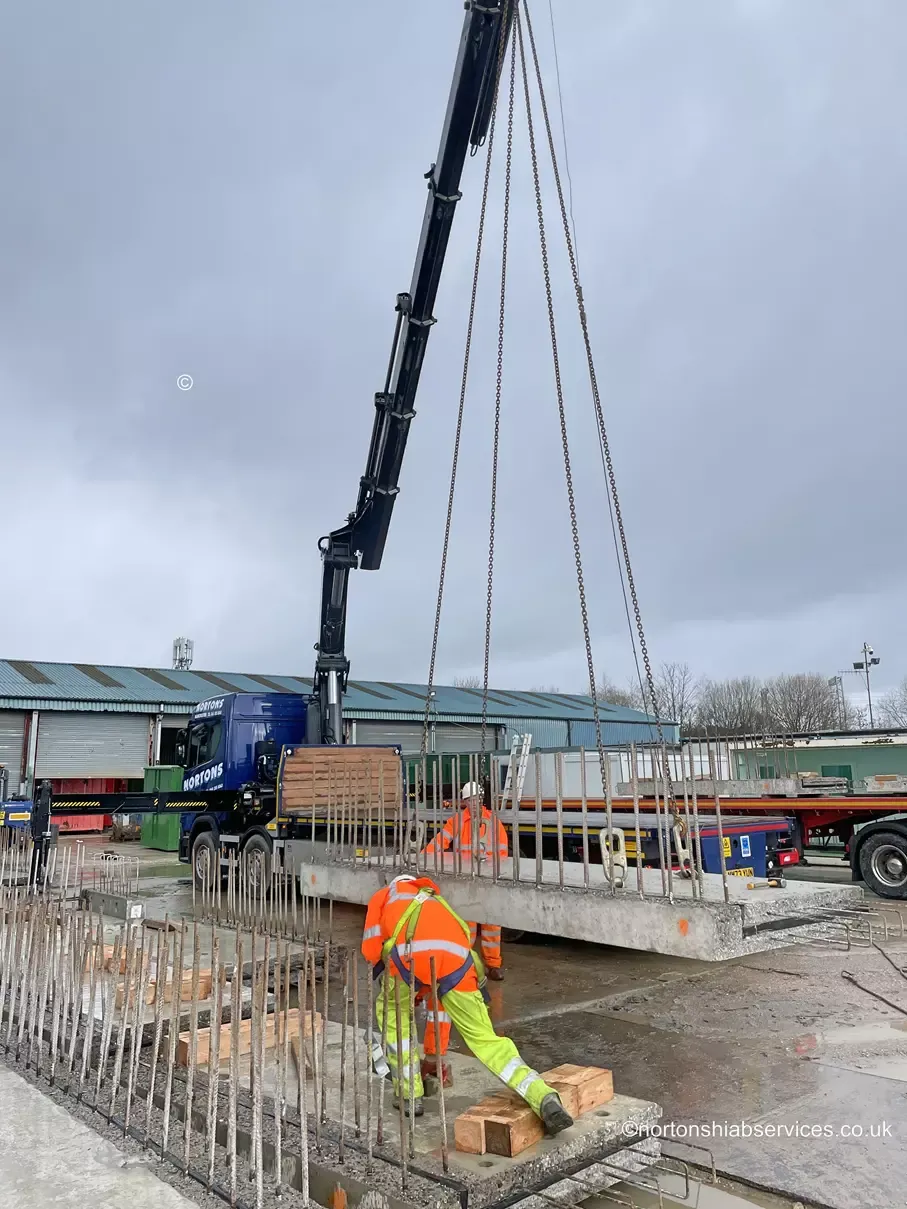
Wash gantries, frames and steelwork lifted in one piece and set down on prepared bases, rather than assembled in position.
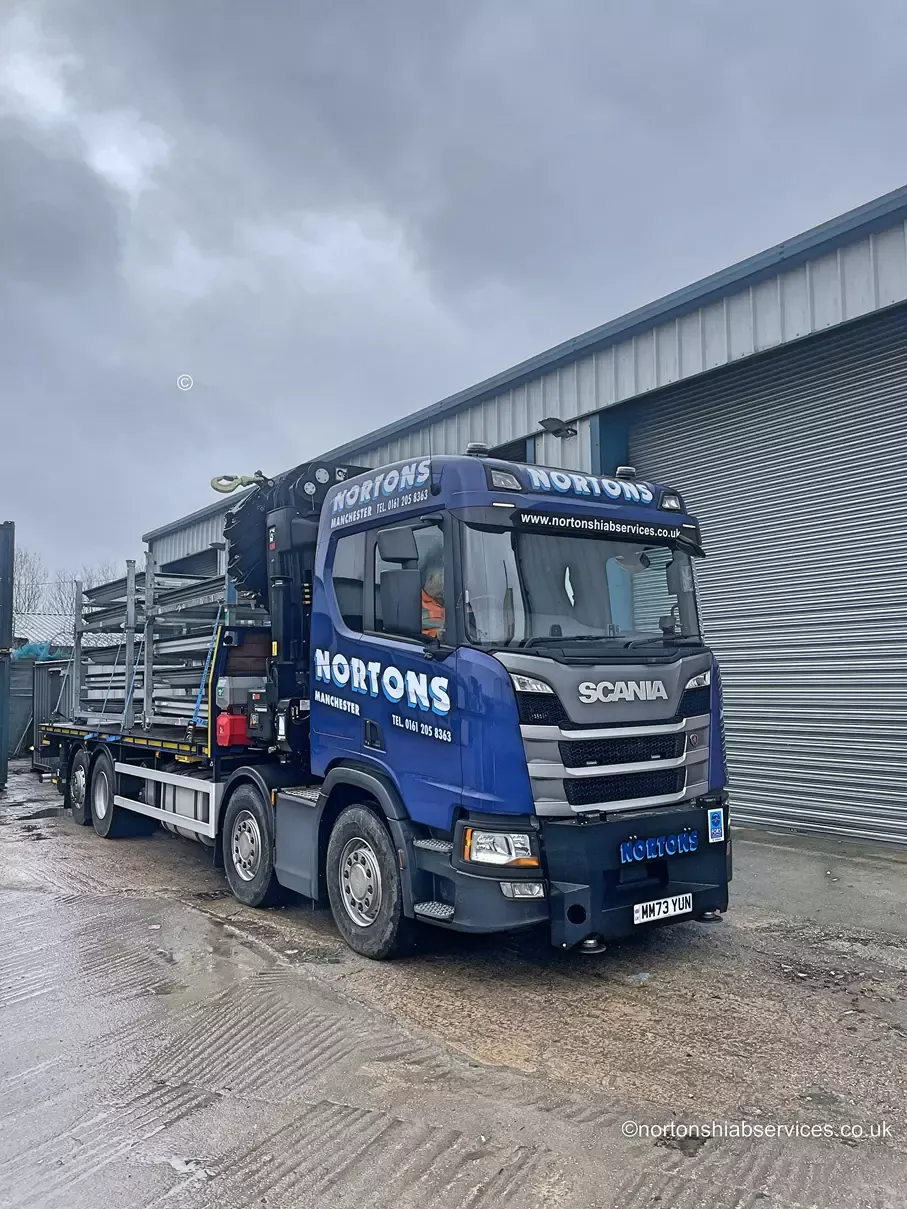
Our heaviest crane on an eight-wheel rear-steer rigid. Lifts over 8 tonnes, carries up to 5.5 tonnes and offers a maximum reach of 19.6m. It gives 22.1 m of lifting height, and the load is carried on the same vehicle that lifts it.
The 858 is a HIAB X-HiPro 858 E-8 — a 66.1 tm loader crane on an eight-wheel rear-steer rigid lorry at 32 tonnes gross. We run these on both Scania and Volvo chassis, and they are Euro VI.
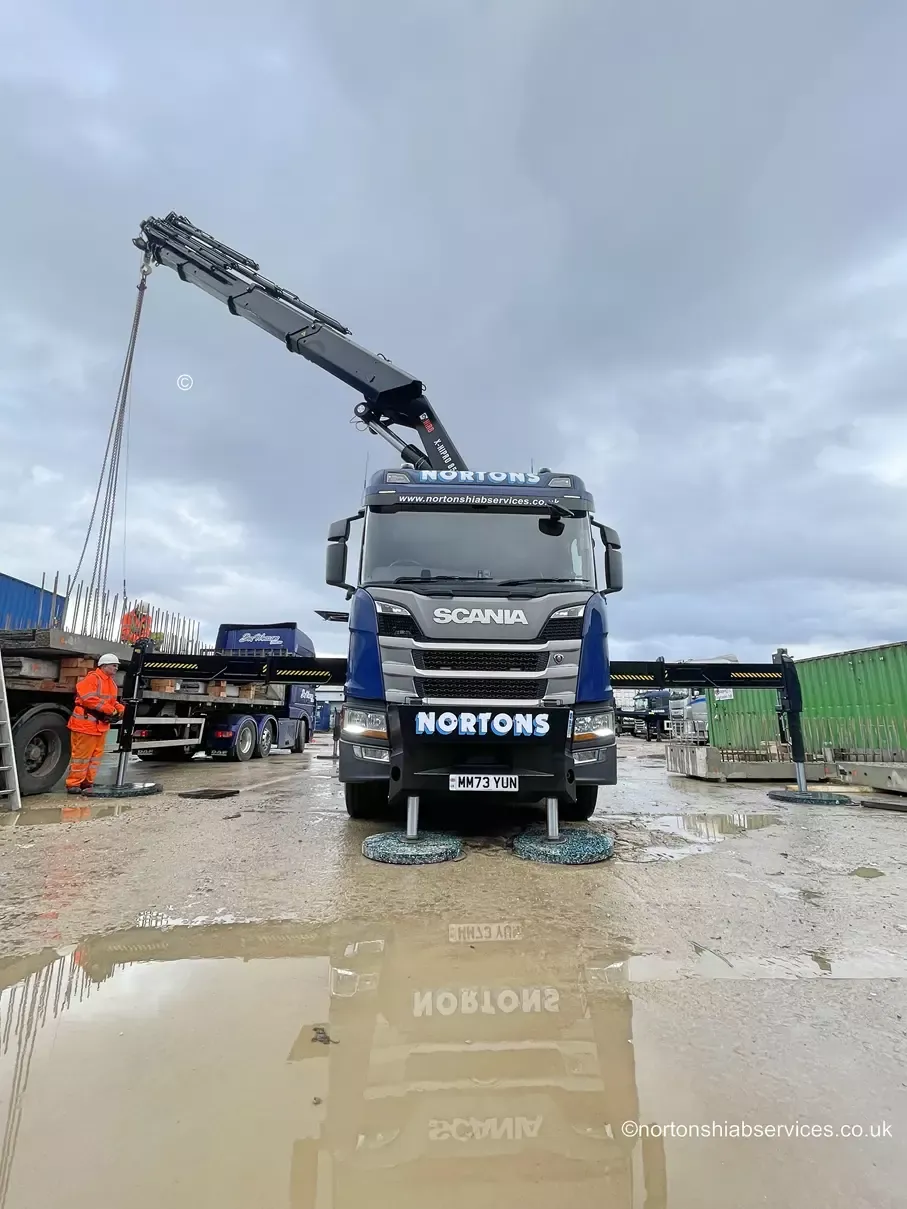
Eight boom sections give 14.9 m of hydraulic extension and 19.6 m of outreach in total. Continuous slew and front stabiliser legs mean it works all the way round the vehicle, including over the cab, which is what makes it useful on a site where there is only one place to stand the lorry.
Because it is a rigid rather than an artic, it gets into places a 44 tonne outfit cannot — but it carries less. If the load is long or heavy rather than awkward, the 658 artic is usually the better answer.
Wash gantries, frames and steelwork lifted in one piece and set down on prepared bases, rather than assembled in position.
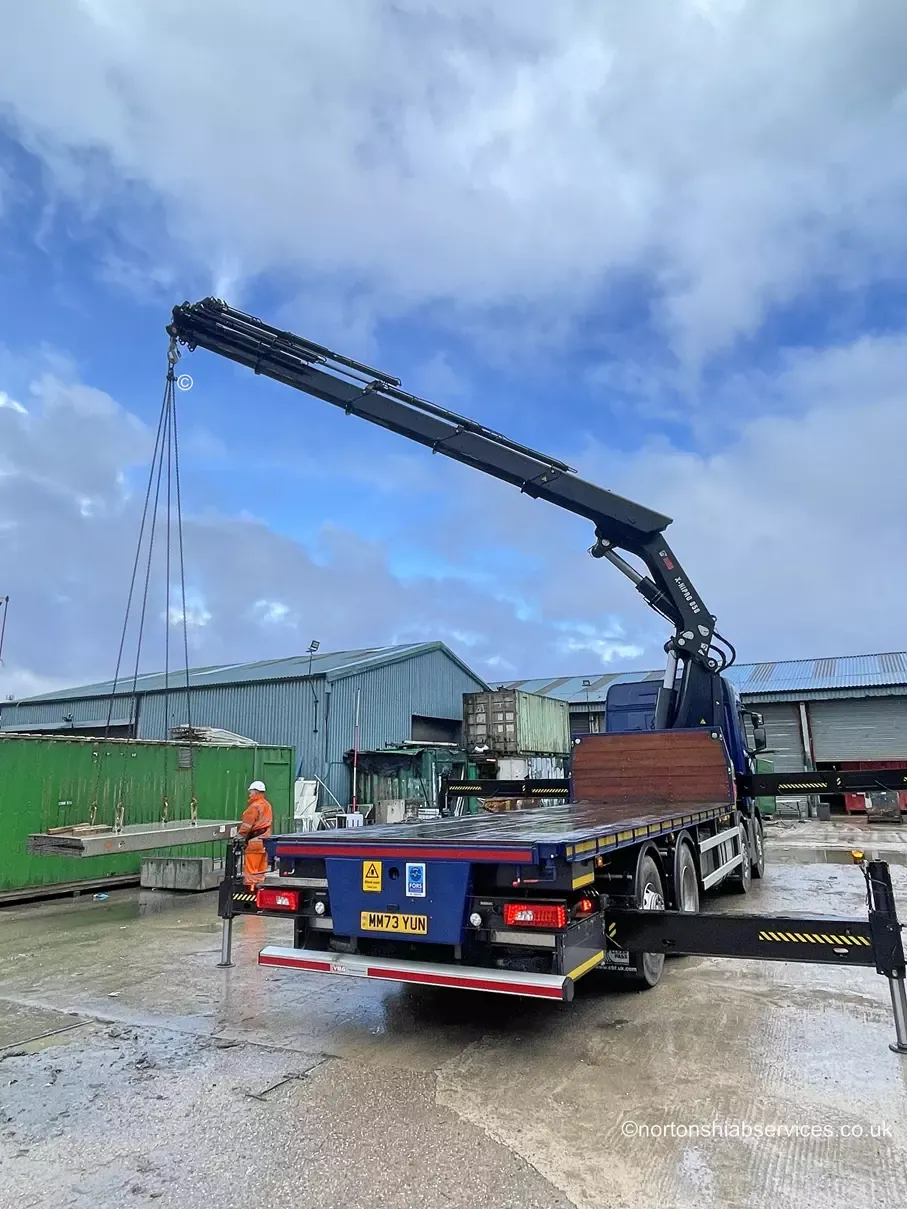
Nineteen metres of outreach means the lorry can stand on the road and the load can go over a wall, a fence or a parked row of cars.
The steering rear axle tightens the turning circle, so a 32 tonne eight-wheeler gets round yard corners that would stop a longer vehicle.
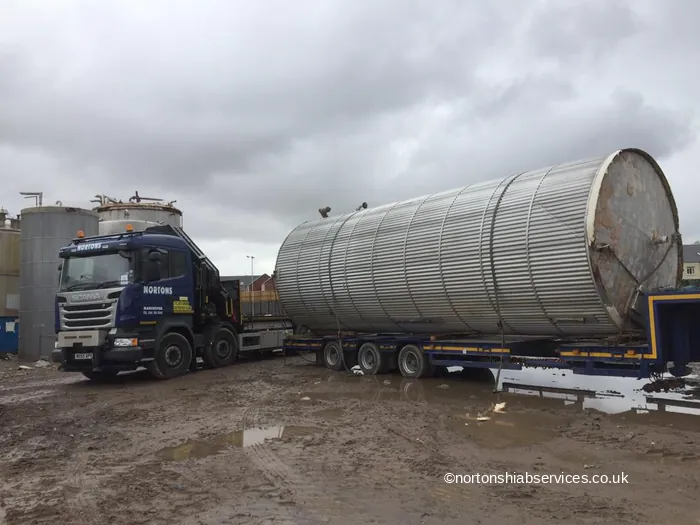
Tanks, vessels, transformers and machine bases — loads where the weight matters more than the length.
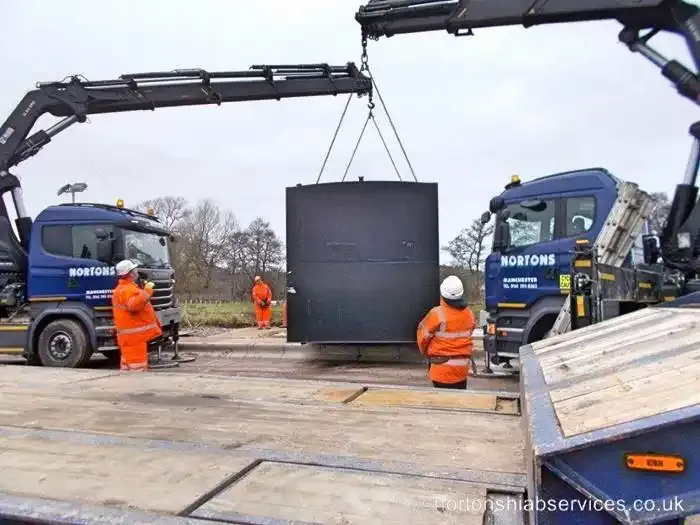
Where an item is too heavy or too long for one crane to take alone, a second vehicle takes the other end and both work to the same lift plan.
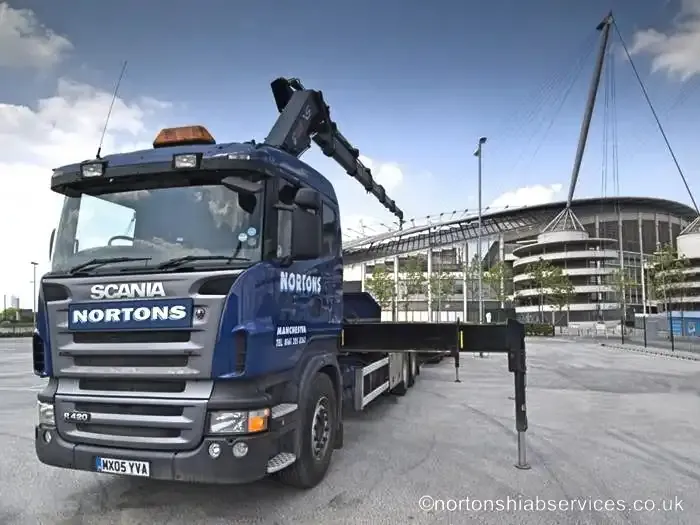
The lorry does not always turn up with the load on it. Plenty of jobs run the other way: legs down, lift on, strap and away.
This film is held until you accept cookies. Nothing is requested from YouTube while you are on this page — the still below is served from this website. Accept the cookie policy and it unlocks where it stands, without the page reloading.
Nothing is loaded from YouTube until you press play. The still below is served from this website, so no third party knows you are here unless you choose to watch it. When you do, the film plays through YouTube’s no-cookie player.
Read across to the radius you need. Capacity falls steeply as the boom extends, which is why a headline maximum lift on its own tells you very little.
| Radius | 3.8 m | 4.6 m | 6.1 m | 7.8 m | 9.5 m | 11.4 m | 13.4 m | 15.3 m | 17.4 m | 19.4 m |
|---|---|---|---|---|---|---|---|---|---|---|
| Capacity | 18,000 kg | 15,500 kg | 11,300 kg | 8,500 kg | 6,700 kg | 5,300 kg | 4,400 kg | 3,750 kg | 3,250 kg | 2,900 kg |
Source: manufacturer data sheet
858-E8 X-Hipro.pdf. Crane weight 7,458 kg without support legs. Full charts for every crane are on the
lifting capacity page.
The model number is not the tonne-metre rating. The 858 is a 66.1 tm crane, 71.5 tm with Automatic Duty Control — not 85 tonne-metres. The figures above are read straight off the manufacturer data sheet, which you can download.
You do not need to work any of this out yourself. Send us two things and the rest is our job.
From those two we work out the radius, read it against the chart, work out what the stabiliser legs will put through the ground and tell you whether the 858 is the right vehicle for it. If you would rather check it yourself, the full charts and the ground pressure table are on the capacity page.
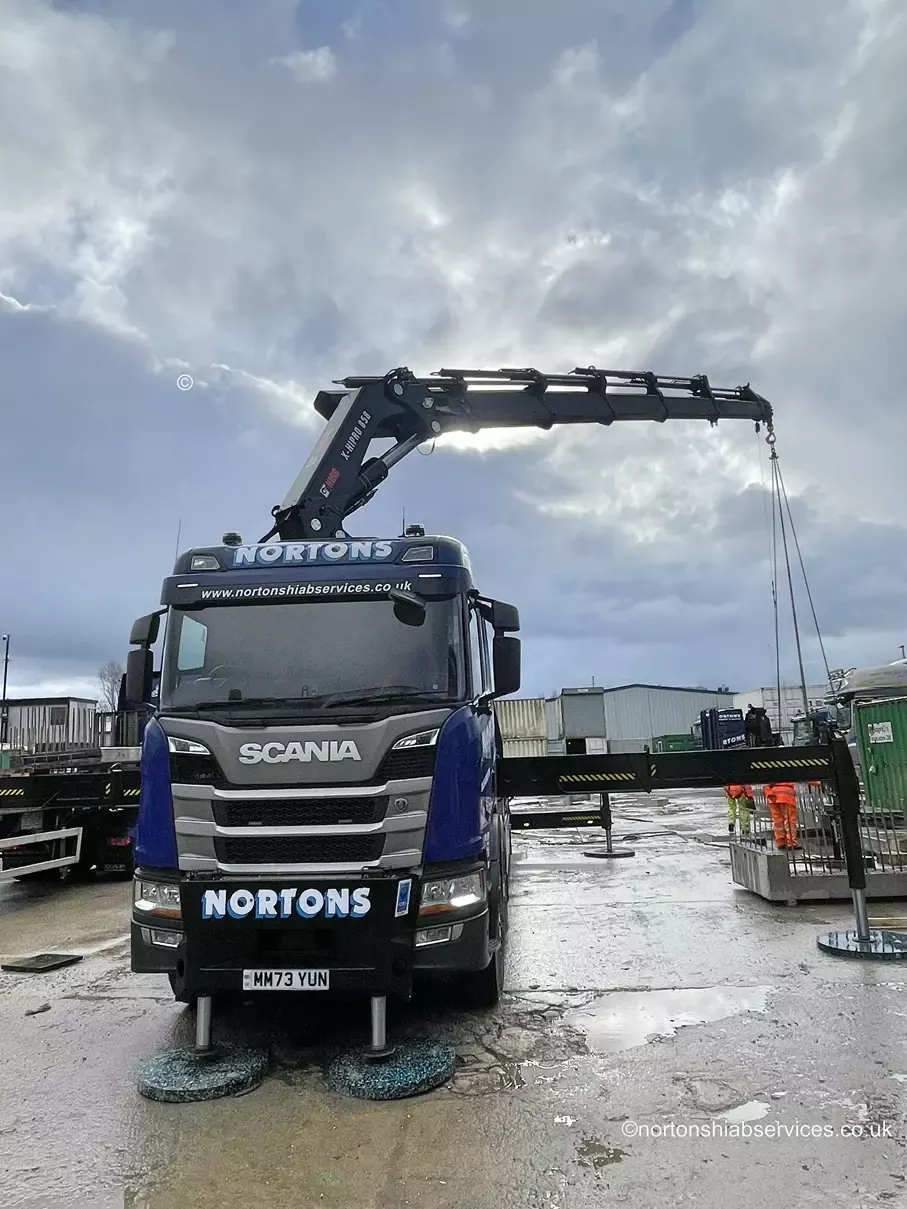
The 858 rigid lifts over 8 tonnes, carries up to 5.5 tonnes and offers a maximum reach of 19.6m. Capacity falls the further out the crane works, so check your load against the distance you actually need rather than against a headline number. The manufacturer data sheet is linked on this page.
No. The model number is not the rating, though the assumption comes up constantly. The 858 E-8 is a 66.1 tonne-metre crane, 71.5 with Automatic Duty Control engaged. Work from the load chart.
Yes. The 858 has front-mounted stabiliser legs, so the working area in front of the vehicle is not restricted and you get full continuous slew without losing capacity over the front.
It is a 32 tonne eight-wheeler on rear steer, so the payload depends on the crane and body fitted; as a rule of thumb the crane and legs alone account for roughly 8.5 tonnes. Send us the weight and dimensions and we will tell you whether it goes on this vehicle or on an artic.
Enough width to get the stabiliser legs out, and ground that will take the load through them. Outrigger pressure is the part most people forget: on soft cohesive ground a single leg can need a spreader pad over two metres square. We publish the full ground pressure table so you can check the set-up area before we arrive.
Always. The 858 goes out with one of our own driver / operators, most of whom are ALLMI trained and CPCS qualified, and the crane is worked by remote control so they stand where they can see the load.
Tell us what needs lifting and where it has to end up. We will confirm the vehicle and what it will cost.





ALLMI trained driver / operators · RAMS, method statements and lift plans · Euro VI clean air zone compliant fleet, renewed by continual investment in new wagons · All our accreditations