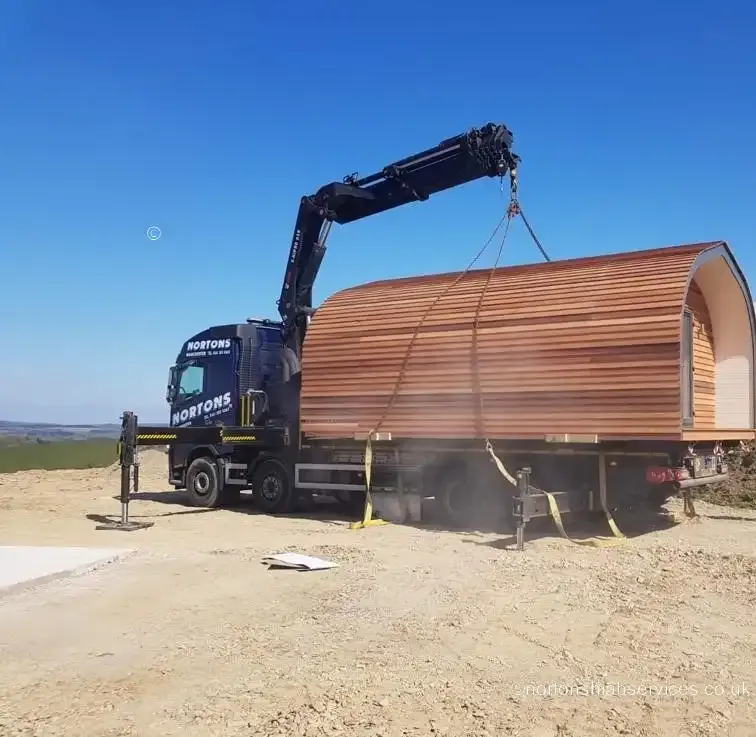
Loaded at the works
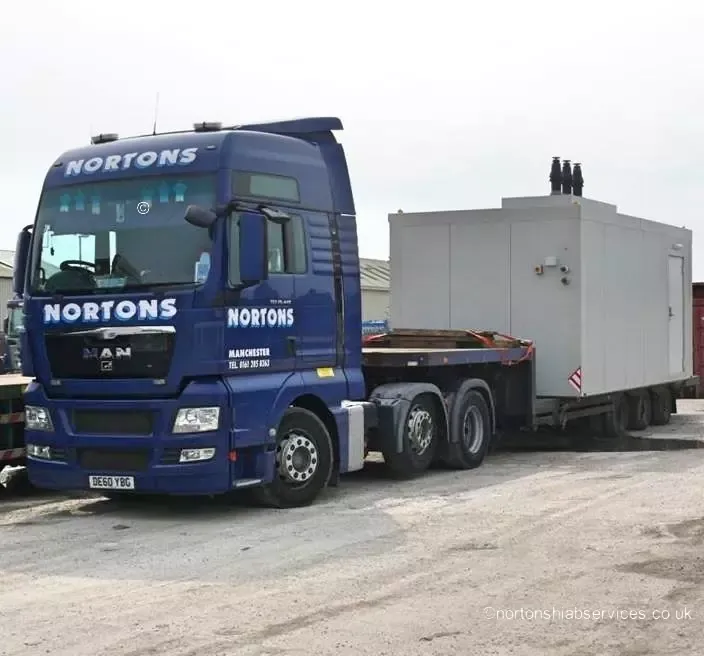
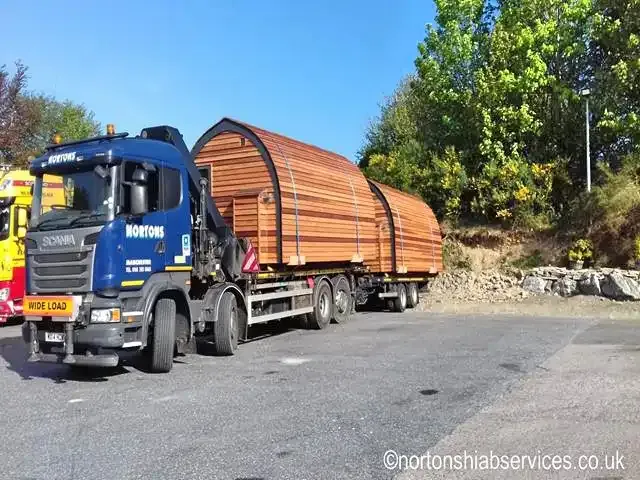
Pods loaded and strapped at the manufacturer. A wagon and drag can take two, since the wagon bed and the trailer both carry one and the same crane serves both.
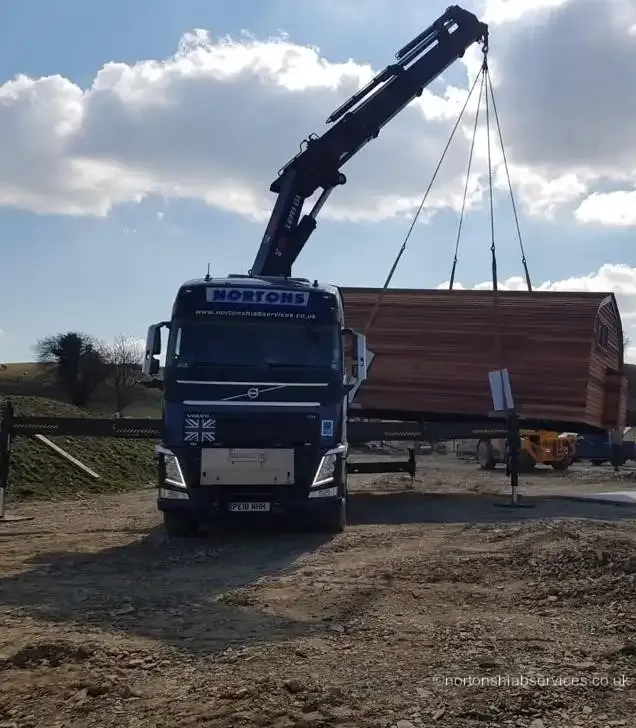
Glamping pods, camping pods and eco pods delivered and craned into position — lifted in over the boundary when there is no way through at ground level.
Almost every pod enquiry is the same shape: the unit is fine, the base is ready, and there is no way to get it from the road to the standing at ground level.
That is exactly what a long-reach loader crane is for. The lorry stands on the road, the boom reaches in over the boundary, and the pod comes down onto the base. No dismantling, no track machine across the lawn, no taking a fence panel out and hoping.
What decides whether it is possible is not the crane, it is the standing position: how close the lorry can get, and whether the stabiliser legs can go down there without sitting on a drain, a soft verge or a neighbour's driveway.
The distance from where the lorry would park to the middle of the base usually answers it.
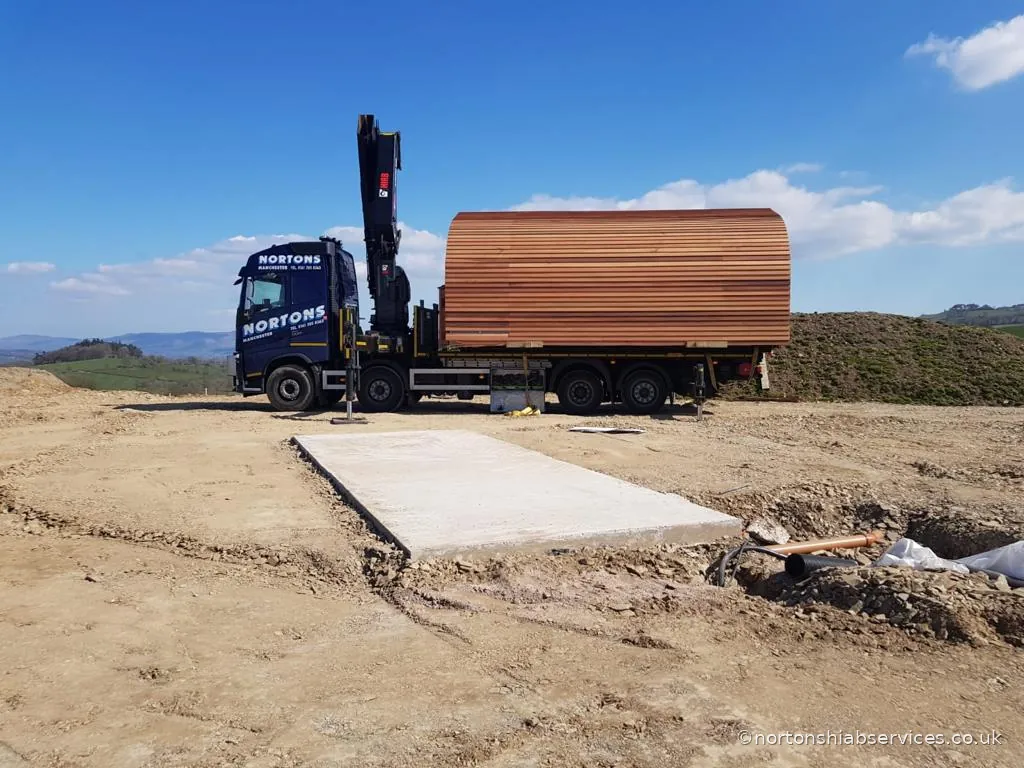
Pods loaded and strapped at the manufacturer. A wagon and drag can take two, since the wagon bed and the trailer both carry one and the same crane serves both.
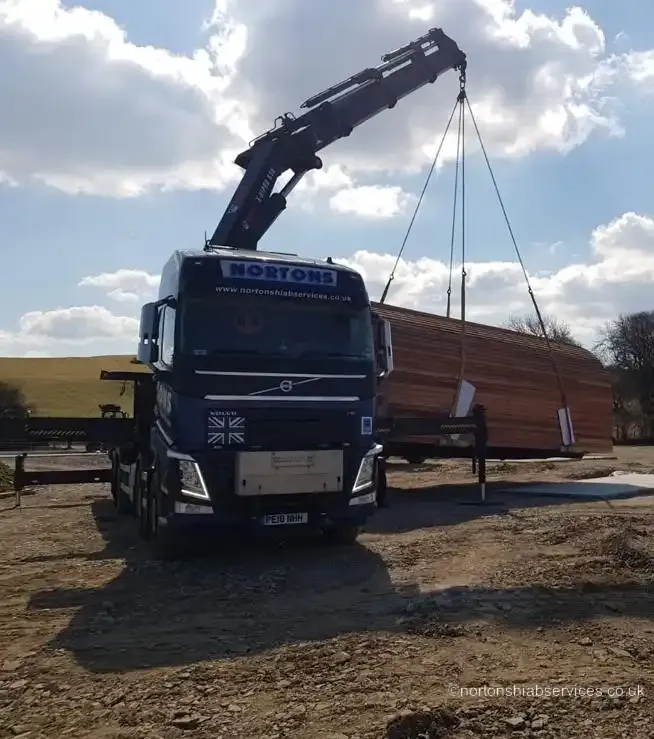
Strapped rather than chained, because the finish is the product. Corners protected before anything is tensioned.
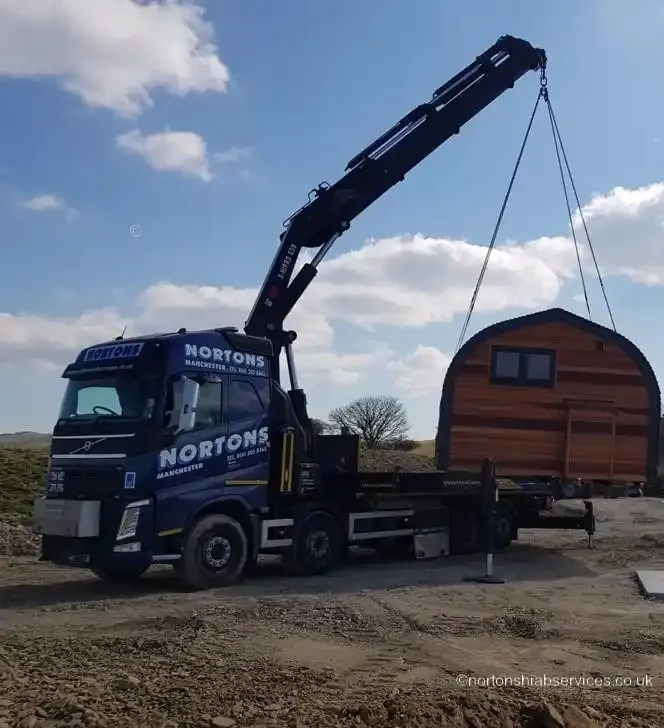
Set down on the prepared base, checked level and released. The base has to be ready and cured — a pod landed on a base that is not is a pod that gets lifted twice.
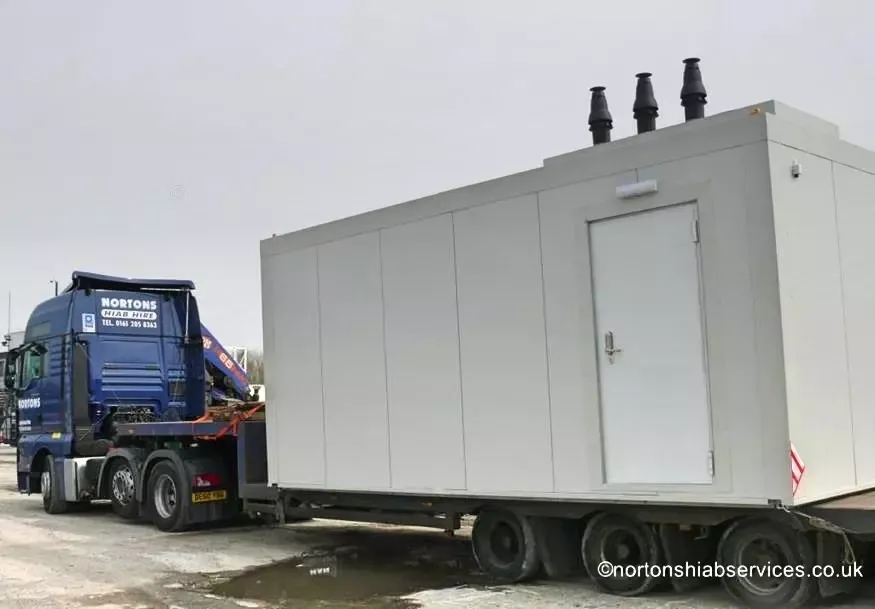
Timber units delivered to holiday and campsite locations, often on ground that decides the standing position rather than the other way round.
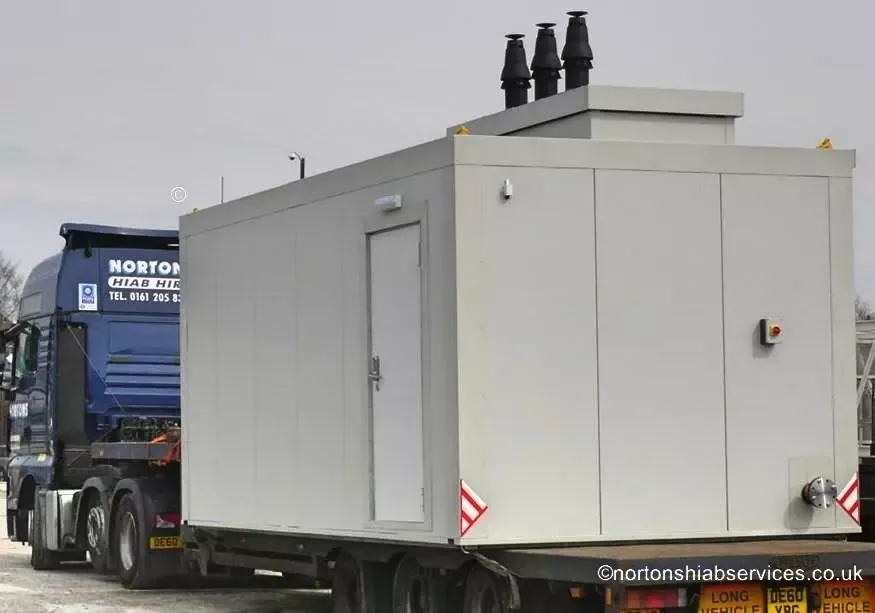
The lift itself is usually the quickest part of the day. Getting the vehicle into the right place is what takes the planning.
Landed square, levelled and released, ready for the fit-out crew to connect and finish.
Different names, one job: a finished building that has to arrive undamaged and land level on a base somebody else prepared.
Camping pods and hobbit-style units for holiday parks and campsites, usually delivered several at a time to a phased site opening.
Timber-clad units, often on skids or a steel sub-frame. Light for their size, which makes them easy to lift and easy to catch in a crosswind.
Pods delivered onto pitches at parks and campsites, where the standing is often well back from anywhere a lorry can get to. The most common single reason we are asked for long reach.
Fitted-out units carrying glazing and services. Handled once and landed level, because a twisted frame shows up in the doors.
Pod manufacturers tend to have the same problem every week: the unit is built, the customer is waiting, and nobody knows whether it can actually get onto the pitch.
On repeat contract work the same small group of driver / operators handles your product, which means the second delivery of a familiar unit is always quicker than the first — and the access question gets answered by someone who has seen fifty of them.
We also hold units at our seven-acre CCTV-monitored yard in Miles Platting between build and delivery, which takes finished stock off a factory floor that needs the space.
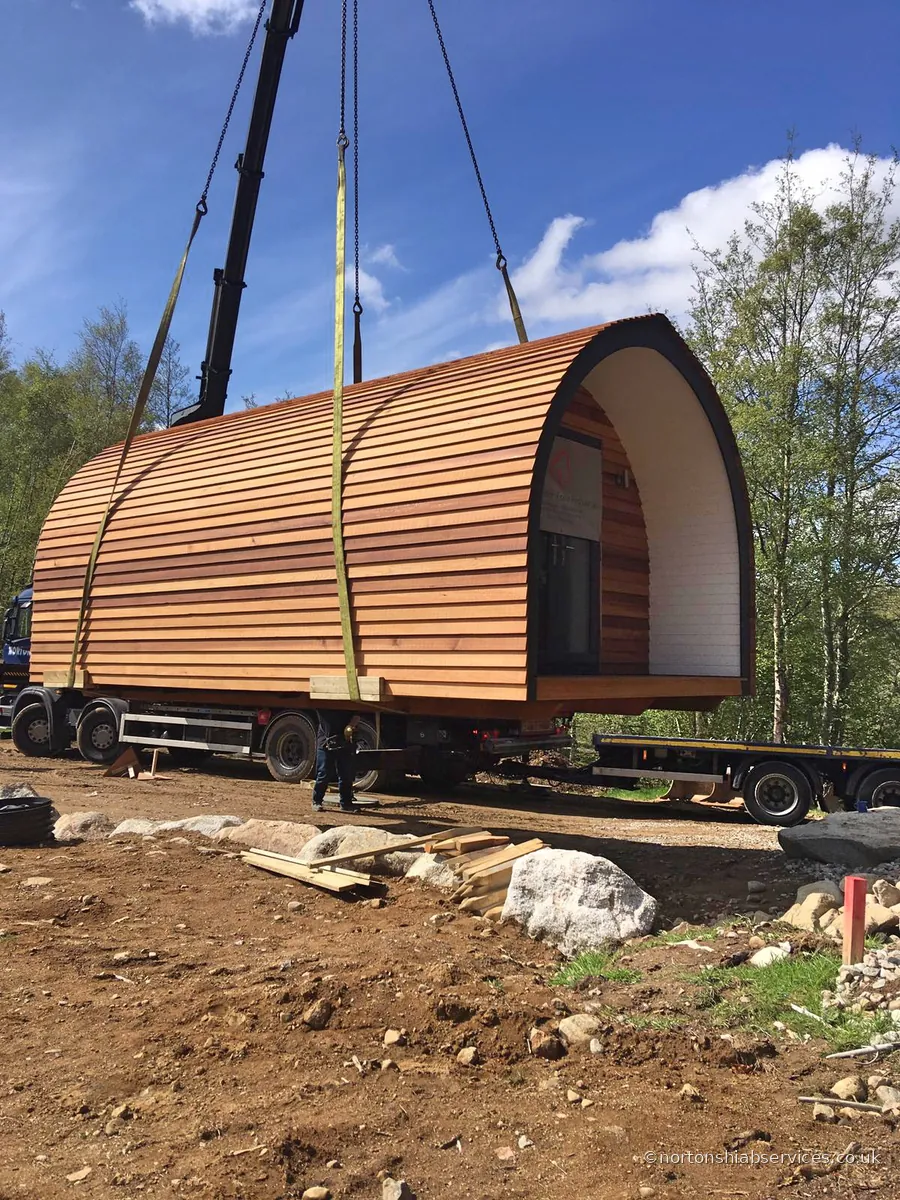
Slings set to the unit's own lifting points where it has them, and to a spreader where it does not.
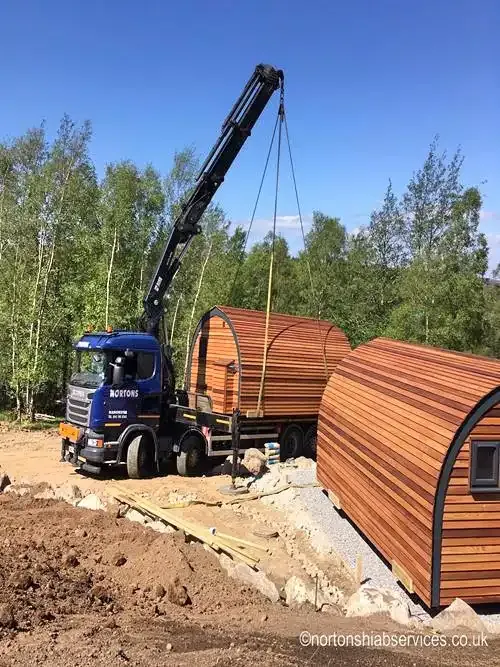
The last few centimetres done slowly, by tag line, with the driver / operator looking at the base rather than the boom.
A glazed garden room is light for its size and completely unforgiving. It will not tolerate being nudged, twisted or set down on anything that is not flat, so most of the care goes in before the crane is ever used.
It travels on the bed of the vehicle that lifts it, which means one loading and one unloading rather than a transfer in between. Every transfer is a chance to damage something that cannot be repaired on site.
At the far end the questions are the ordinary ones: where can the lorry stand, what is between it and the base, and is the base actually level and cured. Tell us those and we will tell you whether it is a job for us.
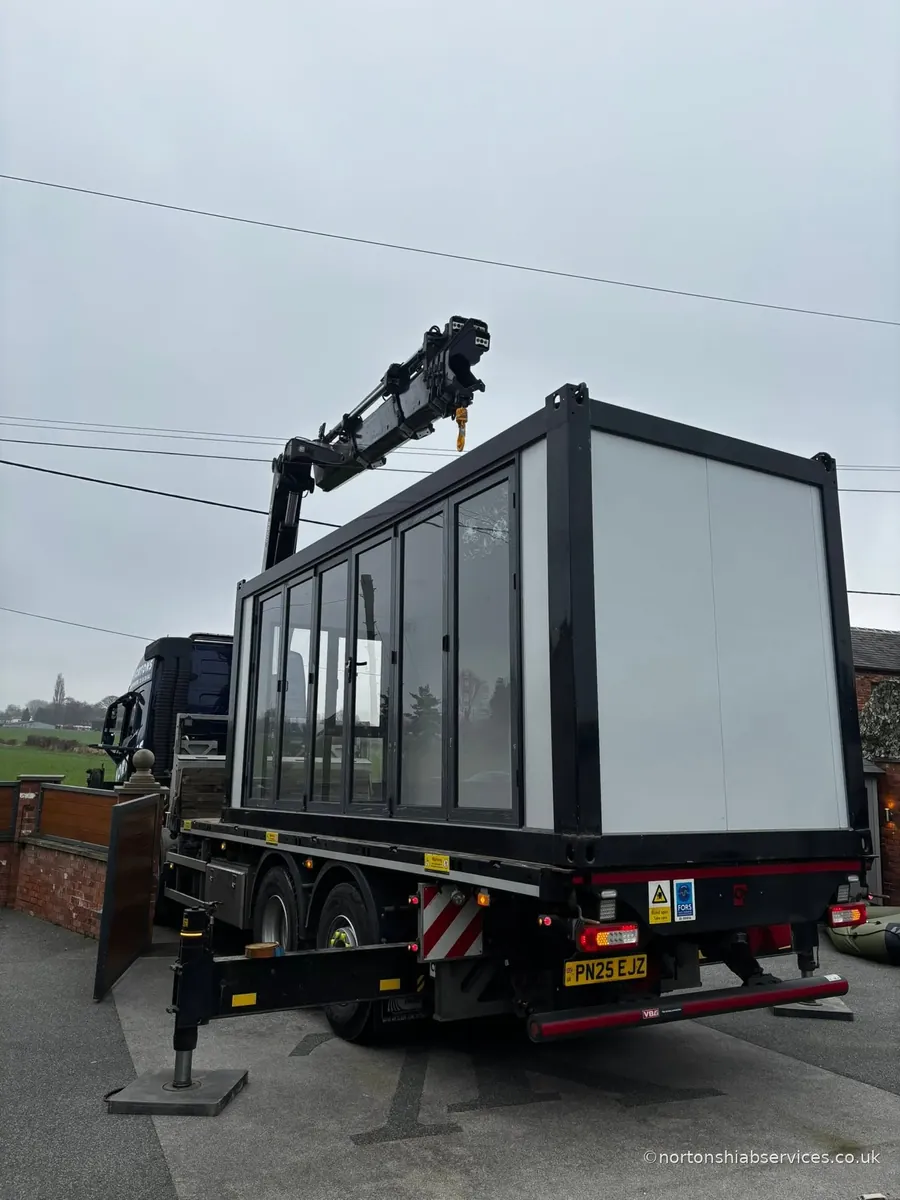
That is the usual job. The lorry stands on the road or the driveway, the crane lifts the pod in over the fence or the boundary wall, and it lands on the prepared base. The limiting factor is almost never the crane — it is whether the lorry can stand close enough and get its stabiliser legs down safely.
Tell us where the lorry would have to park, how far it is from there to the base, and what is in between — a fence line, a boundary wall, overhead cables, soft ground. With those and the pod's weight and size we can answer most enquiries without anyone travelling. If it is borderline, we come and look before you commit.
Our furthest-reaching crane has 19.6 metres of hydraulic outreach and 22.1 metres of lifting height. What it will lift at that distance is 2,900 kg — comfortably more than a glamping pod weighs, but it is the number to check rather than assume. All the charts are published.
Yes, both as one-off deliveries and on repeat contract work. Manufacturers tend to value the same driver / operators coming back, because the second visit to a similar product is always faster than the first.
A wagon and drag gives two beds served by one crane, which suits a pair of pods and is how most of them travel. The larger lodge-sized pods go one to a vehicle, because width, not weight, is what runs out first.
We land the unit on the base you have prepared, level it and release it. We do not lay bases. The base needs to be ready, level and cured before the delivery date; a pod landed on a base that is not ready has to be lifted twice.
Tell us where it has to end up and what the site is like. We will tell you yes, no, or come and look.





ALLMI trained driver / operators · RAMS, method statements and lift plans · Euro VI clean air zone compliant fleet, renewed by continual investment in new wagons · All our accreditations