Helicopter transport
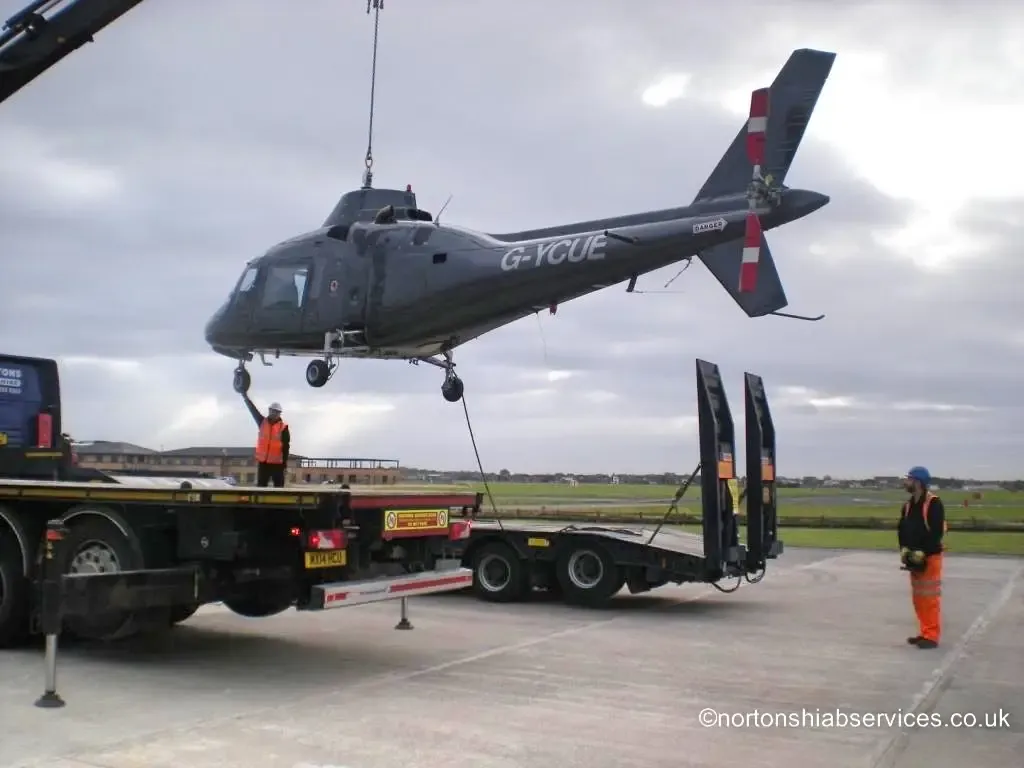
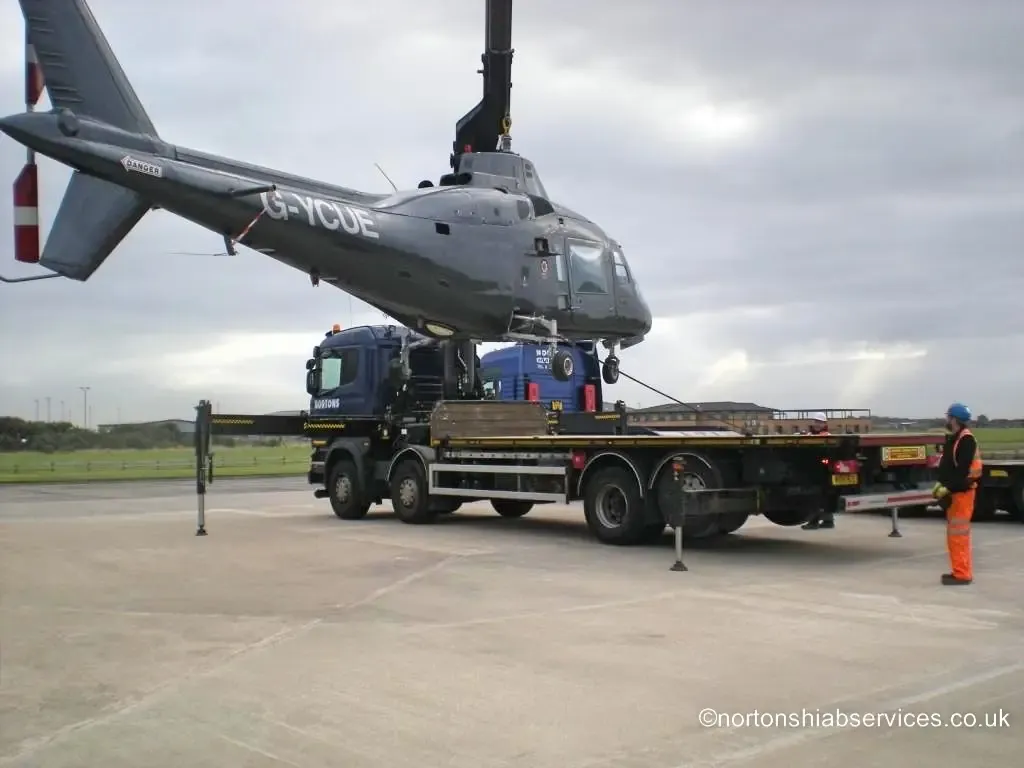
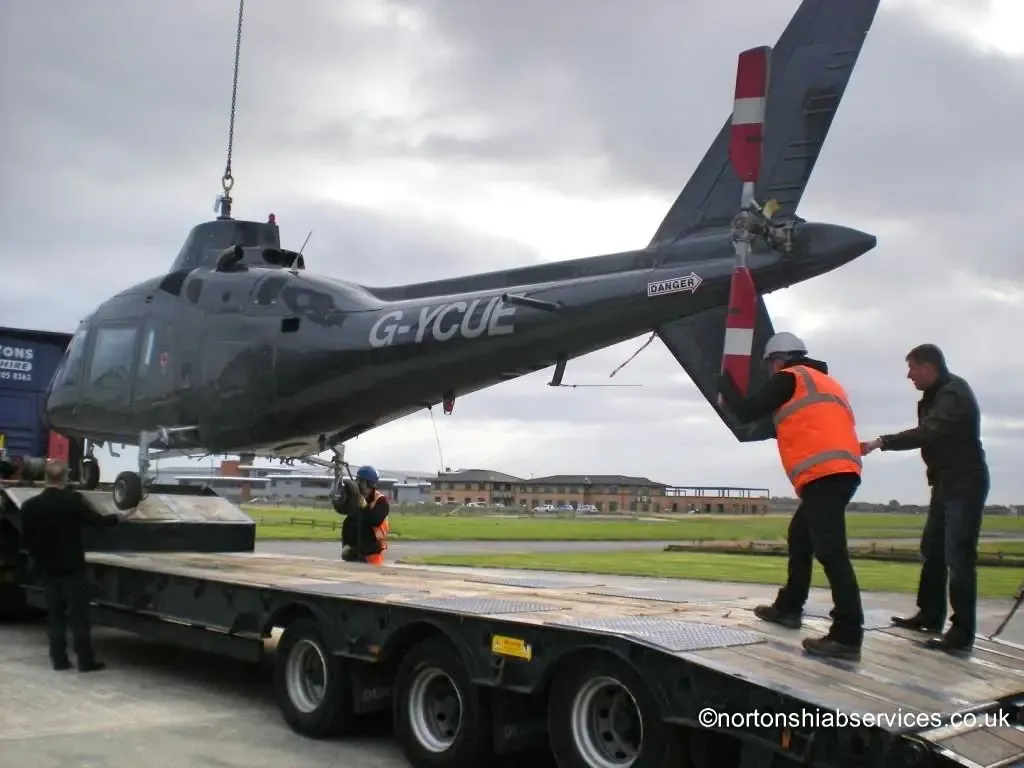
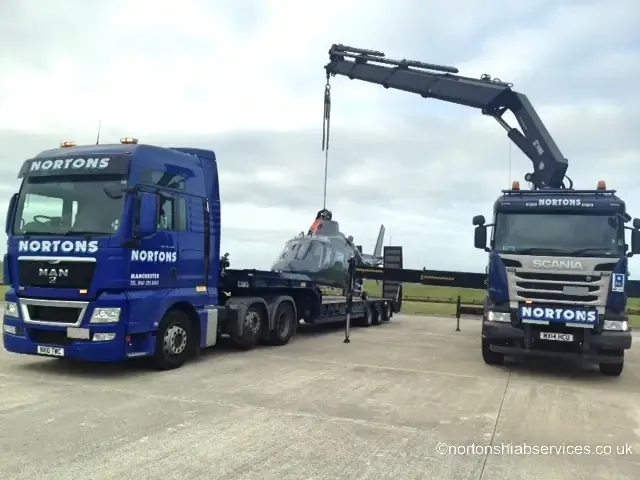
Blades off and crated, airframe lifted onto the trailer by truck-mounted crane, both delivered to Manchester on the same movement. One attempt, no second go.
One helicopter, Blackpool to Manchester
In October 2015 Nortons collected an Agusta A109 helicopter from Blackpool Airport and delivered it to Manchester. The main rotor blades were detached before we lifted and travelled crated in two boxes on the same movement.
That is the whole record, and it is deliberately all of it. The date, the two ends of the journey, the weight and the two crates are what the job sheet says. We have not filled in the rest from memory eleven years later.
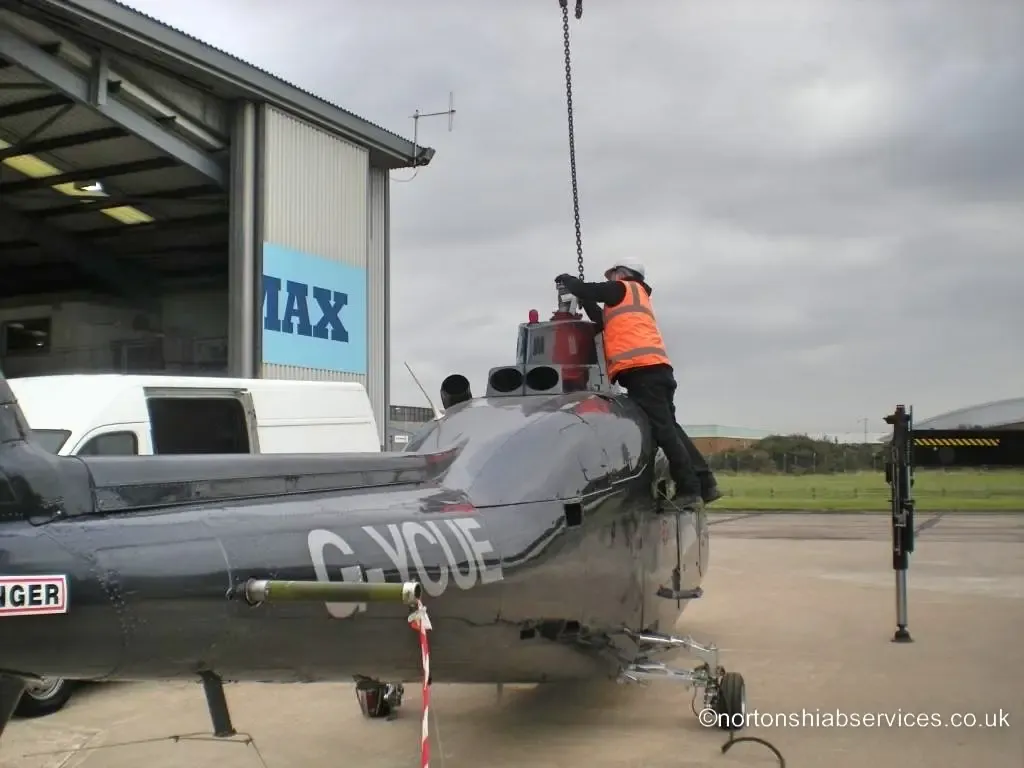
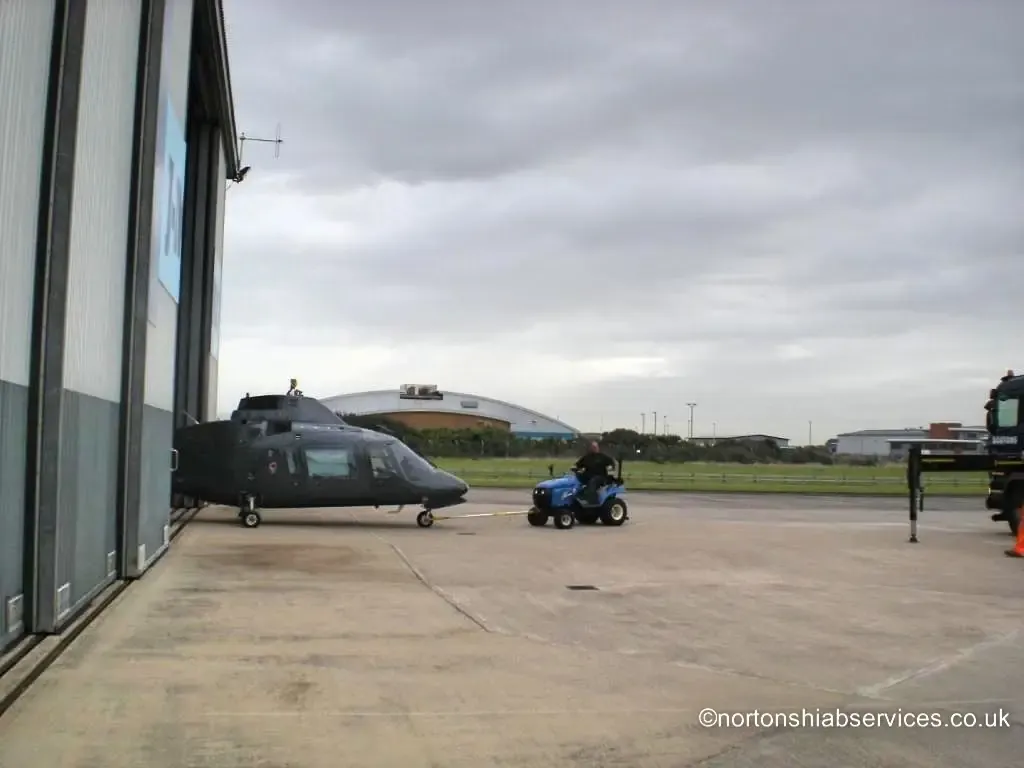
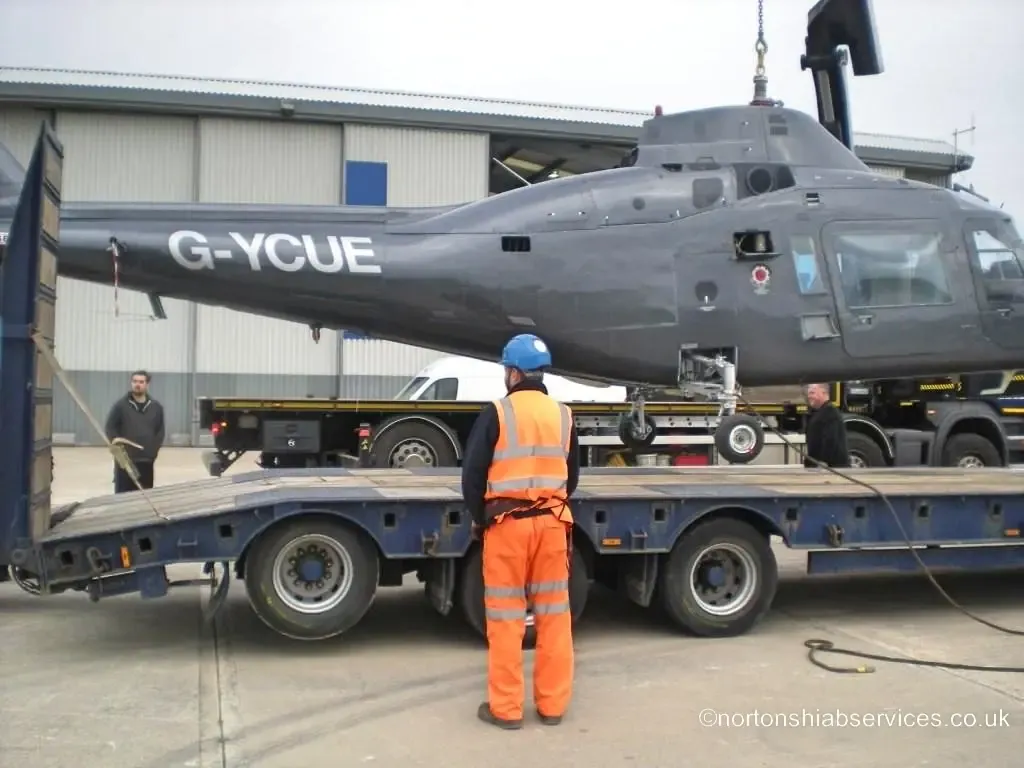
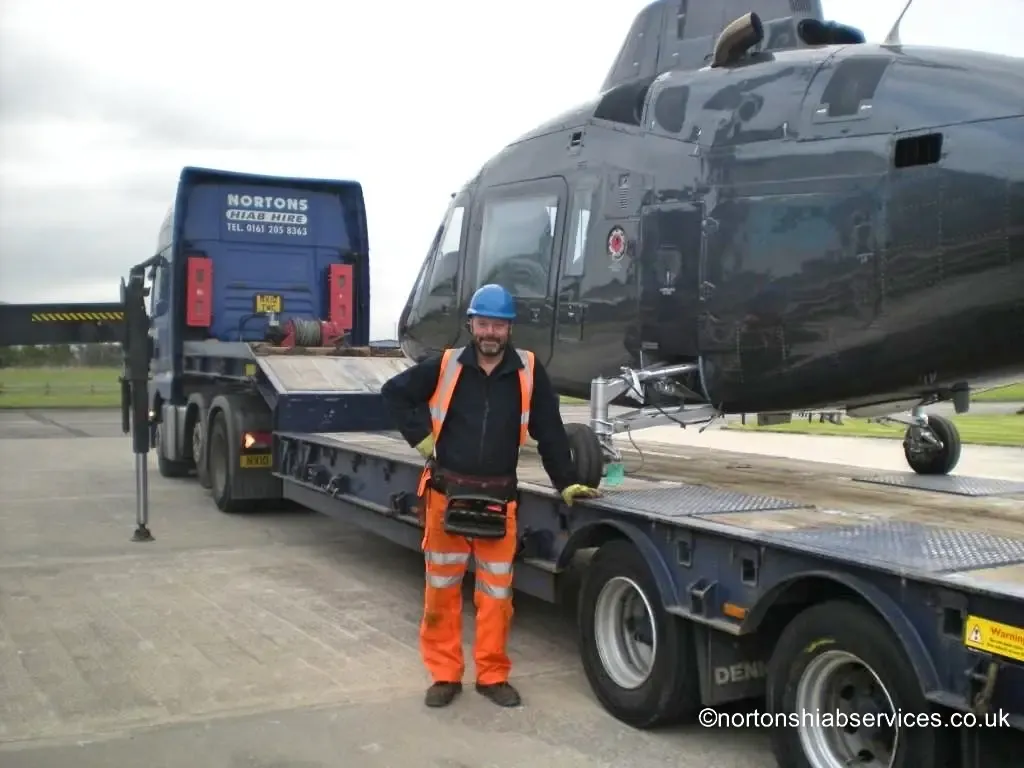
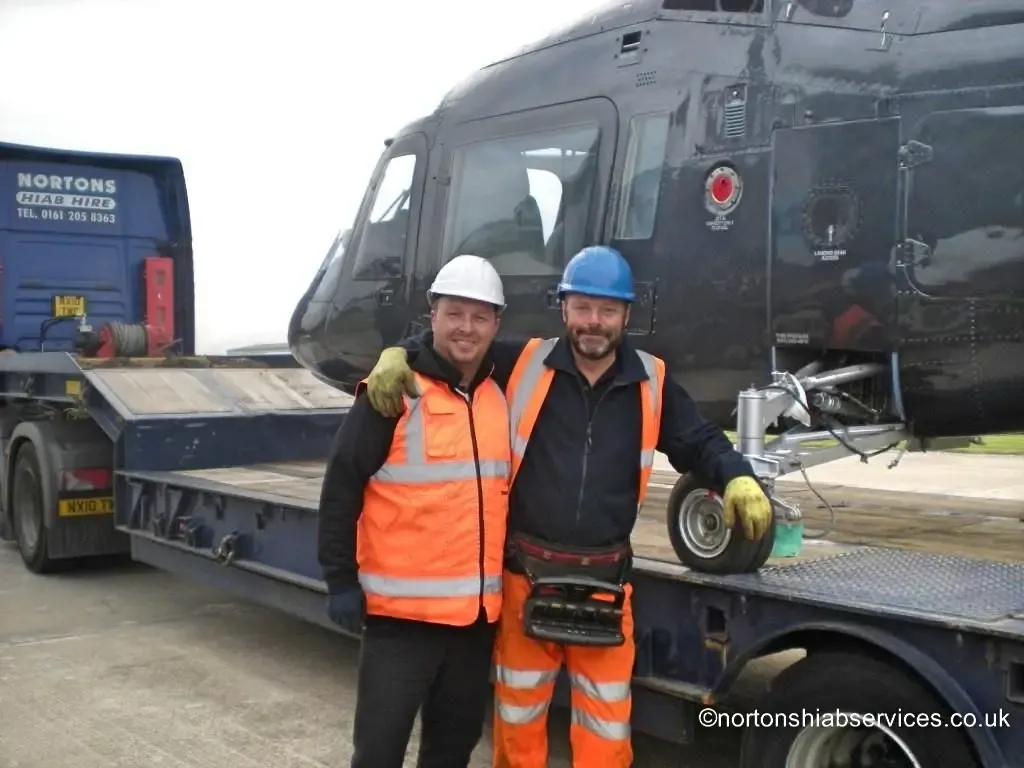
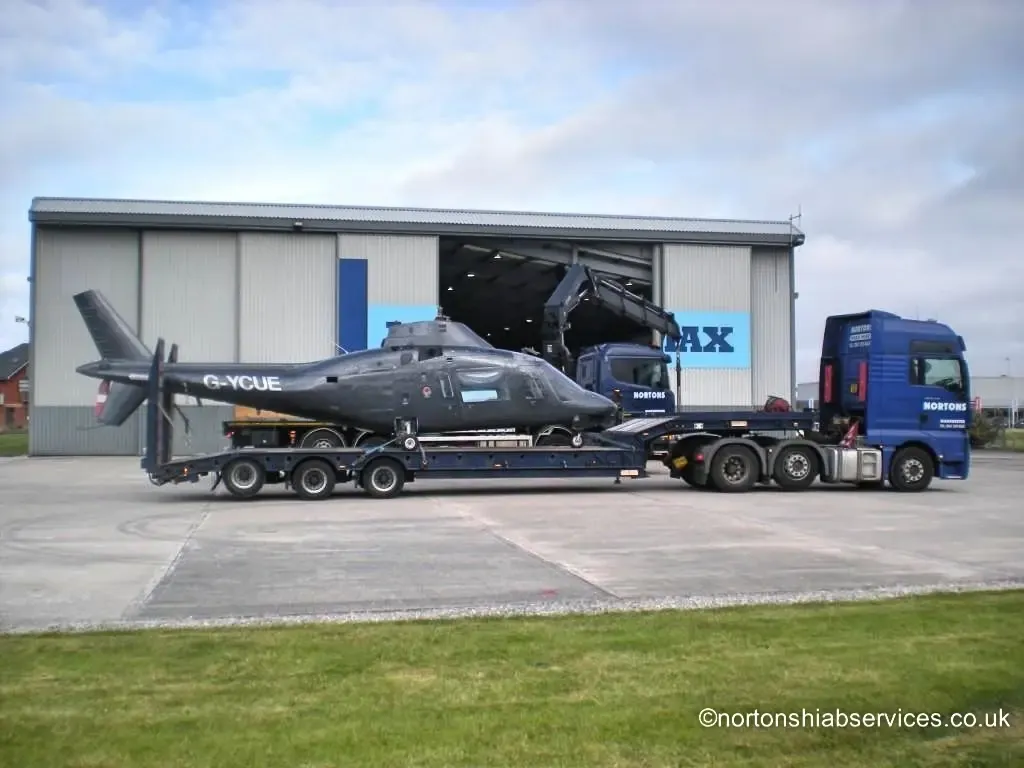
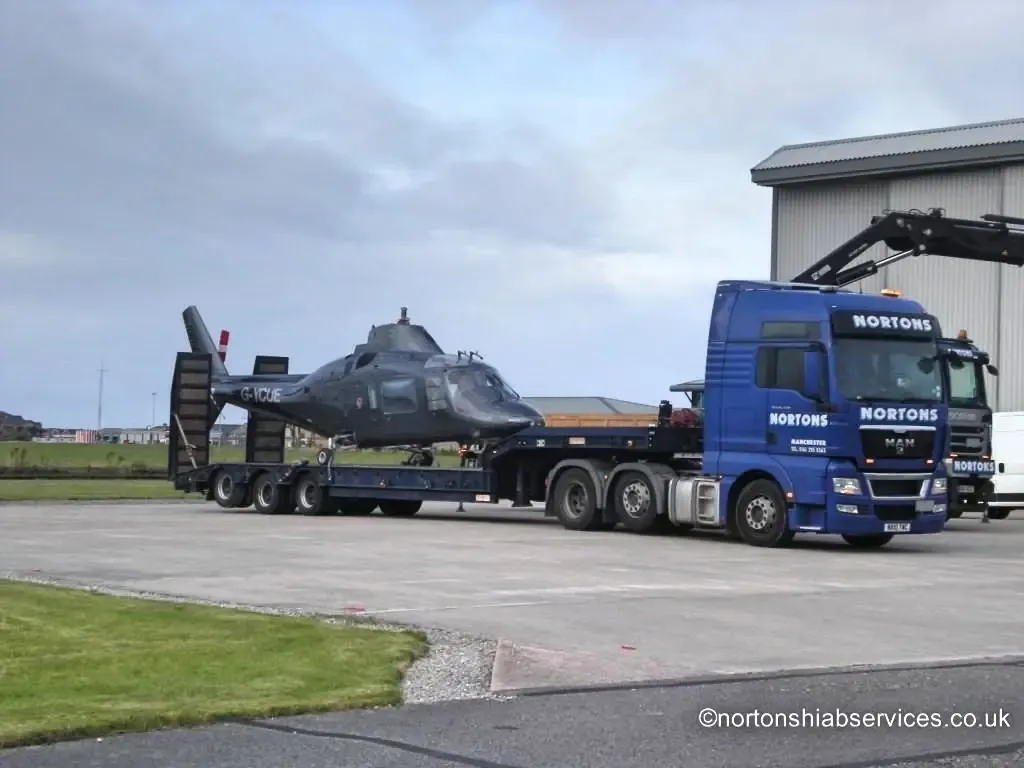
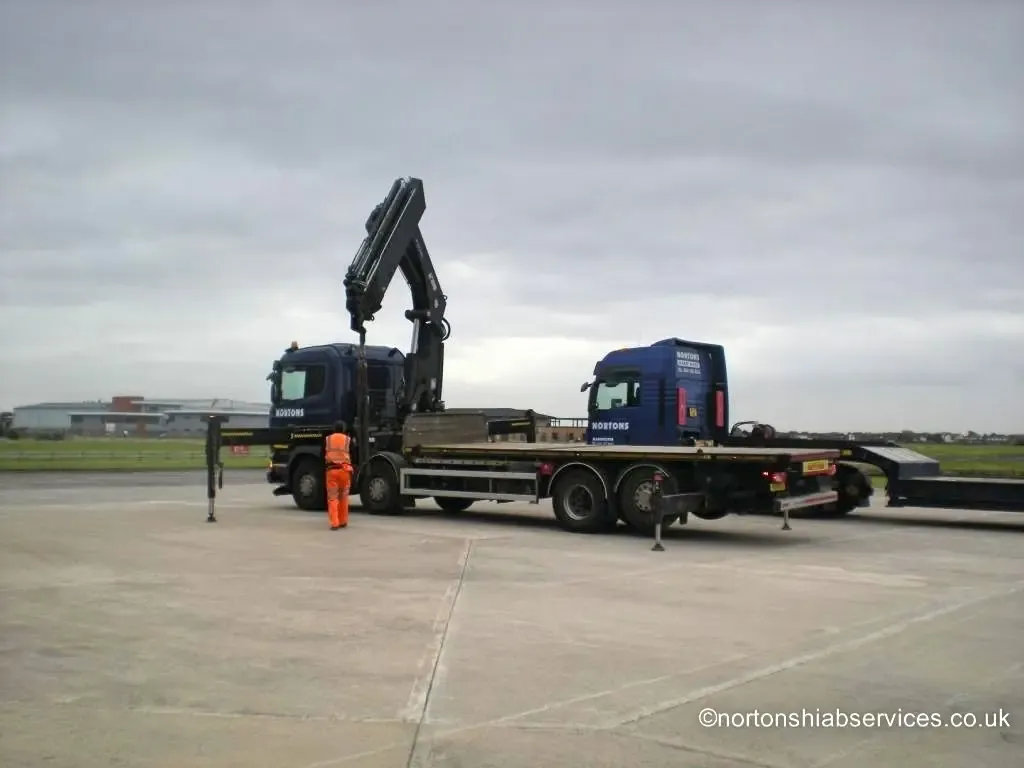
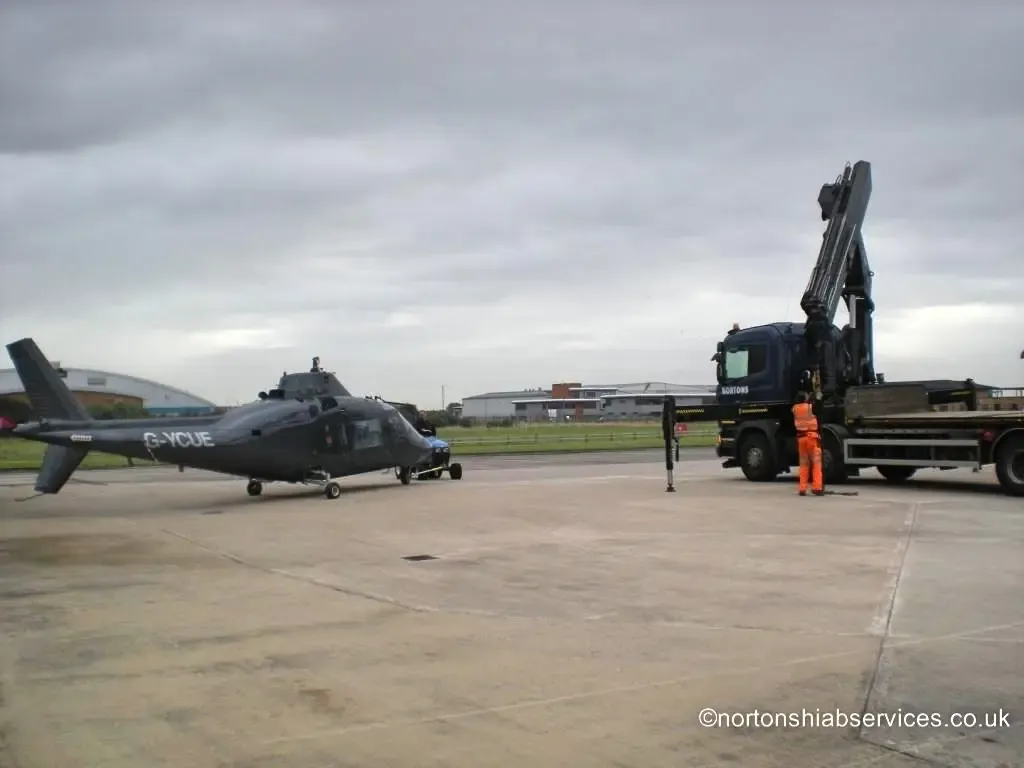
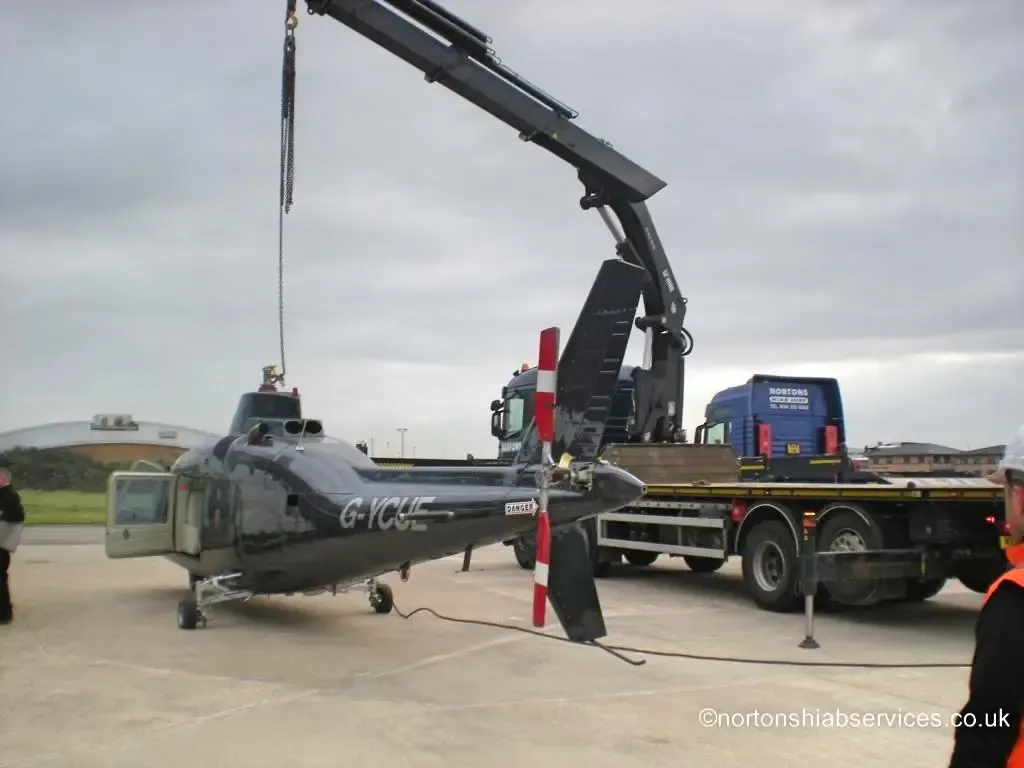
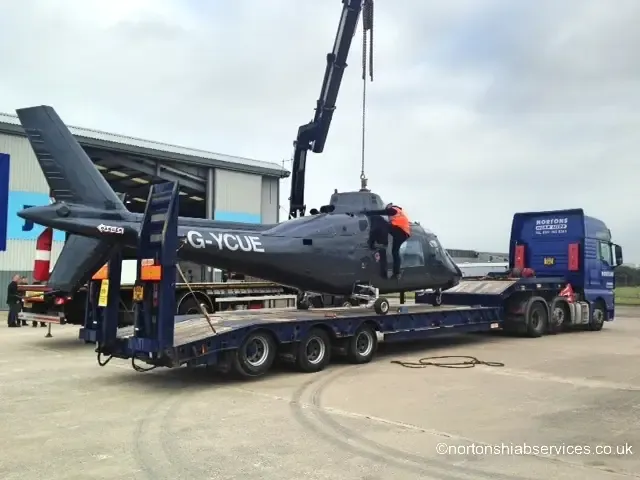
What the photographs show is the part that matters to anyone thinking about a similar move: the aircraft standing on the apron with the blades already off, the strops on, the airframe lifted clear, and the same airframe set down and strapped on the trailer with the crates beside it.
The whole movement
Every photograph on this page is from the one job. Click any of them to open it full size — arrow keys or a swipe move through the set, Escape closes it.
What we need from you
- The type, and the airframe weight with the blades off
- The lifting points, from the manufacturer or your engineer
- Who is removing and refitting the blades, and when they can do it
- Both addresses, and whether either end is airside
- Your contact at the airfield, because access takes longer to arrange than the lift
- Whether the blades need crating or are already crated
The lift, in order
Four stages, and the photographs at the top of this page run in the same order they happened.
Made ready by somebody else
Licensed engineers remove the main rotor blades and confirm the airframe is fit to lift and where it may be lifted from. We do not touch that part and we do not start until it is signed off.
Strops on the designed points
An airframe has a small number of points that will take a load and a great deal of light structure that will not. Those points are agreed before the vehicle leaves the yard.
Lifted clear and held
The crane takes the weight, the aircraft comes up slowly and is steadied, and the trailer is positioned underneath rather than the aircraft being swung across to it.
Set down and strapped
Lowered onto the deck, packed so nothing bears on the skin or the gear, strapped for the road with the crated blades alongside. The same sequence in reverse at the Manchester end.
The weight was never the hard part. An airframe with its blades off is well inside what any of our cranes will pick up. Aircraft work is difficult because the load is fragile, oddly balanced, worth a great deal and completely unforgiving of a second attempt — which is why the planning takes longer than the lift.
The rest of the awkward end of the job list
Aircraft movements sit alongside the other loads that will not go on a normal wagon. Abnormal loads covers the notification and movement order side, plant and machinery transport the tracked and wheeled end, and low loader hire the trailers that carry the tall ones. The portfolio has a decade of dated jobs in it, and there are more one-offs on the photographs page.
Moving an aircraft by road, answered
Can a helicopter be moved by road?
Yes, and it is more common than people expect. The main rotor blades come off and travel crated, the airframe is lifted onto a low trailer, and the whole thing runs as an out-of-gauge load. We did exactly that in October 2015, collecting from Blackpool Airport and delivering to Manchester with two crates of blades alongside the airframe.
Do the rotor blades have to come off?
Almost always. Blades make the load far too wide for a road journey and they are the most easily damaged part of the aircraft. On the Blackpool job they were detached before we lifted, crated, and carried on the same movement so that everything arrived together.
Who removes and refits the blades?
Licensed aircraft engineers, not us. We are the haulier. Our part starts when the airframe is ready to lift and ends when it is set down at the other end. We work to the engineer’s instructions on lifting points and handling, and we would refuse a lift that was not signed off by somebody qualified to say the aircraft was ready.
Where do you lift it from?
Only from the points the aircraft manufacturer and the attending engineer specify. An airframe is not a crate — it has a small number of designed lifting points and a great deal of light structure that will not take a strop. That is agreed before the vehicle leaves our yard, not worked out on the apron.
How heavy was it?
An airframe with its blades off is well inside what our cranes lift, and the Blackpool machine was no exception. The difficulty in aircraft work is almost never the weight. It is the shape, the fragility, and the fact that you only get one attempt at it.
Can you get on to an airfield?
Airside access is arranged through the airport or operator, and it takes longer to organise than the lift itself. Passes, escorts, timing windows and driver details are usually needed in advance. Give us as much notice as you can and tell us who your contact at the field is.
What else in this line do you move?
Anything awkward, valuable and out of gauge — plant, machinery, one-off fabrications, structures, and loads that are too wide or too long for an ordinary lane. The reason aircraft work sits with us is the same reason abnormal loads do: it needs a crane on the vehicle, the movement orders arranged in advance and a driver who has done it before.
Tell us what it is and where it has to go
We will tell you what the move needs and what we would want agreed in writing before the day.