Arrive and assess
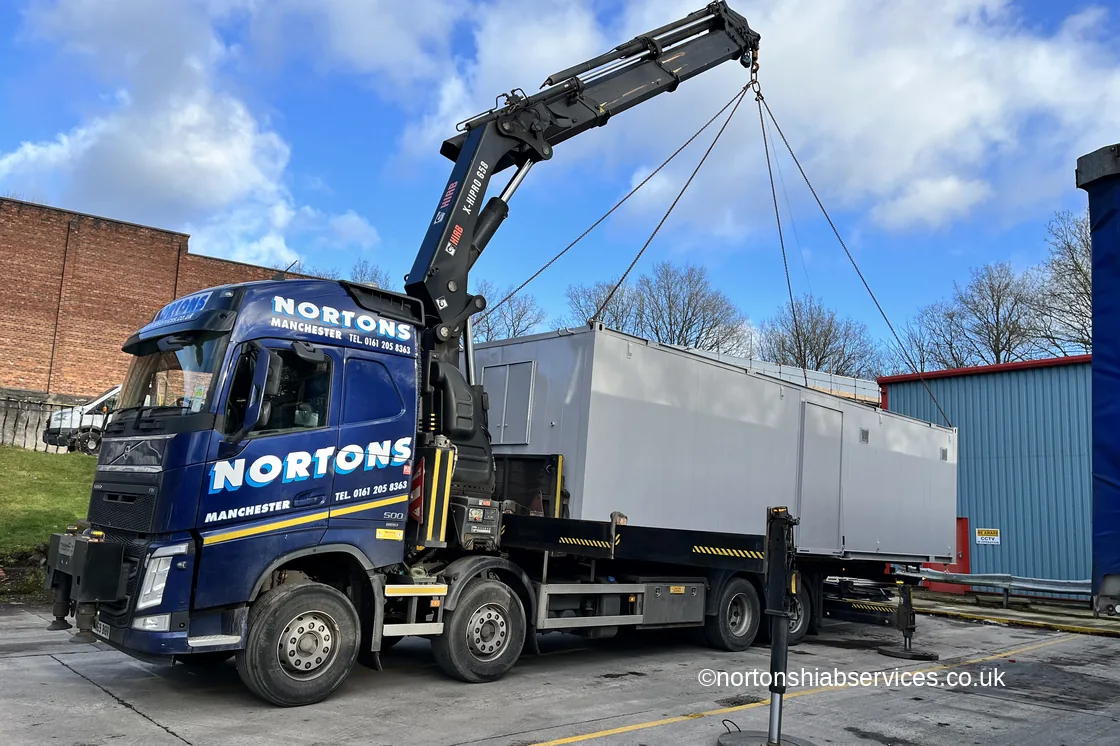
The driver / operator checks where the lorry can stand, what the ground is under the outriggers and what is overhead before anything is unstrapped.
Site cabins, welfare units, anti-vandal units and modular buildings moved across the UK — and placed exactly where they have to go, not left at the gate.
Anyone can carry a cabin. The job is getting it off one base and onto another — and that is what a crane on the lorry is for.
Book a flatbed and you still need lifting at both ends, which means a crane hire at the collection point, a crane hire at the delivery point, and two sets of people standing around waiting for each other.
Our crane travels with the unit. It lifts the cabin off its blocks, the cabin rides on the same vehicle, and the same crane sets it down and levels it at the far end. One booking, one visit, one invoice.
It also means the unit only gets handled twice. Every extra lift is an extra chance to damage a corner, twist a frame or crack a window.
The driver / operator checks where the lorry can stand, what the ground is under the outriggers and what is overhead before anything is unstrapped.
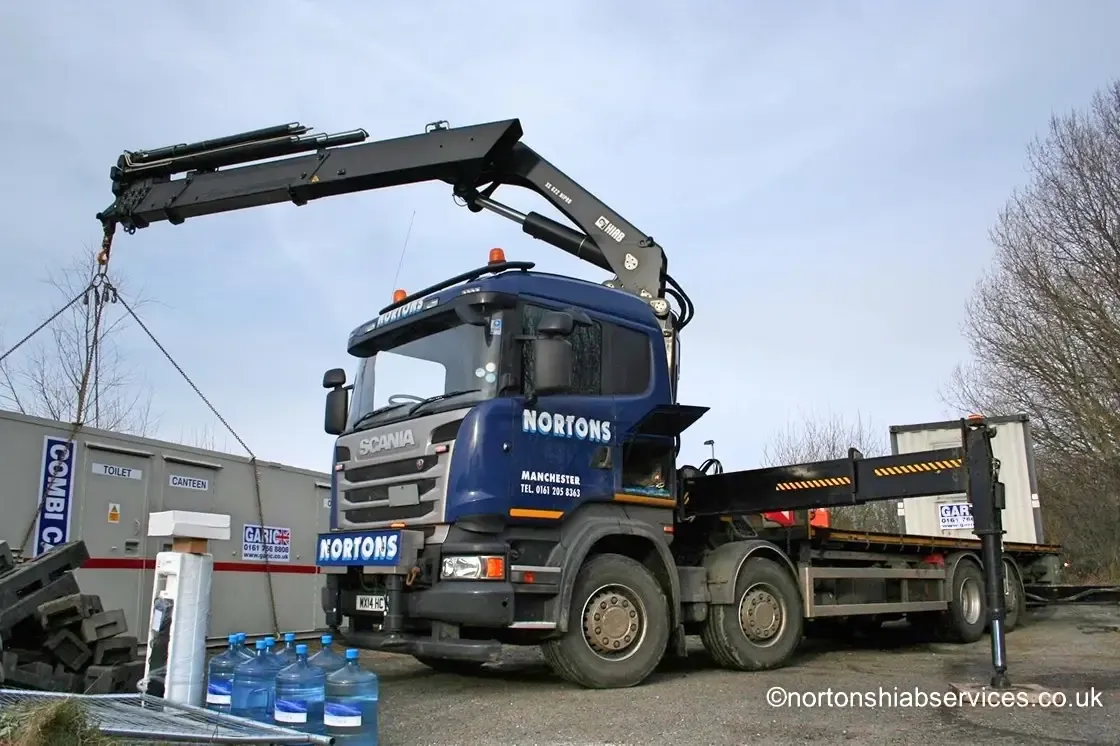
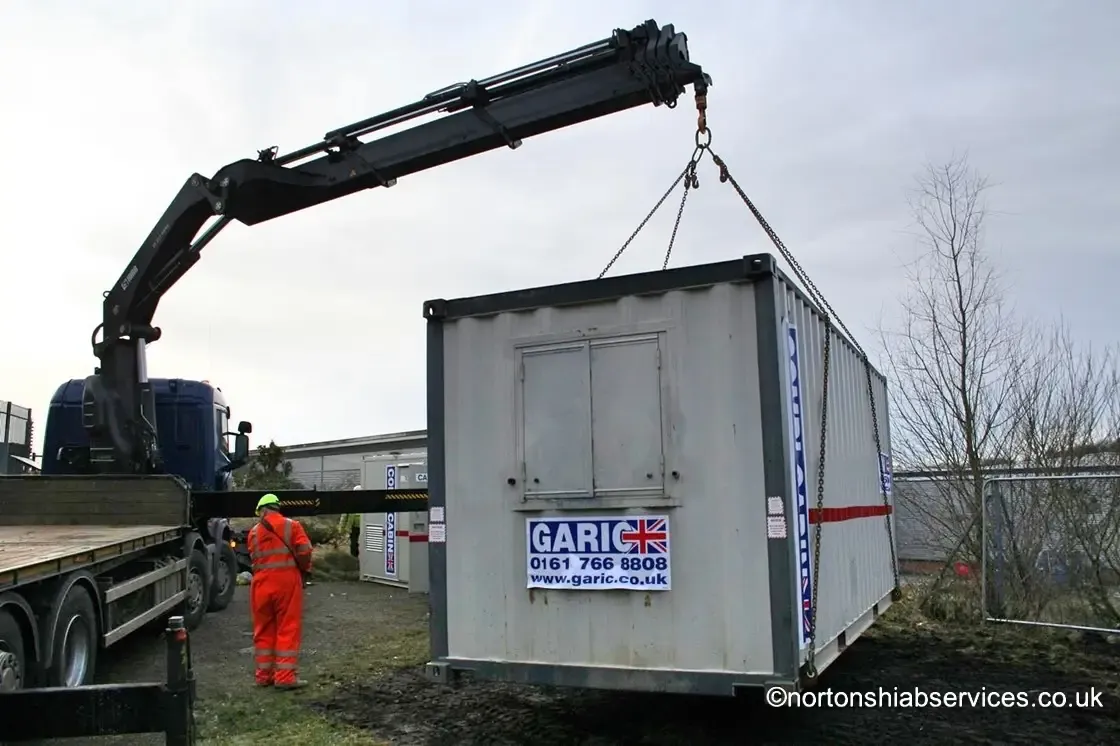
The unit comes off the deck under remote control, with the driver / operator standing where they can see the landing point rather than the crane.
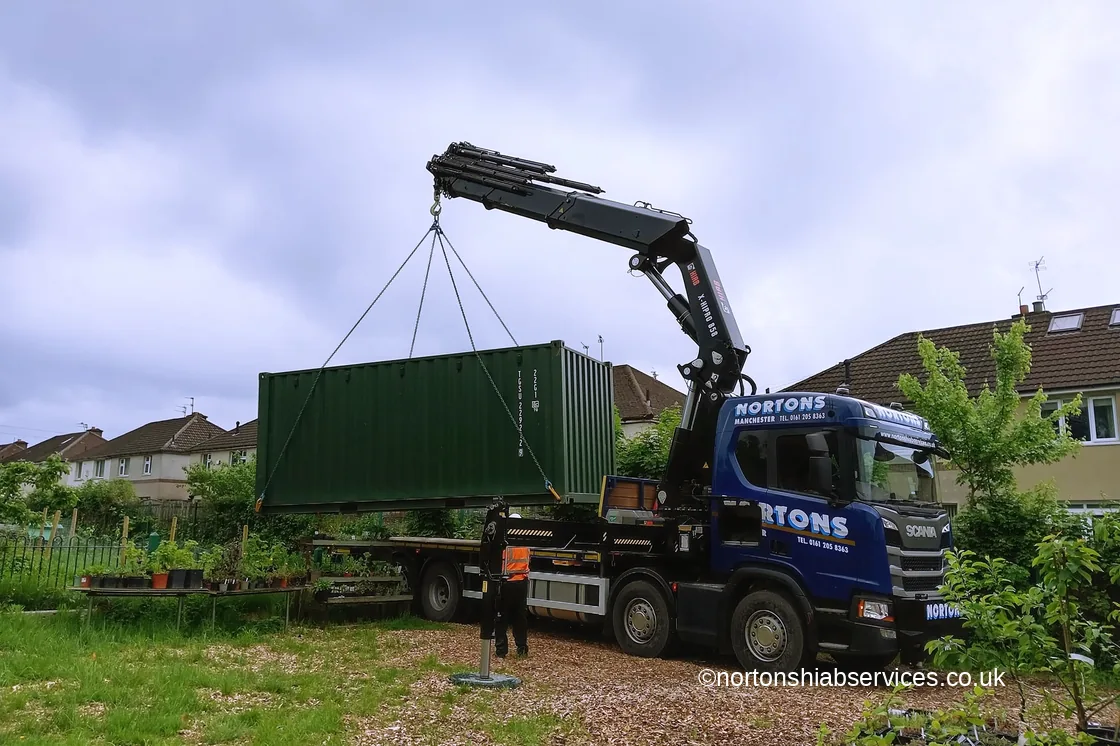
Set down on blocks or a prepared base, checked level, and released. A unit that is landed level does not need to be lifted again next week.
The names differ by supplier and by trade. What decides the vehicle is the size, the weight and how far the crane has to reach to land it.
Standard site accommodation from small stores up to 40ft by 10ft. The most common single item we carry and the one our wagon and drag units were bought for.
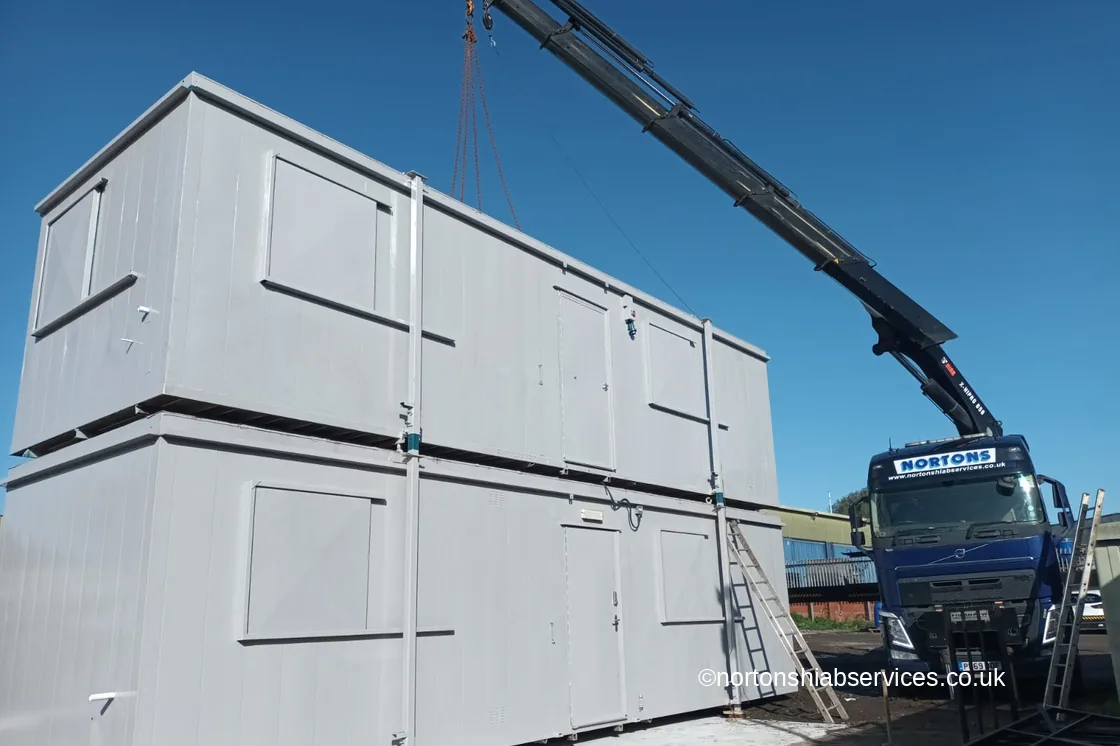
Steel-clad units with shuttered openings. Heavier than they look for their size, which is exactly why the radius question matters before the vehicle is allocated.
Towable and static welfare, canteens and drying rooms. Often needed on site the same week, so they tend to move at short notice.
Multi-module buildings delivered section by section in the order the installers want them, rather than in the order they came off the yard.
Units on jack legs need lifting off the legs cleanly and landing square. Straightforward with a lift plan, awkward without one.
Small, heavy and usually in the most awkward corner of the site. Frequently the reason a long reach vehicle is sent rather than the nearest one.
Most cabin work is not a first delivery. It is a unit coming off one site and going onto another, often the same day.
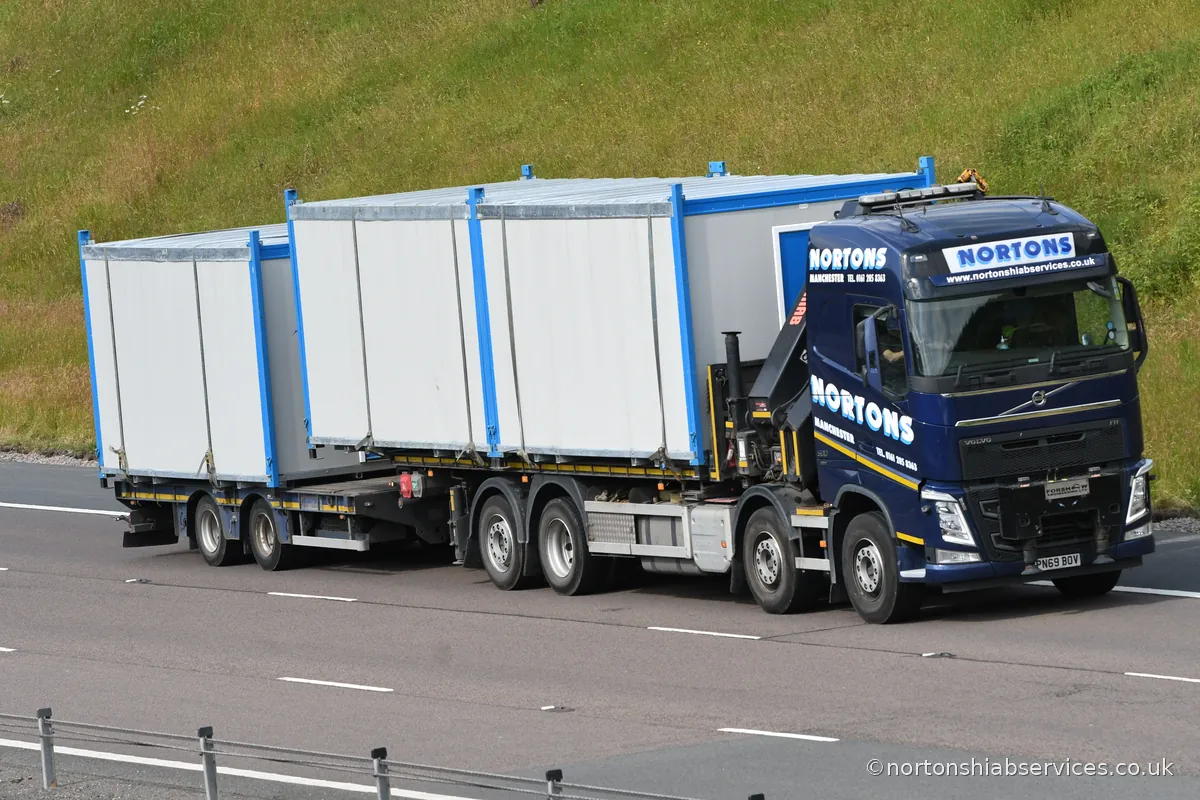
Off the blocks at one compound, onto the base at the next. The unit is handled twice in total, which is as few times as it can be.
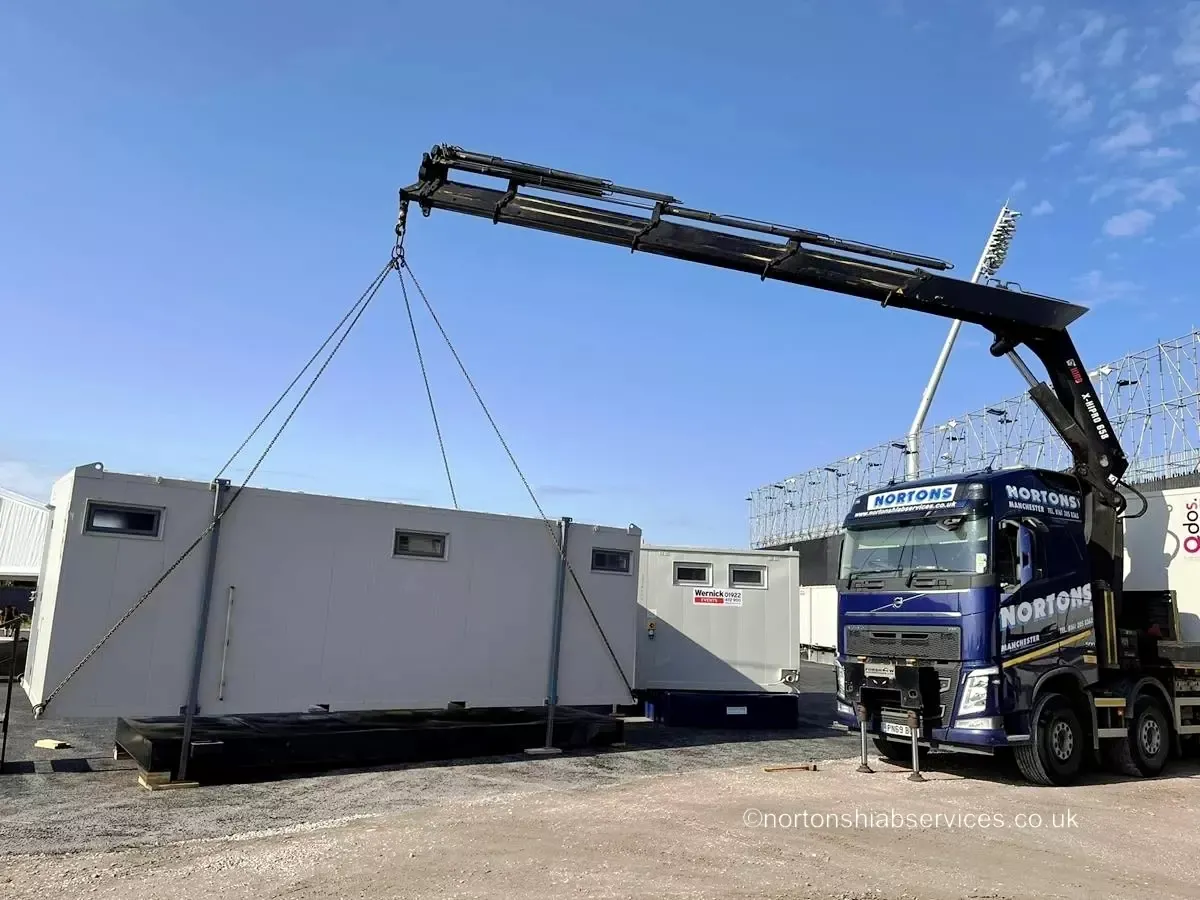
Sometimes a unit only needs moving twenty metres — off a base being re-laid, or round to the other side of a compound. That is a lift, not a haulage job.
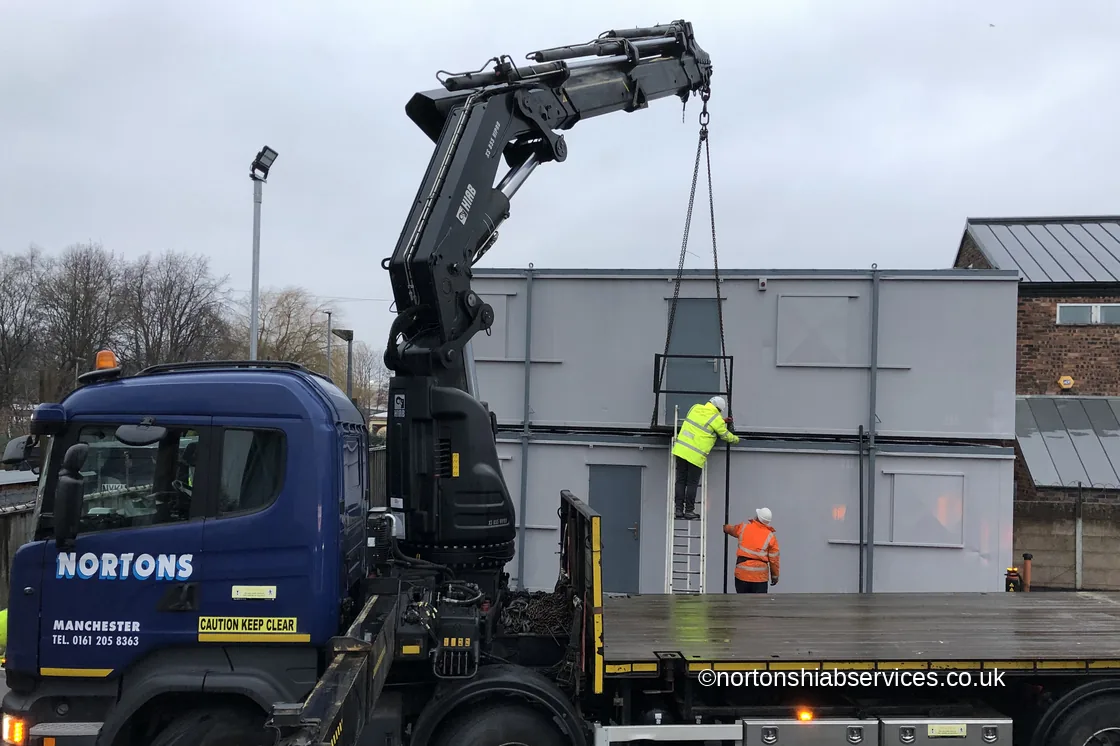
A 32ft by 10ft anti-vandal unit delivered and placed. Big, heavy and entirely routine for the right vehicle at the right radius.
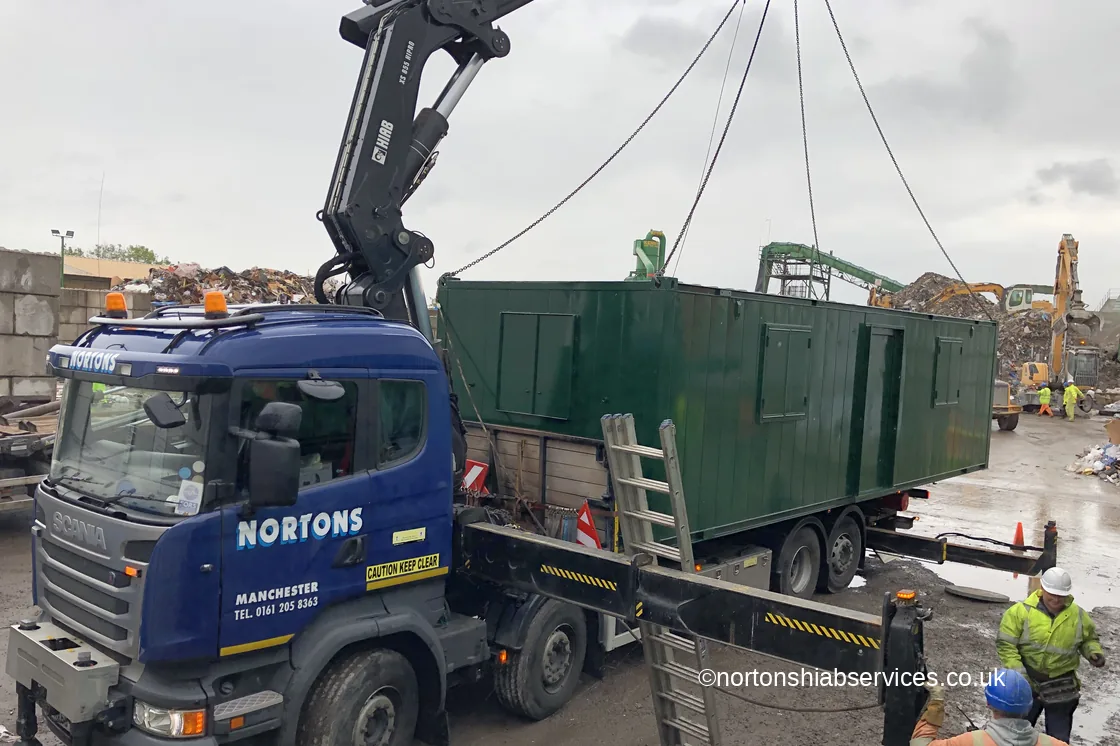
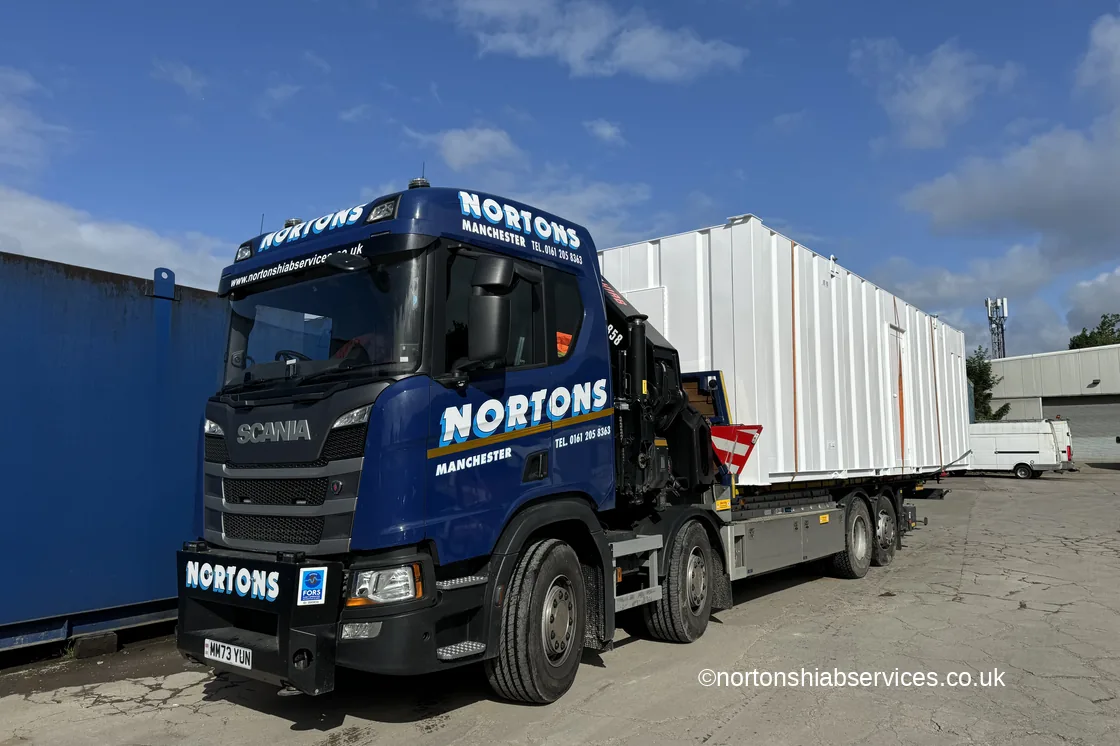
A wagon and drag is a rigid eight-wheeler with a 20ft draw-bar trailer behind it and a 658 crane on the wagon. Both beds carry a unit, and the one crane loads and unloads both.
For cabin work that halves the journeys on any multi-unit move. It also means the two halves can be split on site, so the wagon can go into a compound a full sixteen-metre outfit could never enter, drop its unit, and come back for the trailer.
It is the single most useful type of lorry we own for cabin and modular work, which is why we run several of them.
Nortons Hiab Services moves cabins. Our sister company holds the stock, refurbishes units and sells them, and it is the right place to start if you are buying rather than relocating.
If you need both — a unit bought and delivered to site, placed and levelled — either company can set the whole thing up as one job.
Used cabin sales · Container transport · Storage between moves
Yes. Relocation is most of what we do with cabins. The crane on the lorry lifts the unit off its existing base, it travels on the same vehicle, and the same crane sets it down on the new one. There is no separate crane to hire at either end and no waiting between the two halves of the job.
From small stores up to 40ft by 10ft anti-vandal units, and jack-leg and modular units of similar size. Weight matters more than length: the crane has to lift the unit at the radius where it has to land, so the distance from the lorry to the base is the number that decides which vehicle comes.
Yes, and we do it regularly for site set-ups. Stacking needs the base unit to be level and properly founded first, and it needs the second unit landed square rather than dragged into place. It is a lift plan job, not a delivery job, and we price it as one.
Sales are handled by our sister company Nortons Cabins, which holds the stock and the refurbishment side. Nortons Hiab Services moves them. If you need both, we can arrange it as one job.
Two on a wagon and drag, since the wagon bed and the draw-bar trailer both carry a unit and the same crane serves both. On a straight artic it is one full-size unit, sometimes two smaller ones. On a multi-unit site set-up we usually run a shuttle rather than a convoy.
Less than people expect. What the unit is, roughly, and where it has to end up. From there it is usually two or three questions about where a lorry can stand and what is between there and the cabin, and we will ask those ourselves. You do not need measurements or a weight to get a price.
A line about the unit and where it is going is usually enough for a price. If a photograph would help we will ask for one.





ALLMI trained driver / operators · RAMS, method statements and lift plans · Euro VI clean air zone compliant fleet, renewed by continual investment in new wagons · All our accreditations