Remote control operation
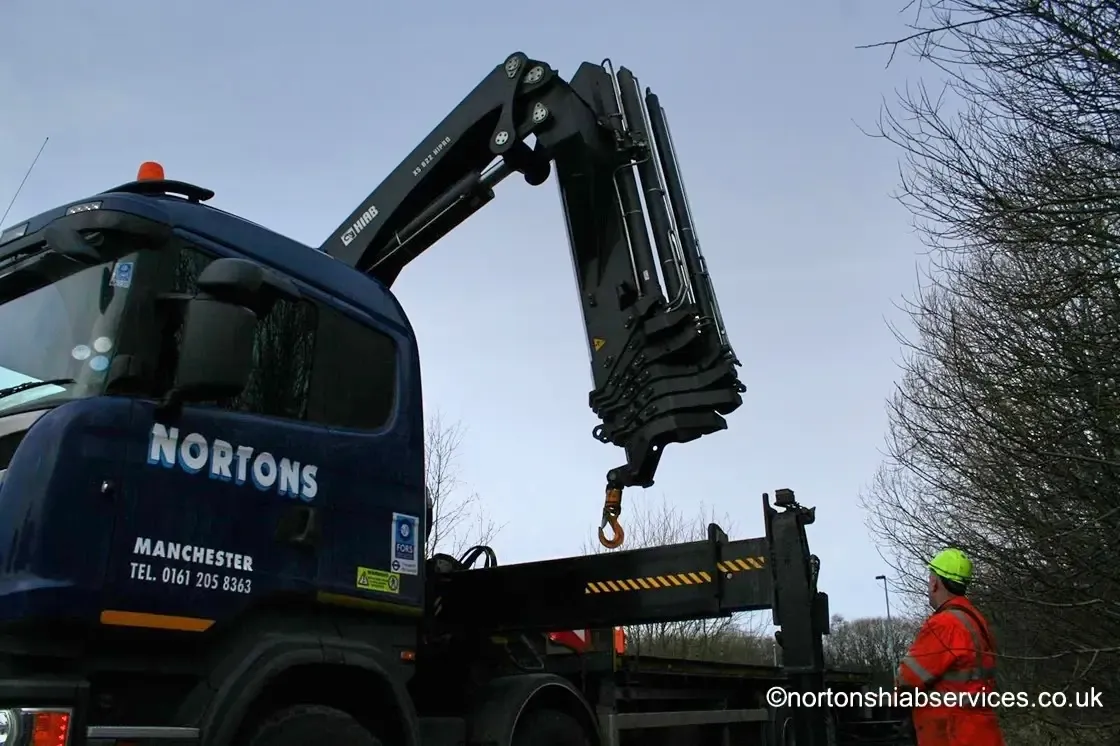
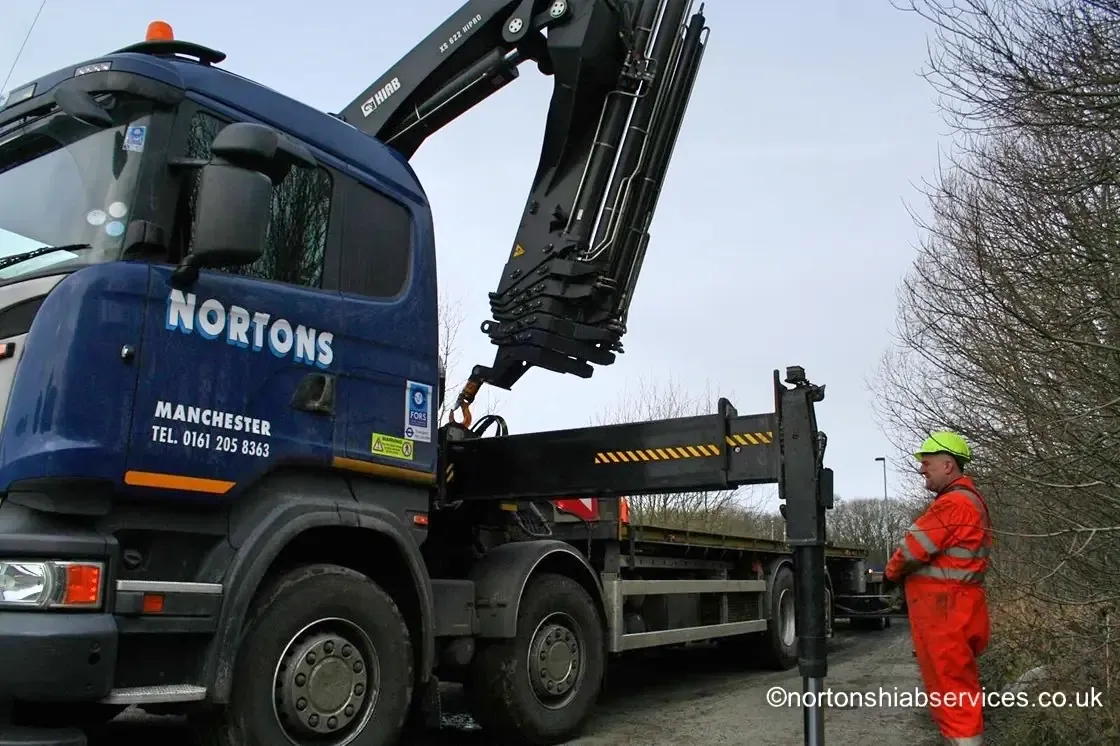
Every crane is worked by remote, so the driver / operator stands where the sightline to the load actually is rather than where the cab happens to be.
Risk assessment method statements — RAMS — generic or written for your specific job, plus lift plans and an appointed person where the lift needs one. Ask at the enquiry and they can be with you before the vehicle is.
Health and safety here is not a separate department that signs paperwork after the fact. Our health and safety officer is NEBOSH qualified, we can provide an appointed person for the lift, and RAMS can be supplied either as a generic set for routine work or written around the specific job and the specific site.
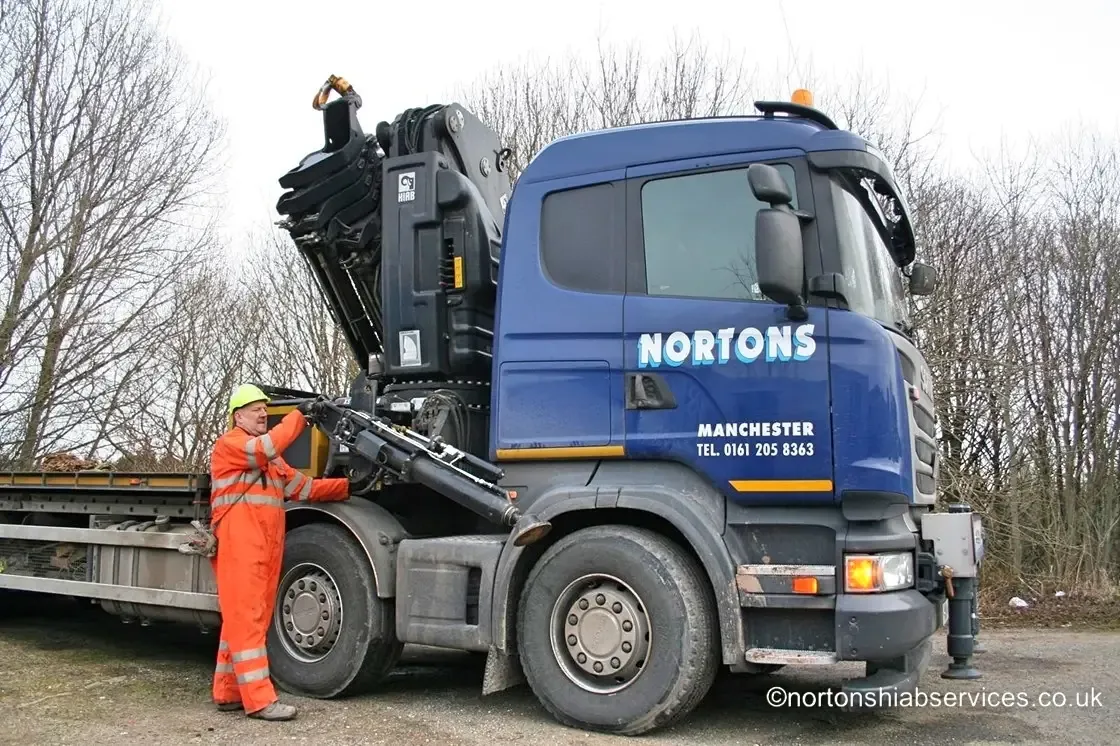
Most of our HIAB driver / operators are ALLMI trained and CPCS qualified to the national standard, with continuous skills training and the health and safety touch screen test. Several hold Rail Track PTS, and we are LINK Up members for safety critical sites.
We can supply a slinger banksman and an appointed person alongside the vehicle. If your site needs the documents before we arrive, ask when you book and they will be with you in advance.
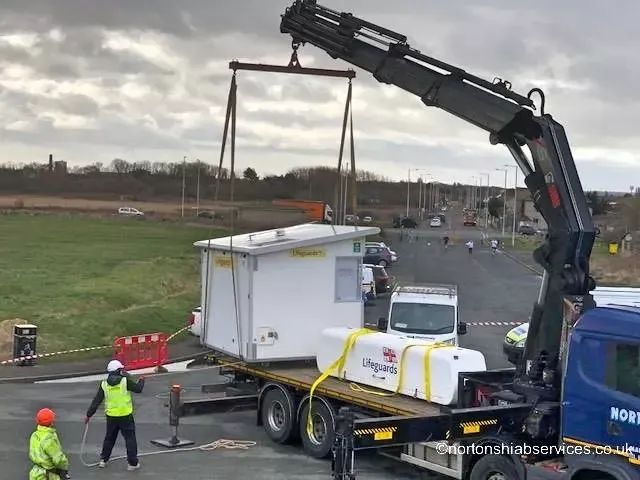
Every crane is worked by remote, so the driver / operator stands where the sightline to the load actually is rather than where the cab happens to be.
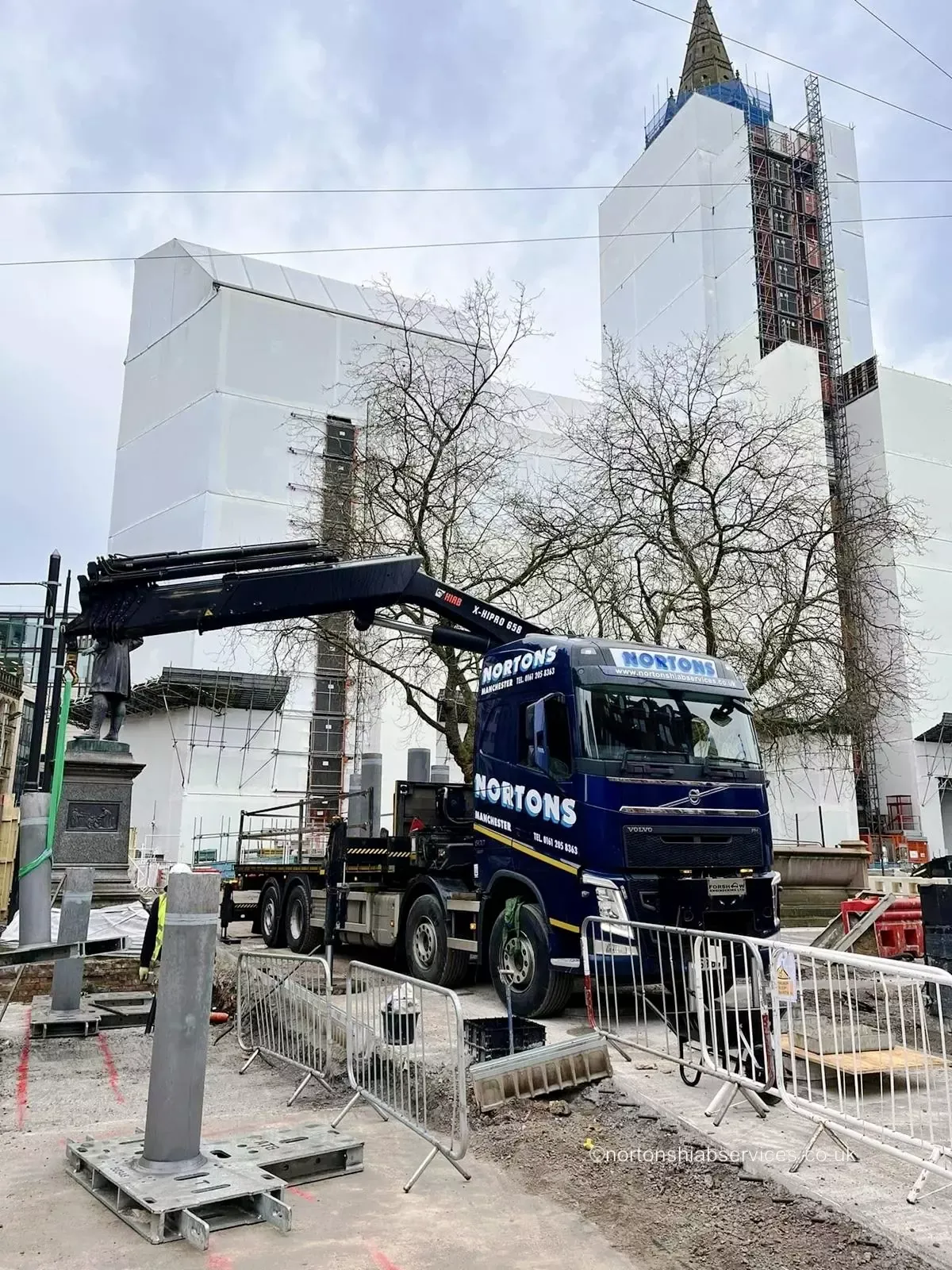
The area under and around the load is cleared and held clear. It is the simplest control there is and the one most often let slip.
Planning a lift is mostly a question of what is under the stabiliser legs. It is the one thing we would rather know in the office than find on site.
An 855 E-8 on its full 9 metre stabiliser span puts around 220 kN through a single leg. Spread over a bare foot plate that is more pressure than most ground will take, which is what the spreader pads are for.
Worked to DIN 1054, that one leg needs a spreader pad 1,049 mm square on asphalt — and 2,346 mm square on soft cohesive ground. Over two metres, for one leg.
On mud, peat or marshy ground the data sheet gives no permissible load at all, whatever the pad size — so the standing position is chosen somewhere firmer, and that is a decision worth making in advance.
So we ask about basements, manholes, service ducts and recently backfilled trenches before the day. What is under the set-up area tells us more than a site plan does.
These are not sent as standard. Ask when you book and whichever of them your site needs will be with you before the vehicle is.
Tell us what the principal contractor is asking for and we will send it in one go. It is quicker than working through a list item by item.
Yes. We can supply generic risk assessments and method statements for a straightforward job, or job-specific RAMS written around your site, and we submit them before the work where the site requires it. Our health and safety officer is NEBOSH qualified and we can provide an appointed person where the lift needs one.
Yes. Slinger banksman and appointed persons can both be supplied with the vehicle. Tell us at the quote stage so the day is priced properly.
We are, unless you tell us otherwise. That is the normal arrangement and generally the one clients want, because it keeps the competence and the insurance with the people operating the crane.
So the driver / operator can stand where they can see the load. On a cab-mounted control the driver / operator watches the lift side-on from a fixed position; on a remote they walk to wherever the sightline actually is. It is a straightforward safety improvement and every one of our cranes has it.
What is under the stabiliser legs, and whether anything is buried there. An 855 on full stabiliser span puts around 220 kN through one leg, which on soft cohesive ground needs a spreader pad over two metres square. Basements, manholes, service ducts and freshly backfilled trenches are the things we need to know about before the day.
Our driver / operators attend site inductions as a matter of course, and we take part in toolbox talks where the principal contractor runs them. Continuous skills training is part of the CPCS scheme our driver / operators are on.
In health and safety, RAMS stands for risk assessment and method statement, and on a lifting job it is normally read as one document in two halves. The risk assessment says what could go wrong and how likely and how serious that is. The method statement says, step by step, how the work will actually be carried out so those things do not happen. On a crane job a lift plan usually sits alongside them.
Either. For routine work - a container onto a hard standing, a cabin into an open compound - a generic risk assessment and method statement covering how we work is usually what a principal contractor wants and it can be with you the same day. For anything with real constraints, we write job-specific RAMS around your site: the access, the standing position, the ground, what is overhead and who else is working nearby. Tell us which your site needs when you enquire.
The appointed person is the individual responsible for planning the lifting operation and making sure it is carried out safely, as set out in LOLER and BS 7121. On most hiab deliveries the driver / operator's own planning covers it. Where a lift is more complicated - blind, over a boundary, near other trades, on questionable ground - an appointed person is needed, and we can provide one rather than you having to find one.
A method statement covers the whole job, including getting there, unloading, and leaving site. A lift plan covers the lifting operation specifically: the weight, the radius, the crane's capacity at that radius, the standing position, the ground bearing, the slinging arrangement and who is banking the lift. A complex job needs both. A simple delivery often needs neither, and we will say so rather than generate paperwork for its own sake.
Generic RAMS, usually the same working day. Job-specific RAMS depend on how much we need to know about the site, but a day or two is typical. The thing that slows it down is almost never our end - it is waiting for a site drawing, a ground bearing figure or confirmation of where the vehicle is allowed to stand. Ask early and it will not hold the job up.
The sooner we know what the site is like, the better the lift plan. If you are not sure about any of it, that is exactly what we are for.




ALLMI trained driver / operators · RAMS, method statements and lift plans · Euro VI clean air zone compliant fleet, renewed by continual investment in new wagons · All our accreditations