Anfield, Liverpool
Site setup at Liverpool Football Club
Anfield has been rebuilt around a stadium that never stopped being used. Before any of that could start, somebody had to put the site on the ground. That part was ours.
The photographs
What it looked like
Our drivers and vehicles carrying out the site setup, photographed on the day.
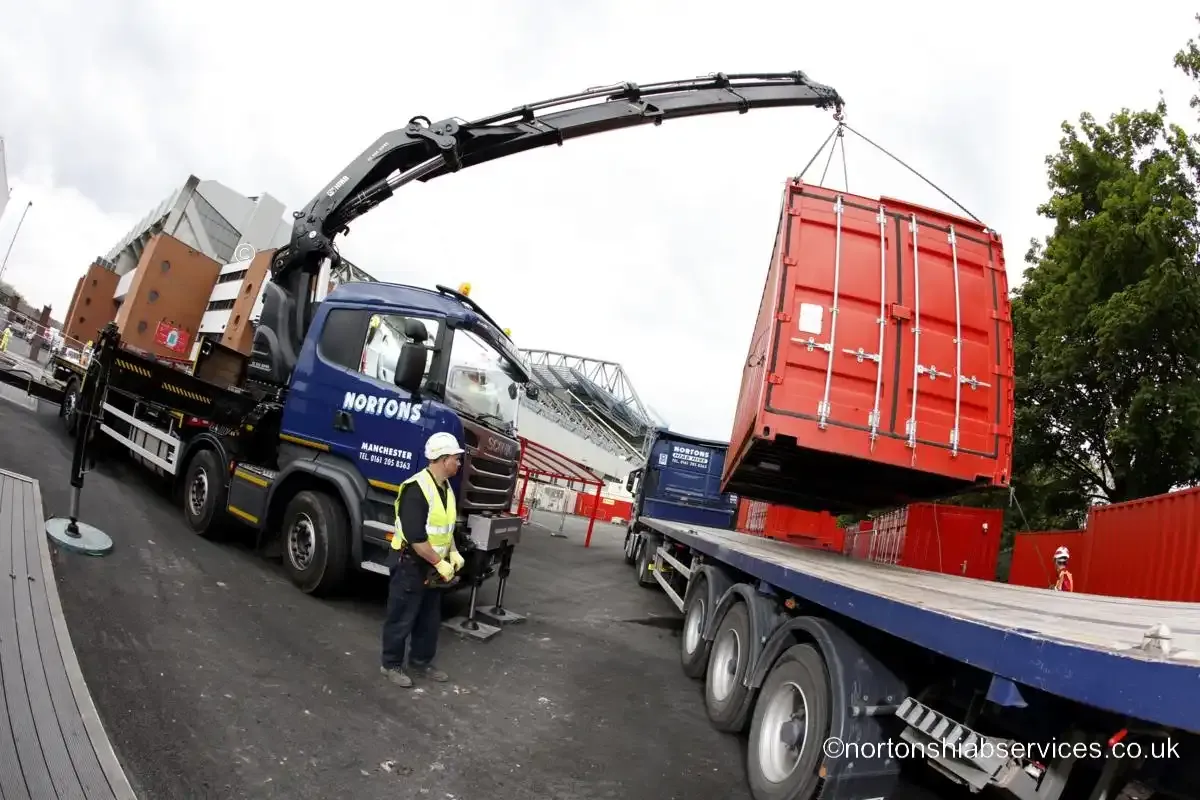
The crane set up on the street
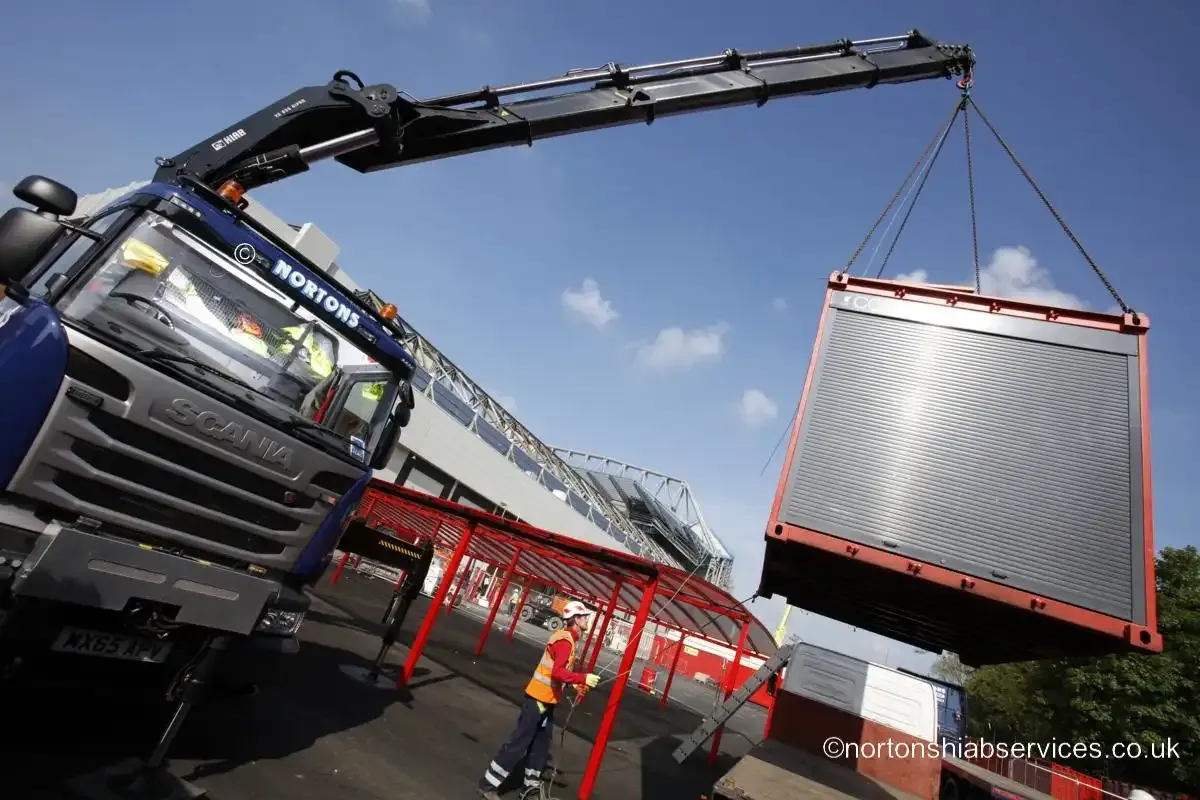
On the slings, banksman watching
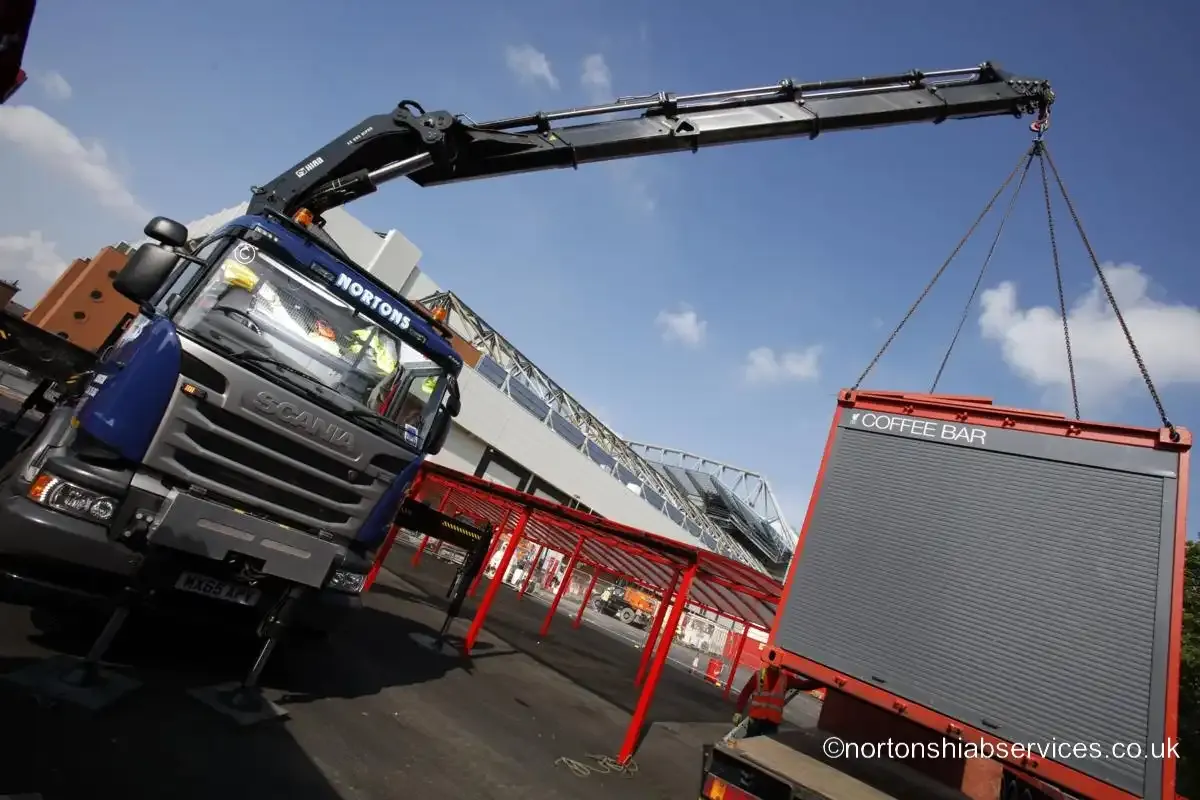
The second unit of the set
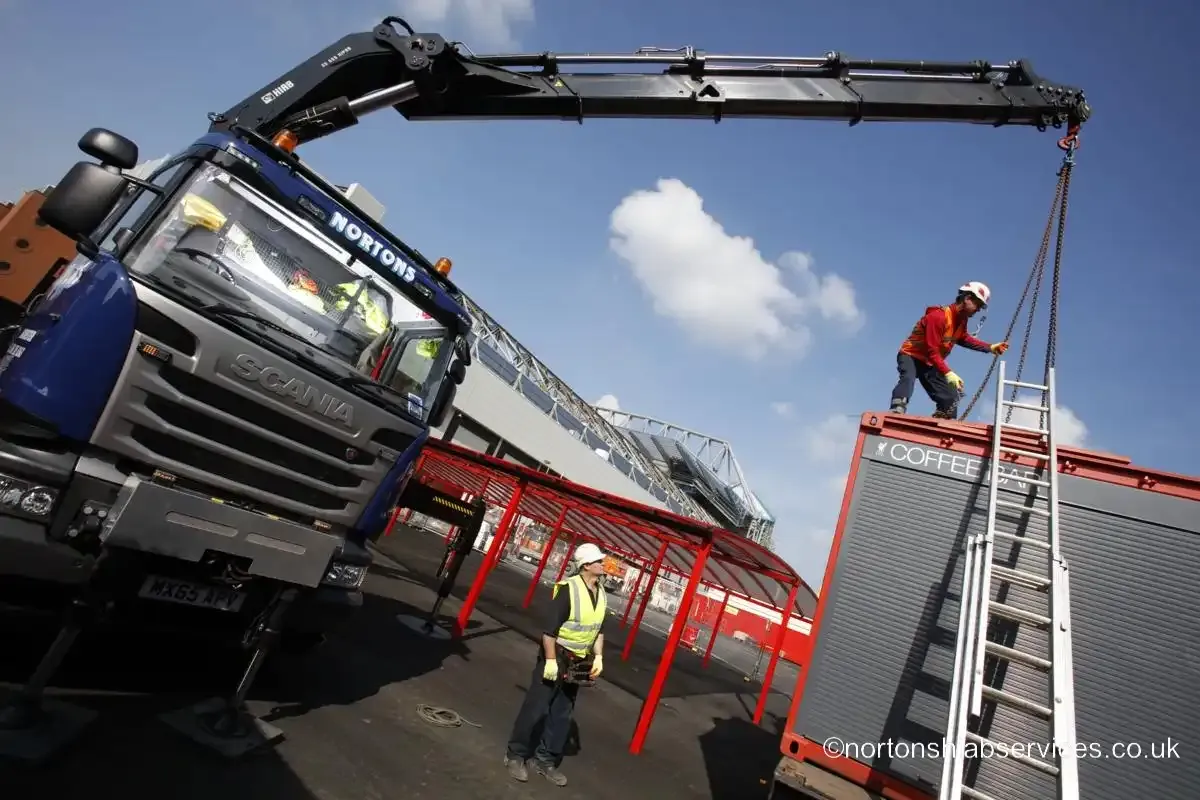
Slinging from height
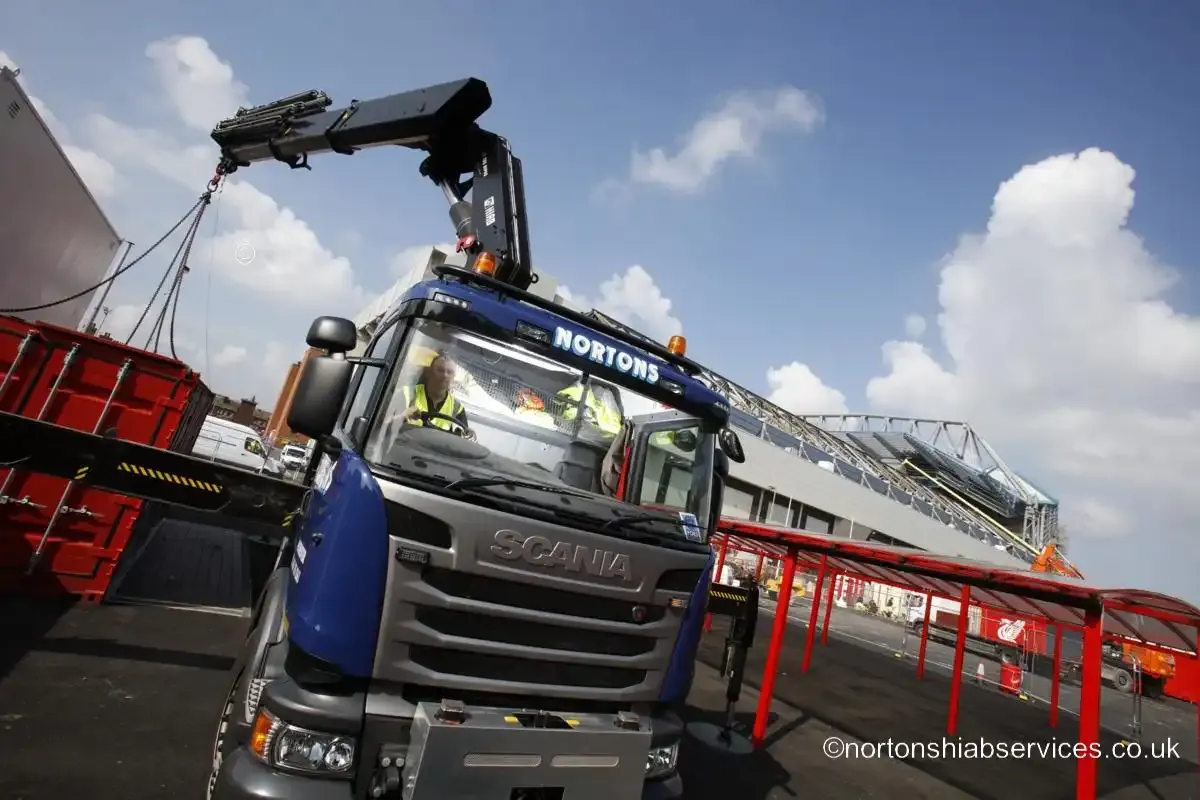
Over the hoarding line
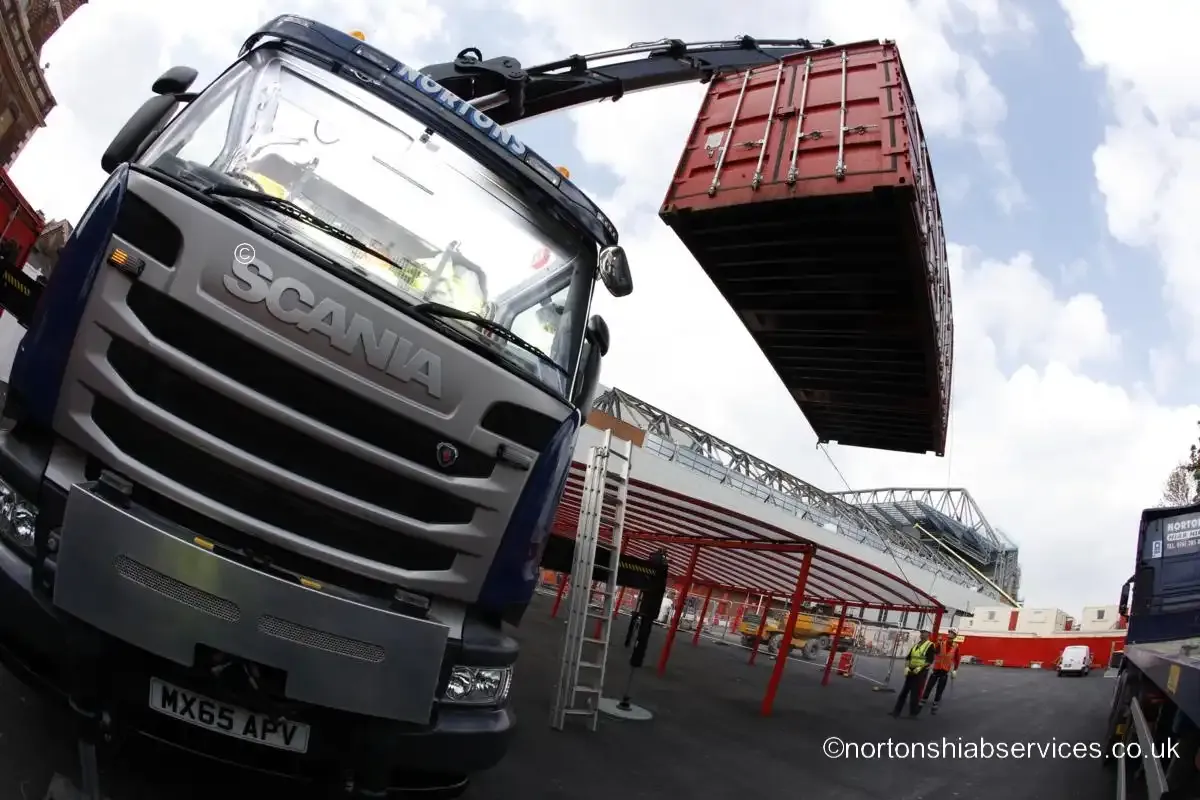
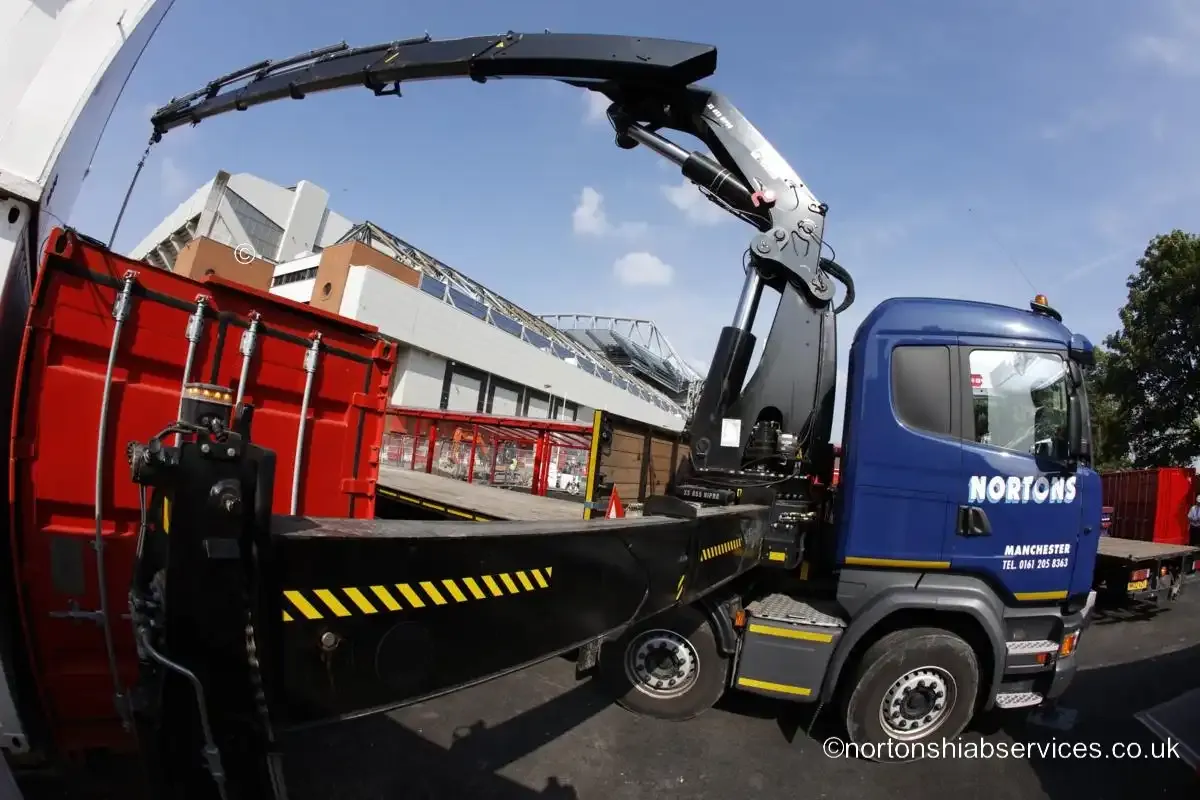
Boom out, load away from the vehicle
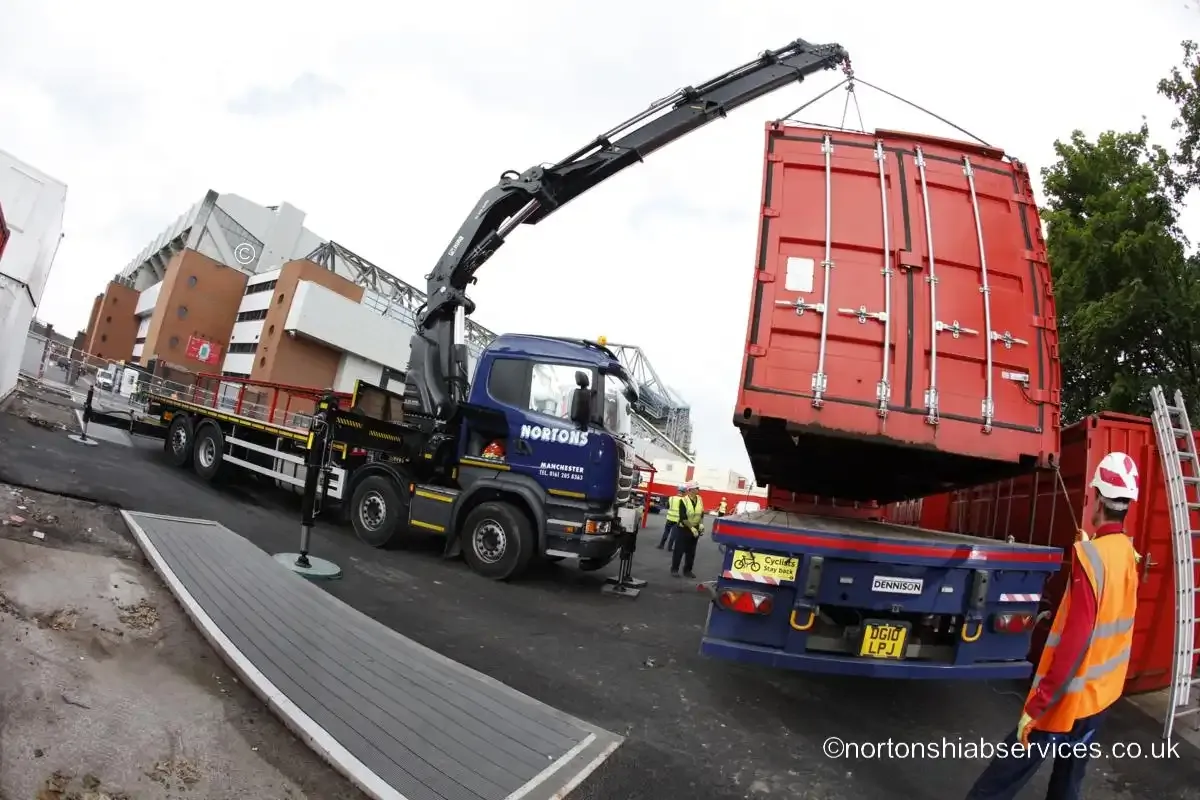
Slewing into position
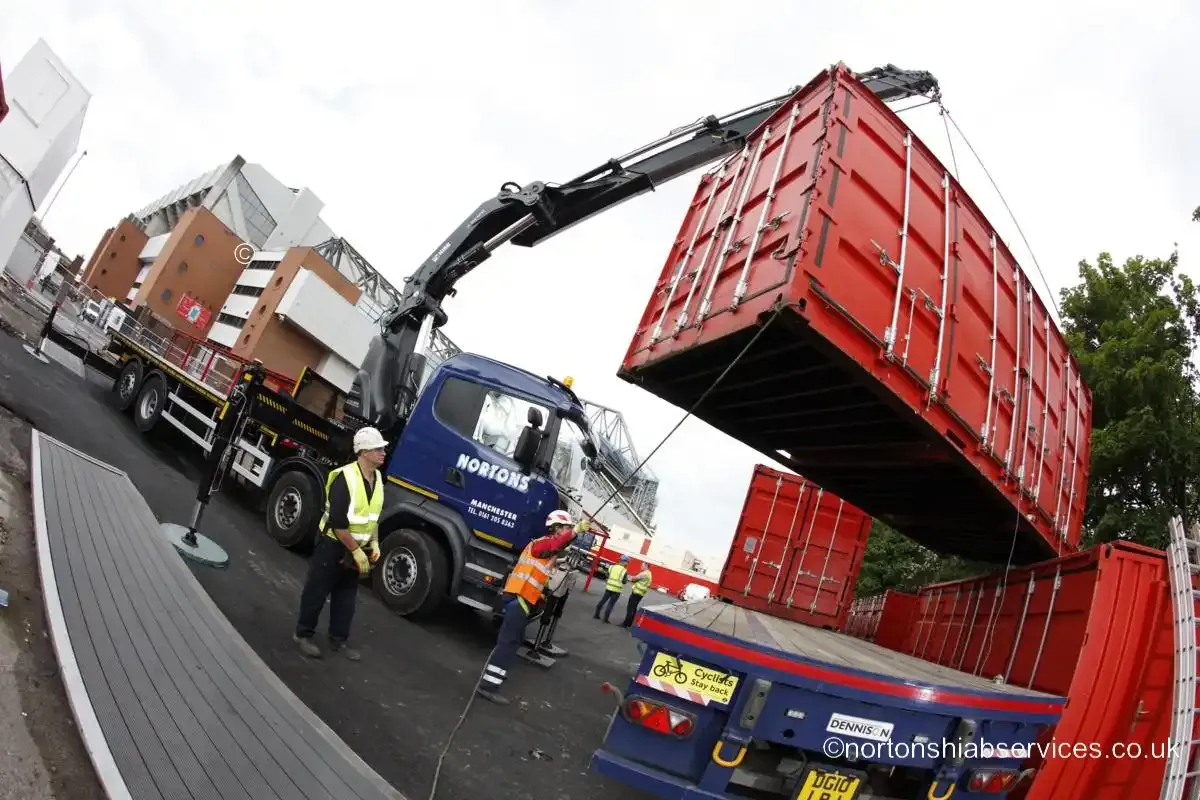
Landing it
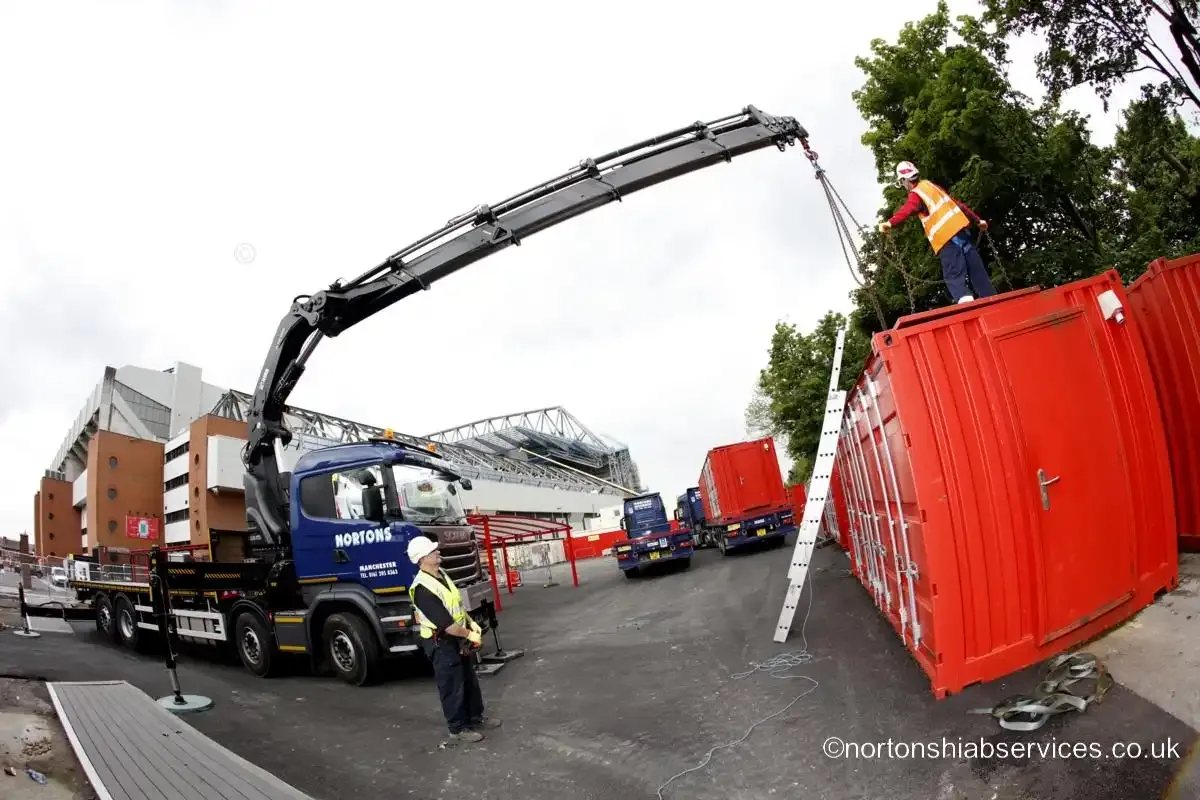
The next one straight after
Checked before the slings come off
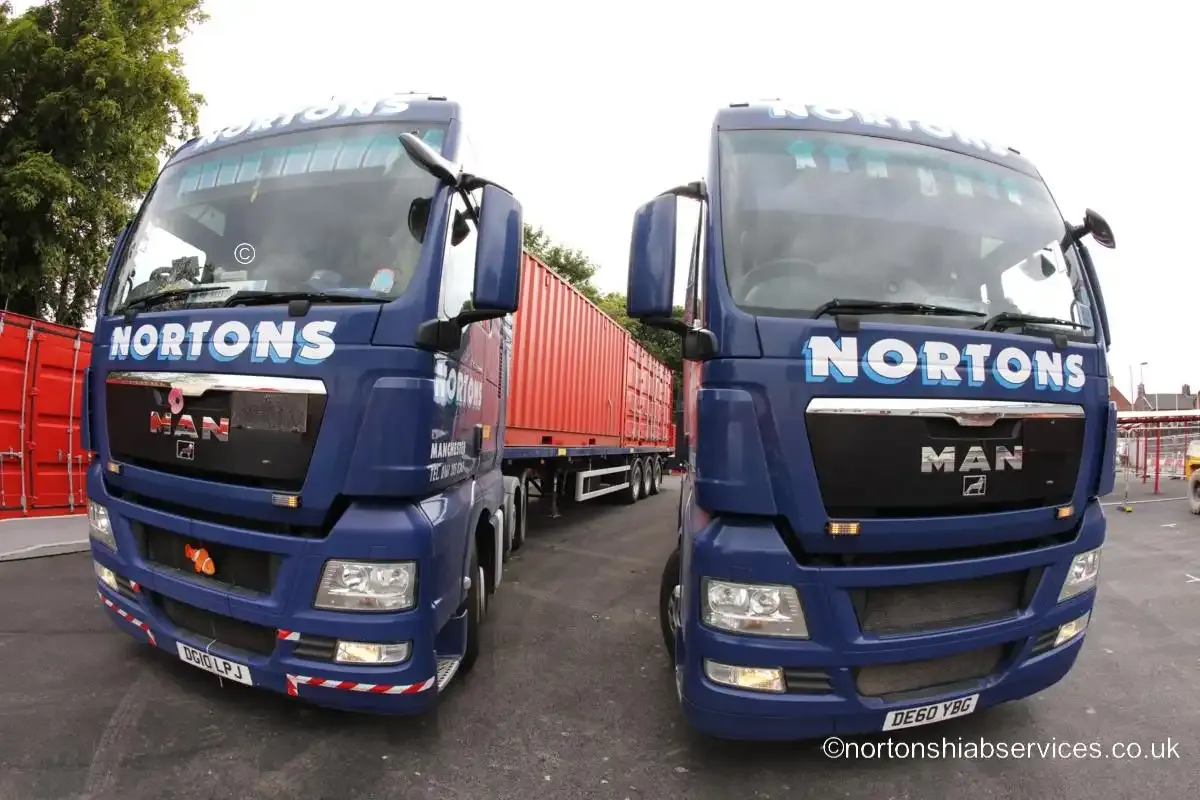
Two of ours on the job
The job
Putting a construction site inside a working stadium
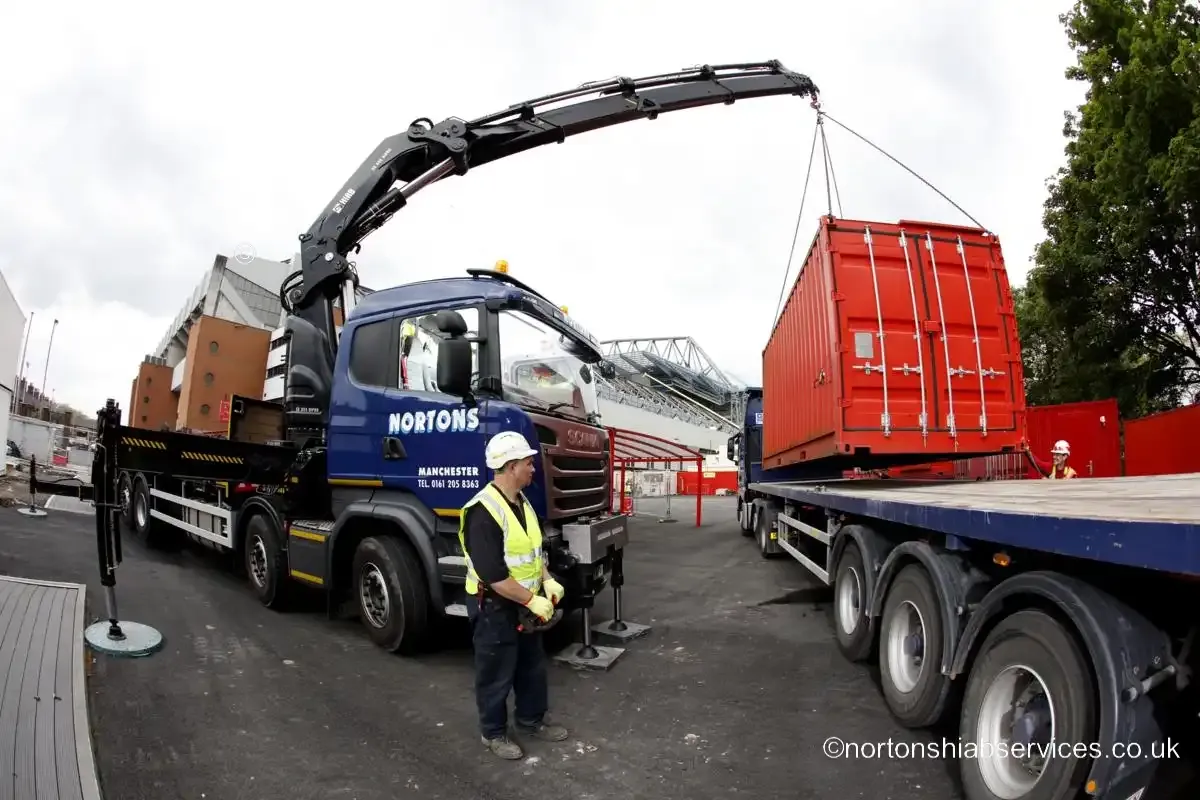
Nortons Hiab Services carried out the site setup at Anfield during the stadium works — welfare units, offices and site accommodation delivered on our own vehicles and craned into position inside the hoarding line.
Anfield has been through several rounds of redevelopment, and every one of them starts the same way. Before a single piece of steel goes up, the contractor needs somewhere to sit, somewhere to change, somewhere to store, and all of it has to land on a footprint that is already surrounded by terraced streets, match-day infrastructure and a stadium that is still hosting football.
That is a radius problem rather than a weight problem. The units are not heavy. What decides the job is where the lorry can legally stand, how far the crane has to reach from there to where the unit has to land, and what happens to the load in between. On the photographs at the top of this page the vehicle is parked on the public street with the boom working over the hoarding line into a site that nobody on the outside can walk into.
It is worth saying plainly that we were a supplier on somebody else’s project, not the main contractor. What we brought was the ability to arrive with the unit and the crane on the same vehicle, in a slot we were given, and to be gone again before it mattered.
19.6mMaximum crane outreach
1hrM62 from our yard
Our ownFleet, not hired in
ALLMITrained driver / operators
May 2017
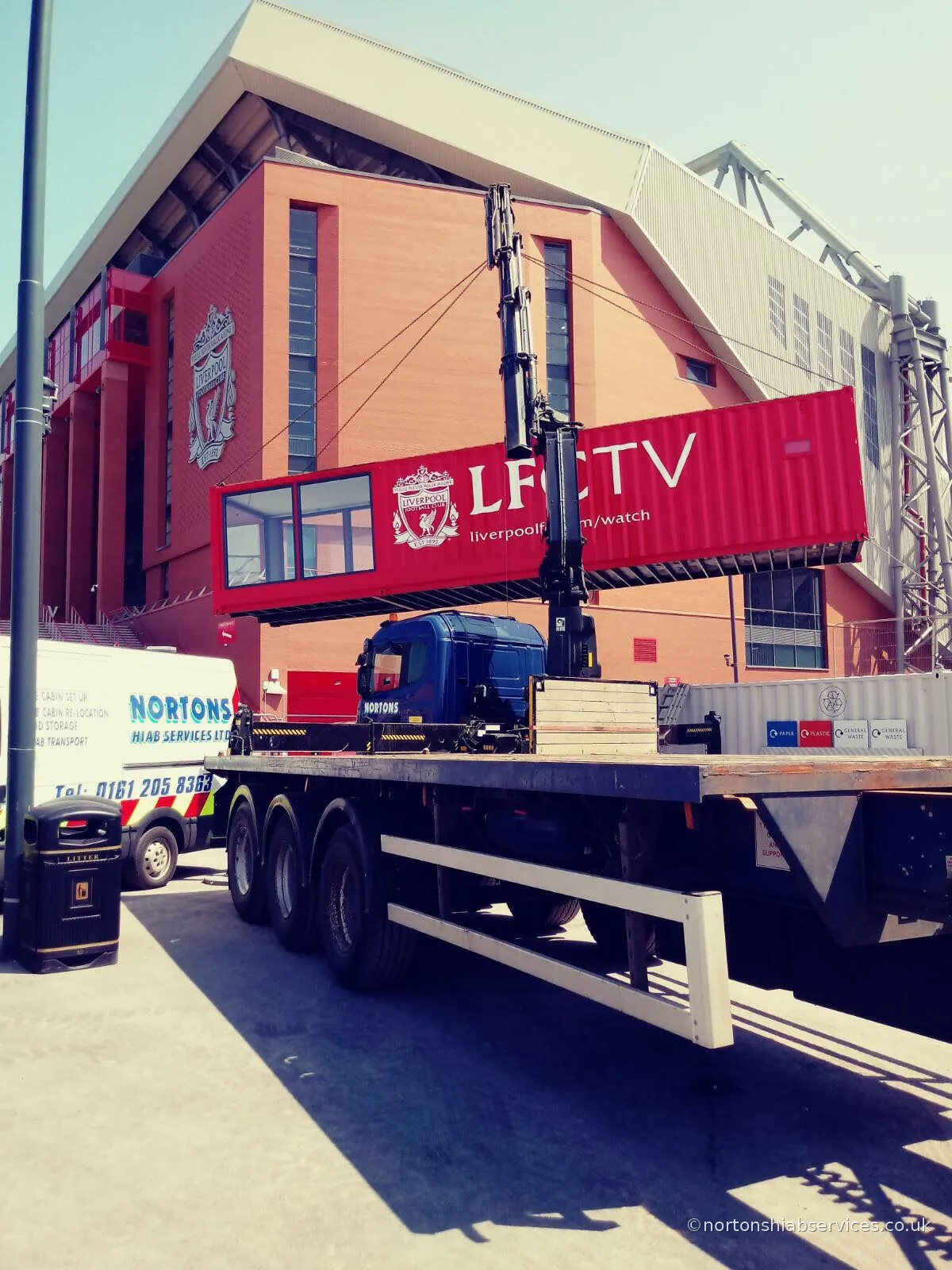
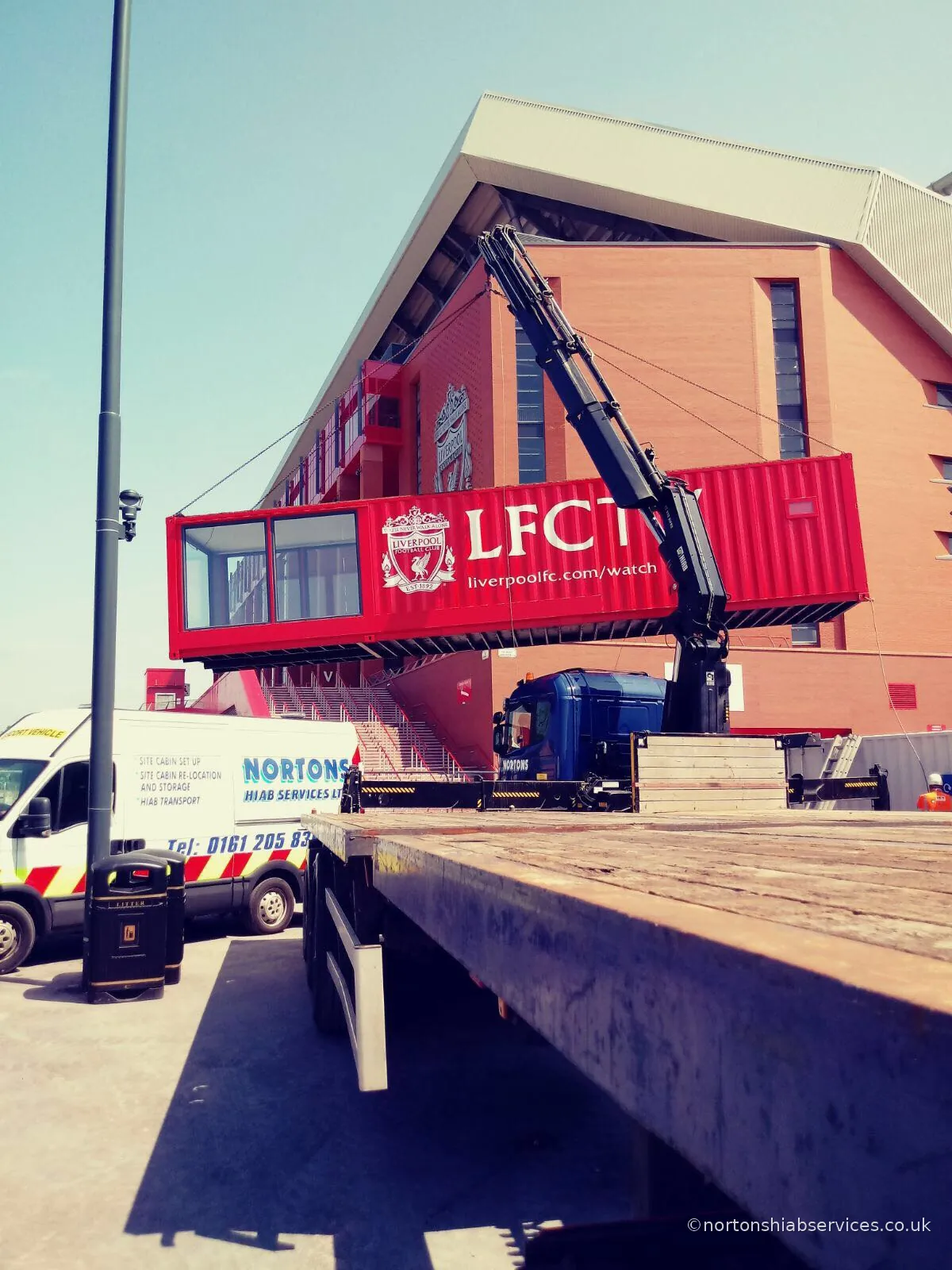
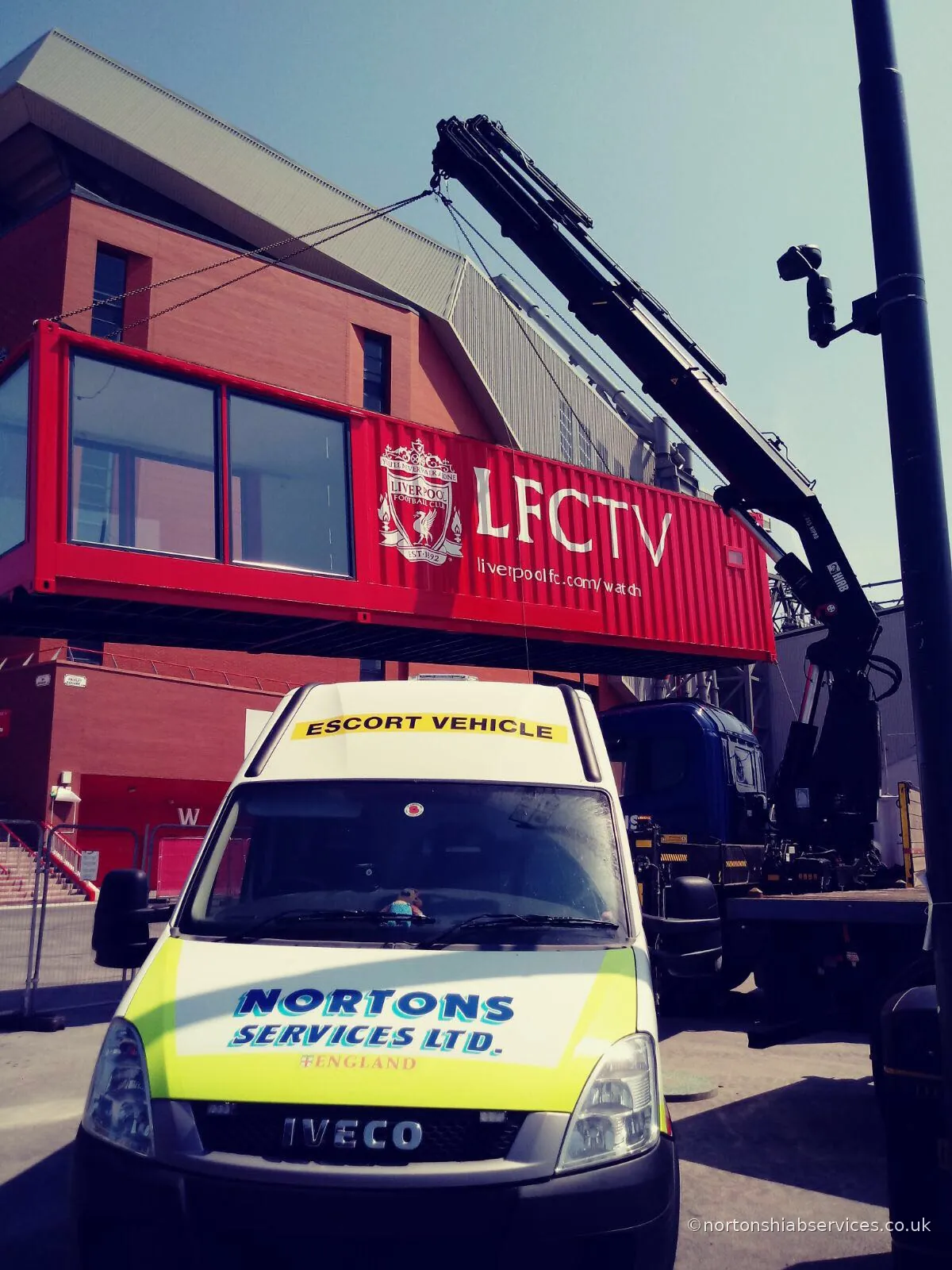
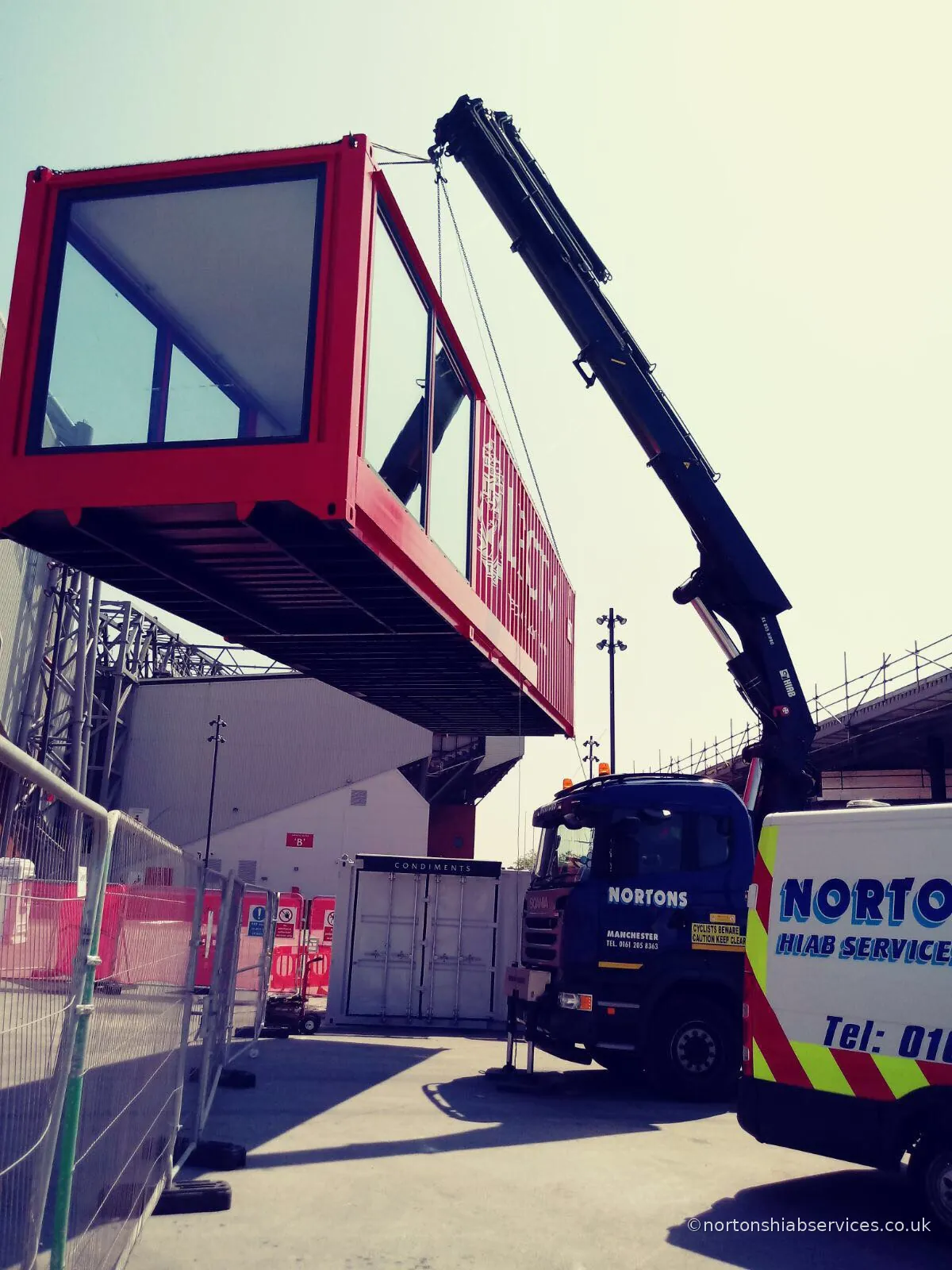
The LFCTV studio unit
A different visit and a different load: a fitted-out studio unit, glazed along one end, craned in beside the stand. Click any of them to open it full size.
It is a container-sized box with a window wall in it, which changes the lift rather than the weight. Glass makes a unit fussy about how it is slung and how it is set down, and the studio had to end up square on its bearers rather than close enough.
The vehicle worked from the hard standing with the boom over the fence line, an escort vehicle in attendance, and the crane on remote so the driver / operator could stand where he could see both ends of the unit at once.
What we brought
Why this is a hiab job and not a crane job
- The load and the crane arrive together. One vehicle, one booking, one slot. A mobile crane needs the lorry to turn up separately and wait.
- Nothing has to be stored. Units go straight from the bed to their final position, which matters on a site with no laydown area.
- The reach is known before anybody travels. Tell us the distance from where the lorry can stand to where the load lands and we will tell you whether the crane gets there.
- Remote-controlled cranes. The driver / operator stands where the load is visible rather than in a cab looking up.
- Our own escort vehicles, and nationwide movement orders arranged for wide loads when the unit is wider than the lane.
- Lift plans, RAMS, parking suspensions and road closures arranged by an appointed person where the job needs them.
Hiab and driver hire · When the reach is the problem · Moving site accommodation
Merseyside
The rest of our Liverpool work
Anfield is one job. Liverpool is one of the cities we work in most often outside Greater Manchester, and it is nearly all restricted-access work.
Arena floors on the waterfront, city-centre streets where the lorry has one place to stand, festival infrastructure that goes in after dark and comes out before the shops open. The town page has the rest of it, with its own photographs.
Hiab hire in Liverpool · The arena job, 2025 · Across the North West
Common questions
Before you get in touch
What did Nortons actually do at Anfield?
Site setup. Cabins, welfare units and site accommodation delivered and craned into position inside the hoarding line so the construction work could start and keep running. It is the unglamorous half of a stadium project and it happens before anybody sees a crane on a skyline.
Why does a job like that need a hiab rather than a mobile crane?
Because the unit and the crane arrive together. A hiab brings the load, lifts it, and leaves. A mobile crane has to be brought in separately, set up, and paid for while the lorry it is lifting from sits in traffic. On a city street with a set slot and no room to store anything, one vehicle doing both is usually the only version that works.
How do you lift over a hoarding safely?
By knowing the radius before anybody travels. The distance from the centre of the crane to where the load has to land decides which vehicle comes, and a lift over a hoarding into a site you cannot walk into is planned, not improvised. Most of our driver / operators are ALLMI trained and CPCS qualified and the cranes are worked by remote control so the driver / operator stands where the load is visible.
Do you work at other stadiums?
Regularly. Stadium and arena work is one of the things we do most of — the Etihad in Manchester, Emirates Old Trafford, the M&S Bank Arena on the Liverpool waterfront, and Accrington Stanley among others. It is nearly always out of hours and always timed by the venue.
How far is Anfield from your yard?
About an hour down the M62 from Miles Platting. Liverpool is a normal day out and back for us, not an overnight, which is why we quote it as regional work rather than as a distance job.
Tell us what needs lifting
Tell us what you need lifting or transporting and we will come back with a vehicle and a price.