It goes over things
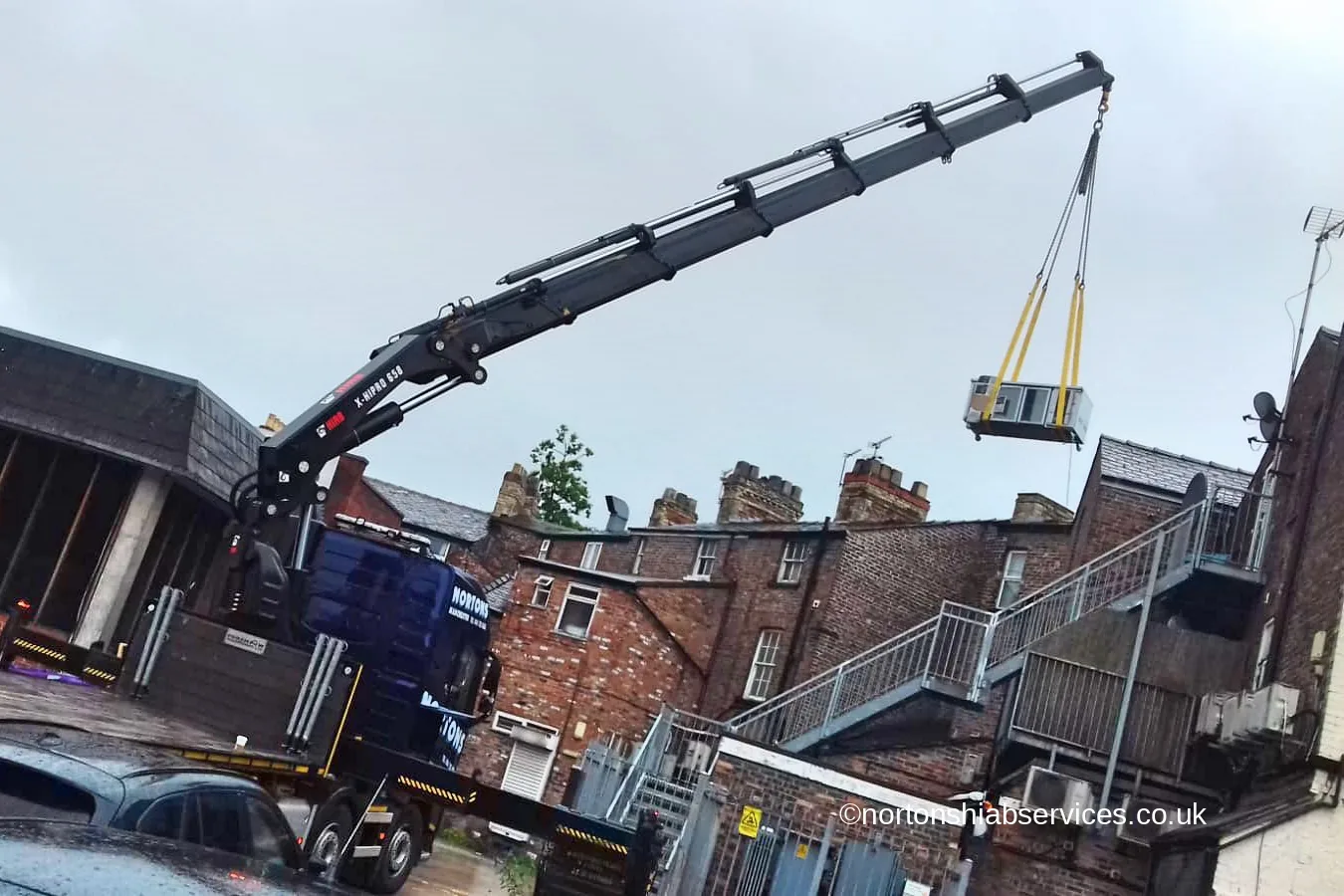
Over a fence, across a verge, past a parked row. Buying a route through the air is most of what a lorry crane is for.
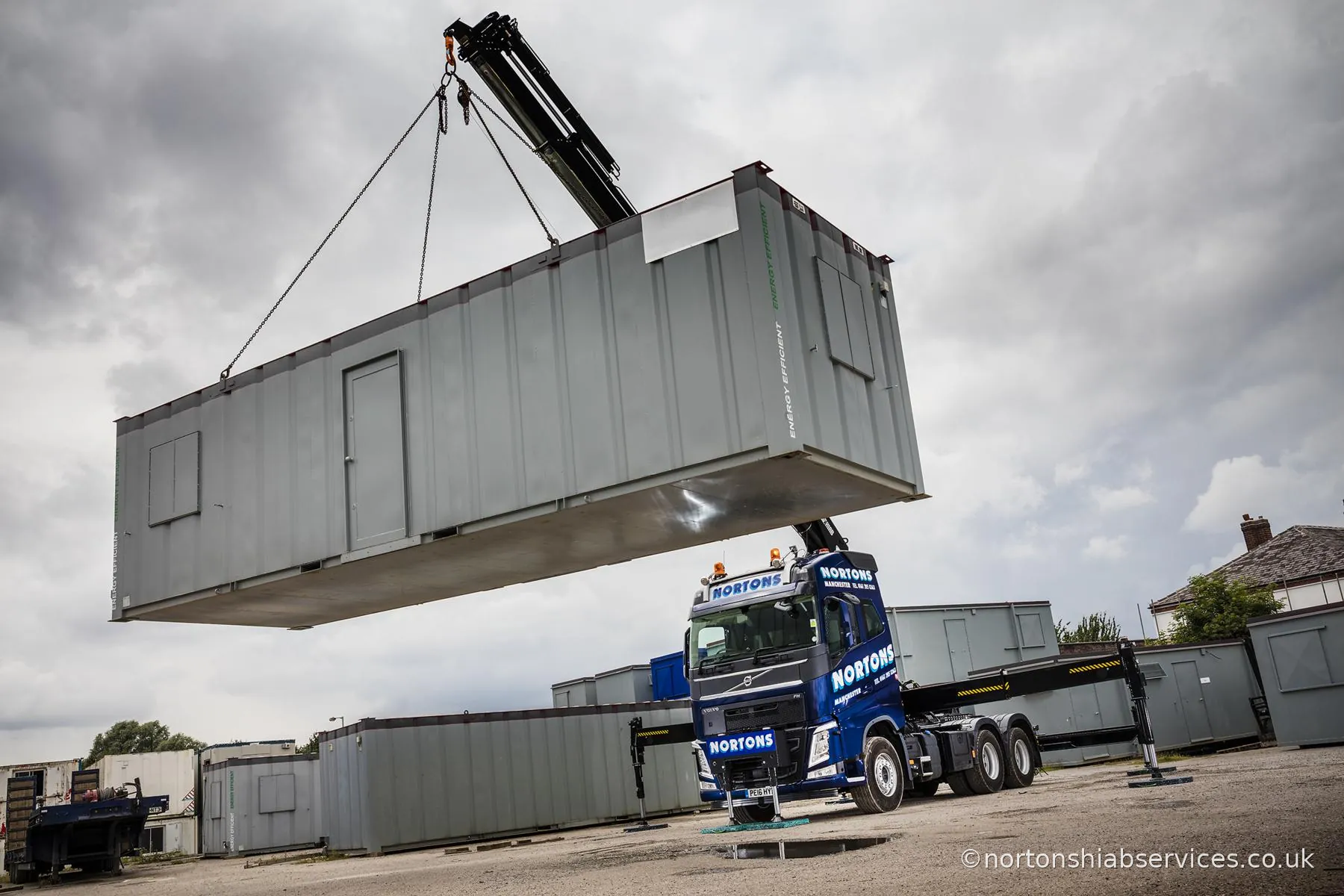
A hydraulic crane mounted on a lorry, so the same vehicle carries the load and lifts it into place. What one lifts, how far it reaches, and where the line is.
A hiab is a hydraulic crane mounted on a lorry, normally just behind the cab, so the vehicle can load and unload itself without a separate crane or forklift. The word is a brand name that turned into the everyday term. The generic names are truck-mounted crane, lorry loader and lorry-mounted crane, and they describe the same machine.
That is the whole of it. What follows is the detail that decides whether one will do your job: how much it lifts, how far it reaches, what stops it, and where the line is between a lorry crane and something else.
We have been operating them out of Manchester since 2007.
HIAB is a registered trade mark of Hiab. The name is a contraction of Hydrauliska Industri AB, the Swedish company that began building lorry-mounted cranes in the 1940s. In Britain the brand became the generic word for the machine, the way Hoover did for vacuum cleaners and Biro did for pens.
We buy and operate Hiab cranes and the company is called Nortons Hiab Services, but we are not part of the manufacturer and we do not represent them. If you want the neutral term, it is truck-mounted crane or lorry loader.
Load handling equipment manufacturers and their logo such as HIAB and the HIAB logo are registered trademarks. Nortons Hiab Services Ltd is not associated or affiliated with HIAB or other load handling equipment manufacturers, and expressly disclaims any and all rights to any such marks.
It matters practically, not just legally. If you search for “hiab hire” you will find operators running cranes made by several different manufacturers, all of them correctly described. Ask what is actually on the vehicle if the specification matters to you.
Sometimes loaded, so it unloads itself — one vehicle, one visit, no separate crane and no forklift at either end. Sometimes empty, because it has come to collect. And sometimes it comes purely to lift something that is already there.
Hydraulic legs extend sideways and down, lift the suspension out of the equation and give the crane a rigid base. How far they can extend decides how much the crane may lift, so a leg that cannot come out fully costs capacity on that side.
Five to eight hydraulic sections telescope out, and the whole assembly rotates — continuously on every crane we run, rather than stopping at a limit.
Slings, chains or a lifting frame, attached at the points the load was designed to be lifted from. A trial lift of a few inches, held and checked, before anything goes anywhere.
Usually by somebody who can see the landing point while the driver / operator cannot. The last foot is deliberately slow.
Pads collected, boom stowed, deck strapped and the paperwork signed. Then the lorry moves off under its own power, which is the other half of the reason there is only one contractor on site.
Over a fence, across a verge, past a parked row. Buying a route through the air is most of what a lorry crane is for.
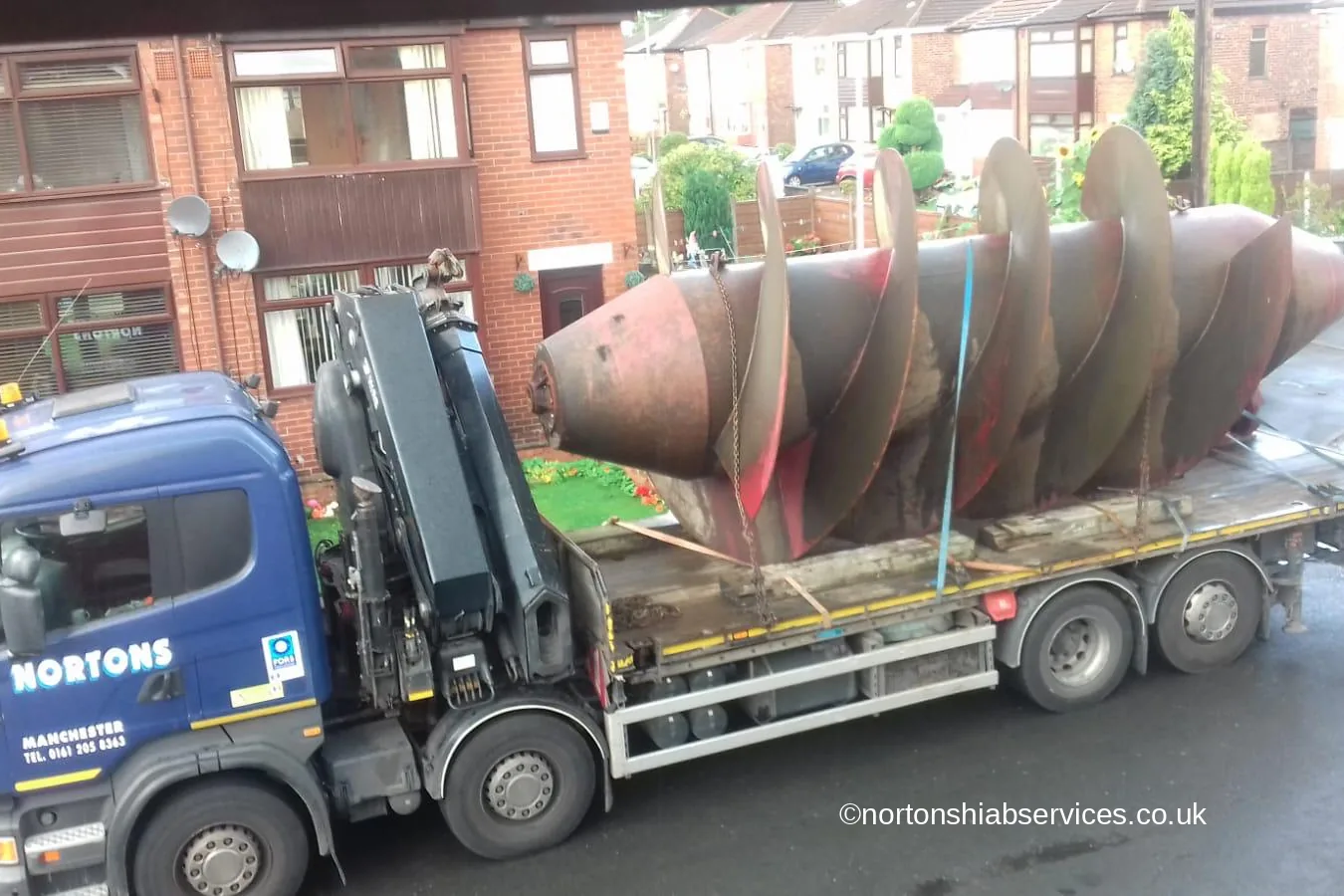
The crane is on a working lorry with a deck. Plant that cannot be driven is craned on, carried and craned off again.
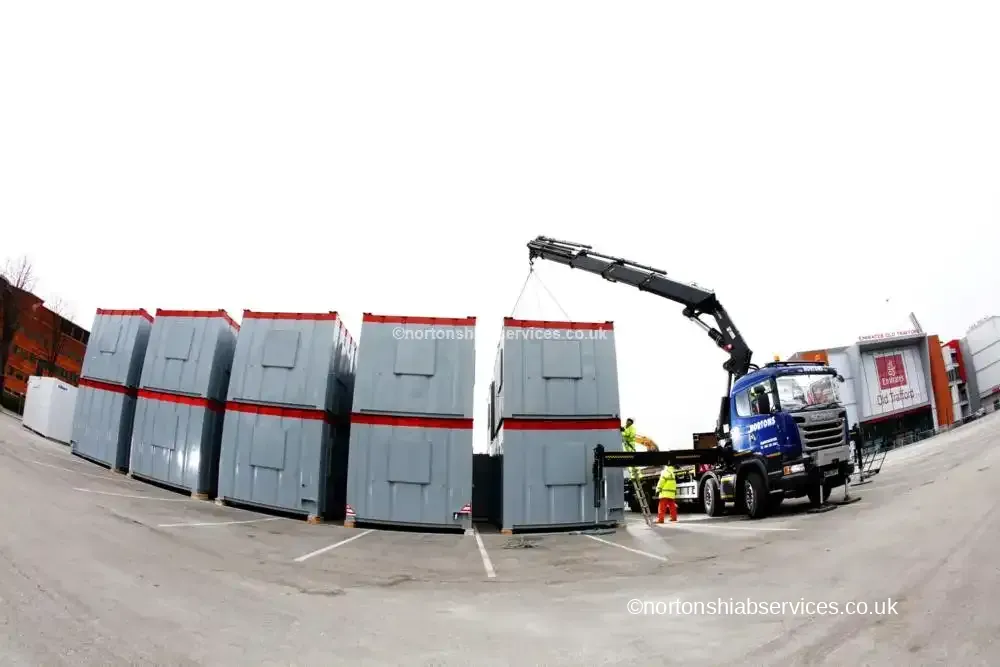
Onto bases, onto a stack, into a socket. Precision at the end of the boom is the skill you are hiring.
If you take one thing from this page, this is it, and it is the thing most people booking a lift for the first time have never been told.
A truck-mounted crane is a lever. The further out the load hangs, the harder it pulls against the vehicle, and the less the crane is allowed to lift. So a crane does not have a capacity. It has a curve.
Here is that curve for the three cranes we run most, straight off the manufacturers’ data sheets:
| Radius | 558 EP-5 | 658 EP-6 | 858 E-8 |
|---|---|---|---|
| Around 5 m | 10,800 kgat 4.6 m | 10,900 kgat 5.1 m | 15,500 kgat 4.6 m |
| Around 7 m | 7,600 kgat 6.4 m | 8,000 kgat 6.7 m | 8,500 kgat 7.8 m |
| Around 9 m | 5,700 kgat 8.3 m | 6,000 kgat 8.6 m | 6,700 kgat 9.5 m |
| Around 11 m | 4,500 kgat 10.3 m | 4,750 kgat 10.6 m | 5,300 kgat 11.4 m |
| Around 13 m | 3,750 kgat 12.3 m | 3,850 kgat 12.7 m | 4,400 kgat 13.4 m |
| Around 15 m | 3,150 kgat 14.5 m | 3,250 kgat 14.7 m | 3,750 kgat 15.3 m |
| Around 17 m | — | 2,820 kgat 16.9 m | 3,250 kgat 17.4 m |
| Around 19 m | — | — | 2,900 kgat 19.4 m |
| Maximum outreach | 14.5 m | 17 m | 19.6 m |
| Rating | 49.7 tm | 51.2 tm | 66.1 tm |
Every figure is read off the manufacturer’s data sheet and nothing is interpolated. The three cranes publish capacities at different radii, so each cell shows the nearest published point and the radius it actually applies at — which is why the numbers in a row are not all at the same distance. The 558 is quoted with automatic duty control engaged; the 658 and 858 at standard rating.
The model number is not the rating. An 858 is not an 85 tonne-metre crane; it is 66.1 tm, or 71.5 tm with automatic duty control. Plan the lift from the load chart, not from the name on the boom.
Two that are not the same thing, and get confused with it constantly:
Most people arrive here having been told they need one, without being told what that means.
A lorry, with a folded arm sitting behind the cab. When it arrives, legs come down on either side to hold it steady, the arm unfolds, and whatever is on the back gets picked up and put where you want it. Then the legs come up and it drives away. That is the whole thing.
It arrives with a driver who is also the person working the arm, so nobody on your side needs any qualification, any equipment, or to be involved beyond pointing at where the load goes.
Hiab, HIAB, hi ab and hi-ab all refer to the same machine, and hi ab hire and hiab hire mean exactly the same booking. It began as a manufacturer’s name and turned into the ordinary word for the vehicle, so there is no correct spelling to worry about getting wrong.
A straightforward delivery and placement is often under an hour on site. Something awkward — a long reach, a blind drop, a job needing a banksman at each end — can take a morning. The travelling is usually the longer part of the day.
Nothing, and you do not need to have your facts straight first. Send an email describing the thing and where it has to go. If it is a job for us you will get a price. If it is not, you will get told that, and told what you actually want instead. We would rather do that than quote for something we cannot do properly.
We do not lift over an occupied building. Where reach matters it is the distance out from the vehicle to the landing point — over a wall, a fence or a boundary — not clearing somebody’s roof. And we do not send the vehicle out without one of our own people on it.
A hiab is a hydraulic crane mounted on a lorry, usually just behind the cab, so that the vehicle can load and unload itself without needing a separate crane or forklift. The name comes from Hiab, the Swedish manufacturer whose cranes became common enough in Britain that the brand name turned into the everyday word. The generic terms are truck-mounted crane, lorry loader and lorry-mounted crane, and they all mean the same machine.
It depends entirely on how far out the load is. A truck-mounted crane lifts far more close in than at full reach. The largest crane on the Nortons fleet lifts over 8 tonnes and reaches 19.6 metres — but not both at the same moment. The single figure that describes a crane is its tonne-metre rating, and the model number is not that figure.
Between about fourteen and twenty metres horizontally on the machines in normal UK use. The Nortons fleet reaches 14 metres on the 558 rigid, 16 metres on the 658 rigid, the wagon and drag and the artic, and 19.6 metres on the 858 rigid. Reach is measured horizontally from the centre of the crane column, not from the side of the lorry.
A hiab travels with its load and puts it where it goes, so one vehicle and one driver / operator do the whole job. A mobile crane lifts far more and far higher but carries nothing, so the load has to be delivered separately. For anything up to a few tonnes at moderate radius, a lorry crane is one contractor instead of two.
The driver / operator needs a recognised lorry loader operator certification as well as the appropriate HGV entitlement for the vehicle, and where they attach loads they also need slinging and signalling training. On operated hire the driver arrives with all of it and carries the certification on the vehicle.
The lorry, the crane and a trained driver / operator come together as one hire, with the driver / operator remaining the employee of the haulier. It is how almost all UK lorry loader work is done, because the machine is not much use without somebody certificated to work it, and because the insurance and the lift planning sit with the company that owns the vehicle.
It cannot lift heavy loads at long radius, cannot work much above twenty metres of height, cannot hold a load steady for long periods while it is fixed, and must never lift people under any circumstances. It also cannot work anywhere its outriggers will not safely deploy, whatever the load weighs.
Yes. HIAB is a registered trade mark belonging to Hiab, a Swedish manufacturer founded in the 1940s. In Britain it has become a generic word for any truck-mounted crane, in the way that Hoover did for vacuum cleaners. Nortons Hiab Services buys and operates Hiab cranes but is not connected to the manufacturer.
As an English acronym, nothing. HIAB comes from Hydrauliska Industri AB, the Swedish company that built the first lorry-mounted hydraulic crane in 1944. The name stuck to the machine itself in Britain, the way hoover stuck to vacuum cleaners, so people now say hiab whoever made the crane.
The manufacturer spells it HIAB. You will see hi ab and hi-ab written just as often, and hi ab hire, hi-ab hire and hiab hire all mean the same thing. Nobody will think less of you for any of them - we answer to all three.
Yes. Hiab lorry, hiab truck, hiab wagon and crane lorry are all the same vehicle. Lorry is the British word and truck is the American one, and the trade uses both interchangeably.
Hiab hire · Operated hire · What it costs · More of this sort of thing
Tell us what you need lifting or transporting and we will come back with a vehicle and a price.





ALLMI trained driver / operators · RAMS, method statements and lift plans · Euro VI clean air zone compliant fleet, renewed by continual investment in new wagons · All our accreditations