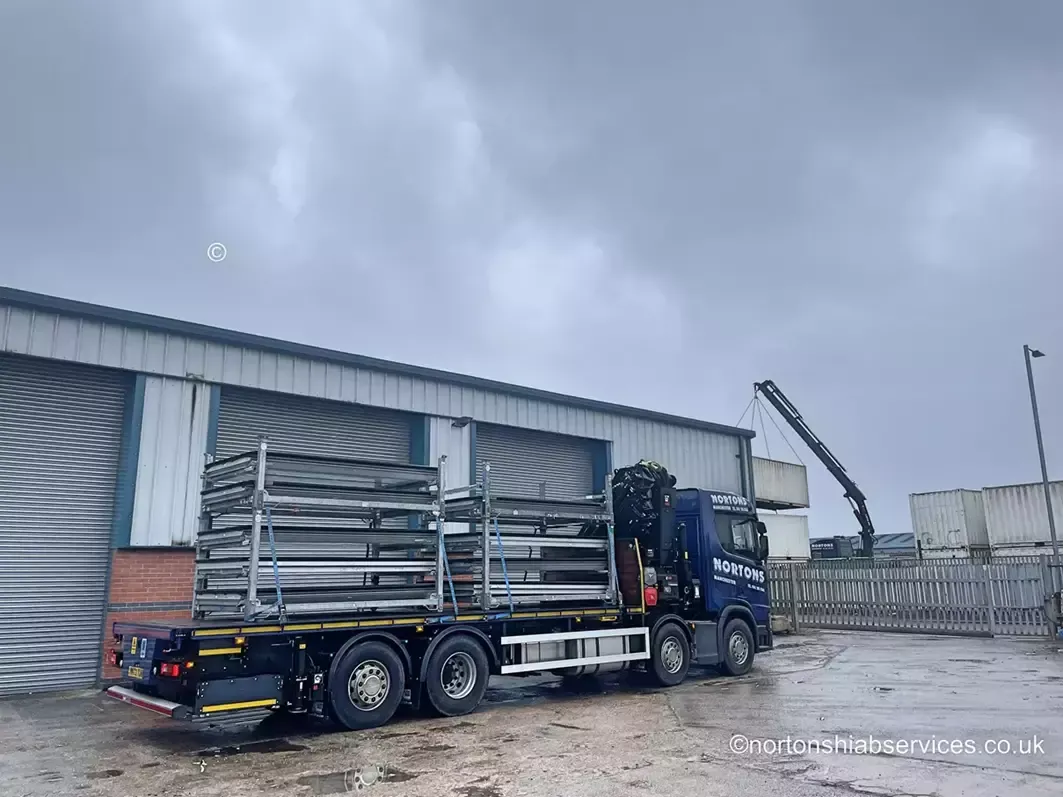
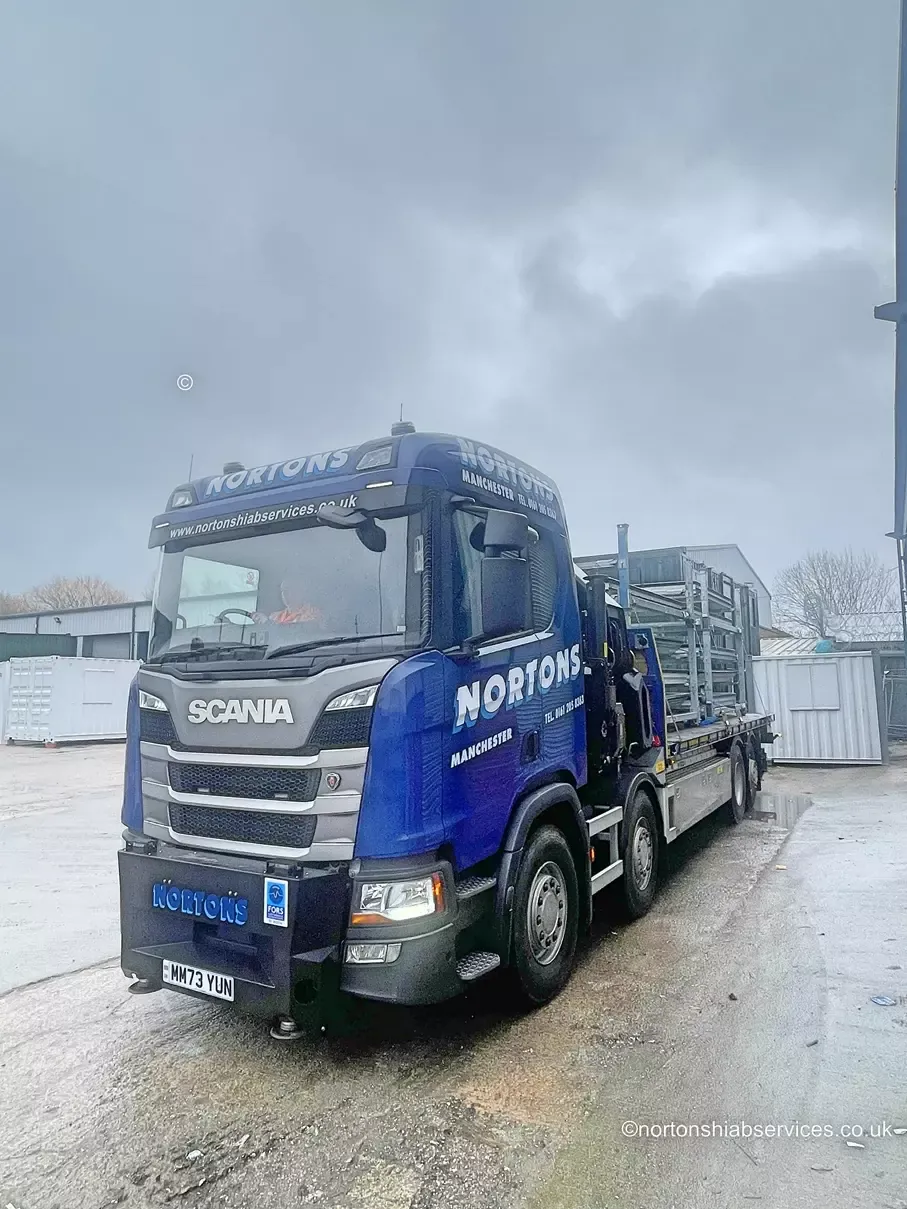
Loaded and strapped
Frames set square on the deck and strapped, with the weight spread across the axles rather than concentrated over one.
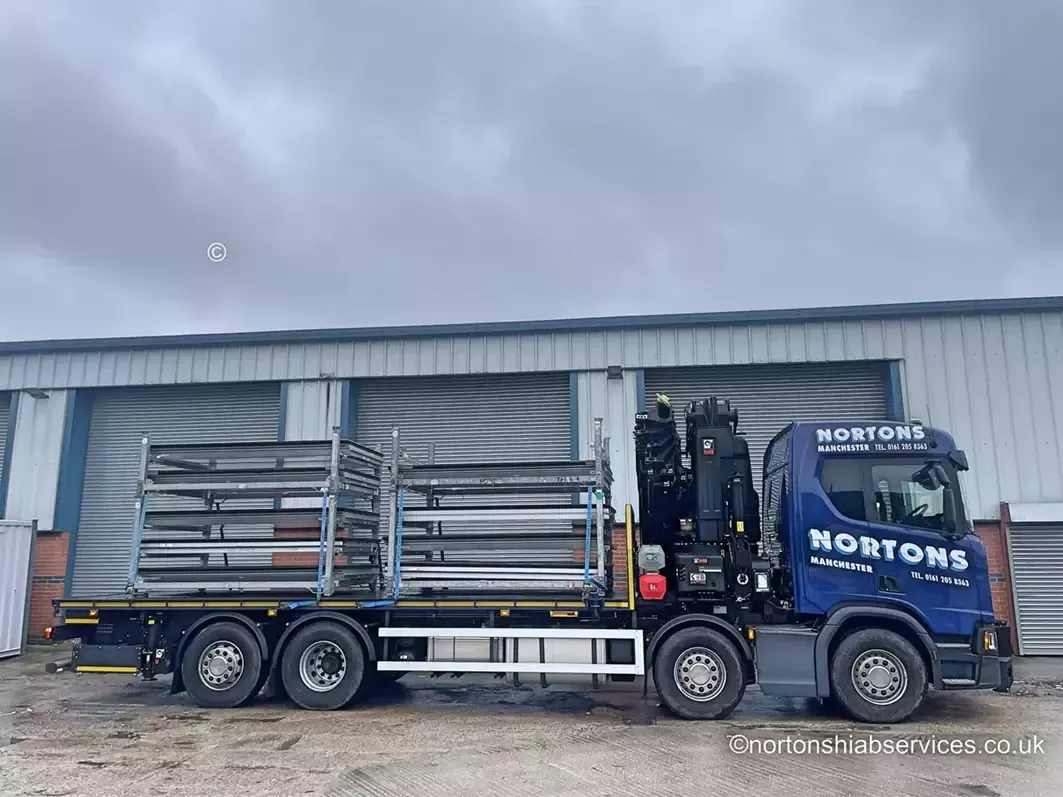
Glass, tyre and component stillages delivered and collected by a lorry that can lift them at both ends — without a forklift waiting at either.
Glass stillages. Sheets carried upright in an A-frame or a box frame. They have to land dead level and release without twisting, which is exactly what a crane does well and a forklift on uneven ground does badly.
Tyre stillages. Bulky rather than heavy, and awkward to handle by hand in any quantity. Usually a circuit job: full frames out, empty frames back, on a regular pattern.
Component and casting stillages. Heavy for their footprint, and often going to sites with no mechanical handling at all. This is where a crane on the lorry stops being a convenience and starts being the only option.
Storage between legs is available at our seven acres of CCTV-monitored yard in Miles Platting, which is what lets a run be scheduled around the receiving site rather than around the factory.
A loaded stillage is heavy, top-heavy and the wrong shape for a forklift on anything other than flat, hard ground. It needs lifting at the despatch end and at the receiving end.
Book a curtainsider and you need a forklift and an operator at both ends, available at the same time as the lorry. That is three diaries to line up for one delivery, and the lorry is the one that waits.
Our crane is on the lorry, so the stillage comes off the deck and lands where it has to go. If the receiving end is a yard, a verge or a compound rather than a loading bay, that stops mattering.
And the empties go back on the same visit, which is what turns a stillage run from a delivery into a circuit.
From the 2024 job book: glass stillages out of storage, delivered, and the empty frames brought back on the same vehicle.
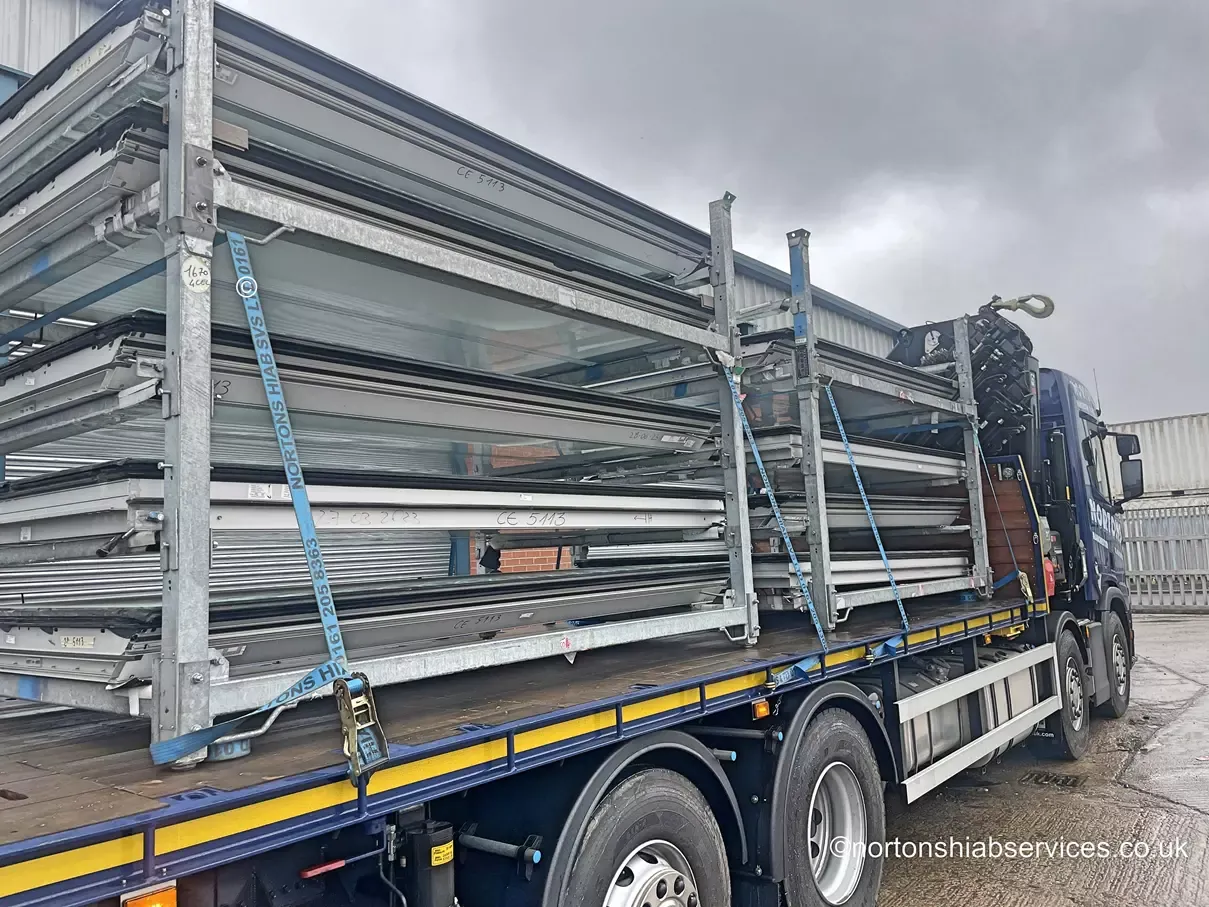
Frames set square on the deck and strapped, with the weight spread across the axles rather than concentrated over one.
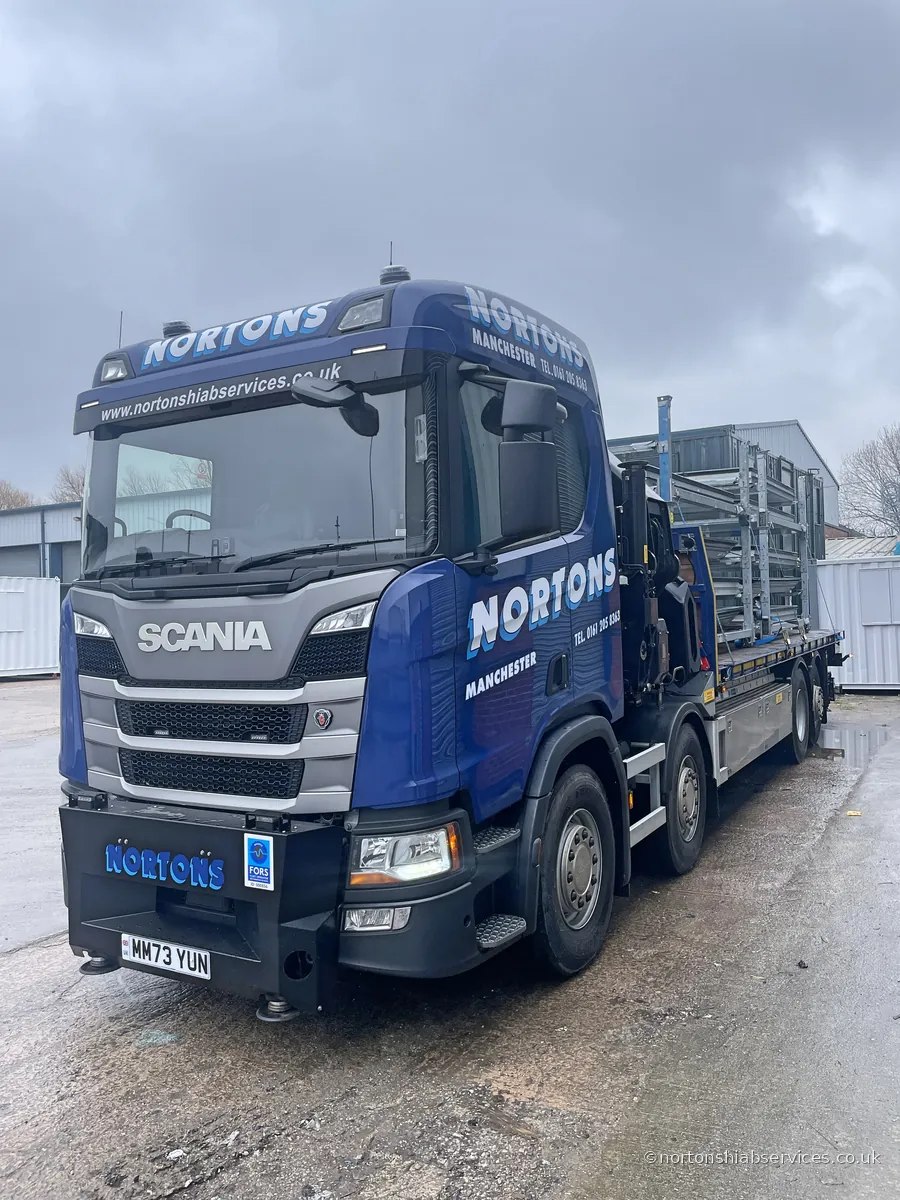
Off the deck by crane, so the receiving site does not need a forklift, a bay or a level apron.
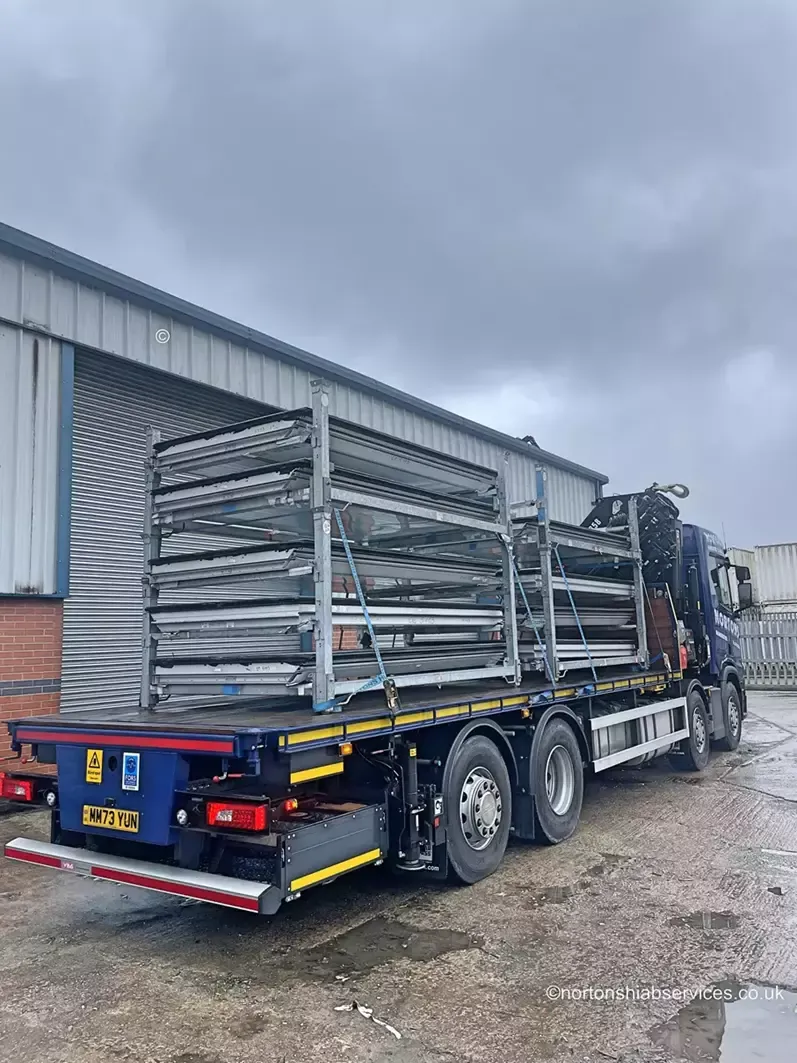
Set down flat and released. Glass stillages in particular have to land level and come off the hook without any twist.
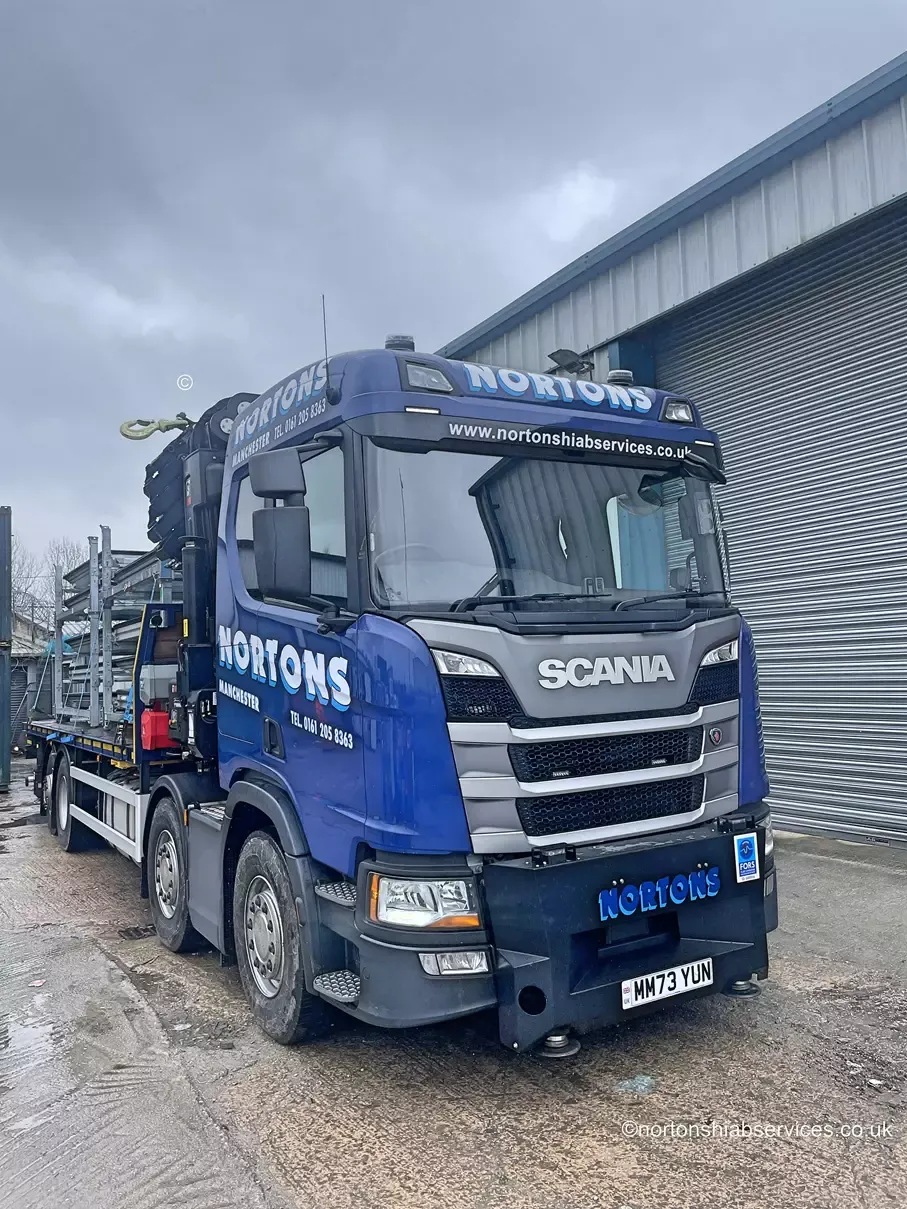
A stillage run is a timed job more often than a lifting one. Getting there in the window is most of the service.
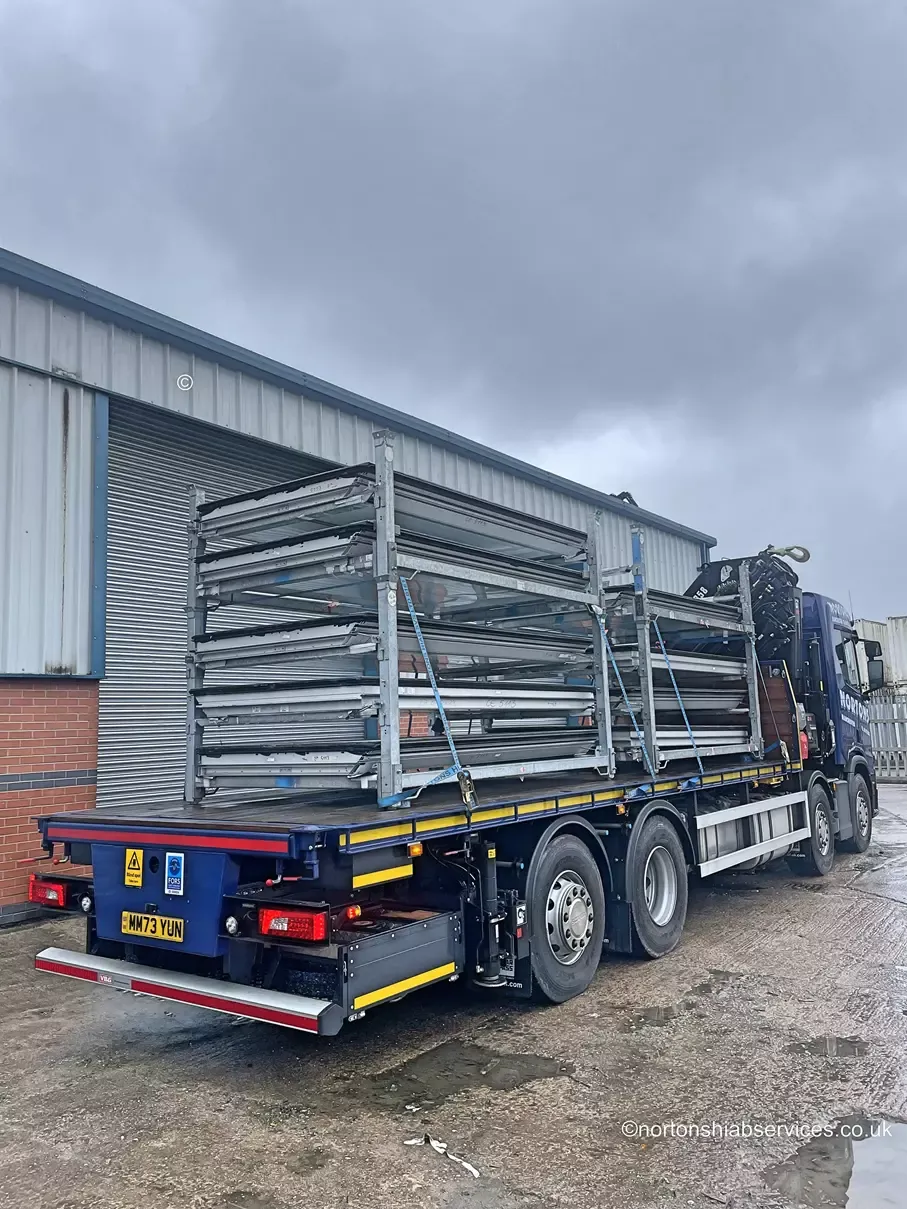
Frames taken off in the order the receiving end wants them, not the order they came off the yard.
Empty frames loaded for the return leg. A run that goes out full and comes back empty is paying twice for one journey.
Manchester is the depot and a good deal of stillage work is regional, but the runs go wherever the circuit does — England, Scotland and Wales.
Something worth saying plainly: people looking for stillage haulage almost always search with a place name attached, and this site will not claim a stillage run to a town we cannot show one in. The places below have documented Nortons jobs behind them, photographed, though not all of them are stillage jobs.
A stillage is a rigid steel frame that carries awkward goods upright and stackable — glass sheets, tyres, castings, components. They are too heavy to manhandle and the wrong shape for a forklift on rough ground, so a crane on the delivery lorry is usually the practical answer at both ends.
Yes, and it is generally what makes the economics work. Full stillages off, empties on, one visit. A stillage run that only goes one way is paying for a return journey with nothing on it.
Yes. Glass stillages need landing dead level and released without any twist, which is a crane job rather than a forklift job. They also need somewhere flat to stand at the receiving end, which is worth checking before the lorry sets off.
It depends on the frame size and weight rather than the deck length. A wagon and drag gives two beds served by one crane, which suits a stillage run particularly well because the trailer can be dropped and collected on the return.
Most of this work is contract. A regular run with the same vehicle and the same driver / operator means the loading pattern, the site access and the empties collection all become routine instead of being explained every week.
Manchester is the depot and much of the work is regional, but the runs go UK-wide across England, Scotland and Wales. Tell us the two ends of the circuit and we will tell you whether it fits the existing pattern or needs a vehicle of its own.
Tell us what the frames are and where they run between. Regular runs are quoted as a circuit rather than a job.





ALLMI trained driver / operators · RAMS, method statements and lift plans · Euro VI clean air zone compliant fleet, renewed by continual investment in new wagons · All our accreditations