Somerset · every summer
Two hundred miles and one field
The run down to Glastonbury is the easy part. The job starts at the gate, where the road stops being a road and the ground decides what happens next.
The photographs
Ten years of the same run
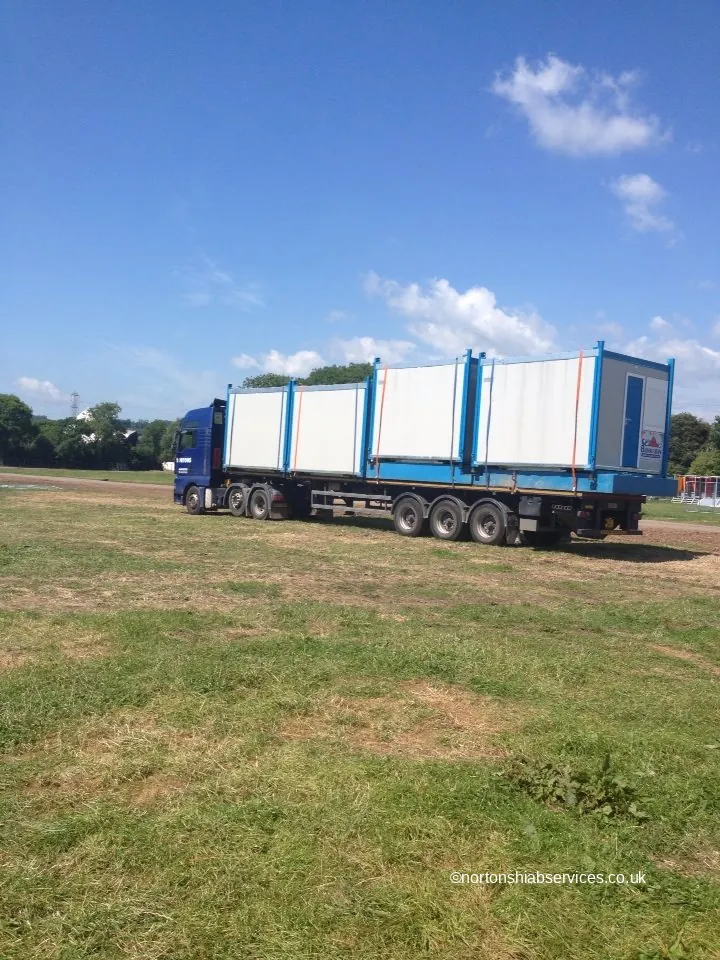
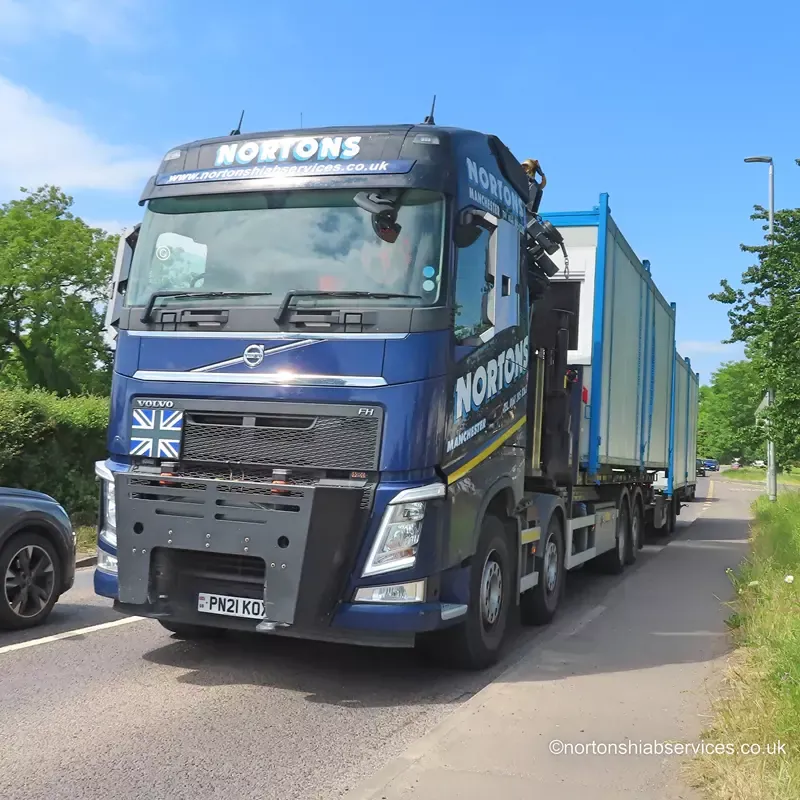
Loaded at the yard, down the A road, across the field, and out again afterwards.
Down the A39
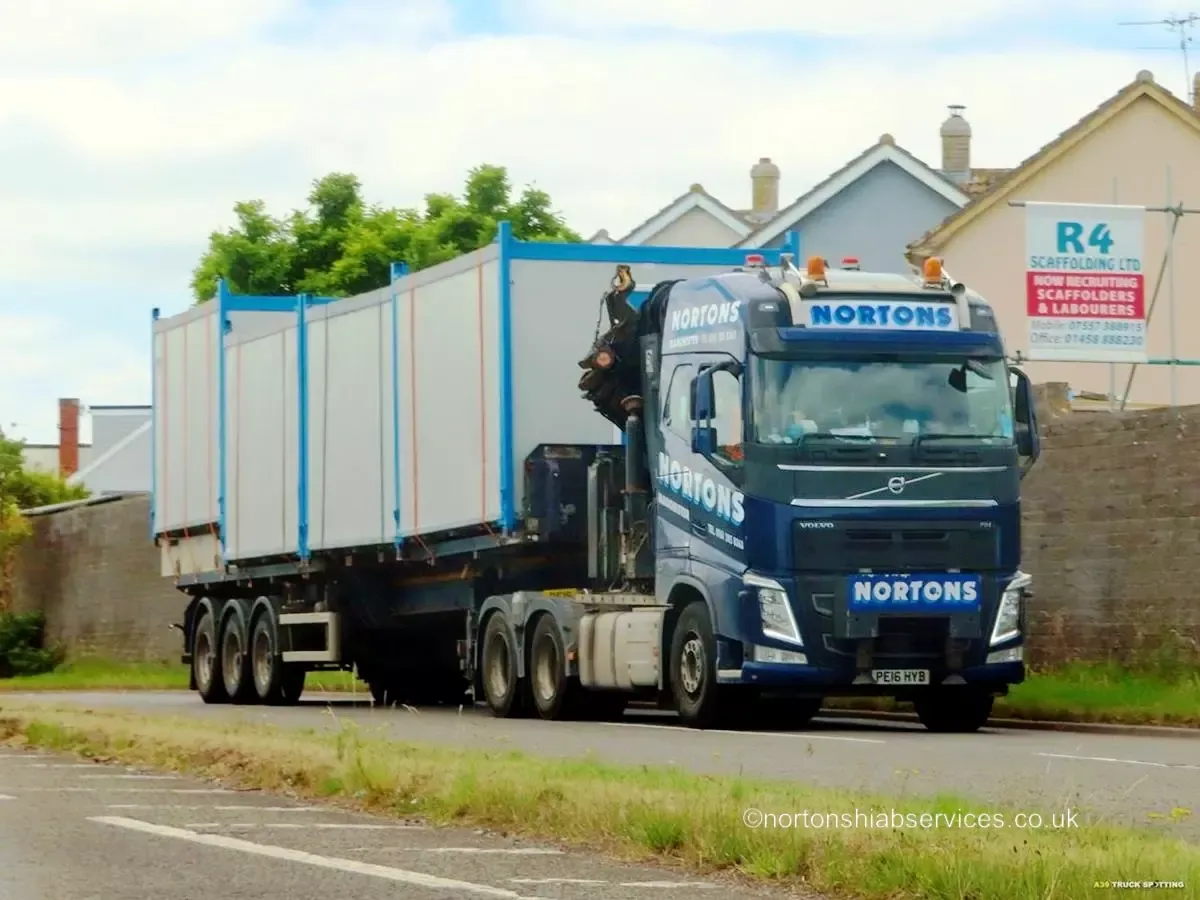
Through the village
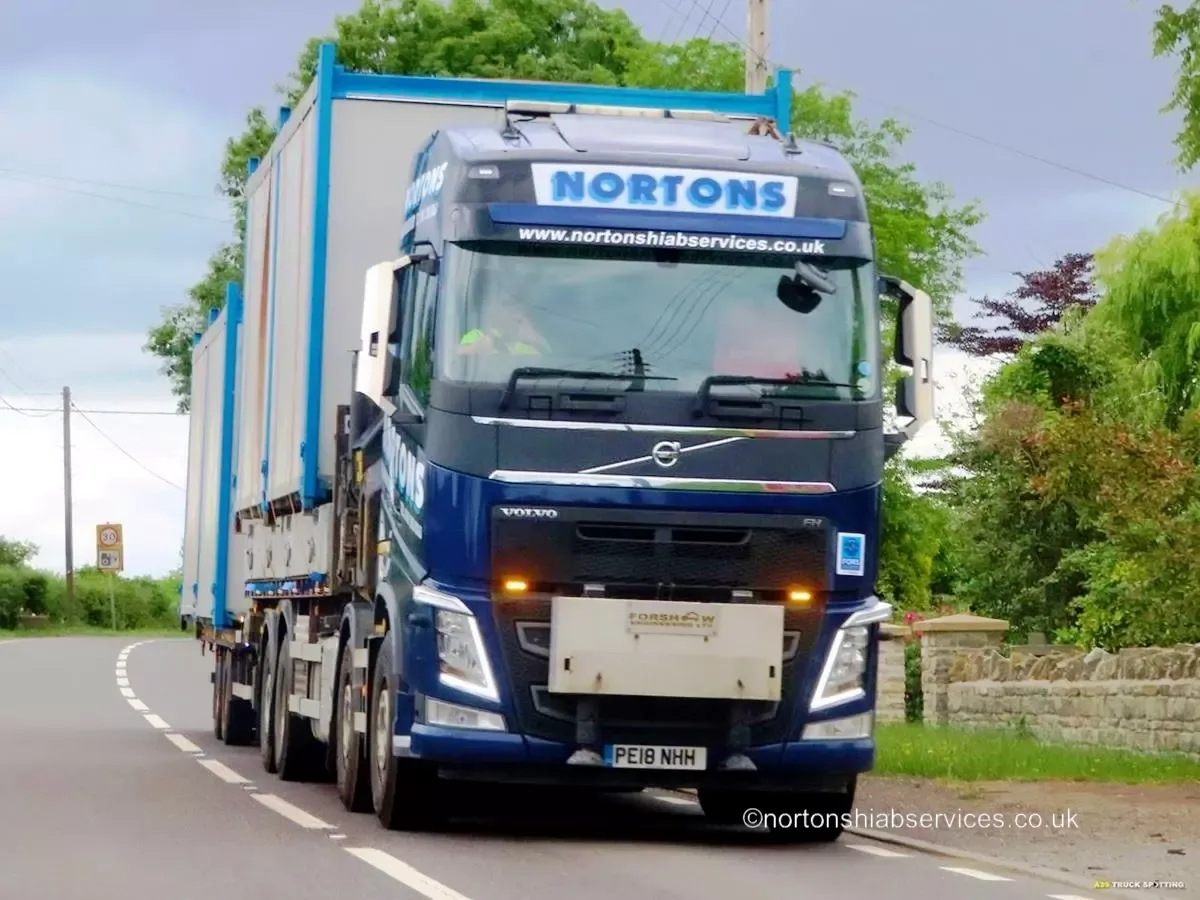
The last few miles
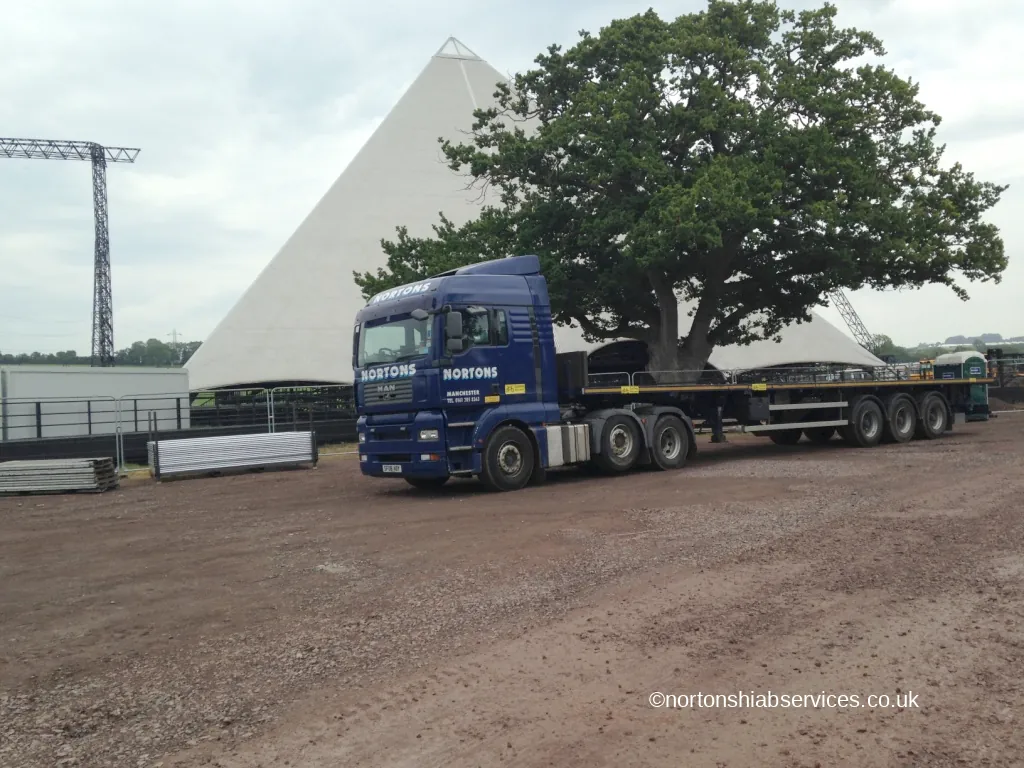
Parked up under the oak
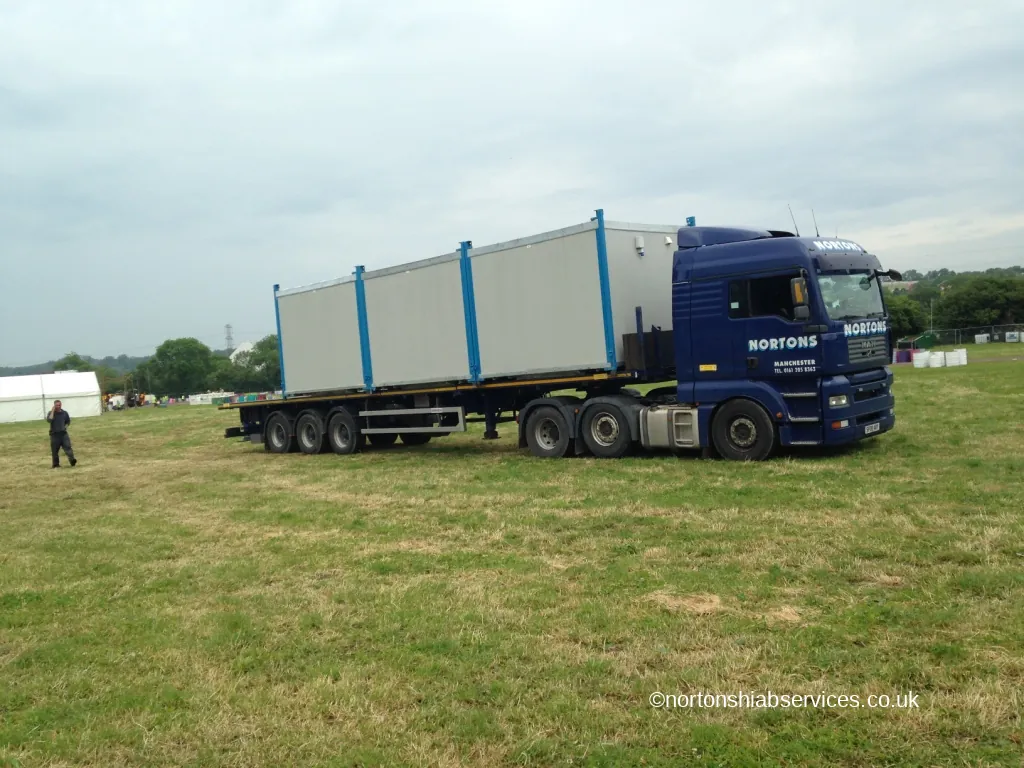
Across the field
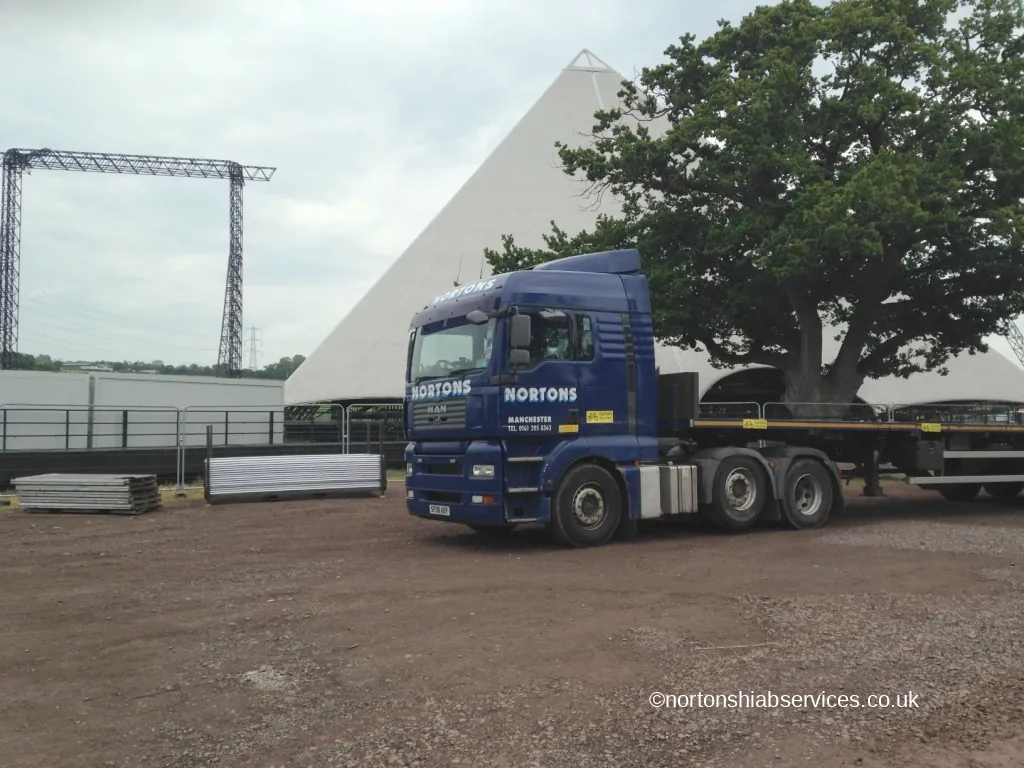
At the site gate
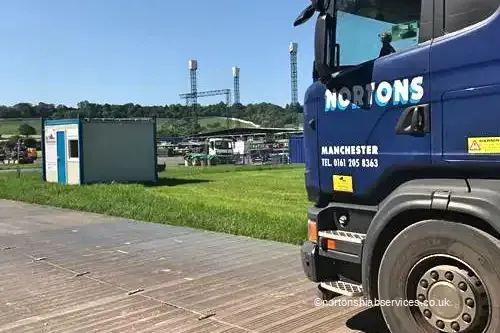
On the temporary trackway
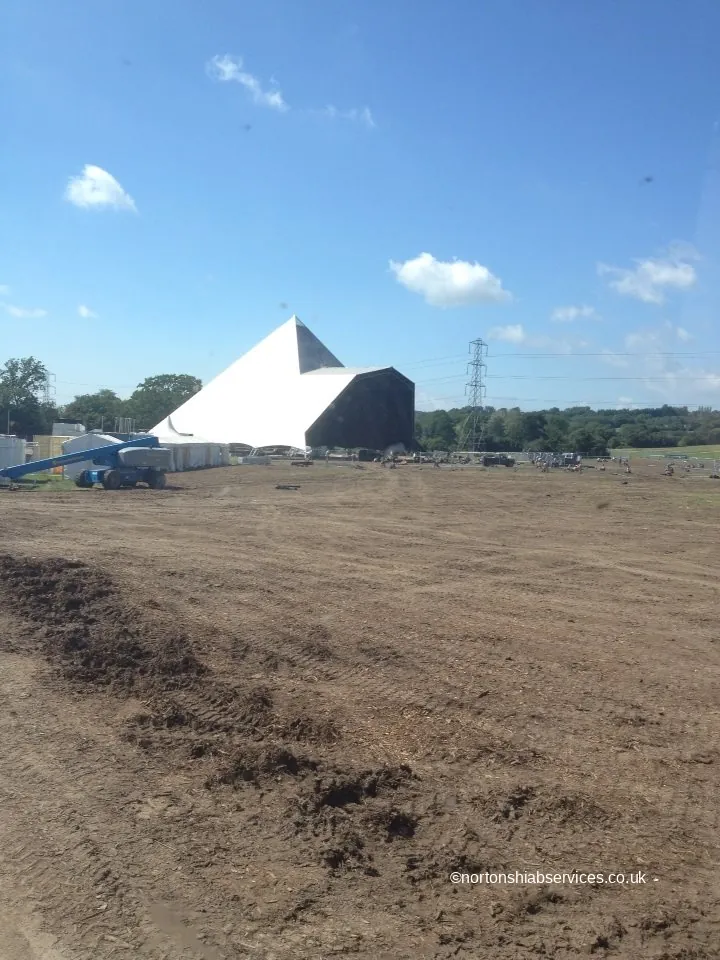
The only tent left standing
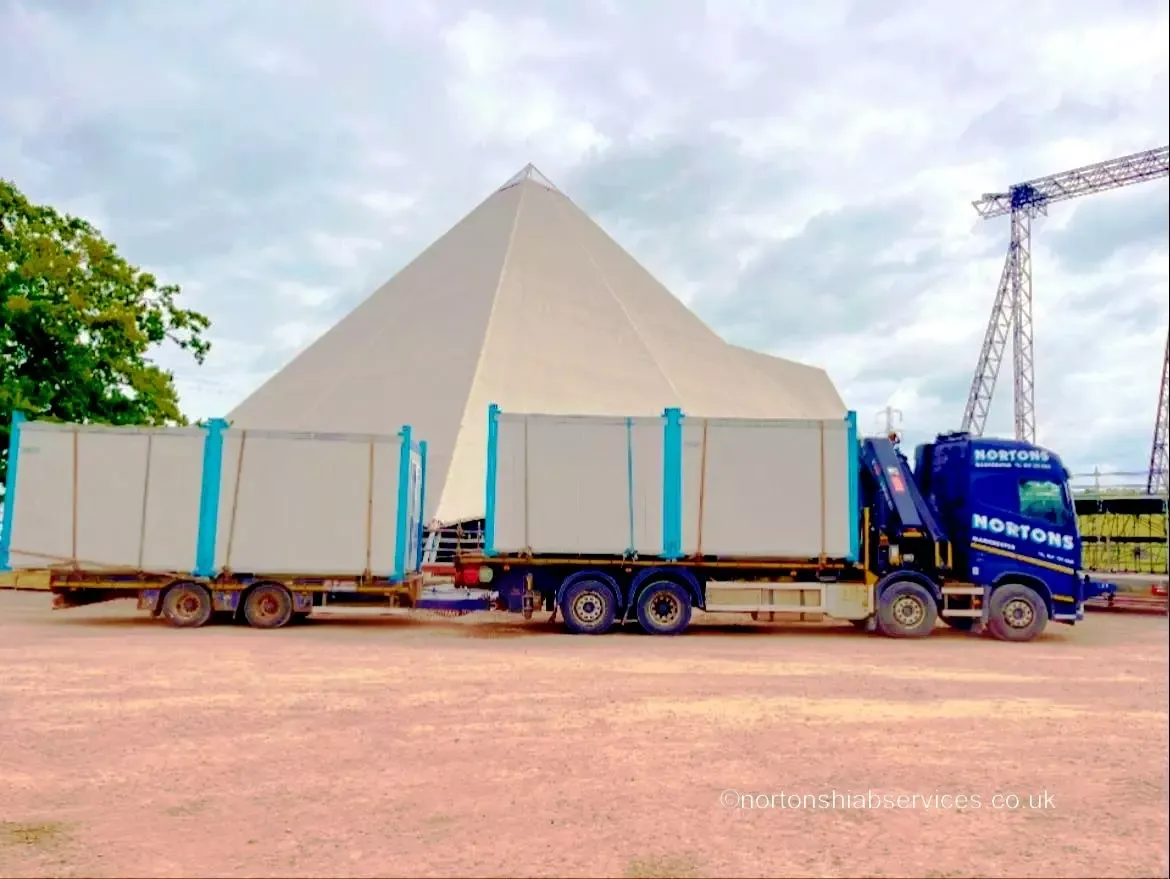
The last photograph is the one worth looking at. That is the site after everybody has gone, with one marquee still standing and a field that used to be a road. Getting a loaded artic back out across that is a different job from the one that went in.
The short answer
Somebody has to bring the boring boxes
Nortons hauls site accommodation to the Glastonbury festival site and back — welfare units, offices, production cabins and containers, loaded at Miles Platting and craned off in a Somerset field.
What makes festival work different from any other delivery is that the last hundred metres are the whole job. The A39 down is straightforward. The site is a working farm for fifty weeks of the year, and for the other two it has to take several thousand vehicle movements across grass. There is temporary trackway where it matters, and mud where it does not. A 44-tonne artic that gets it wrong stops being a delivery and starts being an obstruction that somebody has to tow.
So the planning is about ground and timing rather than about lifting. Which vehicle can get in and turn round. What the ground will take under an outrigger. When the slot is, and what happens to the schedule if the weather changes it. The crane part — picking a cabin off the bed and putting it where it goes — is the straightforward bit.
CabinsWhat we take
SomersetWhere it goes
A39The road in
Out againThe harder half
If you run an event
What to tell us when you ring
- Where the vehicle can get to, not where the load has to end up. Those are usually different places, and the gap between them is what decides the crane.
- What the ground is. Grass, hardcore, trackway or tarmac. It changes the vehicle, and sometimes it changes whether the job is possible at all.
- The slot, and how firm it is. Build schedules move. Tell us early and we can usually move with them.
- How it comes out again. Half the festival jobs that go wrong go wrong on the way out, when the ground is worse and everybody wants to leave at once.
- Whether anything is wide. Our transport team arranges nationwide movement orders for wide loads as required and we run our own escort vehicles, so a wide unit is a planning question rather than a problem.
Moving site accommodation · Container transport · Working away from the North West
Common questions
Festival and event haulage
What do you actually take to a festival?
Site accommodation, mostly. Welfare units, offices, production cabins, storage containers and the odd awkward one-off. The festival infrastructure everybody photographs is somebody else’s; ours is the boring boxes that the people running it work out of.
Why is festival haulage difficult?
Because the last mile is not a road. The A roads down are fine. What decides the job is the site itself: soft ground, temporary trackway, a queue of other vehicles doing the same thing, and a build schedule where being a day late means the unit cannot get in at all. Coming back out after the event is usually harder than going in.
Do you do event and festival work generally?
Regularly. Brighton, Liverpool, arena work on the Merseyside waterfront and stadium work in Manchester. Event work is nearly always out of hours and always timed by somebody who is not us.
How far in advance should a festival job be booked?
As early as you can. Build weeks are the same weeks for everybody, so the vehicles that suit that work are spoken for a long way ahead. Tell us the site, the access and the dates and we will tell you straight away whether we can commit to it.
The 2025 run · Brighton festival, 2020 · Liverpool festival, 2021
Tell us what needs lifting
Tell us what you need lifting or transporting and we will come back with a vehicle and a price.