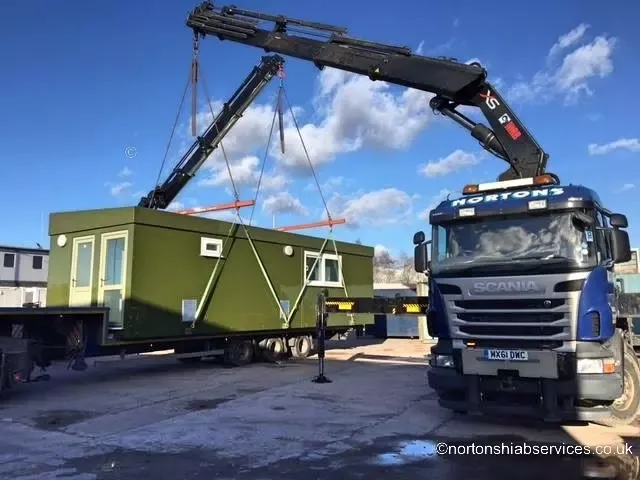
A straightforward drop
Hardstanding both ends, load within a few metres of the lorry, site ready. In and out inside the hour. This is the cheapest shape a hiab job comes in.
No list price, because there is no list job. Tell us what needs lifting and where it has to go, and we will price the job in front of us.
Hardstanding both ends, load within a few metres of the lorry, site ready. In and out inside the hour. This is the cheapest shape a hiab job comes in.
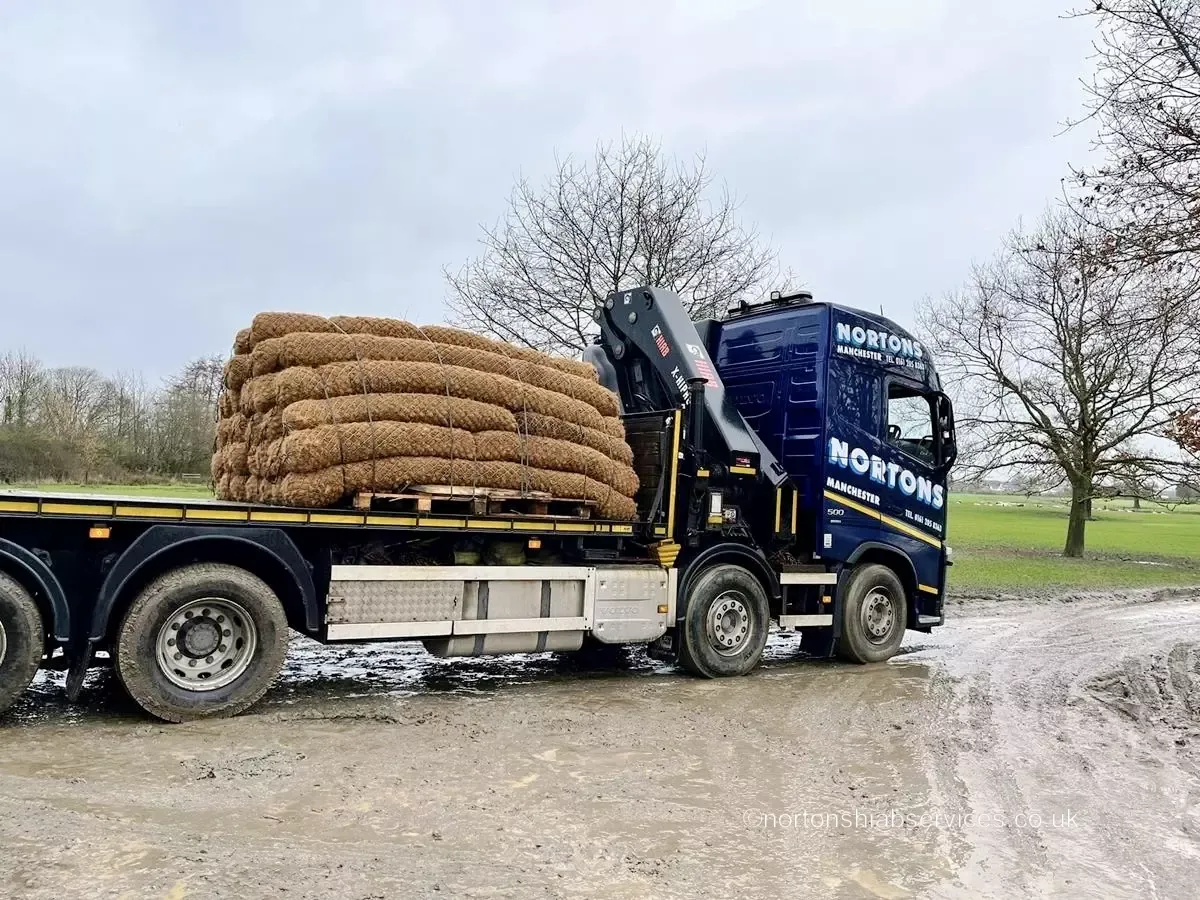
Where the outbound job pairs with a backload, the empty miles disappear from the calculation. It is the same lorry and a better rate.
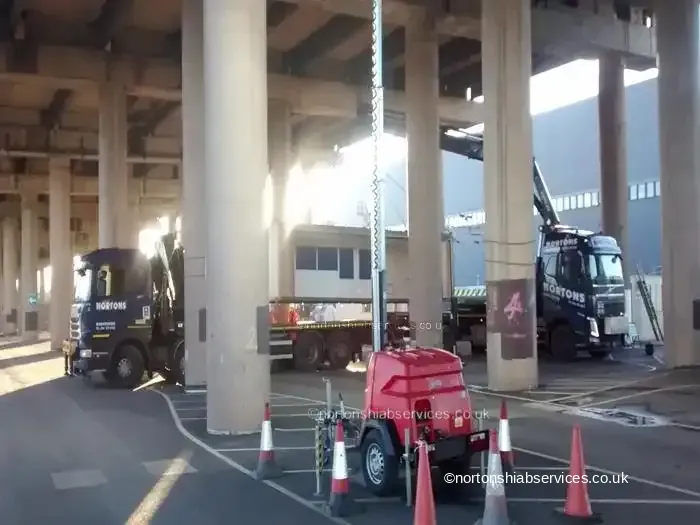
Cones out, a lighting set and two vehicles working under a viaduct with no room above the boom. Set-up is the part people forget to ask about, and it is on the clock like everything else.
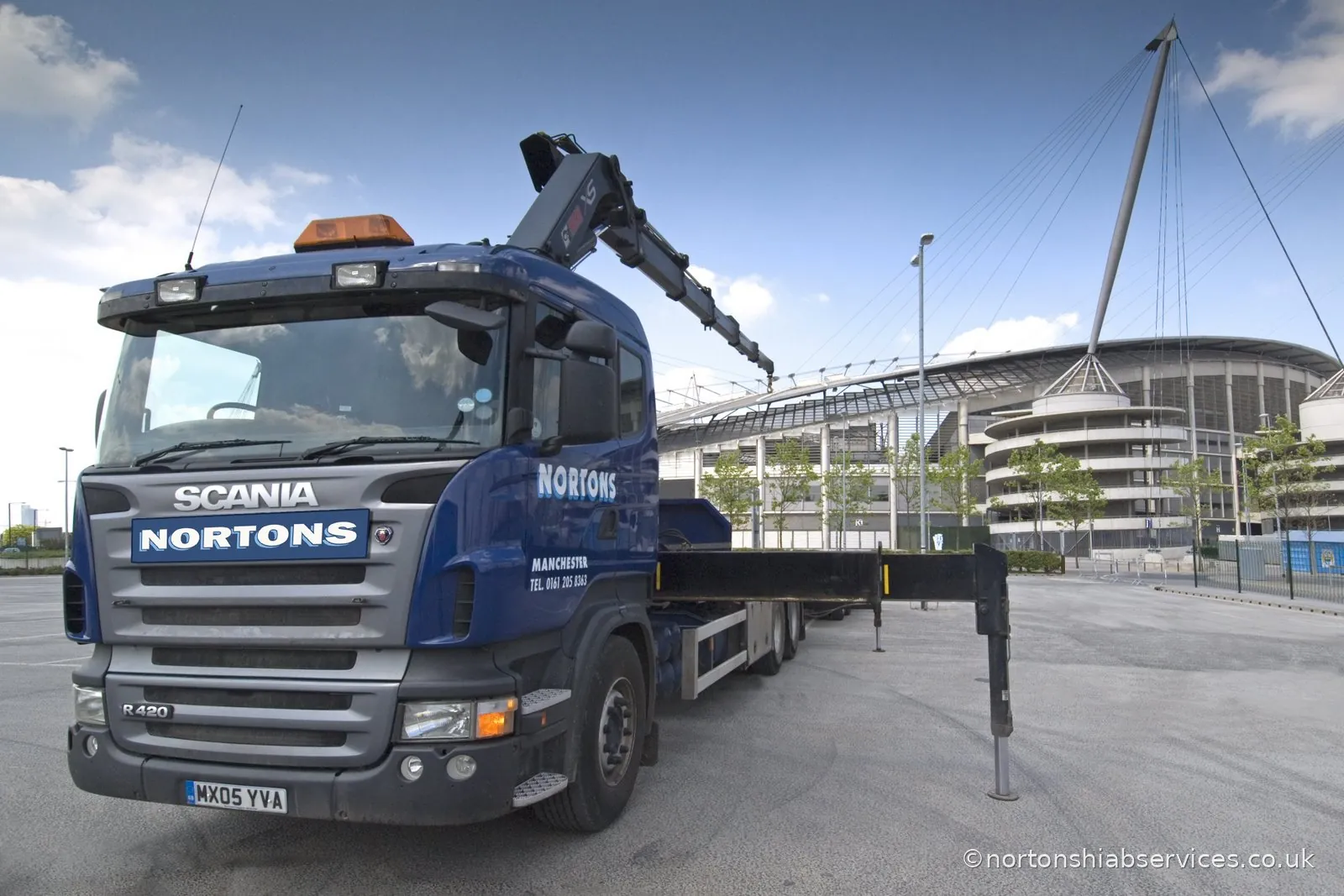
Traffic management, a footway that has to stay open, timed access. None of it is difficult, but all of it is time on site, and time on site moves a price more than most people expect.

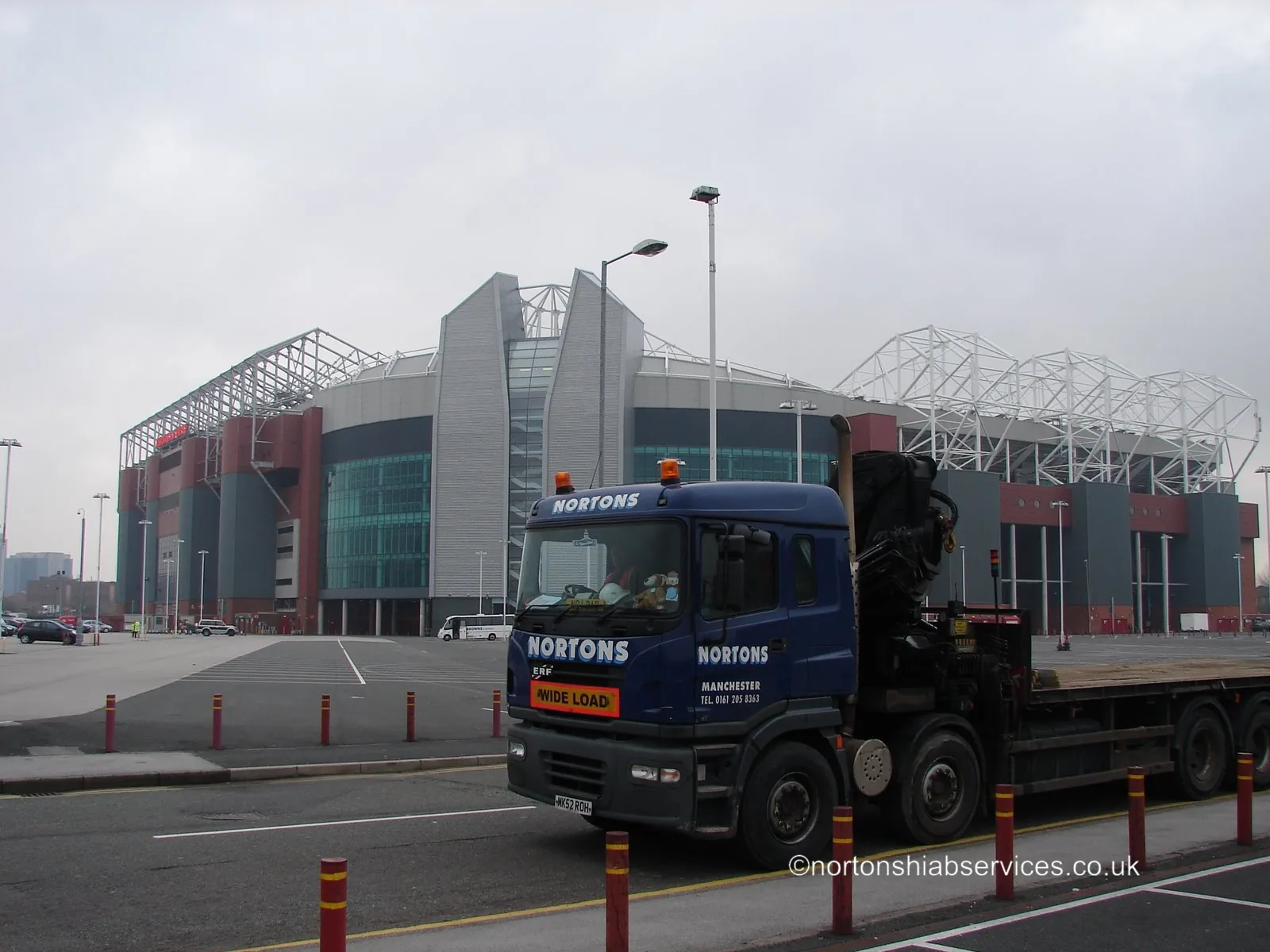
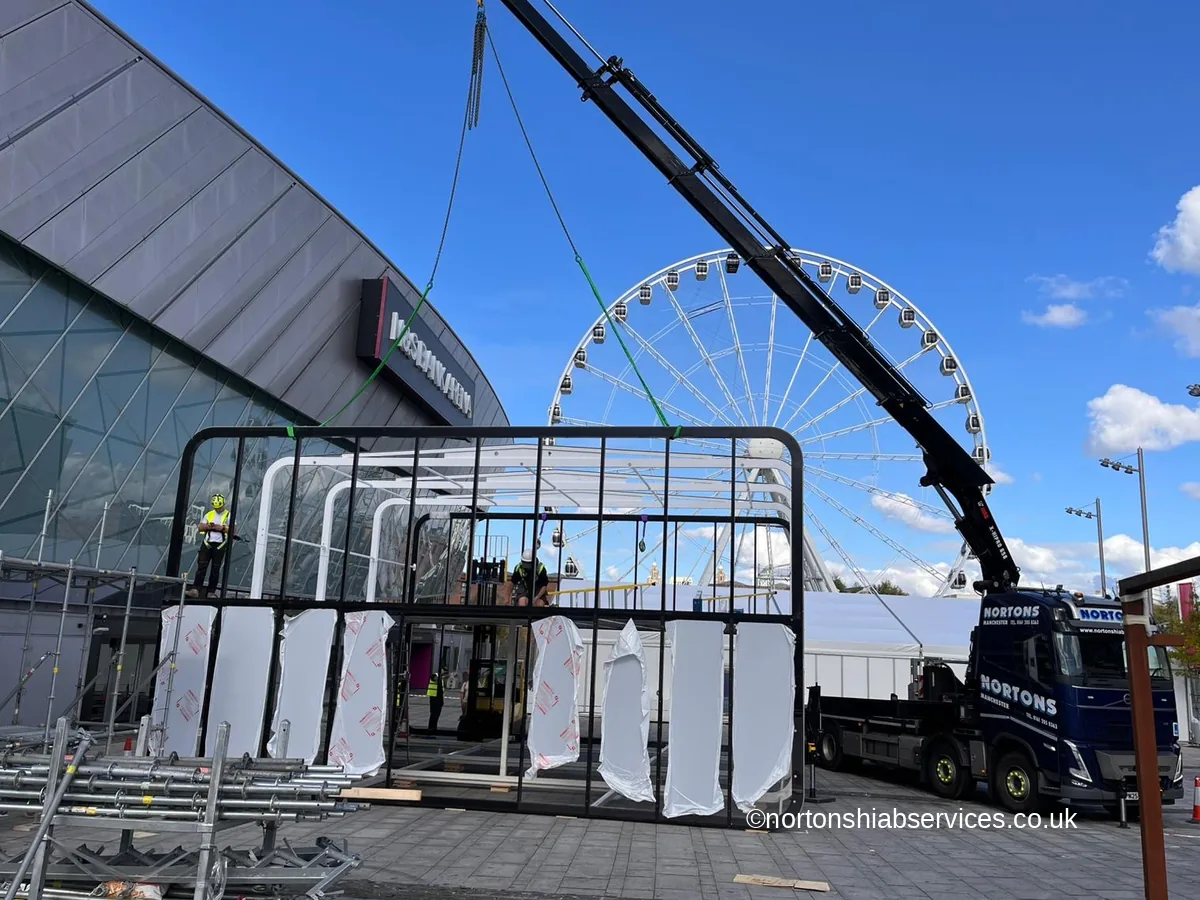
A civic square, a road closure and a window to work in. The lift itself takes minutes; the arrangements around it are what the quote is mostly made of.
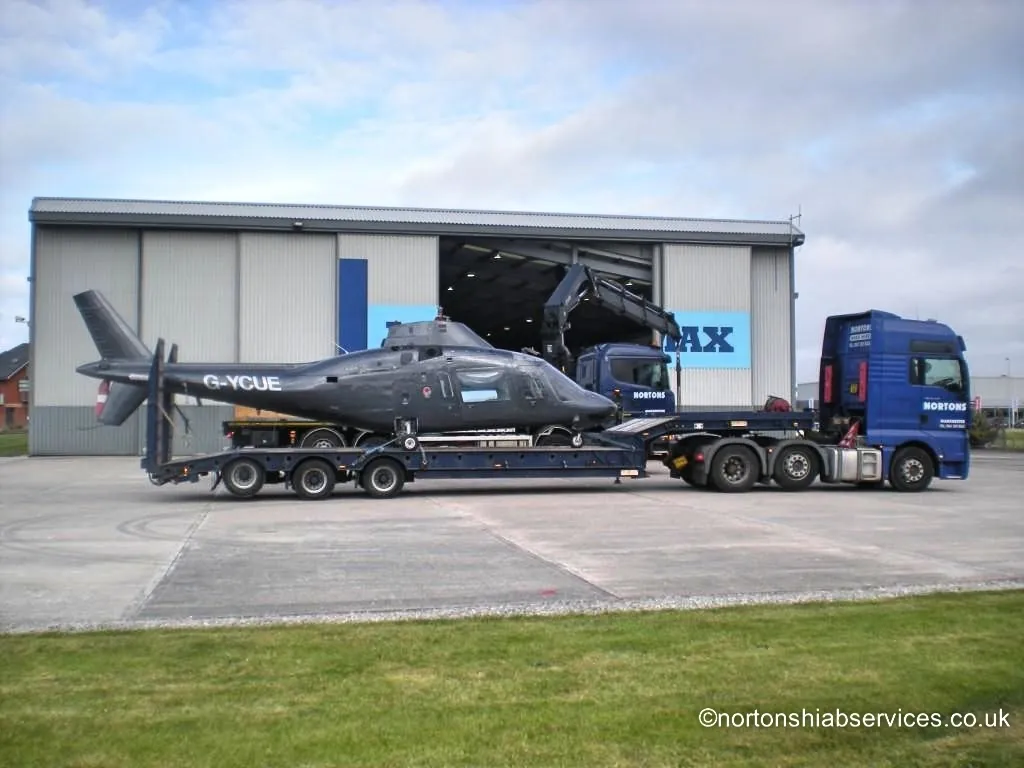
Unusual loads need a written plan, the right slings and often a site visit first. The plan is the cheap part; getting it wrong is not.
Every other figure on this website is one we can evidence — a capacity off a manufacturer data sheet, a vehicle off the December 2025 schedule, a threshold out of the regulations. A "from £x" rate would be the only number here that was invented.
A price you can rely on depends on the load, the access and how long the vehicle is on site. Tell us what needs lifting and where it has to go and a real figure comes back the same day. Anything else we need, we will ask you for. Anything published without them is a headline that changes the moment somebody looks at the job.
What we can tell you is how the work is bought. We quote job rates, half day rates and day rates, and which one you are offered follows the job rather than our diary — a twenty-minute drop is a job, not a day, and we are not going to sell you one because it is tidier for us.
What is worth your time beyond that is knowing what actually moves the number, because that is what lets you compare quotes properly — and spot the one that has quietly assumed a smaller crane or a shorter day.
Roughly in the order they matter. The first two account for most of the difference between two quotes for what looks like the same job.
The single biggest factor, and the one most often got wrong. A load that lands three metres from the lorry may suit a 558; the same load at twelve metres needs an 858. Quote the radius and you get the right vehicle first time.
Whether the lorry can get its stabiliser legs down where the load has to land. A tight yard, a soft verge or a footway that has to stay open all add time, and sometimes add a second vehicle.
A drop that takes twenty minutes and a lift that ties a vehicle up all afternoon are different jobs. Waiting for a site to be ready is the most avoidable cost on any quote we issue.
A loaded run out and an empty run back costs more per tonne than a job that pairs with a backload. Where a return load exists we use it, and that shows up in the price.
Over 44,000 kg gross, over 2.9 m wide, or a rigid length over 18.65 m and statutory notice applies — a minimum of two working days. A police escort requested through a force generally carries a fourteen-day lead; we run our own, which is usually cheaper and always faster.
Most jobs need a documented plan. We have our own appointed persons, so the plan is arranged as part of the job.
A crane's rating is its capacity close in. What decides your job is what it will lift at the radius your load actually has to travel.
Take our largest crane. Close in it lifts over 8 tonnes. Right out at 19.6 metres it lifts a fraction of that. Nothing about the load changed — only how far out it had to go.
This is why "how heavy is it?" is the second question we ask and "how far from where the lorry can stand?" is the first. Get the radius wrong at quote stage and the vehicle that turns up cannot do the job, which is the most expensive mistake available on a lifting quote.
Every capacity-at-radius table for every crane in the fleet is published, so you can check the answer before you ask for a price.
Ask all five of every supplier. Two quotes that looked hundreds apart usually turn out to be answering different questions.
There is no honest single figure, which is why you will not find one on this page. The same lorry can do a twenty-minute drop or a full day of lifts on a restricted site, and the price properly reflects that. What we can promise is that a quote arrives with the crane, the radius and the time it assumes written down, so you can compare it against anyone else on the same terms.
All three, and the job decides which. We quote job rates, half day rates and day rates, so a single drop is priced as a single drop rather than as a day you did not need. Where a vehicle is genuinely with you for a session or a full day, a half day or day rate is usually the cheaper way to buy it. Across the industry the mixing up of those three is why quotes look so different, so ask every supplier what the minimum charge is, what the rate covers after that, and what happens if the site is not ready when the lorry arrives.
For most deliveries, yes, because you are not paying twice. A mobile crane has to be hired, delivered and set up separately from the haulage, and someone has to be there for both. A hiab arrives with the load already on it. Where a hiab is not cheaper is a long duration lift or one above its reach, and we will say so rather than stretch a job to fit the vehicle.
It changes which vehicle comes, which is what changes the price. Capacity falls sharply with radius. The 858 rigid lifts over 8 tonnes and reaches 19.6 metres, but not both at once — the manufacturer charts in our documents show exactly where each crane stops being the answer.
Almost always one of three things: the site was not ready and the lorry waited; the load turned out heavier or further from the hardstanding than described; or the movement needed notice nobody had asked about. All three are avoidable at quote stage, which is why we ask about them.
Quotes are free, always. Tell us what needs lifting and where it has to go and you will get a price back. If a job needs somebody to come and look at it before we can price it or plan it, that site visit is chargeable, and we will tell you what it costs before we arrange anything.
There is no single figure, and any firm quoting one before hearing about the job is guessing. What moves the number is which crane it takes, how far out it has to reach, how good the access is and how long we are on site - all of which matter more than mileage. We price by the job, the half day or the day. Tell us what needs lifting and where it has to go and you will have a real figure rather than a range.
Because a price list for hiab hire would be wrong more often than it was right, and you would find that out on the invoice. Two jobs the same distance apart can differ by a factor of three on crane size and access alone. We would rather spend two minutes reading your enquiry and give you a number we will stand behind.
Describe the job in a sentence and we will come back with a real figure. Quotes are free and there is nothing to work out first.





ALLMI trained driver / operators · RAMS, method statements and lift plans · Euro VI clean air zone compliant fleet, renewed by continual investment in new wagons · All our accreditations