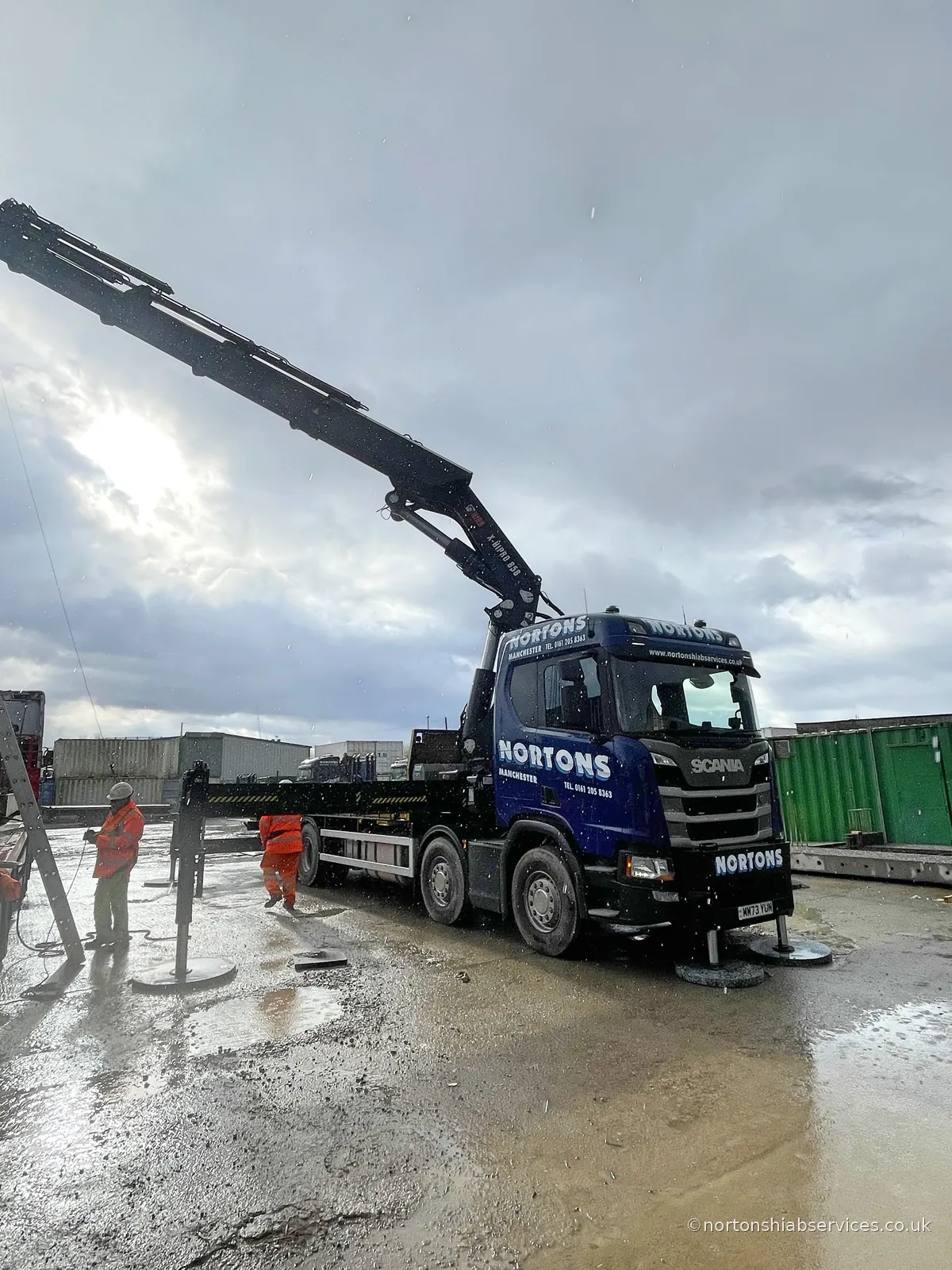
Loaded and secured
Units stacked and strapped on the deck with the load spread across the axles. Concrete rewards getting the weight distribution right first time.
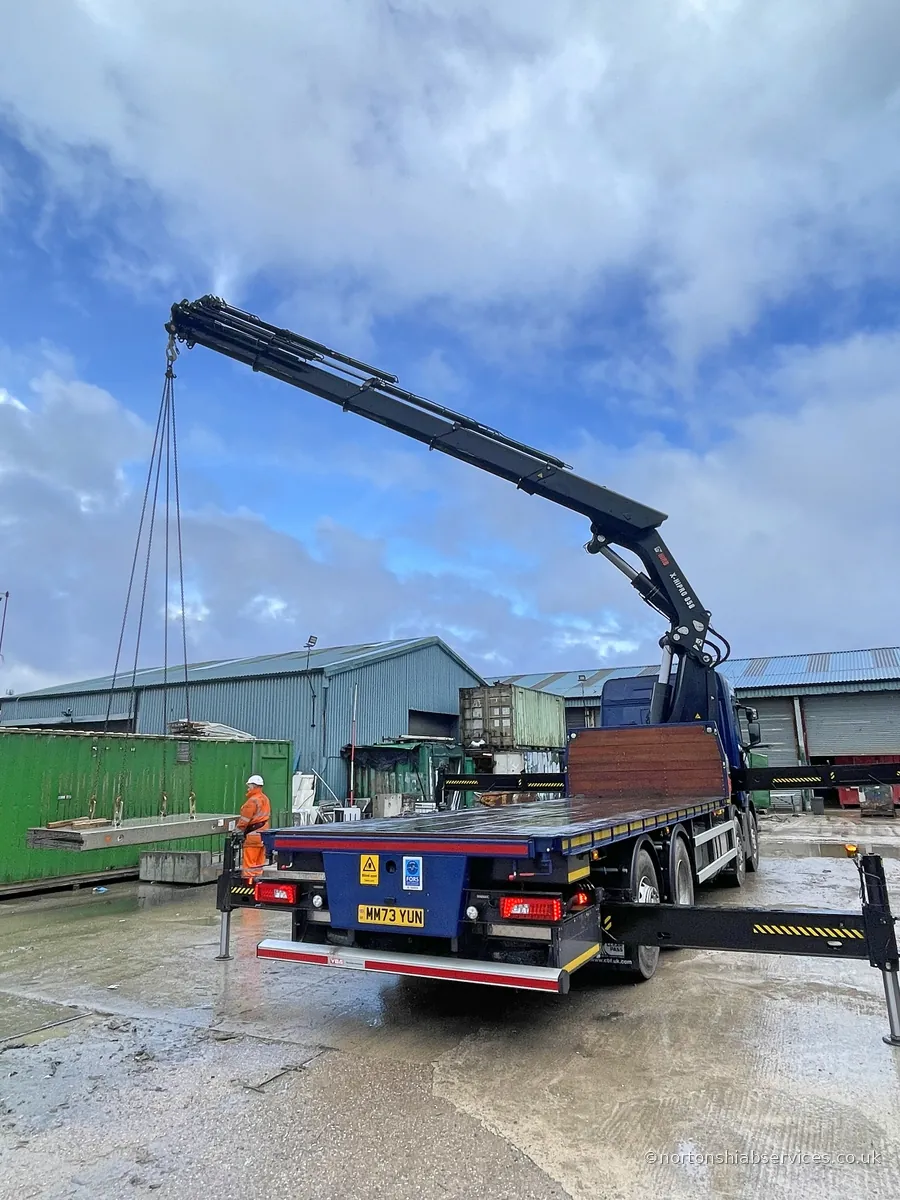
Units, panels, bollards and street furniture delivered and set down where they belong — once, on prepared bedding, by the crane that brought them.
From the 2024 job book. The same crane did every lift on this job, so the units were handled exactly twice: on at the works, off at the site.
Units stacked and strapped on the deck with the load spread across the axles. Concrete rewards getting the weight distribution right first time.
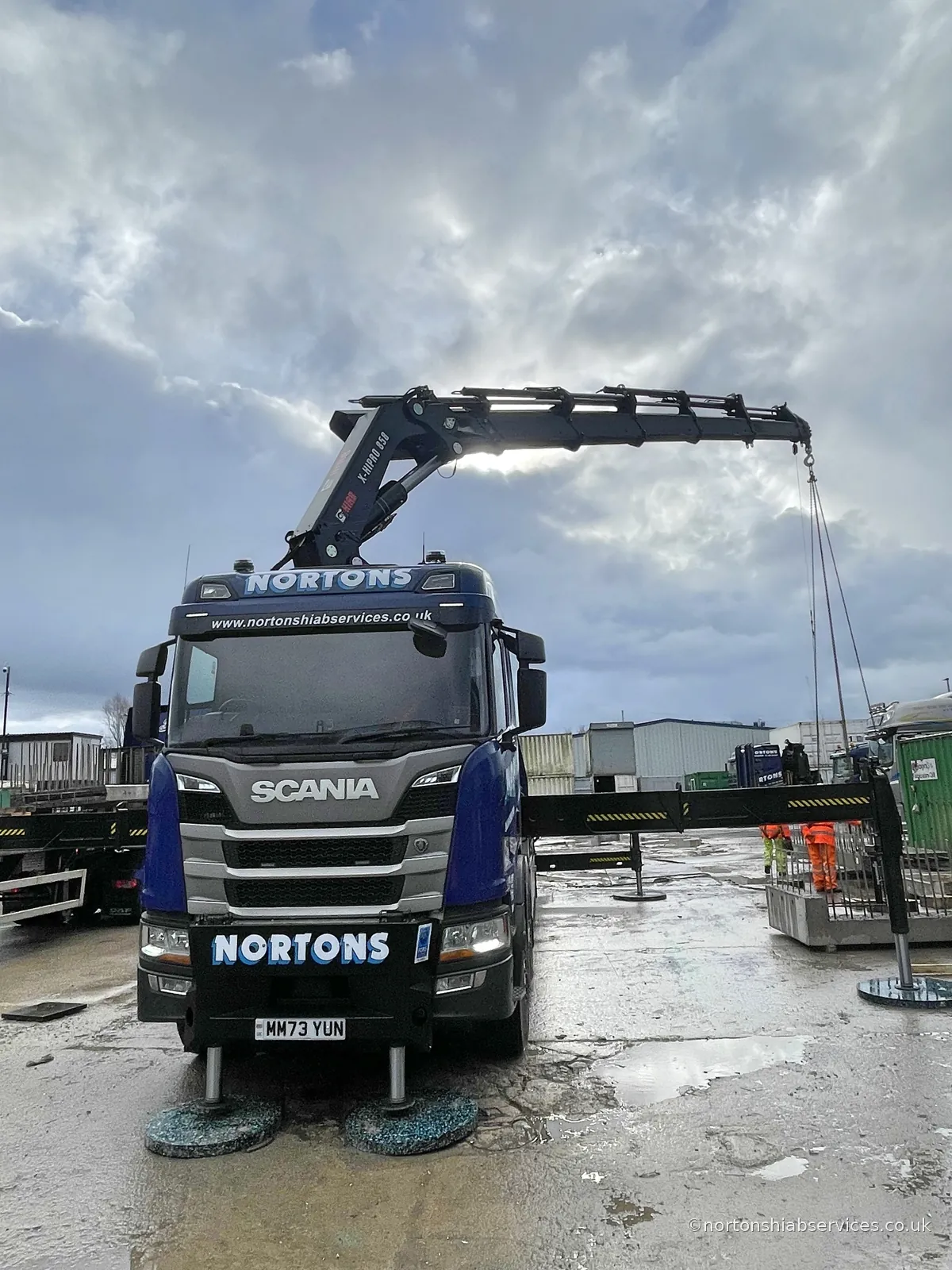
Chains and shackles set to the unit's own lifting points, checked before the load takes any weight.
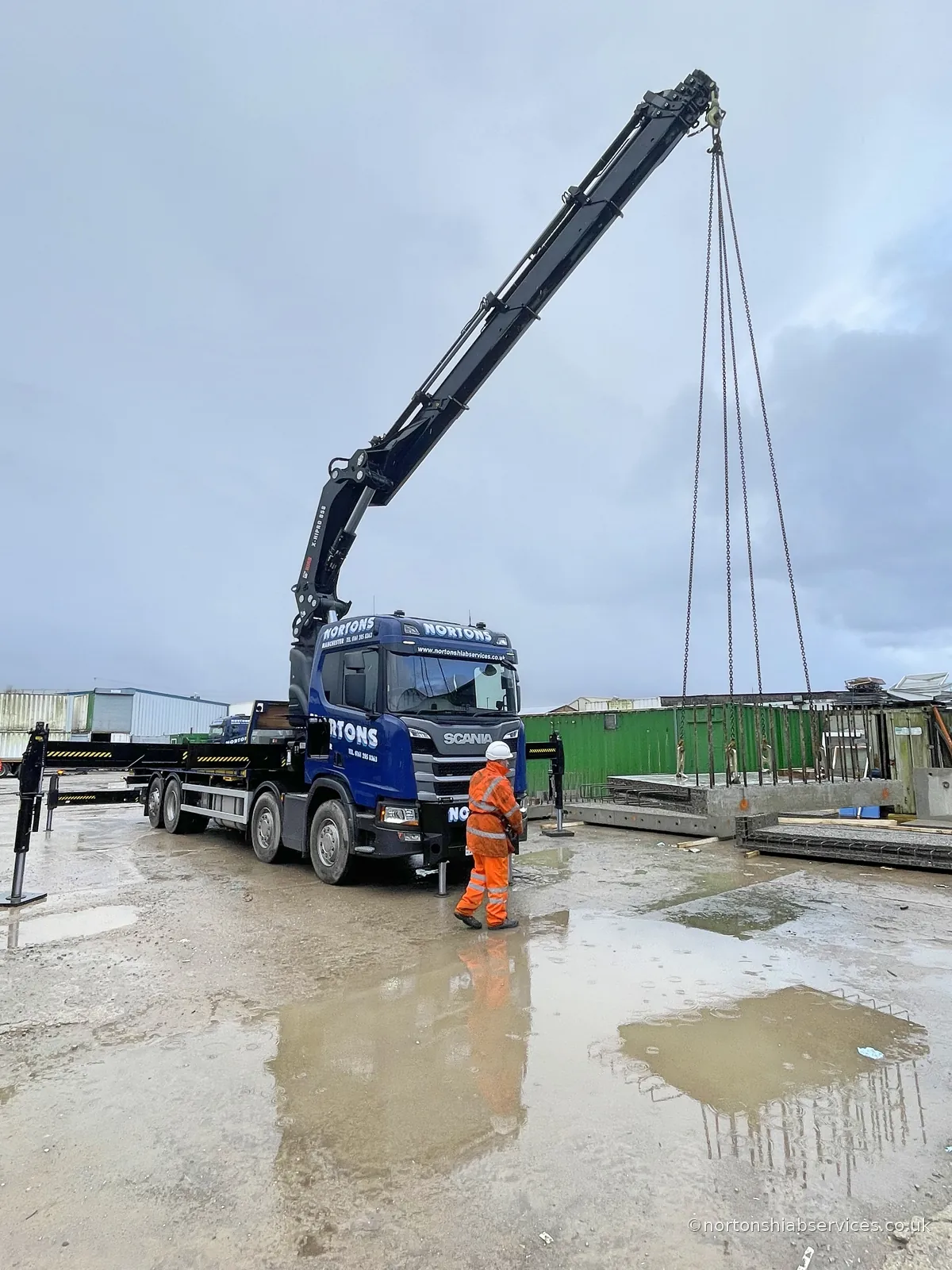
The unit taken up under remote control, with the driver / operator standing where they can see the landing point rather than the crane.
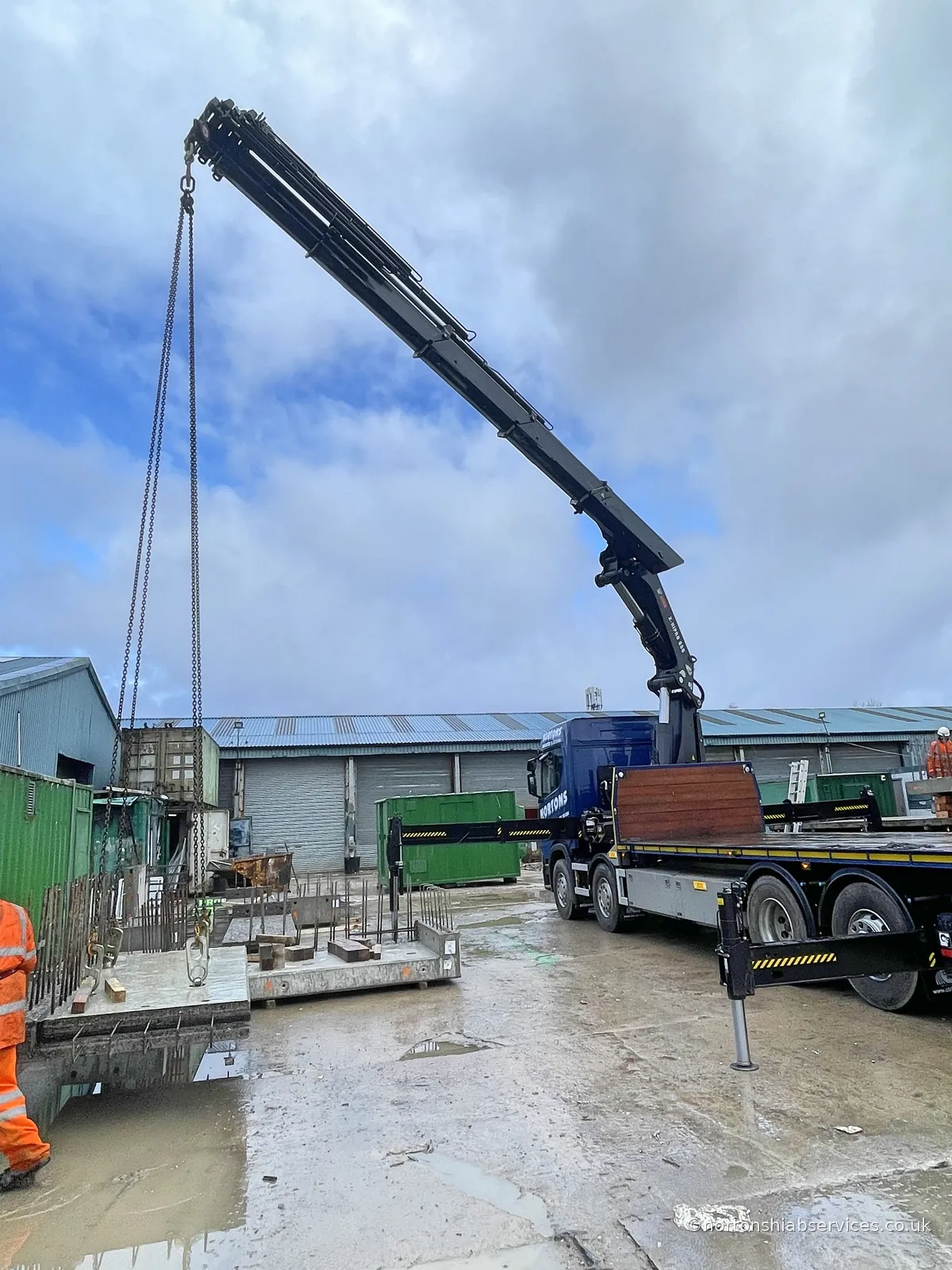
Landed on prepared bedding, in the right orientation, by tag line rather than by hand.
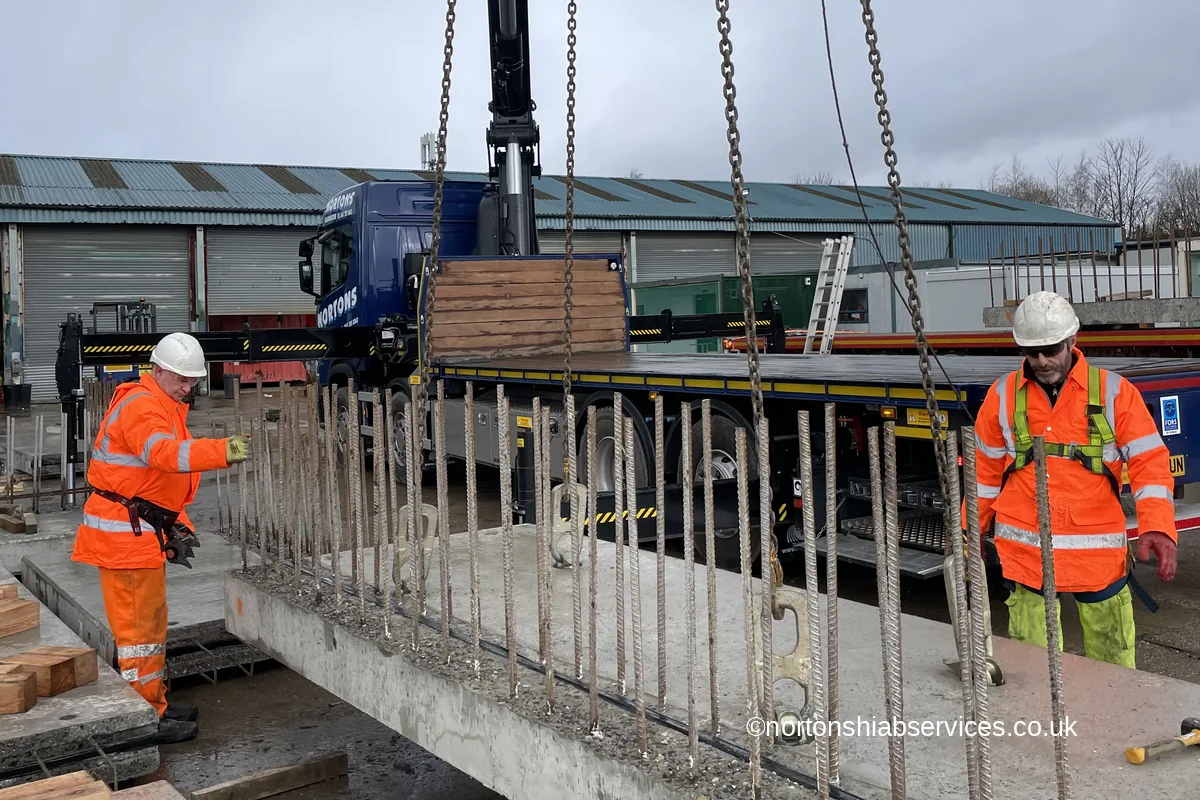
Landed on timber packing between the starter bars and checked square before the chains come off.
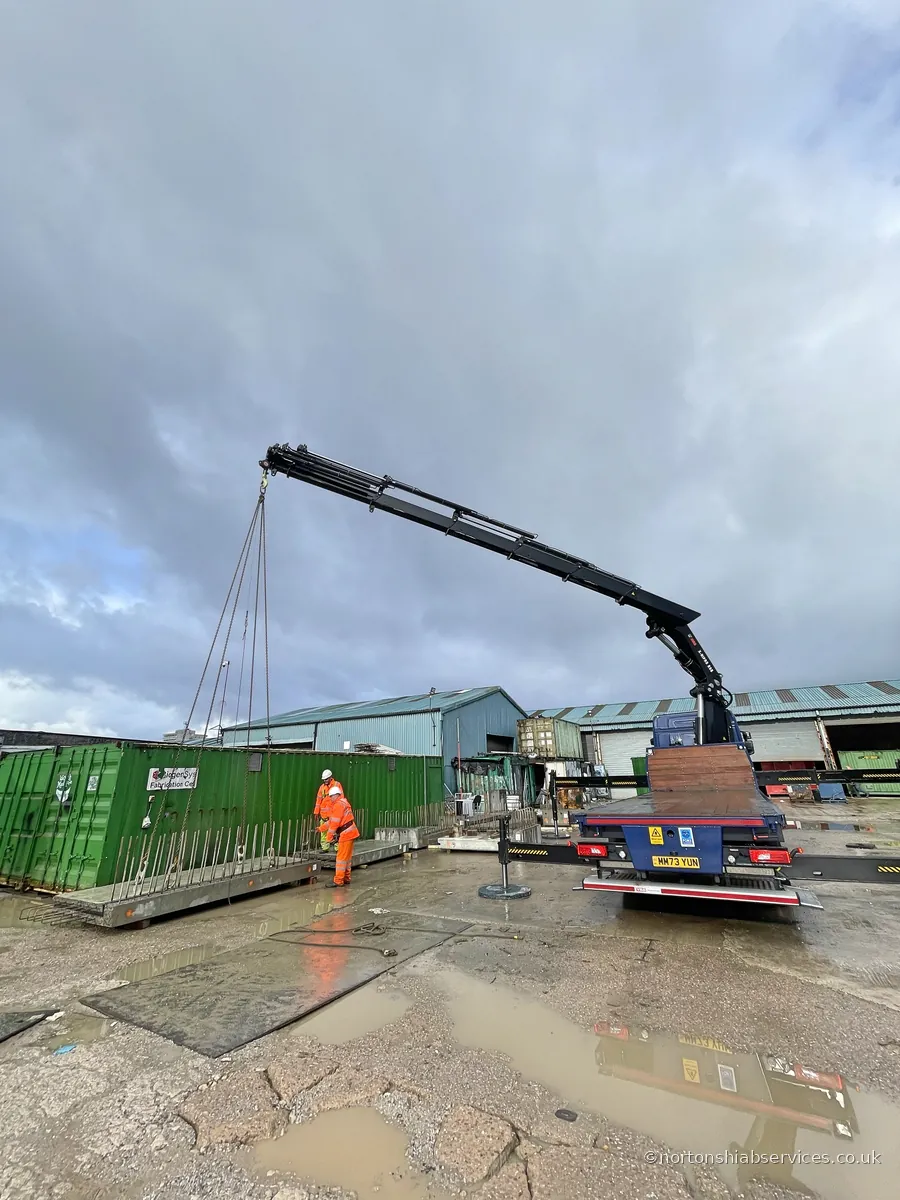
A repeat run of similar units is the best case for a hiab: one vehicle, one driver / operator, one set-up, and no crane standing idle between drops.
Precast is heavy, brittle at the edges and expensive to replace. Every extra set-down between the factory and the final position is an extra chance to chip a corner.
A flatbed delivery means the unit is craned off, stood somewhere, and craned again later. Our crane is on the lorry, so the unit comes off the deck and goes straight onto its bedding in one movement.
It also means the unit is landed in the right orientation. Turning a precast unit on the ground is how they get damaged; turning it in the air, under control, is routine.
Concrete bollards and street furniture are a different job from a construction delivery: small, very heavy for their size, and placed on live streets where the footway usually has to stay open.
The lift is easy. What takes the planning is the exclusion zone, the traffic management and the timing — and the fact that the drop point is often on the far side of a pavement full of people.
Manchester City Council is among our clients and this kind of work is a regular part of the week.
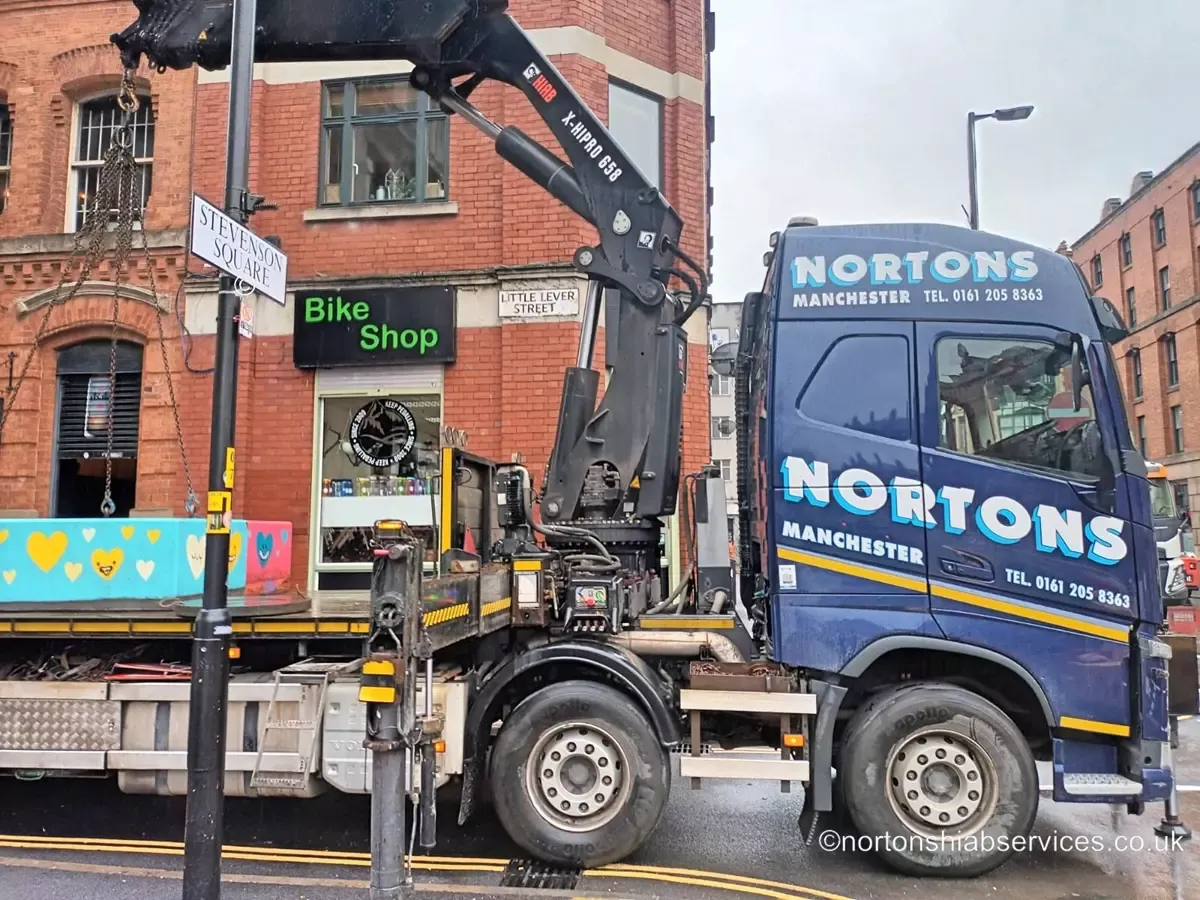
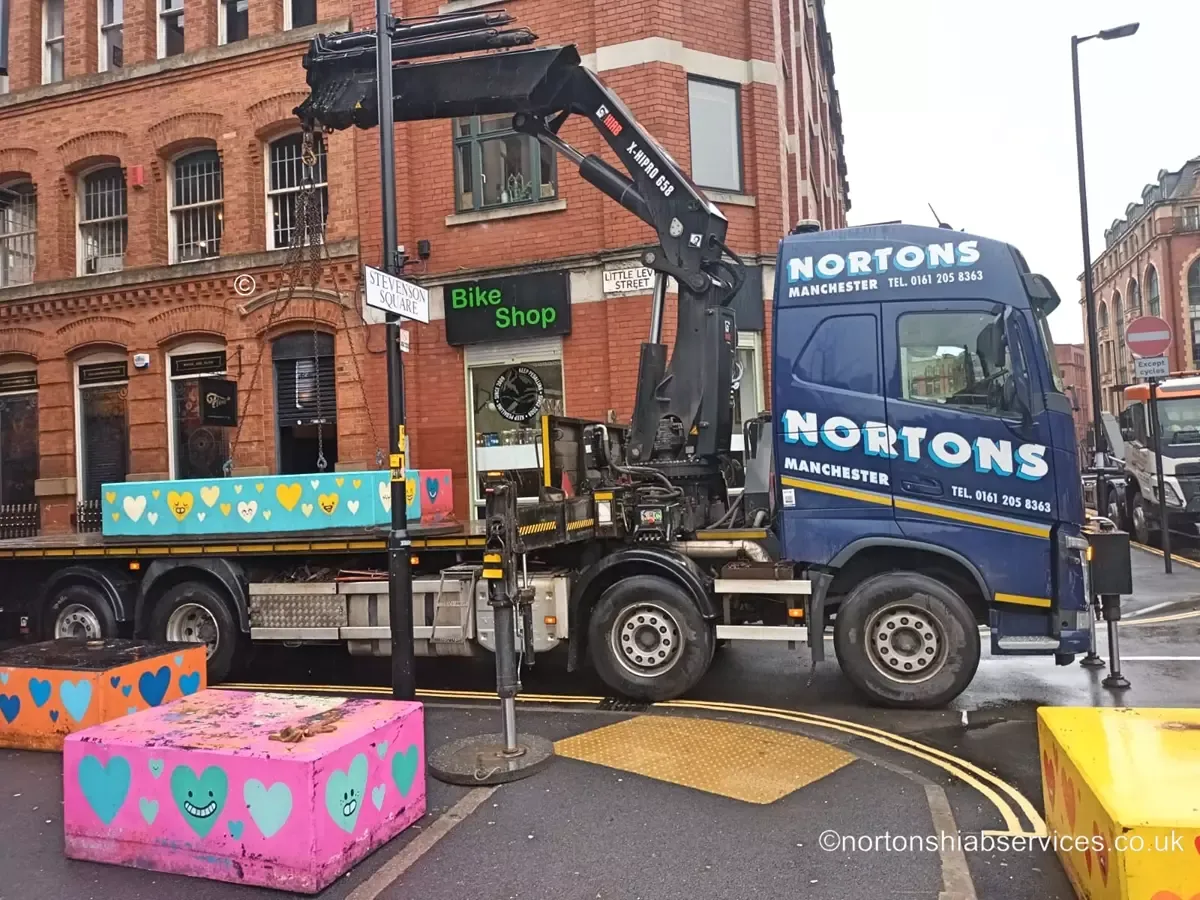
Each bollard lifted individually rather than as a set. Slower on paper, and much faster in practice than repositioning a dropped one.
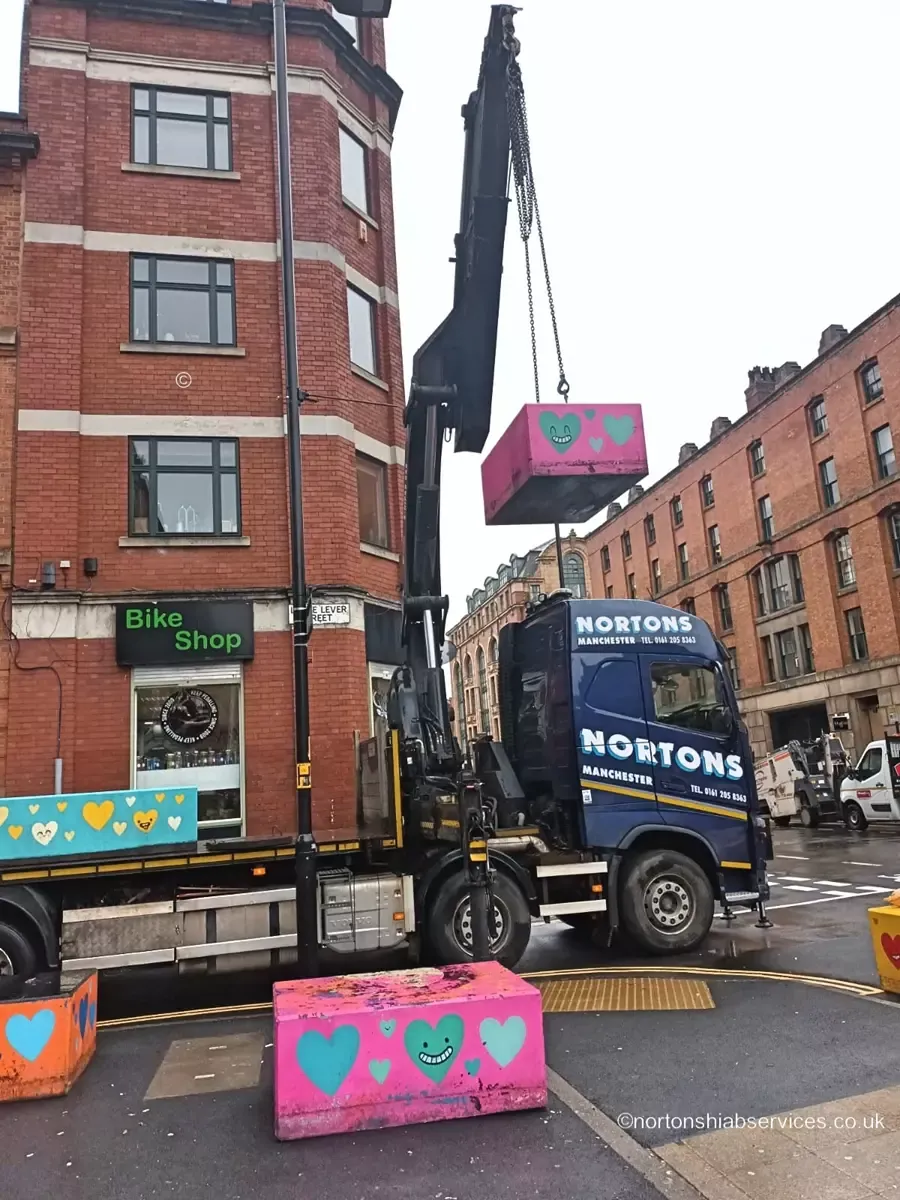
Landed on the setting-out mark and released, with the driver / operator working from where they can see the base rather than the boom.
Concrete gets heavy long before it gets big, so the radius decides everything. Our largest crane lifts over 8 tonnes and reaches 19.6 metres, and capacity falls the further out it works. Send the unit weight and the distance from the standing position to the bed, and we will tell you which vehicle it is — or tell you it needs a mobile crane.
Yes, and it is the whole reason to use a hiab for precast. A unit that is set down once, onto prepared bedding, in the right orientation, is a unit that has not been chipped by being handled twice.
We carry standard chains, slings and shackles. Proprietary lifting clutches or sockets specific to a manufacturer's unit need to come with the unit or be confirmed at booking — that is a question worth settling at quote stage rather than on the day.
Regularly. Bollards, kerbs and street furniture are usually placed from the carriageway with the footway kept open, which means traffic management and an exclusion zone matter as much as the lift itself.
Wagon and drag units give two beds and one crane on the same journey, which suits a repeat run of similar units well. For a phased delivery we would usually shuttle rather than send everything at once, so units are not stacked on a site with nowhere to stack them.
It is the thing to check first. The heavier the unit and the longer the radius, the more load goes through one leg. Tell us what the legs will be standing on when you book — made-up ground, a soft verge, or a drain or basement under the hardstanding all change where the vehicle can set up.
What they are and where they have to be set. We will pick the vehicle and price the job.





ALLMI trained driver / operators · RAMS, method statements and lift plans · Euro VI clean air zone compliant fleet, renewed by continual investment in new wagons · All our accreditations