Telehandlers and forklifts
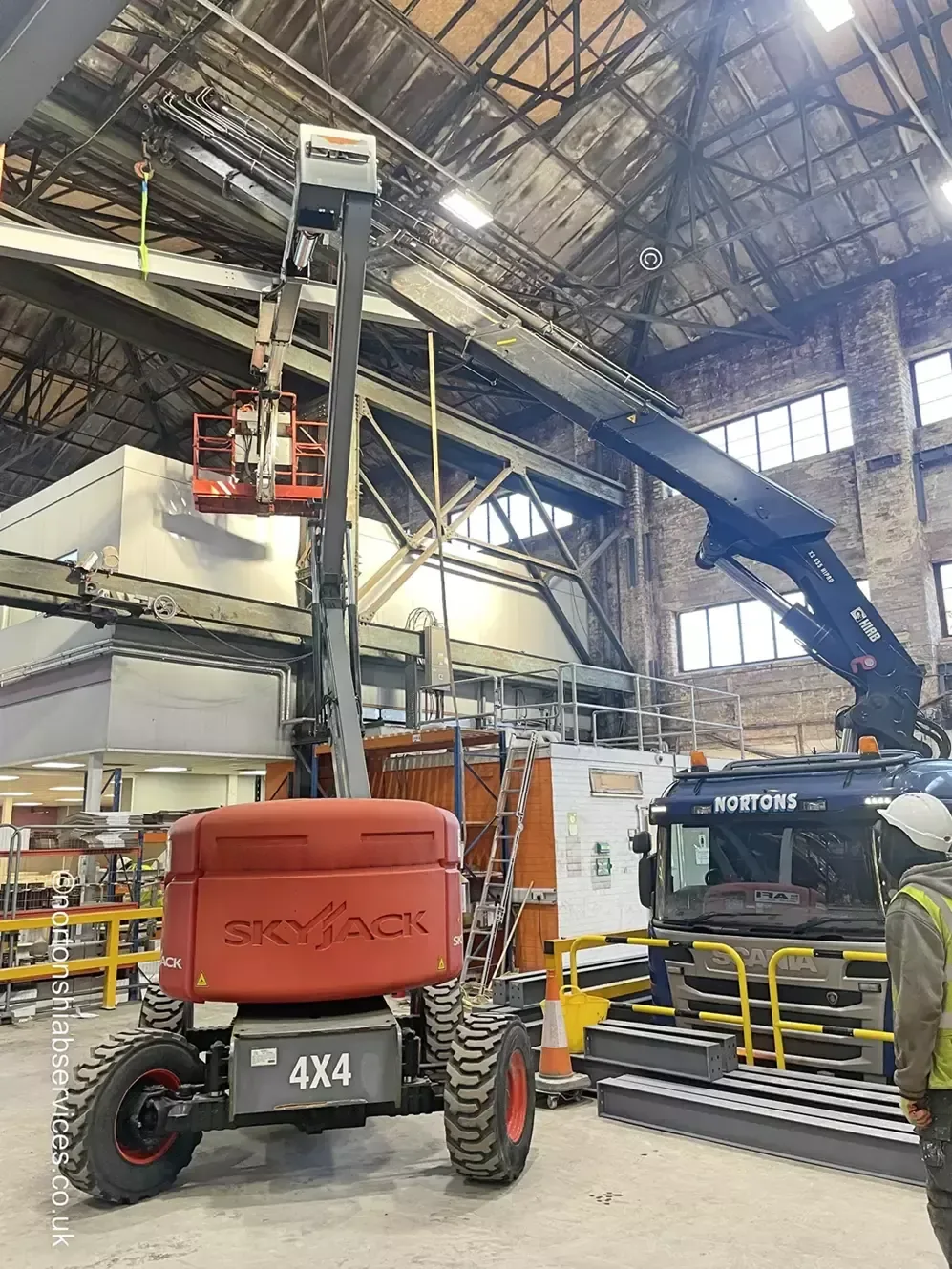
Moved between sites and into buildings, lifted in through openings where they cannot be driven.
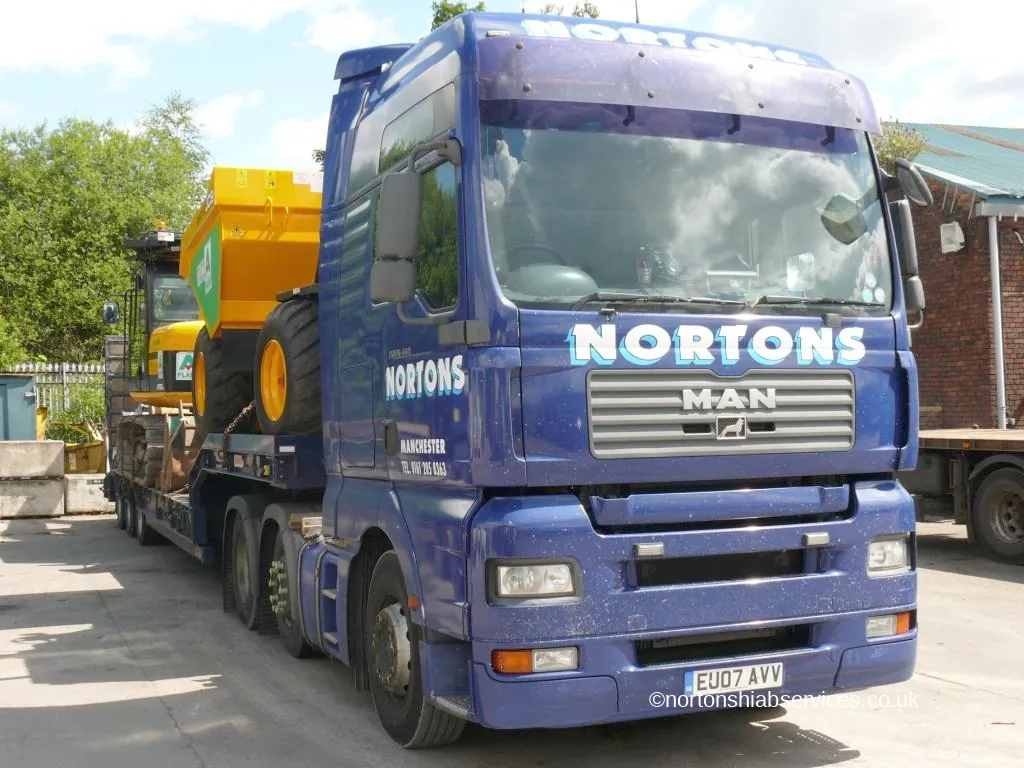
The crane is on the lorry. A machine that will not start, has no operator with it or cannot climb a ramp still gets loaded — and set down exactly where it is needed at the other end.
Most failed plant movements fail at the loading, not on the road. The machine will not start, the operator has gone home, the ramp angle grounds it out, or there is no hard standing to load from. A lorry with its own crane removes all four problems.
The same applies at the delivery end. Rather than needing somewhere to unload and then driving the machine across the site, we can place it directly where it is going to work — inside a compound, behind a building, on the far side of a trench.
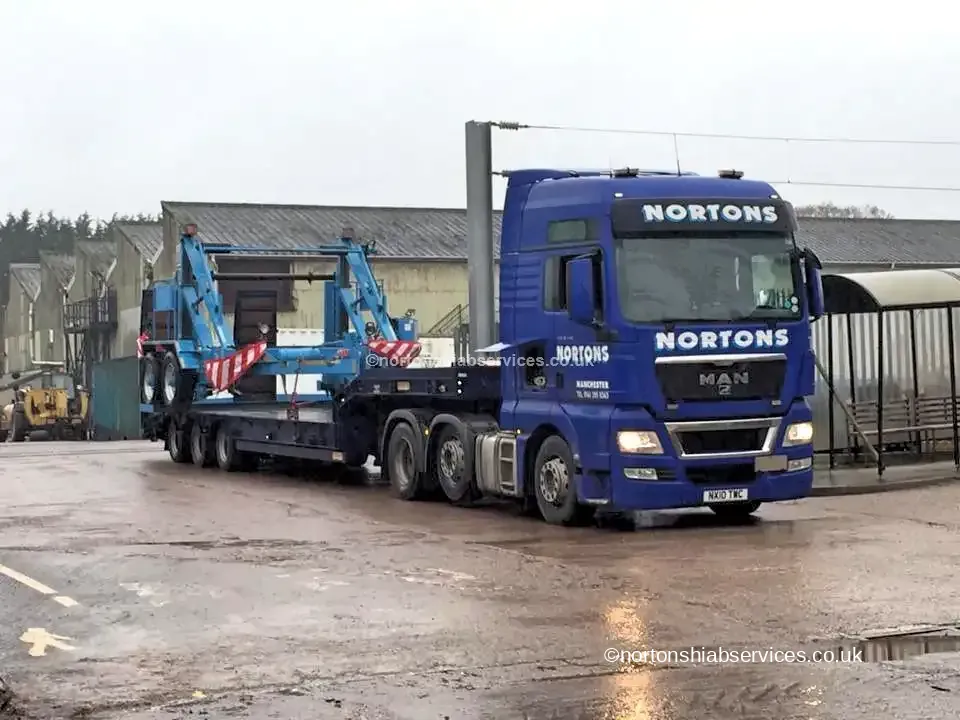
Where a machine is too tall for a flatbed we put it on the low loader instead, and where it is over 2.9 metres wide the movement becomes an abnormal load and we handle the notices.
Moved between sites and into buildings, lifted in through openings where they cannot be driven.
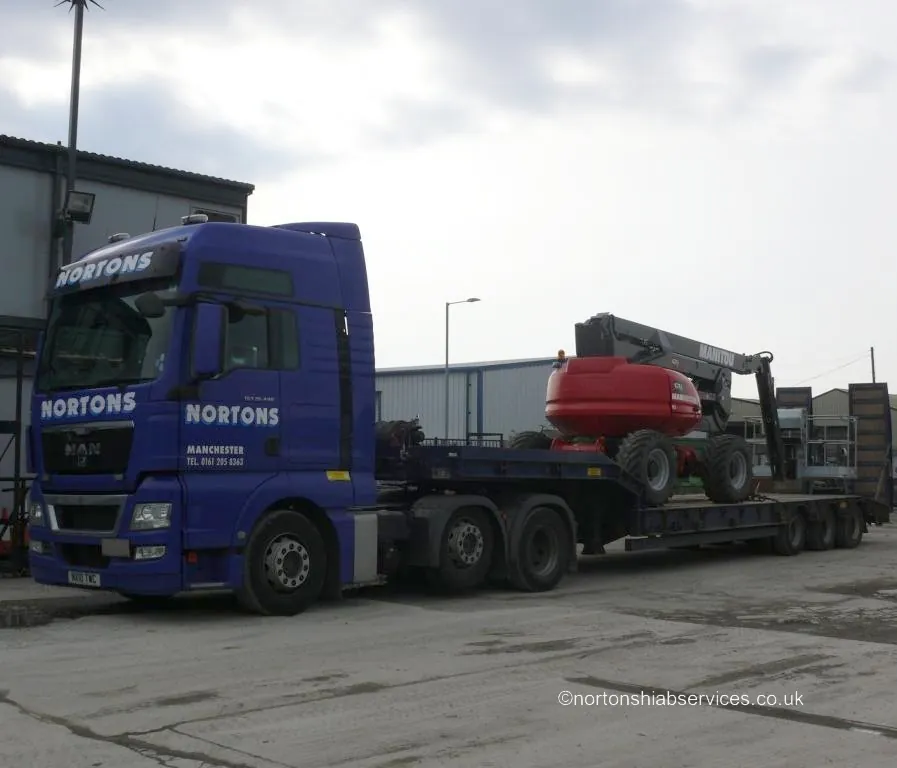
Booms and scissor lifts collected from depots and set down inside the compound rather than at the gate.
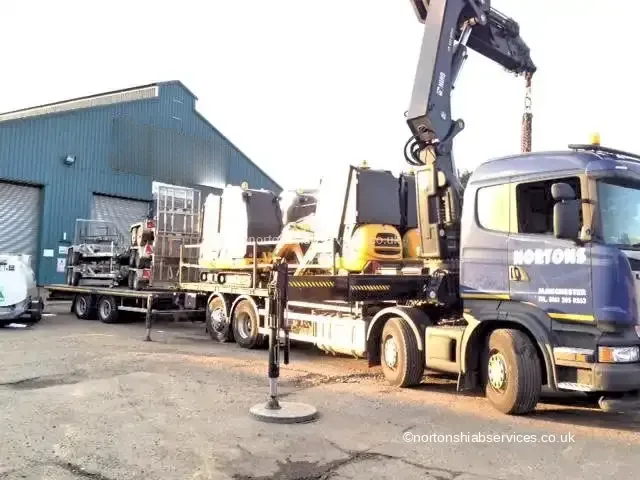
Norwich to Kilmarnock in one movement. At 44 tonnes gross the journey is worth doing once rather than twice.
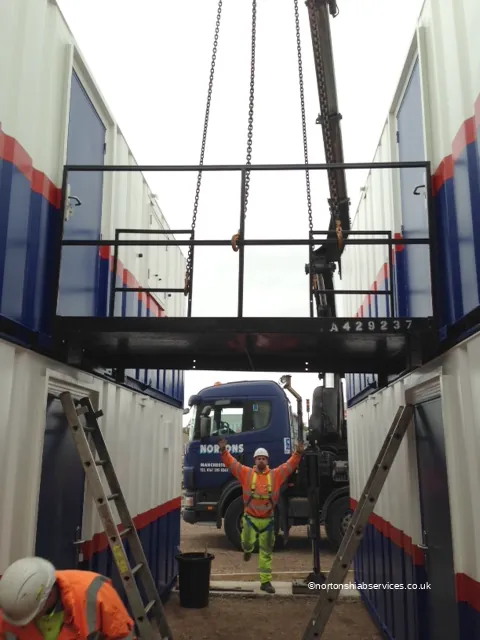
Engineering equipment and steel fabrications that are neither standard plant nor ordinary freight.
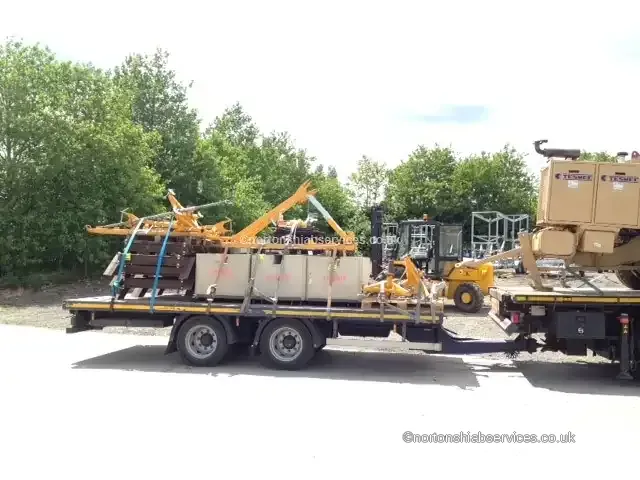
Skid-mounted units collected, carried and set down on their bearers ready to be connected.
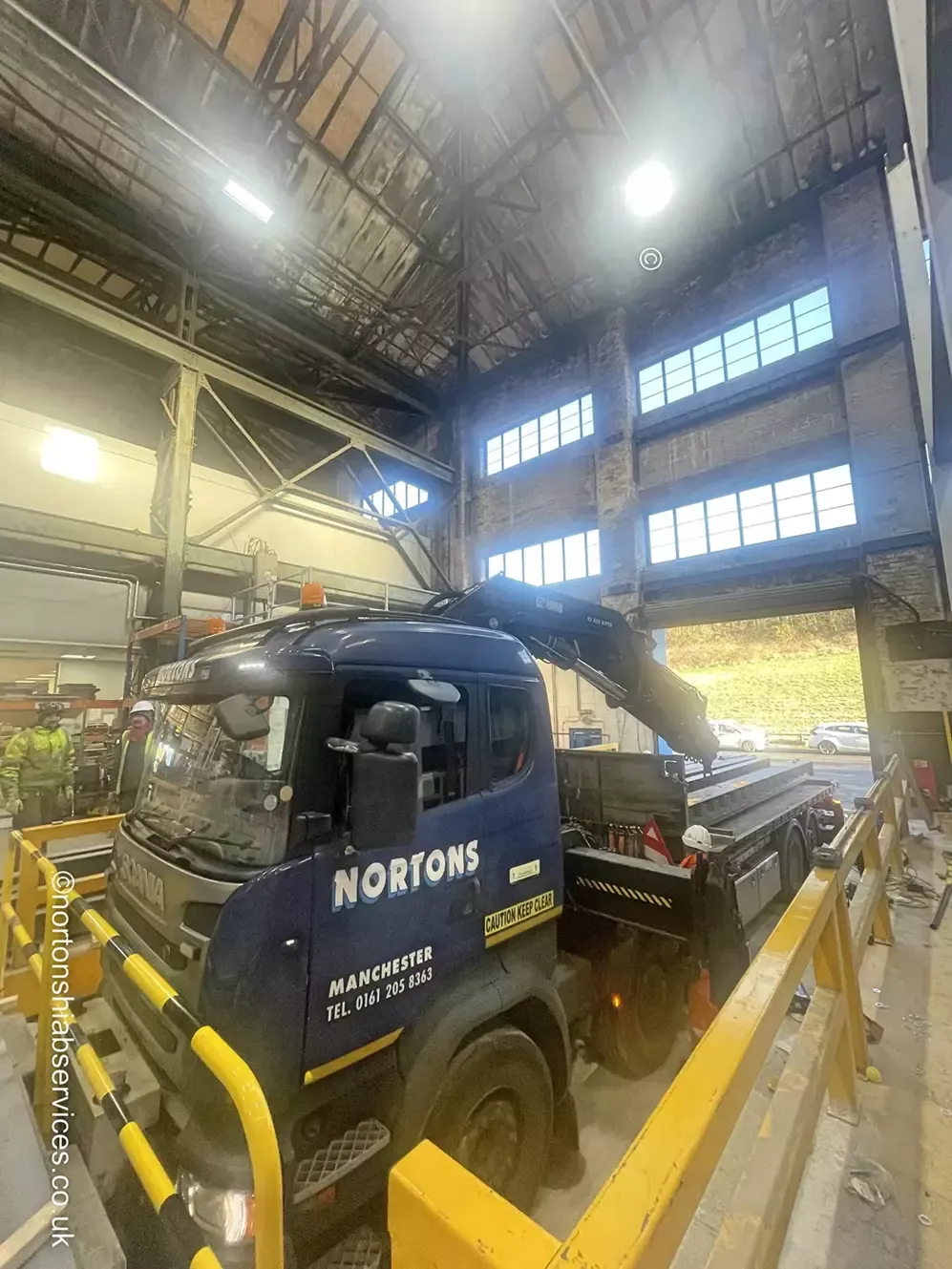
Factory plant taken in through openings and positioned on prepared bases inside live premises.
Plant movement quotes go wrong on estimates. These three, taken from the machine plate rather than guessed, settle almost everything.
From the machine plate or the manufacturer’s data, including attachments and any ballast. This decides both the vehicle and whether the crane can lift it.
Length, width and height as the machine will actually sit on the bed — boom lowered, bucket off, mirrors folded. Over 2.9 metres wide changes the paperwork.
How the lorry gets in and where it can stand with its legs out. Gateway width, kerbs and anything overhead tell us more than a site plan does.
Our biggest crane lifts over 8 tonnes and the vehicle carries up to 5.5 tonnes, and capacity falls the further out the crane works; the full charts for all five cranes are on the lifting capacity page. If a machine is outside the chart at the radius you need, we will tell you before the day rather than on it.
A machine that will not start, has no operator on site, or simply cannot climb a ramp still gets loaded, because our crane picks it up. On a beavertail or a low loader without a crane, a machine that will not drive is a wasted journey.
Weight and lifting are two separate questions. On weight, our artics and wagon and drags run at 44 tonnes gross, so the payload is generous. On lifting, our biggest crane lifts over 8 tonnes and the vehicle carries up to 5.5 tonnes, so tell us the machine weight and we will check it against the chart before committing.
Yes. Tracked plant travels with the tracks cleaned and the machine chained to its own lashing points. For taller machines a low loader keeps the travelling height legal — see our low loader page.
Yes, and it is a lot of what we do. Depot to site, site to site as a job phases, and back to the depot at the end. Tell us the collection reference and we will deal with the depot directly.
Regular work for us. Boom lifts, scissor lifts and telehandlers move between sites constantly, and the lifting capability means they can be set down inside a compound rather than left at the gate.
Yes, not just trade accounts. Tell us the make and model and where it has to go, and we will come back with a price.
Plant machinery transport means getting a machine from where it is to where it is needed without driving it there. We lift it onto the bed with the vehicle's own crane, secure it, move it and lift it off at the far end. For anything too tall or too heavy for a flatbed the low loader does the same job with a lower deck height.
Transport only. We move plant, we do not hire it out. That is worth being clear about because the two get confused constantly: if you need a machine, you want a plant hire company; if you have a machine and it needs to be somewhere else, that is us.
That is enough to start. We will confirm the vehicle, the loading method and the price.




ALLMI trained driver / operators · RAMS, method statements and lift plans · Euro VI clean air zone compliant fleet, renewed by continual investment in new wagons · All our accreditations