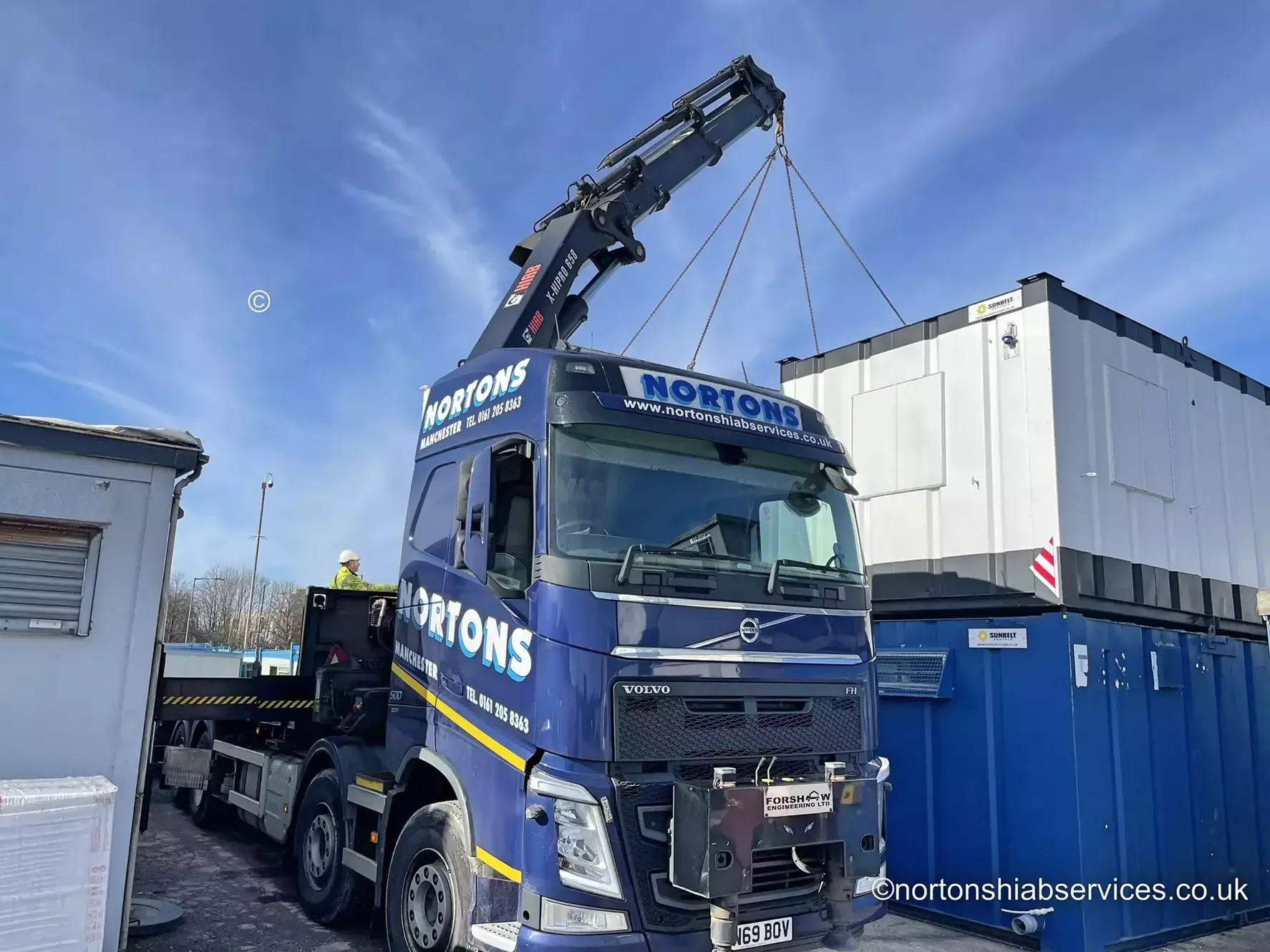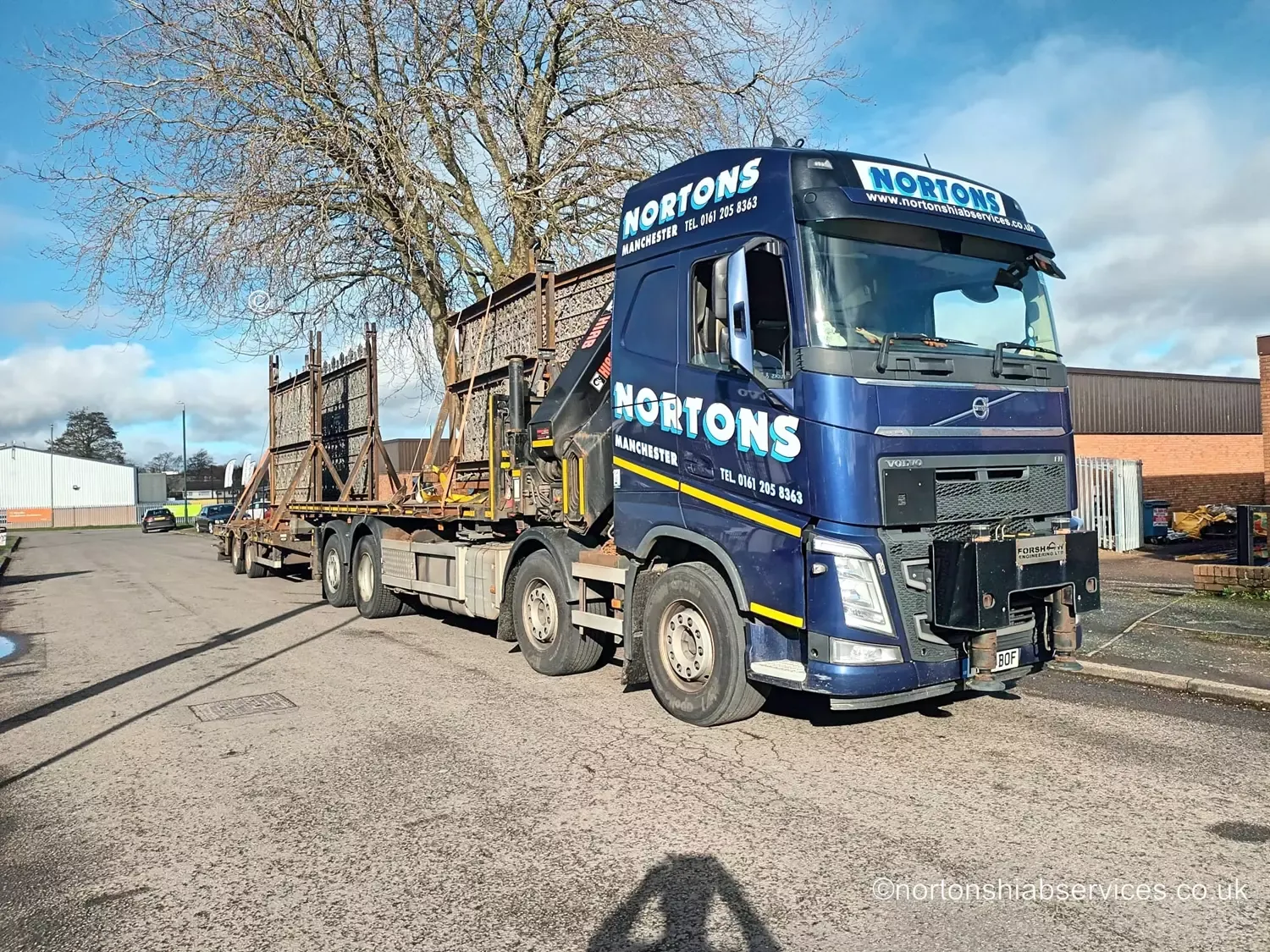
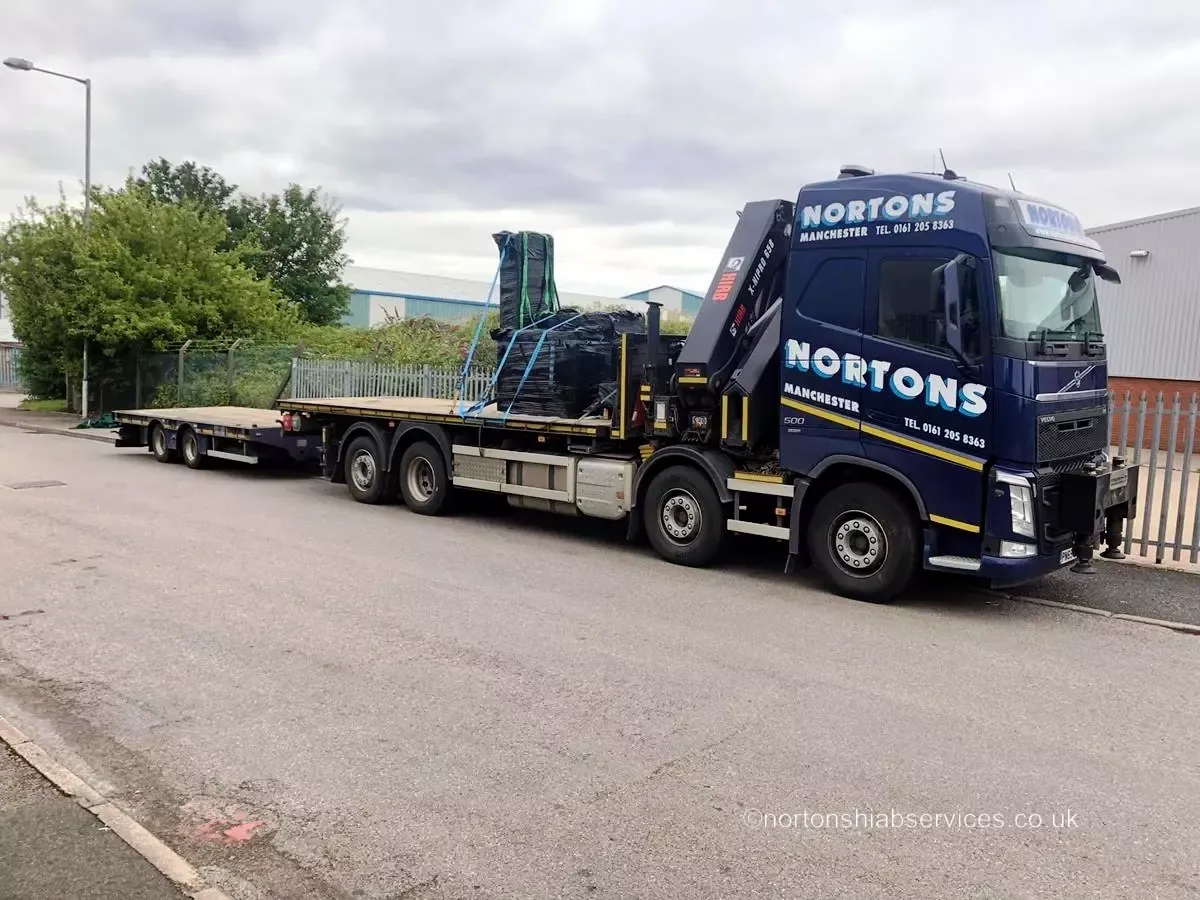
Our 32-tonne eight-wheel rigid lorries carry a HIAB X-HiPro 858 E-8. It is the crane people ring up and ask for by name, usually because somebody on a previous job told them it was the one that would reach.
The figures
Off the manufacturer's data sheet, not off a brochure:
- 66.1 tonne-metres rated capacity, or 71.5 tm with automatic duty control engaged
- 19.6 metres of maximum reach
- 22.1 metres of lifting height
- Eight hydraulic boom sections
- Continuous slewing, so it will keep turning rather than stopping at a limit
- The crane itself weighs 7,458 kg, which comes straight off what the lorry can carry
What that means at radius
Over 8 tonnes lifted, up to 5.5 tonnes carried, 19.6 metres of reach — and the manufacturer data sheet behind it showing exactly how the capacity falls away as the boom goes out. Those are the numbers that matter, and they are the ones we work from when we quote.
Note the last one particularly. At full stretch the 858 is a three-tonne crane. It is a very long three-tonne crane, which is exactly the point — most jobs that need the 858 need it for the distance, not the mass.
The thing the model number does not tell you
An 858 is not an 85 tonne-metre crane. The number in the name is a model designation. We say this at every opportunity, because somebody planning a lift off the wrong figure is planning a lift that will not go.
Where it earns its keep
Over a wall or a fence rather than round it. Into a back garden from the road. Onto a flat roof. Across a live carriageway where the coning is the expensive part and one long reach saves a second closure. Anywhere the lorry cannot get close and a mobile crane would mean a second contractor.
The 858 vehicle page · Every load chart on the fleet · The manufacturer data sheet