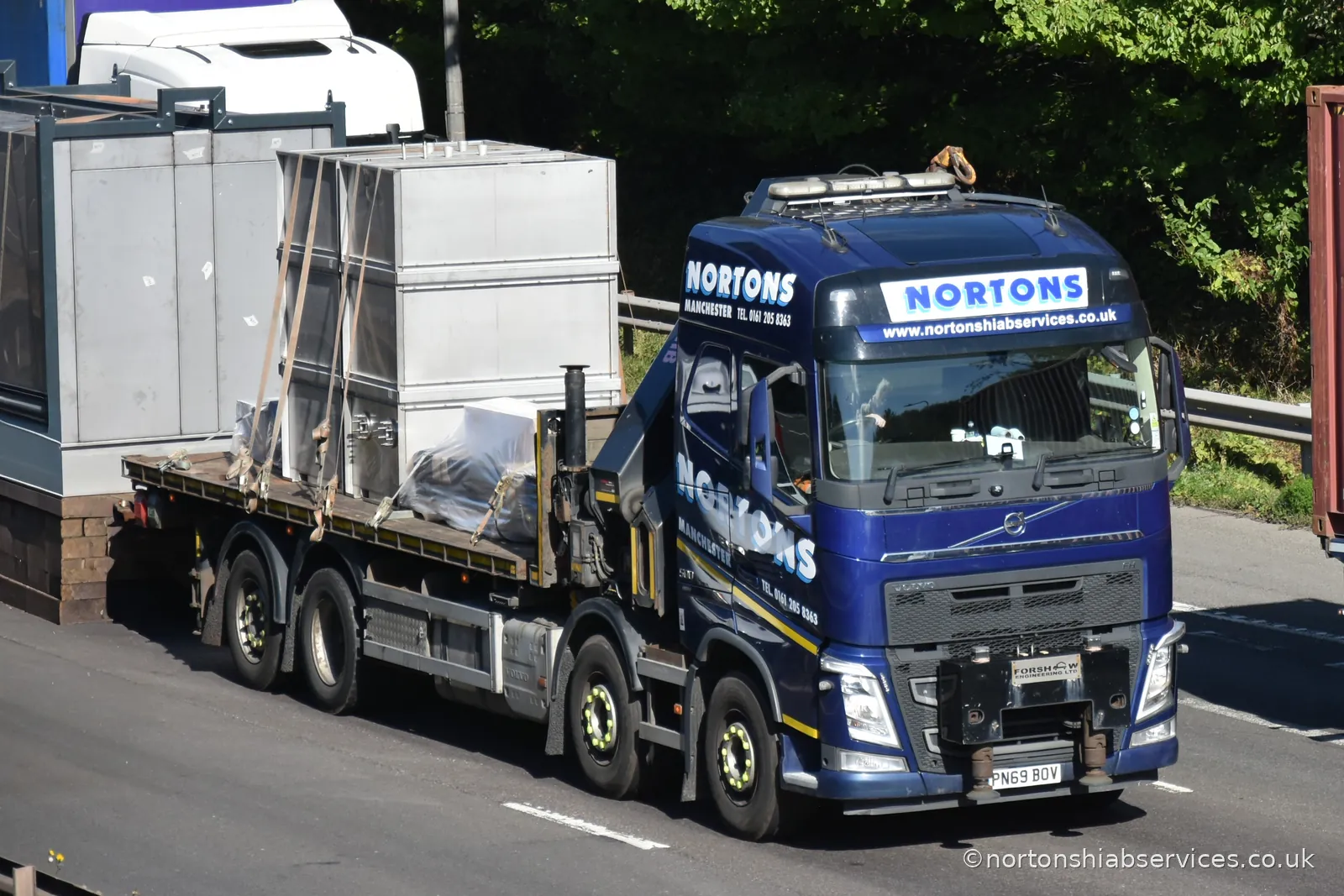
People assume the hard part of an oversized load is driving it. It is not. The hard part is that several organisations have a legal right to be told about it first, and each of them has its own clock.
Who gets told
Depending on the dimensions and the weight, some combination of the police forces whose areas the route crosses, the highway authorities, and the owners of any bridge or structure on the route. On a long run that can be a dozen separate bodies, and the notice does not start until the last one has it.
The clocks
Notice periods run from two clear days for the more ordinary movements up to several weeks where a structure has to be assessed. Clear days means clear — weekends and bank holidays do not count towards them, which is why a job that looks like it needs a week of notice can need eleven days over Easter.
We are not going to print a table of thresholds here, because the categories interact and the wrong row copied off a website is worse than no row at all. What we will do is tell you, for your actual load and your actual route, what the notice period is and therefore the earliest date it can move.
What changes the answer fastest
Width, then length, then weight, roughly in that order for the sort of work we do. A load that comes in under the width at which notification bites is an ordinary delivery. The same load 200 mm wider is a notified movement with a lead time. That is worth knowing at the design stage, not at the booking stage.
Why we would rather you rang early
Because a notice period cannot be compressed. If you tell us on the Monday that something has to be in Aberdeen on the Wednesday and it needs a fortnight of notice, there is nothing anybody can do about that. Tell us at the point the load exists on a drawing and it is a diary entry rather than a crisis.
We hold UK-wide movement orders for wide loads and run our own escort vehicles, so once the notice is in, the movement itself is ours to organise rather than another contractor's.