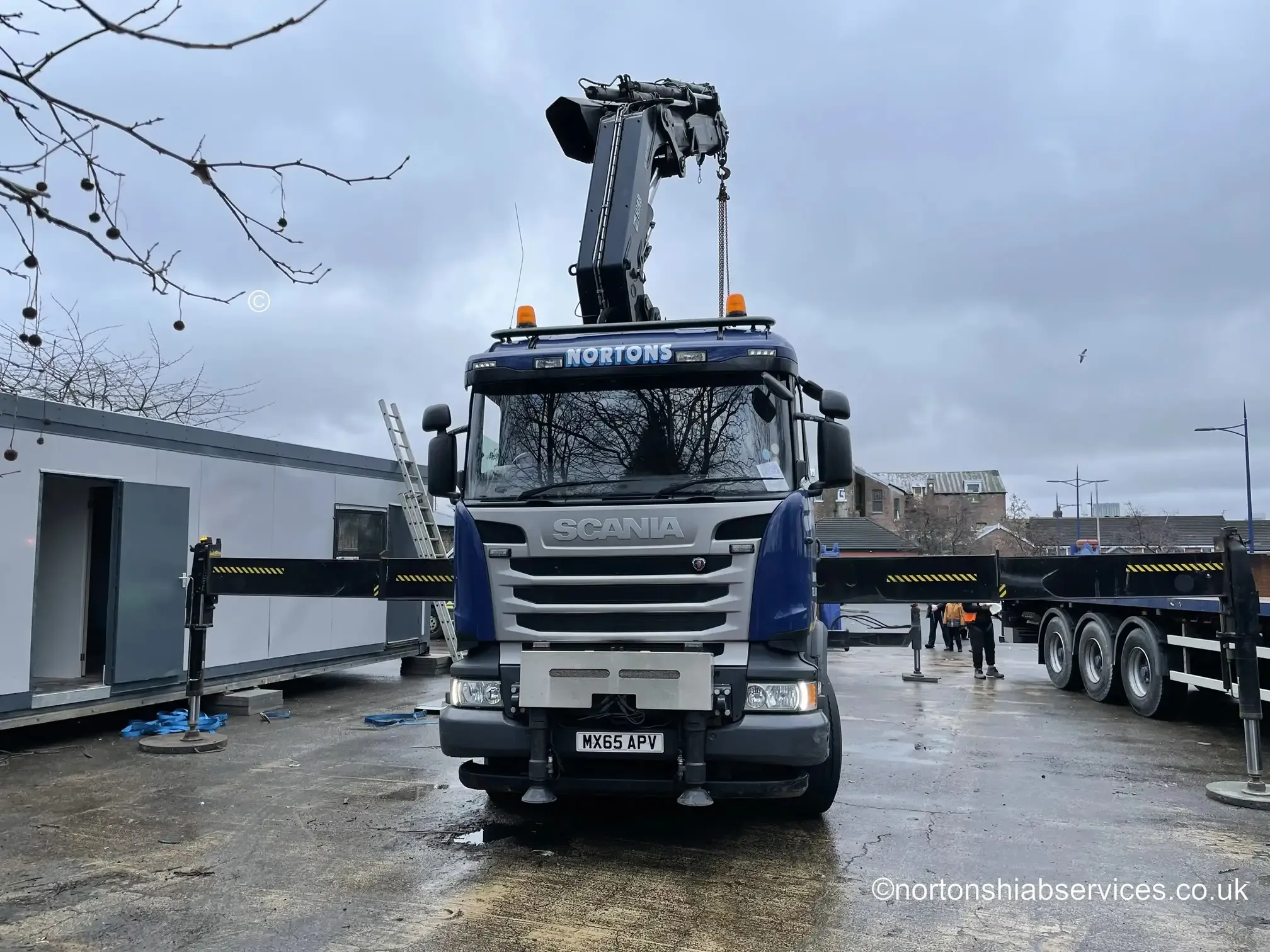
The promise of offsite building is that the difficult work happens in a factory. That is true, and it is a good promise. What it does not remove is the day the factory output has to become a building, and that day belongs to the haulier and the crane.
Finished units are fragile in a way that steel is not
A modular unit arrives with its cladding on, its windows in, and often its kitchen fitted. It cannot be dragged, it cannot be landed hard, and it cannot be lifted on the wrong points. The lifting points are designed in, and the frame is only strong where they are.
So the slinging is decided by the manufacturer, not the lifting company, and part of our job on a modular delivery is refusing to improvise when a lifting point does not match the drawing.
Sequence is the whole job
Units go together in an order, and the order runs from the far corner back towards the road. That means the last lorry to arrive holds the unit that goes nearest the gate, and the first one to arrive holds the one that goes furthest away. If the loads turn up in the order the factory finished them, the crane spends the day shuffling.
Which is why the useful conversation happens a fortnight before delivery, with the installer, over a plan. Not on the morning.
The ground has to be right first
Modular units sit on prepared bases, and they sit level or they do not close properly. That is the installer's work, not ours, but we will not land a unit on a base that is not ready, and a wasted delivery is nobody's idea of a saving.
What we bring to it
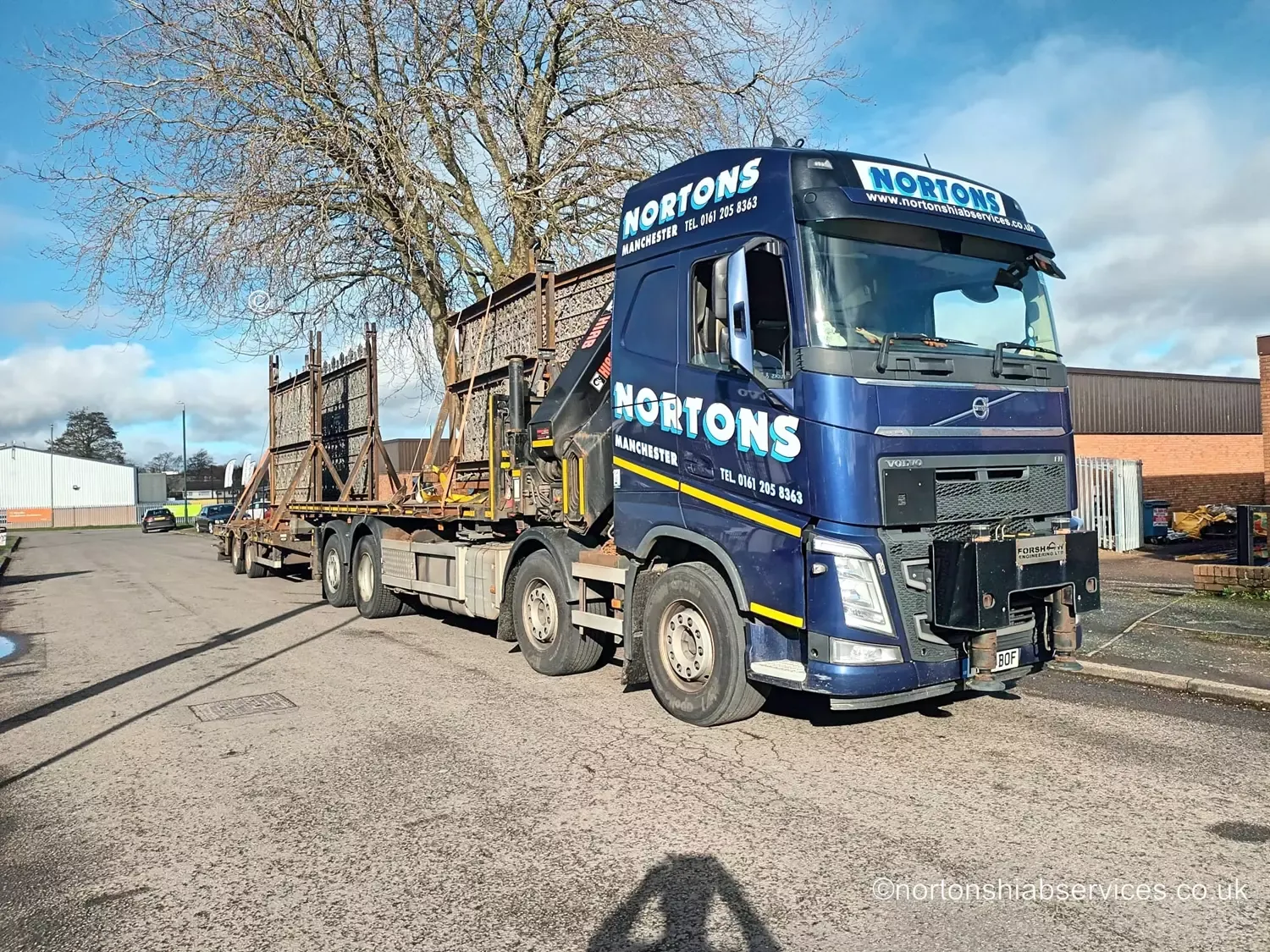
Vehicles that carry the unit and place it, so one contractor does both. Extendable trailers for the longer units. Two cranes on the same job where a unit is long enough to need lifting at both ends. And drivers who have done a lot of these and will say so when something is not right.
Cabin and modular transport · Glamping pods · The school job in the photograph