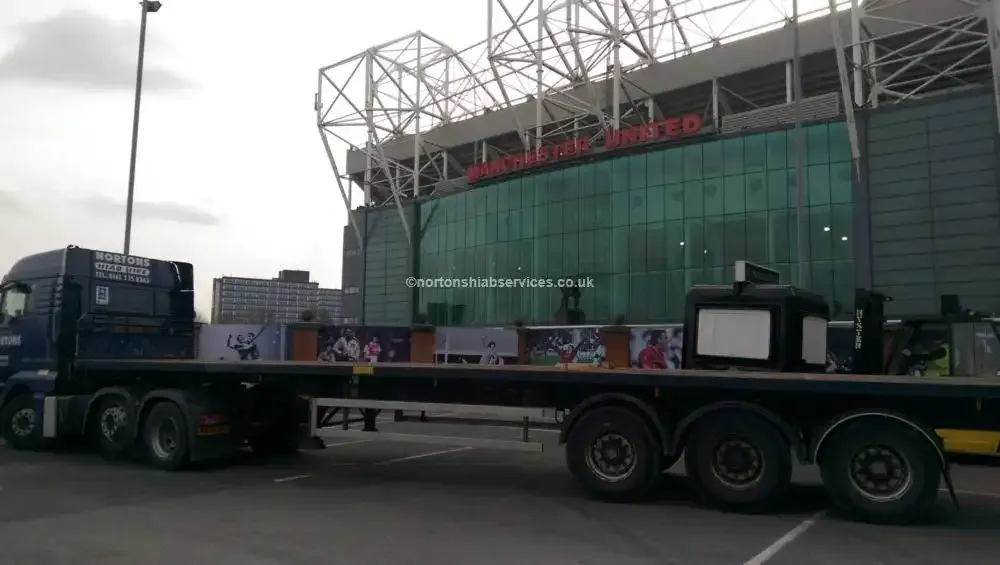
Grounds and arenas need things moved constantly: catering kiosks, media units, hospitality cabins, storage containers, ground equipment, temporary structures for a concert that is coming in three weeks and going out four days later.
The timing is not negotiable
None of it can happen on an event day and most of it cannot happen during the working day either, because the concourses are being used for something else. So the work runs early mornings, evenings, and the dead midweek days between fixtures.
That has practical consequences. Drivers' hours have to be planned around a start that is not nine o'clock. Site access is through a gate that has a person on it who may or may not have been told you are coming. And the lighting is whatever the ground has, which on a concourse at six in the morning in January is not much.
Concourse floors
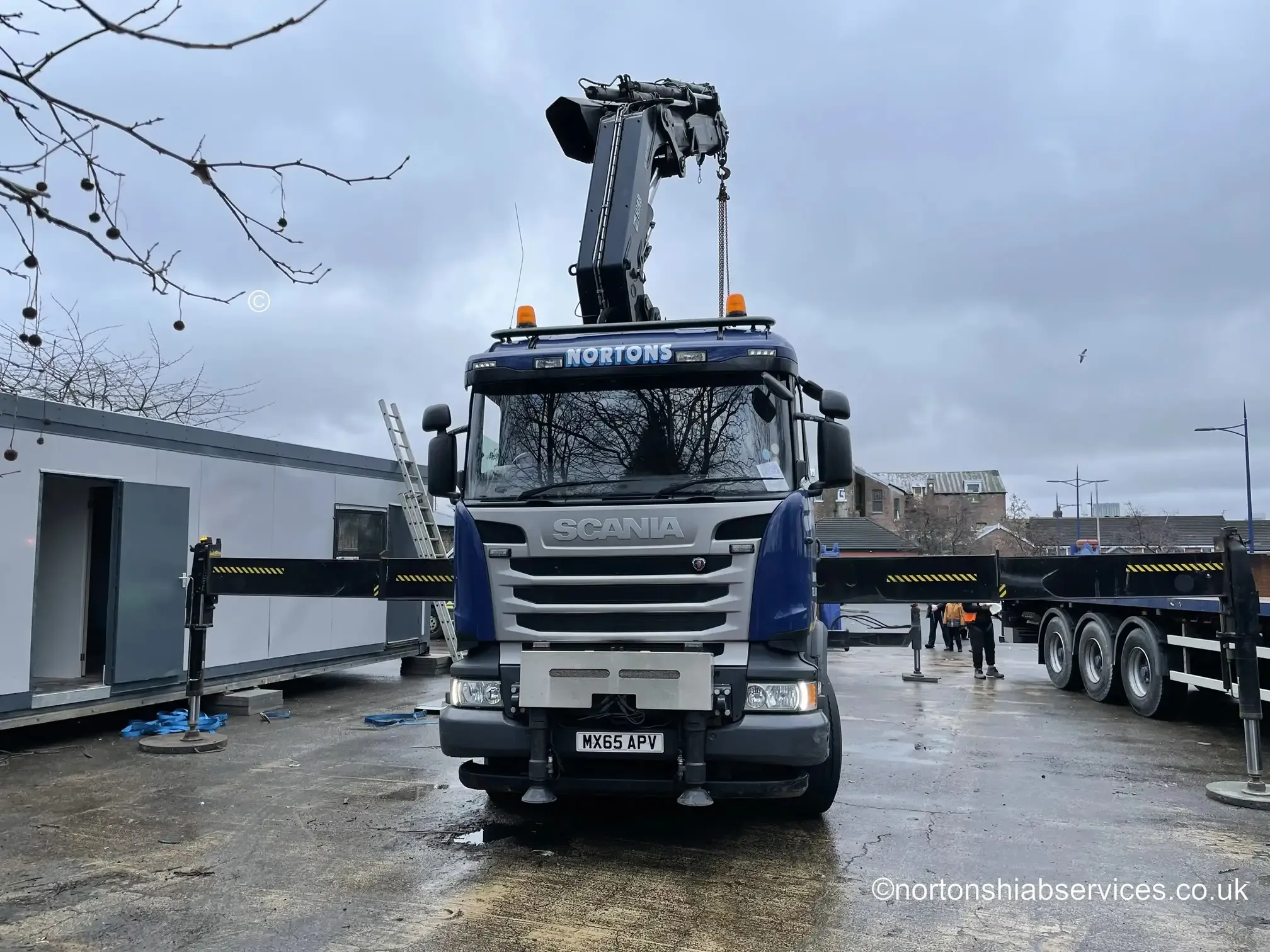
The surfaces around a modern stadium are finished, drained, and frequently sitting on top of something. A concourse slab over a service void will not take an outrigger without spreading the load, and nobody thanks you for cracking it.
This is where the ground bearing data earns its place in the lift plan rather than sitting in the appendix.
Everybody wants the same fortnight
Close season, and the two weeks either side of a big event. Every ground in the country is doing its capital works in the same window, and so is every haulier who does this work. Book early is trite advice but it is the only advice.
Where we have worked
Manchester and Liverpool mostly, and one cricket ground with a very large number of grey cabins. The photographs are on the site where the permission allows it. We do not claim any relationship with any club beyond having done work at the ground.
Manchester and the venues · The Anfield compound · Festival work