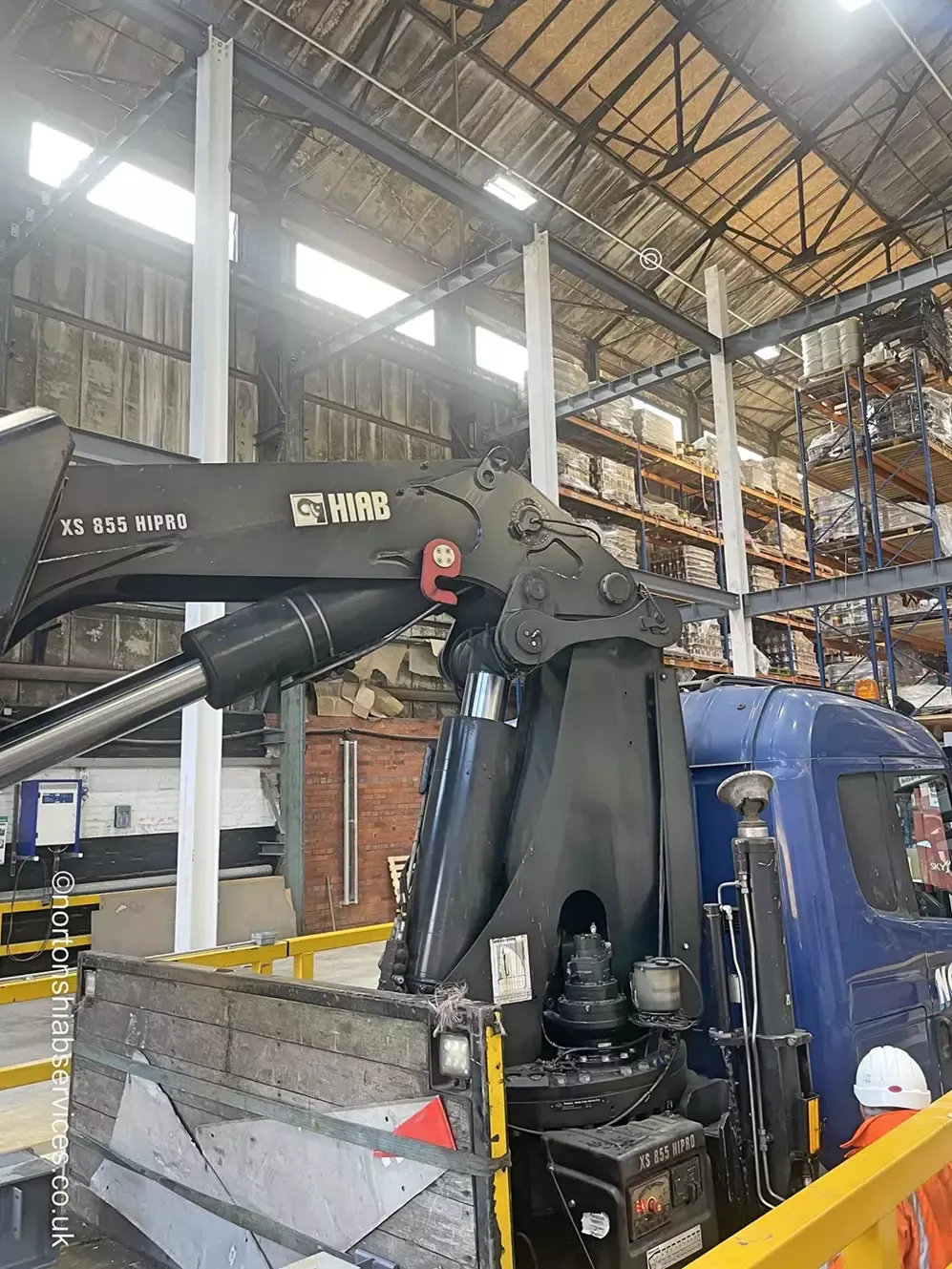
Almost every awkward conversation about a lift starts the same way. Somebody has a weight, and they have a distance, and they have been told a lorry crane will do it. What they have not been told is that those two numbers are joined together, and that moving one of them moves the other a long way.
What actually happens
A truck-mounted crane is a lever. The load hangs on one end and the vehicle, sitting on its outriggers, holds down the other. The further out the load hangs, the harder it pulls, and the crane has to give ground somewhere. So the published capacity is never one number. It is a curve.
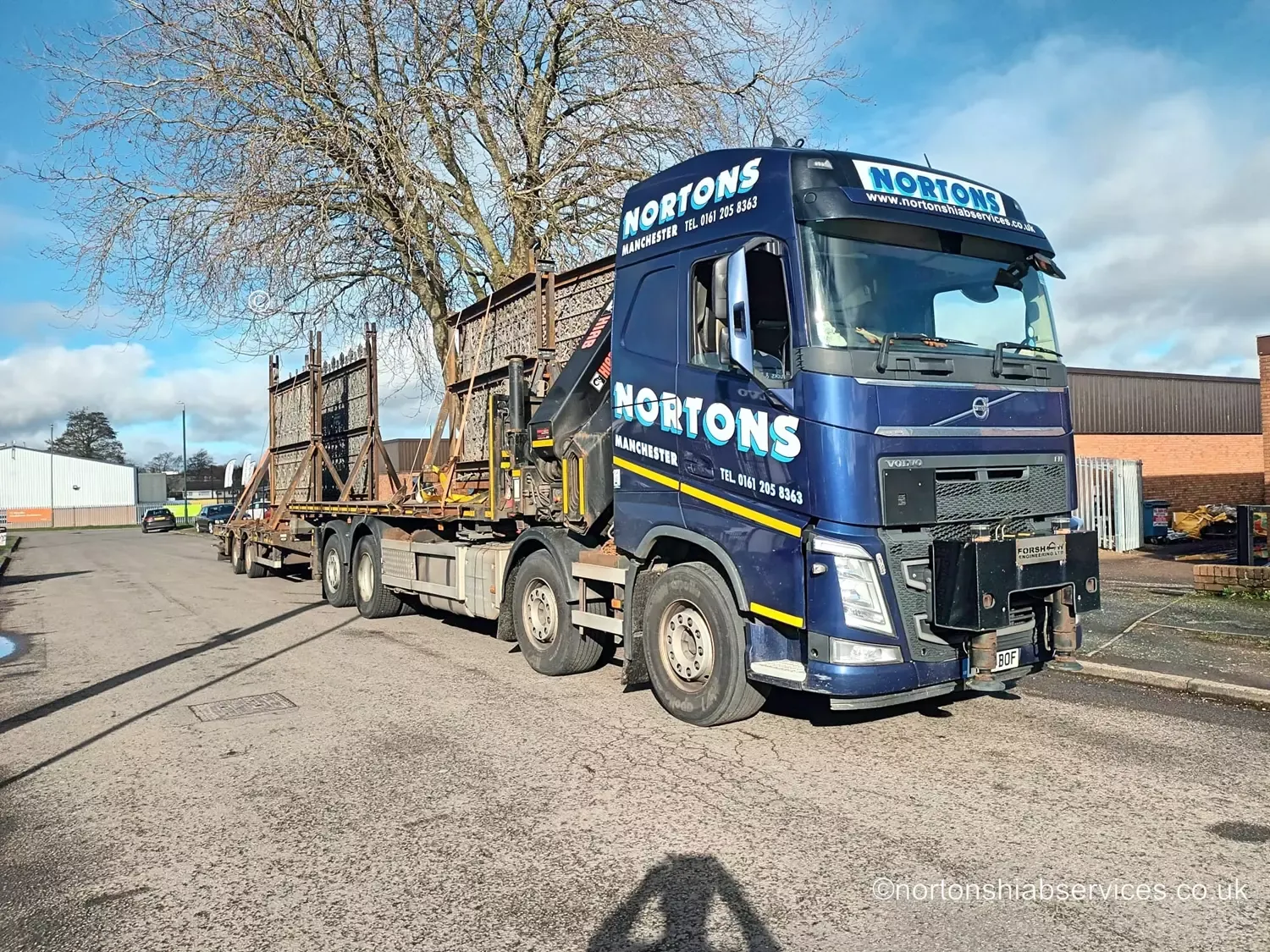
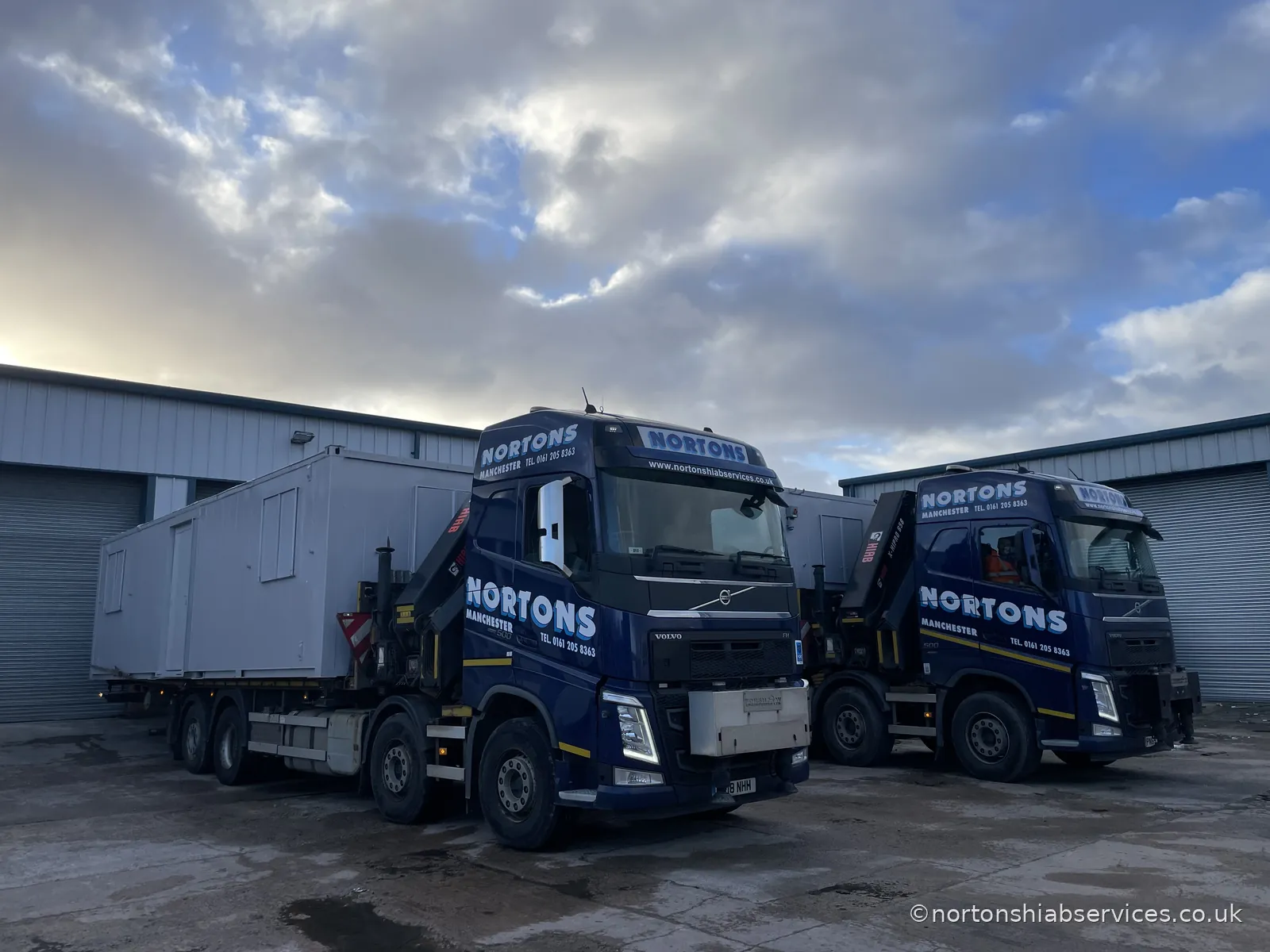
Take the 858 on our two 32-tonne rigids. Nortons publish it as lifting over 8 tonnes, carrying up to 5.5 tonnes, with a maximum reach of 19.6 metres — and the point of this piece is that those three numbers do not all happen at once. Run the boom out and what it will hold falls away sharply. Same crane, same lorry, same day. The load has not changed; the geometry has.
That is a drop of more than eighty per cent across the working range, which is why "it is only two tonnes" is not, on its own, an answer to anything.
The number that describes the whole curve
The single figure that describes a crane is the tonne-metre rating, written as tm. It is roughly the load multiplied by the radius, so a 66.1 tm crane will handle something in the order of six tonnes at ten metres or three tonnes at twenty. Roughly. The real chart is never a clean multiplication because the boom itself weighs something and that weight moves out with the load.
A warning about tonne-metres, because it catches people out constantly: the model number is not the rating. An 858 is not an 85 tonne-metre crane. Off the manufacturer's data sheet it is 66.1 tm, or 71.5 tm with automatic duty control engaged.
What to do with this
When you ring, give us the weight and the distance together. Not "how big a crane do I need" but "it is 1,800 kg and it has to go fourteen metres from where the lorry can stand". That is a question with an answer.
The distance that matters is from the centre of the crane's column to the middle of where the load lands, measured horizontally along the ground. Not the length of the driveway. Not how far the building is. The horizontal radius.
Height matters too, but usually less. Every one of our cranes will lift eighteen metres or more into the air, which is more than most jobs need. It is the sideways distance that runs out first.
Where the numbers are
We publish the capacity-at-radius tables for every crane on the fleet, straight off the manufacturer's sheets, along with the original PDFs. No competitor we know of publishes theirs in a form you can read on a phone.
The load charts · The fleet and what is on each vehicle · When you need genuine long reach