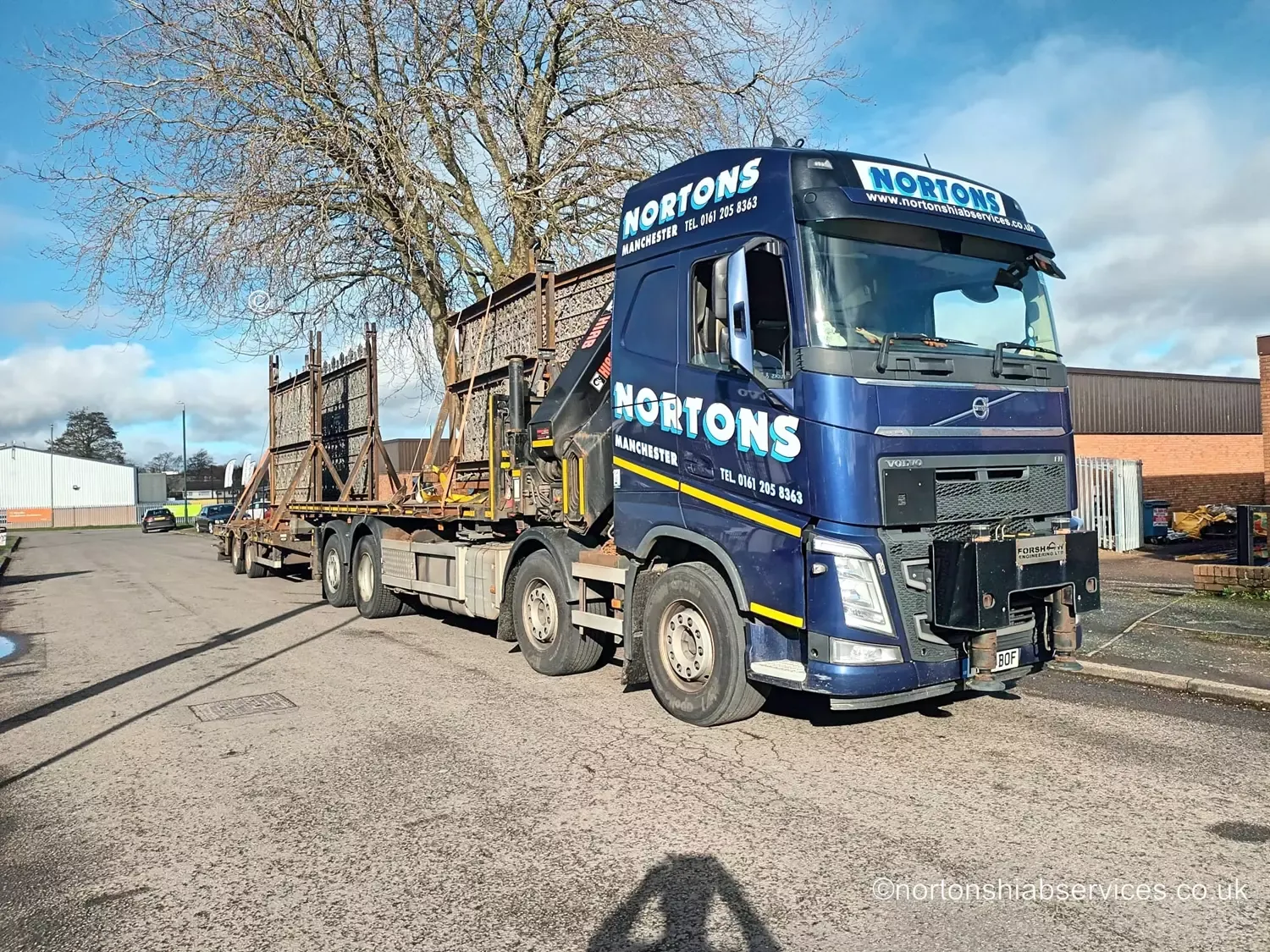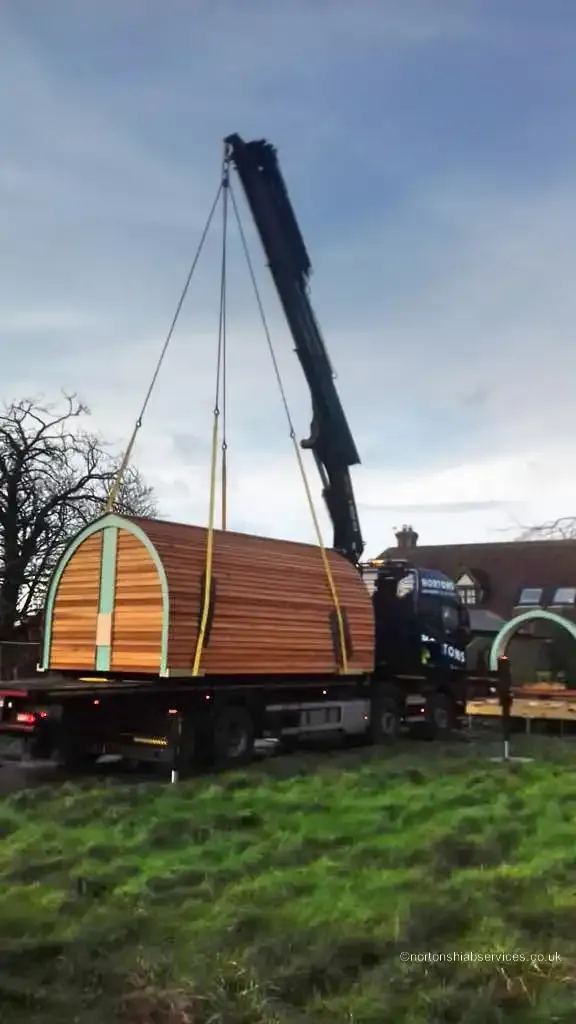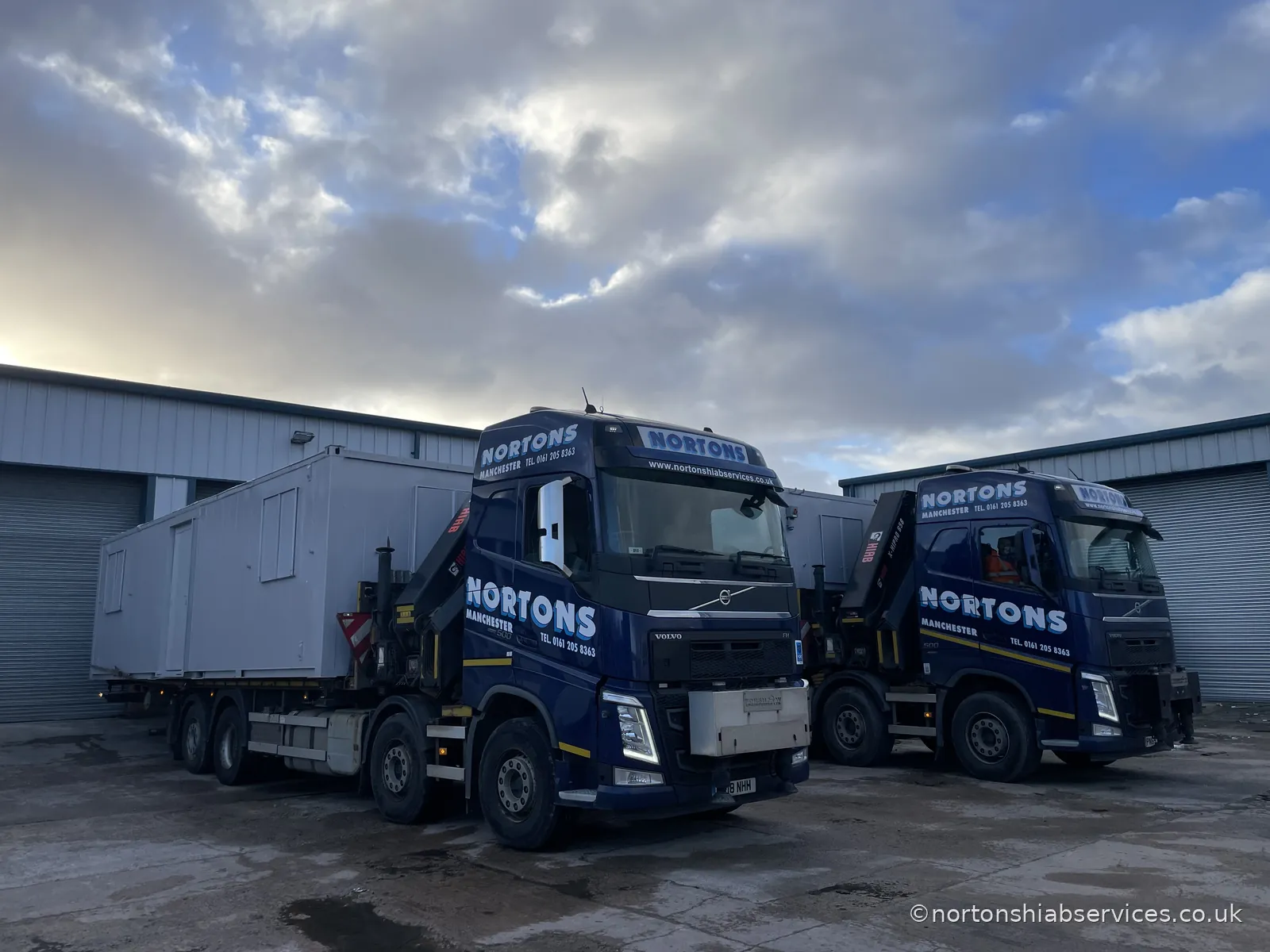
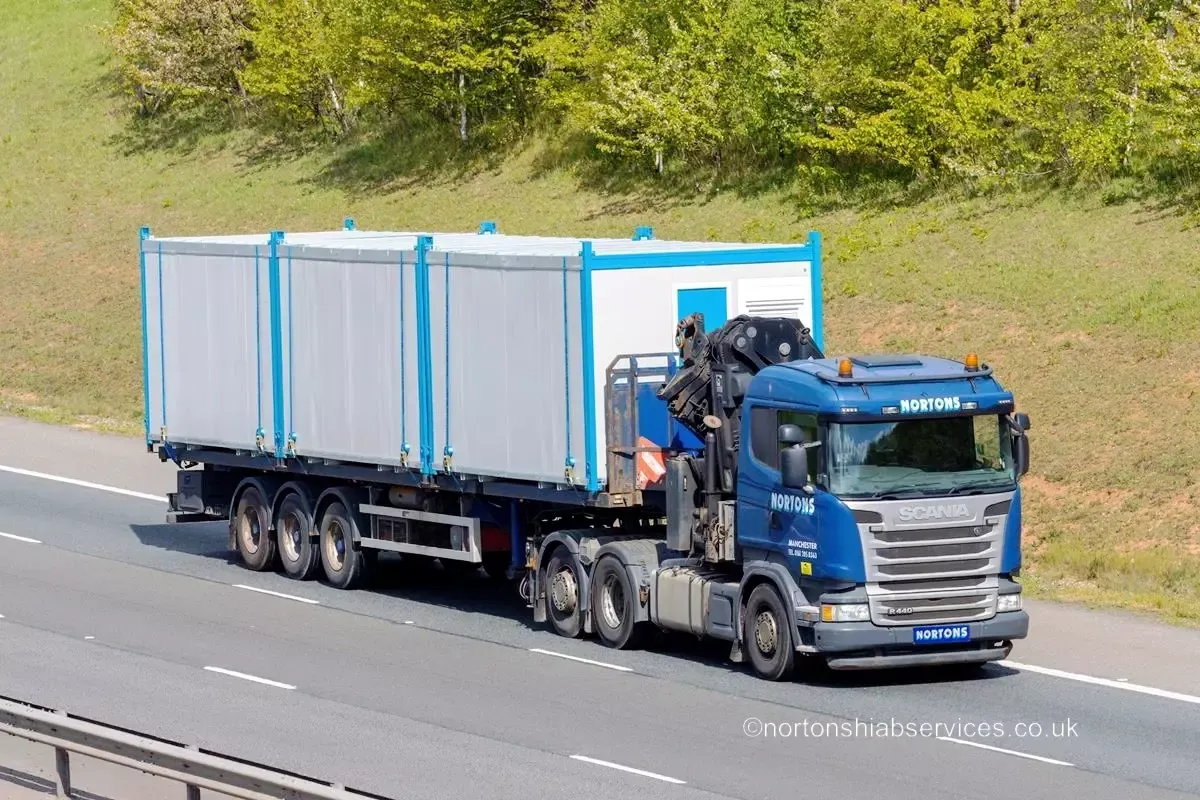
We run both. 32-tonne eight-wheel rigid lorries, artics at 44 tonnes, and wagon-and-drag outfits that sit between the two. Which one comes to your job is usually decided in the first two minutes of the conversation, and it is almost never decided by the weight.
The rigid
An eight-wheeler is one vehicle: cab, bed, crane, all on the same chassis. Around twelve metres long. Rear-steer axles, so it turns in a good deal less space than its length suggests. This is the vehicle for anywhere with a gate, a bend, a residential street, a city centre, a yard with parked cars in it.
What you give up is bed length and payload. A rigid carrying a big crane has already spent a lot of its weight allowance on the crane itself — the 858 alone is nearly seven and a half tonnes.
The artic
Tractor unit plus trailer, up to 44 tonnes, with far more deck and far more payload. Our artics carry extendable trailers, so a long load is a booking rather than a problem. The crane sits behind the cab and lifts over the trailer.
What you give up is manoeuvrability. An artic needs somewhere to turn round, and "there is a wide bit at the end" is not a turning circle. On a housing development with unadopted roads and parked cars, an artic that gets in may not get out.
The wagon and drag
A rigid with a drawbar trailer behind it. Uncouple the trailer and you have a rigid that can go up the difficult bit on its own, then come back for the rest. On sites where half the load has to go somewhere an artic could never reach, this is the one that saves the day.
How to decide
Tell us about the approach and the standing position — the width of the road, what the lorry can get past, and how far it is from there to where the load lands. If we need to see it, we will ask.