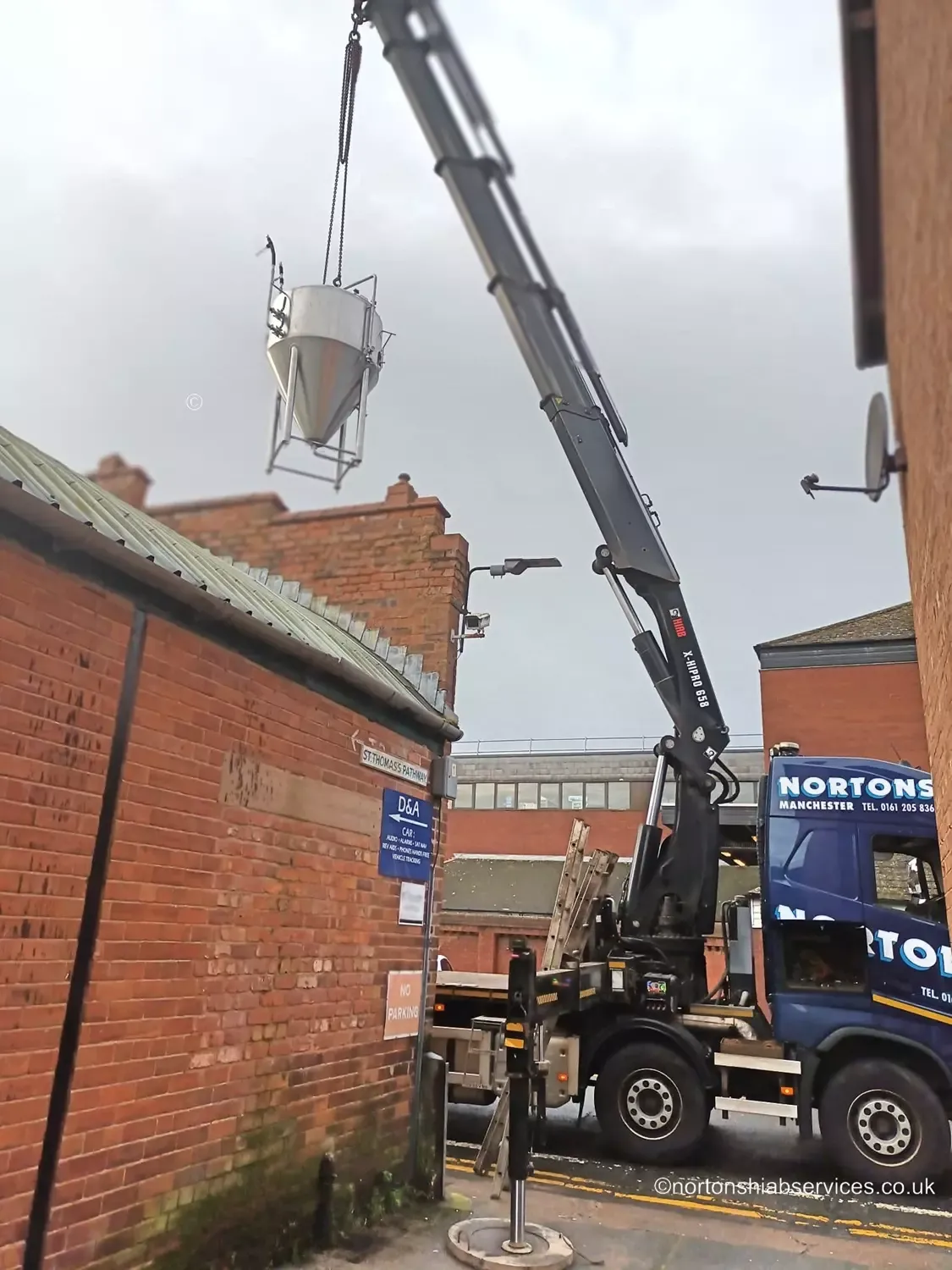
A brewery buys a vessel. The vessel arrives at the front of the premises, on a street with double yellows and a footway barely wide enough for two people to pass. The vessel needs to be in the yard behind the wall. There is a gateway, and it has never been wide enough, because the yard was laid out for barrels rather than for a tank the size of a small car.
Through is not an option, so it goes over the wall
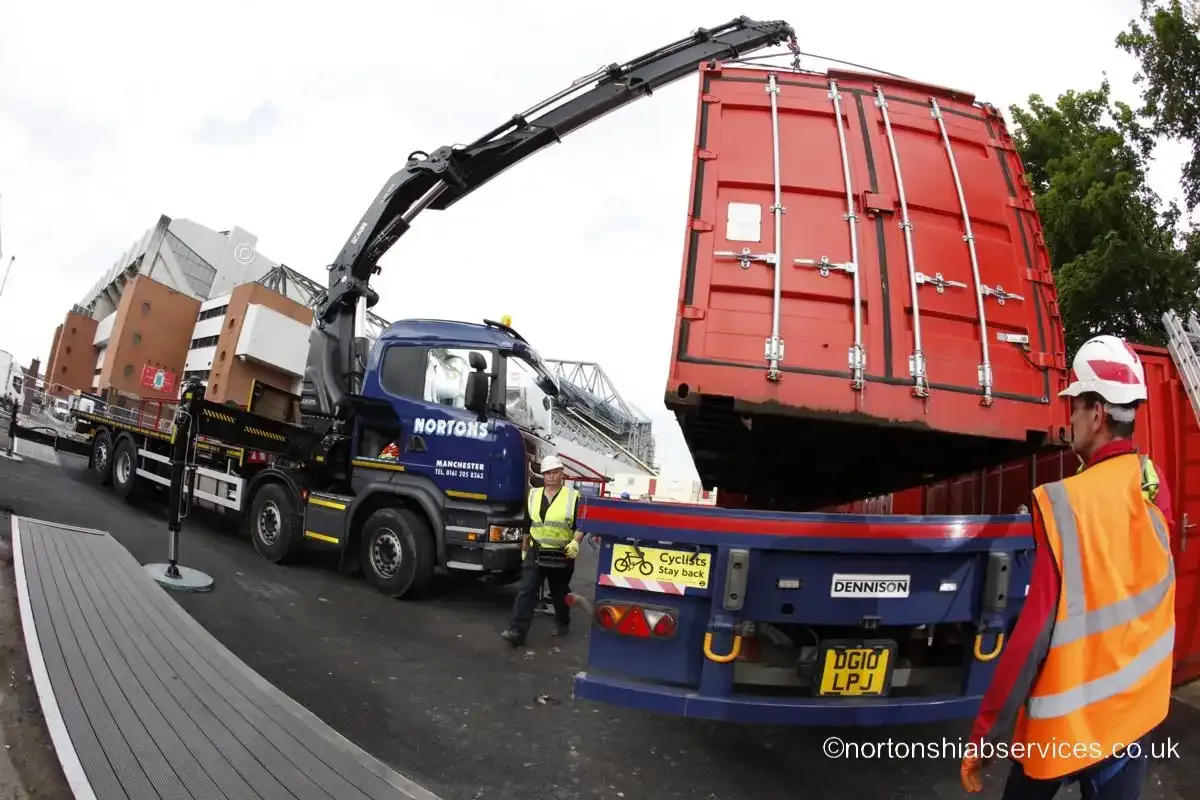
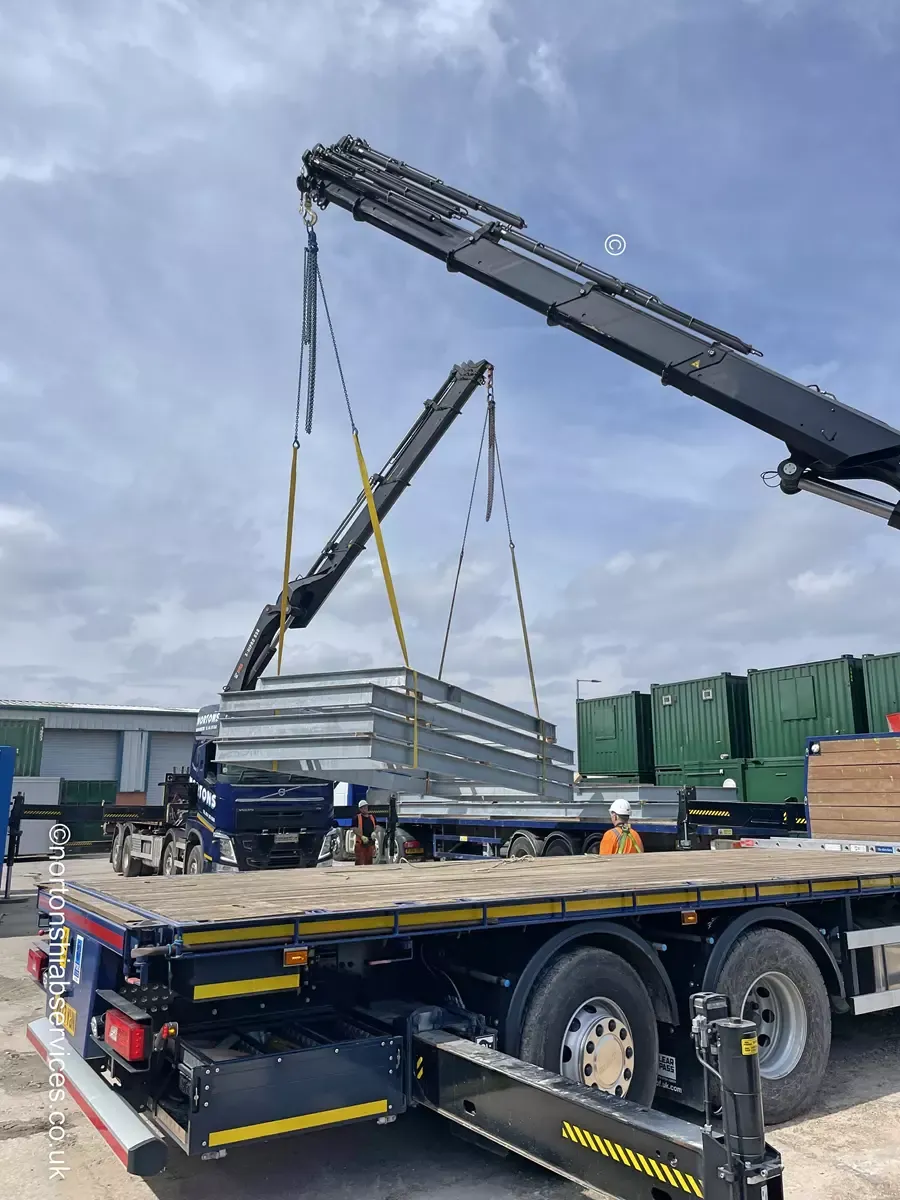
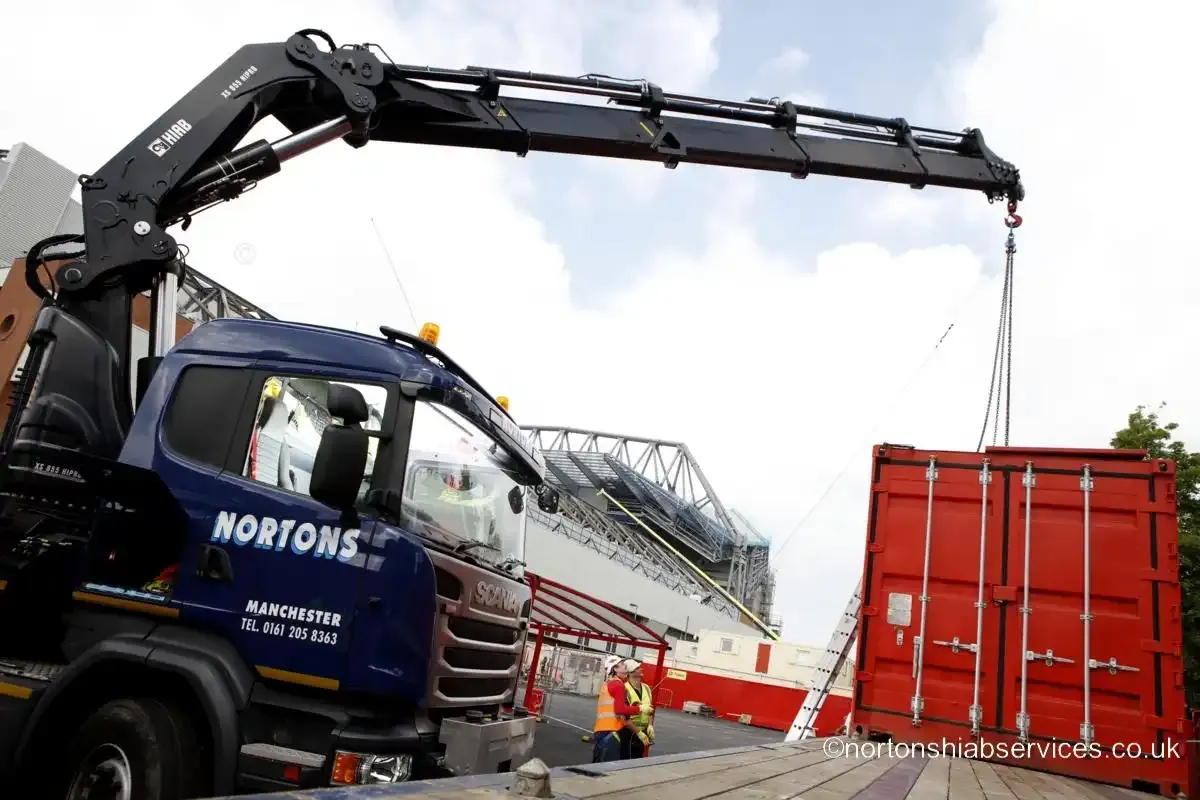
Which sounds dramatic and is in fact routine. The crane picks the vessel off its own bed at the front, lifts it clear of the boundary wall, slews it round and lowers it into the yard. From the pavement it looks a good deal more alarming than it is.
What makes it work is not height. It is radius: the distance from the crane's column out to the landing point. Add the width of the footway, the standing offset and the depth of the yard behind the wall, and it is a long way out before you have gone anywhere at all. That is the number the job is planned around, and it is the first thing we ask about.
What gets checked before anything moves
The obvious one is what is overhead on the street side: cables, phone lines, aerials, dishes, the corner of the neighbouring gable. All of it sits in the arc of a boom that has to swing through it.
The less obvious one is what happens if the lift has to be abandoned halfway. A load out at radius is a load that cannot simply be set down anywhere. So there is a plan for putting it back on the bed it came off, and the lift does not start until everybody on the job knows what that plan is.
Blind, at both ends
The operator cannot see into the yard. The people in the yard cannot see the lorry. That is two banksmen and one radio channel, with the discipline that only one of them talks at a time.
Why not a mobile crane
On a street like this one a mobile crane needs a road closure and a much larger footprint, and it still needs the tank delivered to it separately. The lorry crane brings the tank, lifts it and leaves. The road is occupied for the length of the lift rather than the length of the day.
What we would need from you
Not a load chart, and not a set of measurements. Tell us what the vessel is, roughly how heavy it is, and what sits between the road and where it has to end up - a wall, a gateway, a fence, a drop. Describing the gateway in a sentence is enough for us to start; we will come back and ask if we need anything more precise.
More of the 2024 work · Long reach lifting · Plant and vessel movements