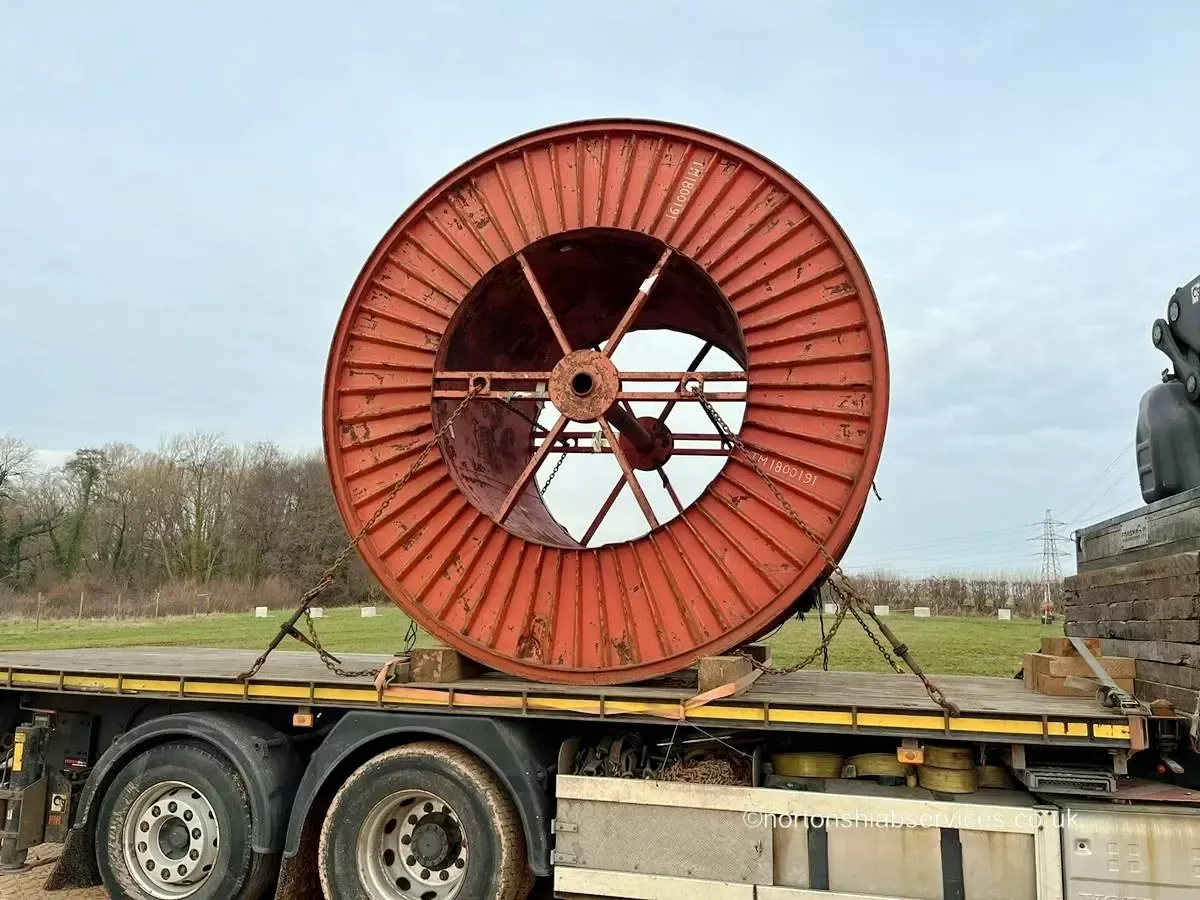
Everything else we carry is a box. Boxes behave. A drum is a cylinder lying on a flat deck with its own ideas, and every one of them involves rolling.
Securing it
A drum is chocked first and strapped second, and the chocks do the work. Straps stop a load lifting and shifting; they are poor at stopping something rolling, because a cylinder under tension can turn inside a strap without the strap going slack.
So there are chocks fore and aft of the drum, fixed to the deck, and then chains over the top. On a big drum, chains rather than webbing, because the flange edges will cut through webbing given a corner and a few miles of motorway.
Lifting it
Through the centre where there is a spindle hole, with a bar and slings, so the drum hangs level and turns predictably. Not choked round the outside, which crushes the flange and can let the whole thing spin as it lifts.
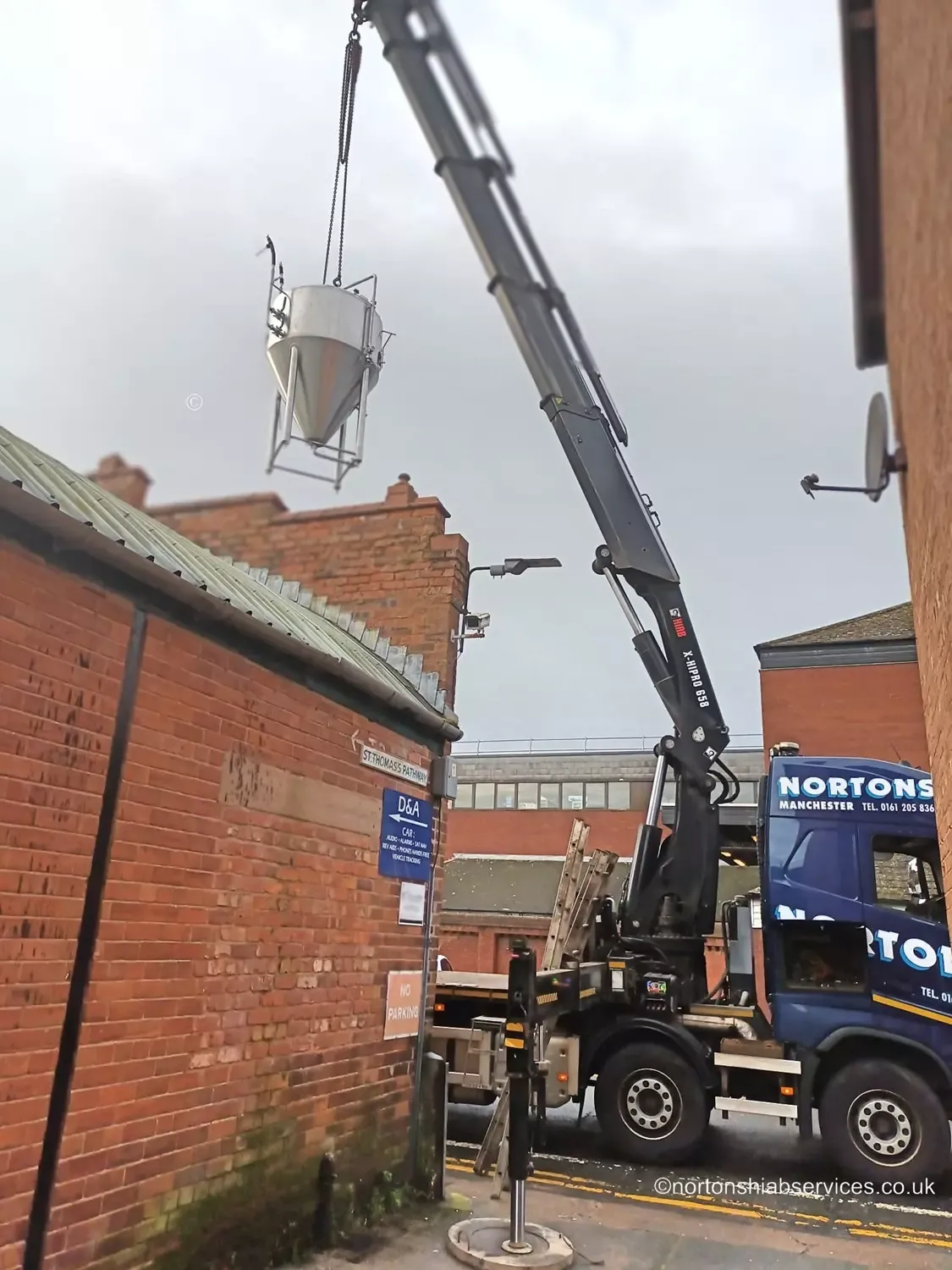
Weight is usually not the issue — it is the shape. A drum swinging on a crane is a very large flywheel and it takes a long time to stop once it starts turning, which is why these come down slowly and with a tag line on them.
At the other end
Where it lands matters more than usual. On a slope, a drum that is not immediately chocked will find out about the slope. So the landing area is chocked before the drum is unslung, not after.
The general point
Every load type has a failure mode and it is nearly always the shape rather than the mass. Sheet material slides. Steelwork whips. Cabins catch wind like a sail. Drums roll. A haulier who has moved a thing before knows which one it is, and that is most of what you are buying.
More 2025 jobs · Plant and awkward loads · Working away from base