Railway land is a particular kind of site. Long, narrow, fenced on both sides, with an access road built for maintenance vehicles and a set of rules about what may be lifted where.
What arrived
A modular unit, complete: cladding on, glazing in, joinery fitted, ready to be connected. Those units are heavier than people expect because everything is in them, and they are more fragile than people expect for the same reason.
The lift
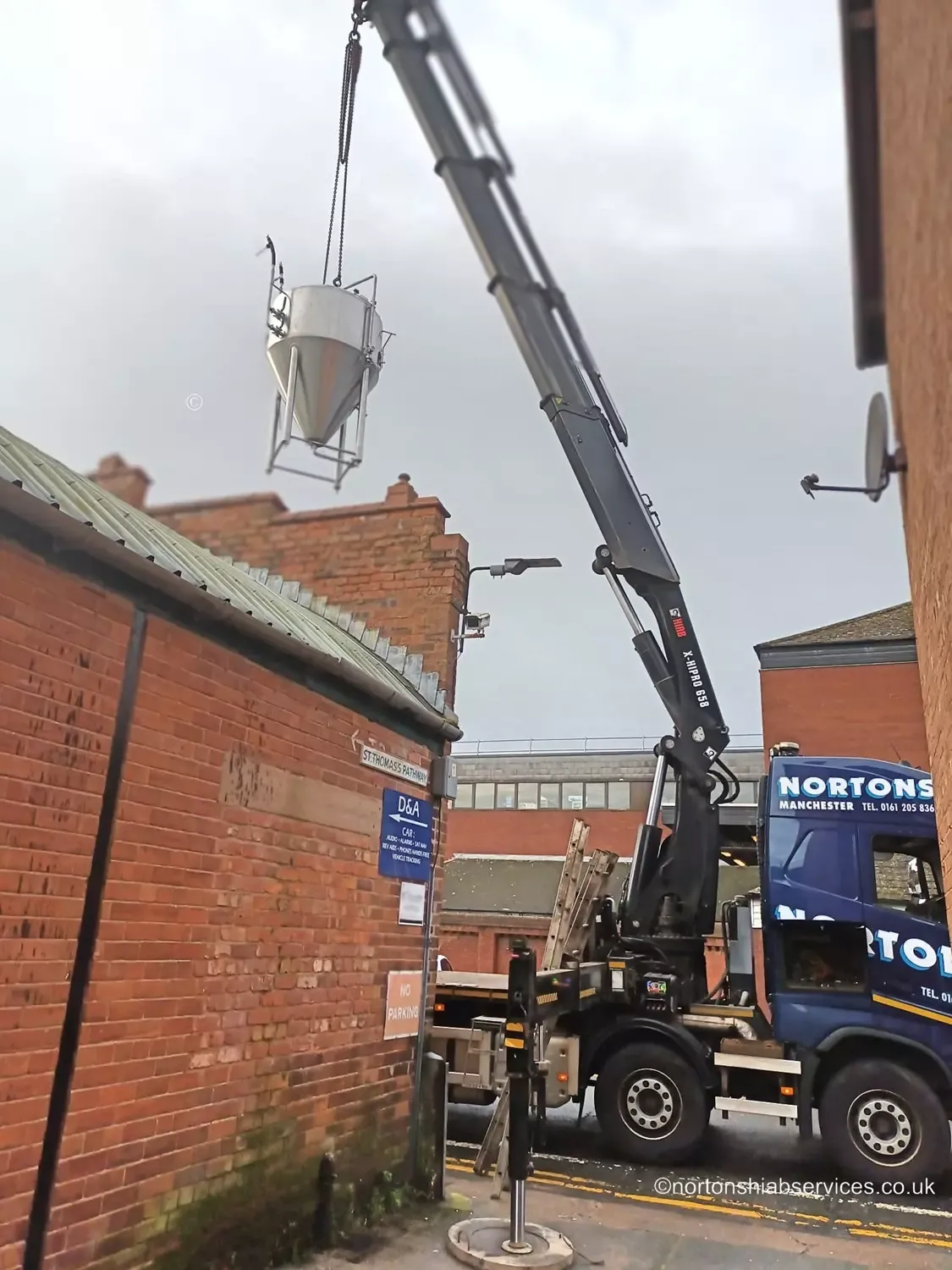
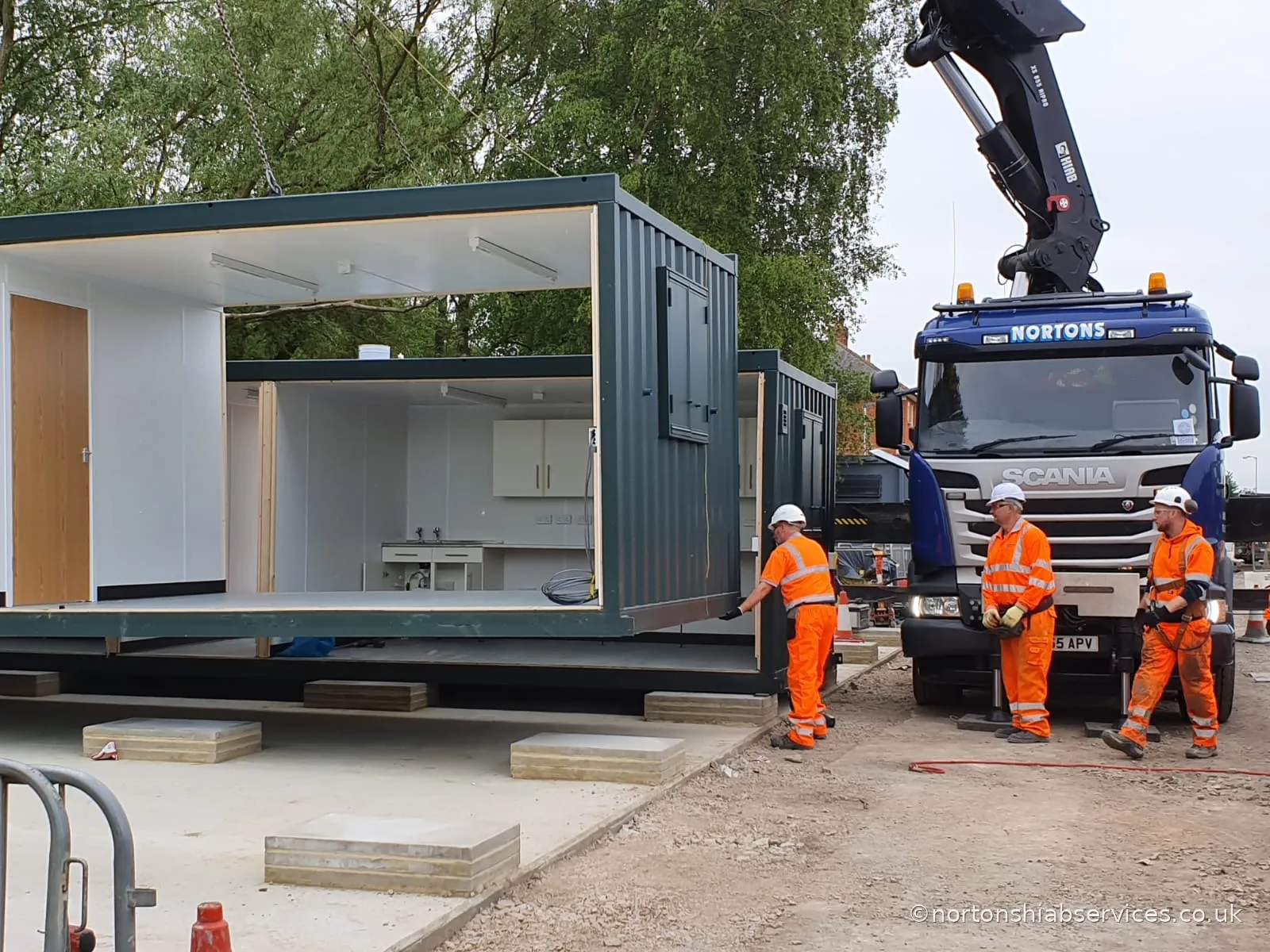
Straightforward on paper — off the bed, across, down onto four prepared bases. The complications were all about what could not be crossed. On railway-adjacent land there are limits on slewing towards the line, and there are limits on what may be suspended over anything live, and both of those constrain where the lorry stands before anything else is decided.
So the standing position came first and the lift plan came second, which is the reverse of most jobs.
Landing on bases
A unit sits on discrete pads rather than a slab. That means it has to come down on all of them at once, square, with the frame taking the load where the frame is designed to take it. A corner touching first is a corner carrying the whole unit for a moment, and modular frames do not enjoy that.
Hence the pause a foot up, the check, and the very slow last movement.
The bit that is not our job but affects it
Whether the bases are right. Level, at the correct spacing, cured. We do not set them and we do not sign them off, but we will decline to land a unit on bases that are obviously wrong, because the alternative is a building that does not close and an argument about who caused it.
The 2020 portfolio · Modular and cabin transport · Working nationwide