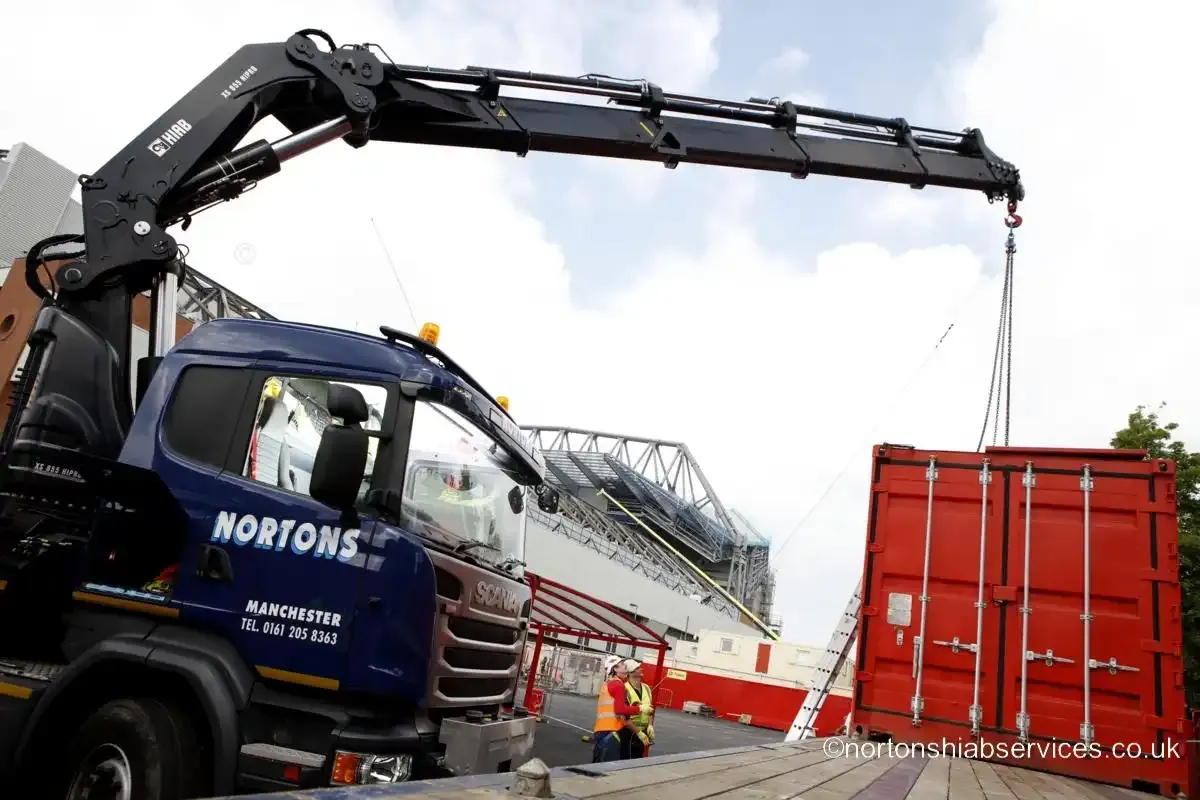
Nobody photographs the site compound. It is a rectangle of red boxes behind a hoarding, and by the time anybody is interested in the building it has already gone. But it is the first thing on site and the last thing off, and getting it in is a proper job.
What the constraint is
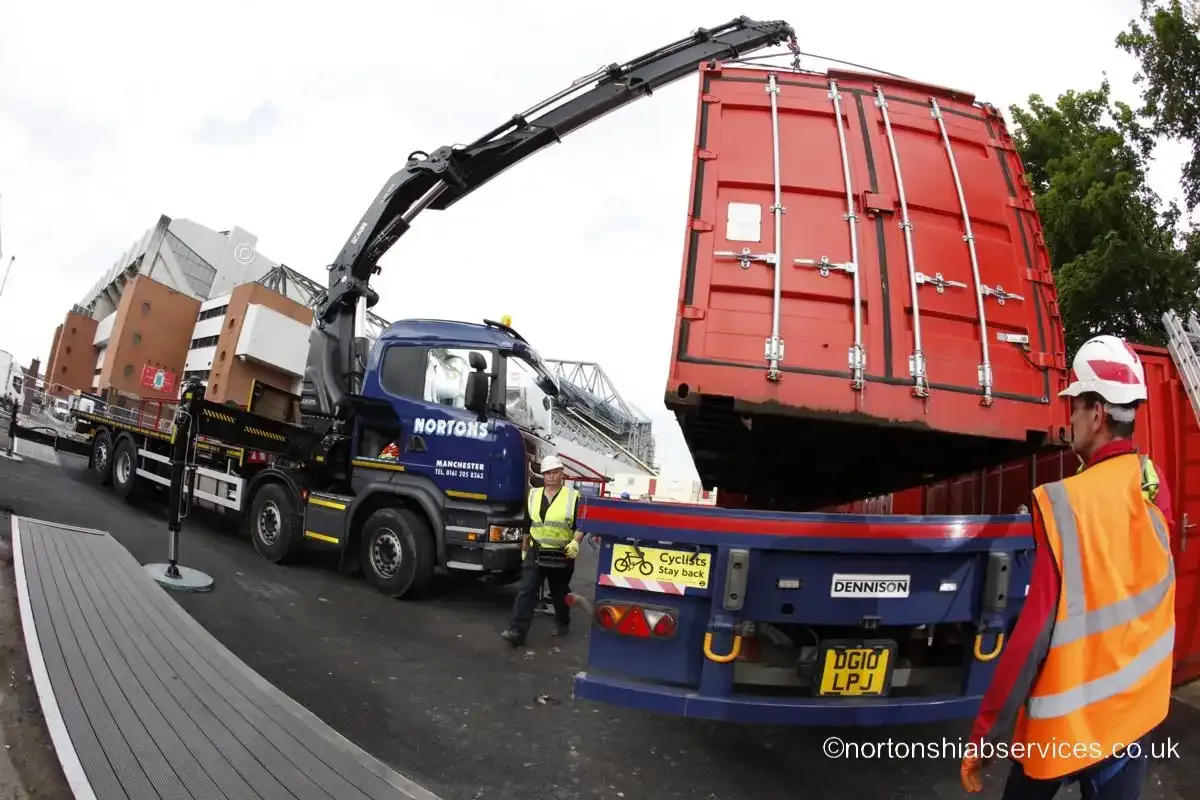
At Anfield the yard sits tight against a public footway with houses on the far side of it. So the lorry cannot swing wherever it likes; it stands where it is told, on outriggers, with a working area that has to be roped and manned, and the containers go up and over the hoarding rather than through a gate.
That is a reach problem before it is a weight problem. An empty twenty-foot container is a couple of tonnes. Two tonnes at fifteen metres is a different proposition from two tonnes at five, and the choice of vehicle follows from the distance, not the mass.
Order matters more than you would think
Containers stack, so the sequence is fixed before anything is lifted. The bottom row goes in the order the site wants the doors facing. Get that wrong and a unit that should have been opened from the yard side opens onto a wall, and moving it later means moving everything above it.
So the first job on a compound is not lifting. It is standing in the space with the site manager and agreeing which box goes where, and which way round.
Why a lorry crane rather than a mobile crane
Because the lorry brings the load with it. A mobile crane is a crane and nothing else; it needs the containers delivered separately, which means two contractors, two site inductions and a sequencing problem if either runs late. Our vehicle arrives with the unit on the back, sets its legs, puts the unit where it goes and drives off for the next one.
For a compound of six or eight units on a constrained city site, that is usually the difference between one day and three.
The whole Anfield job, with the photographs · Container transport and craning · Working in Liverpool