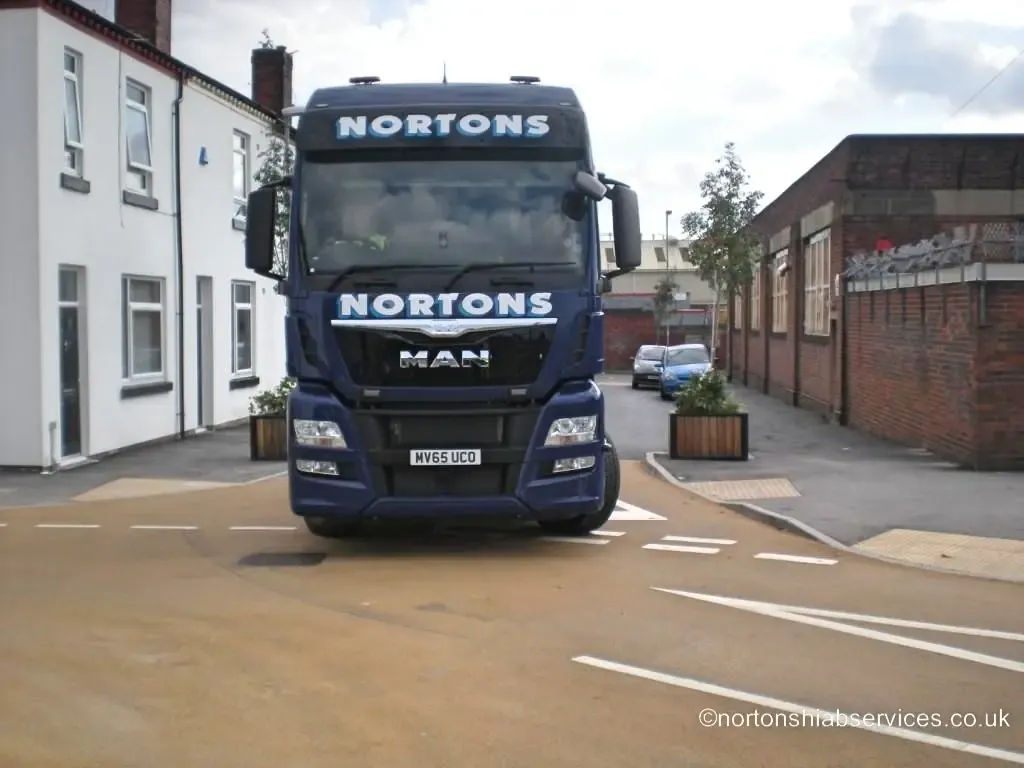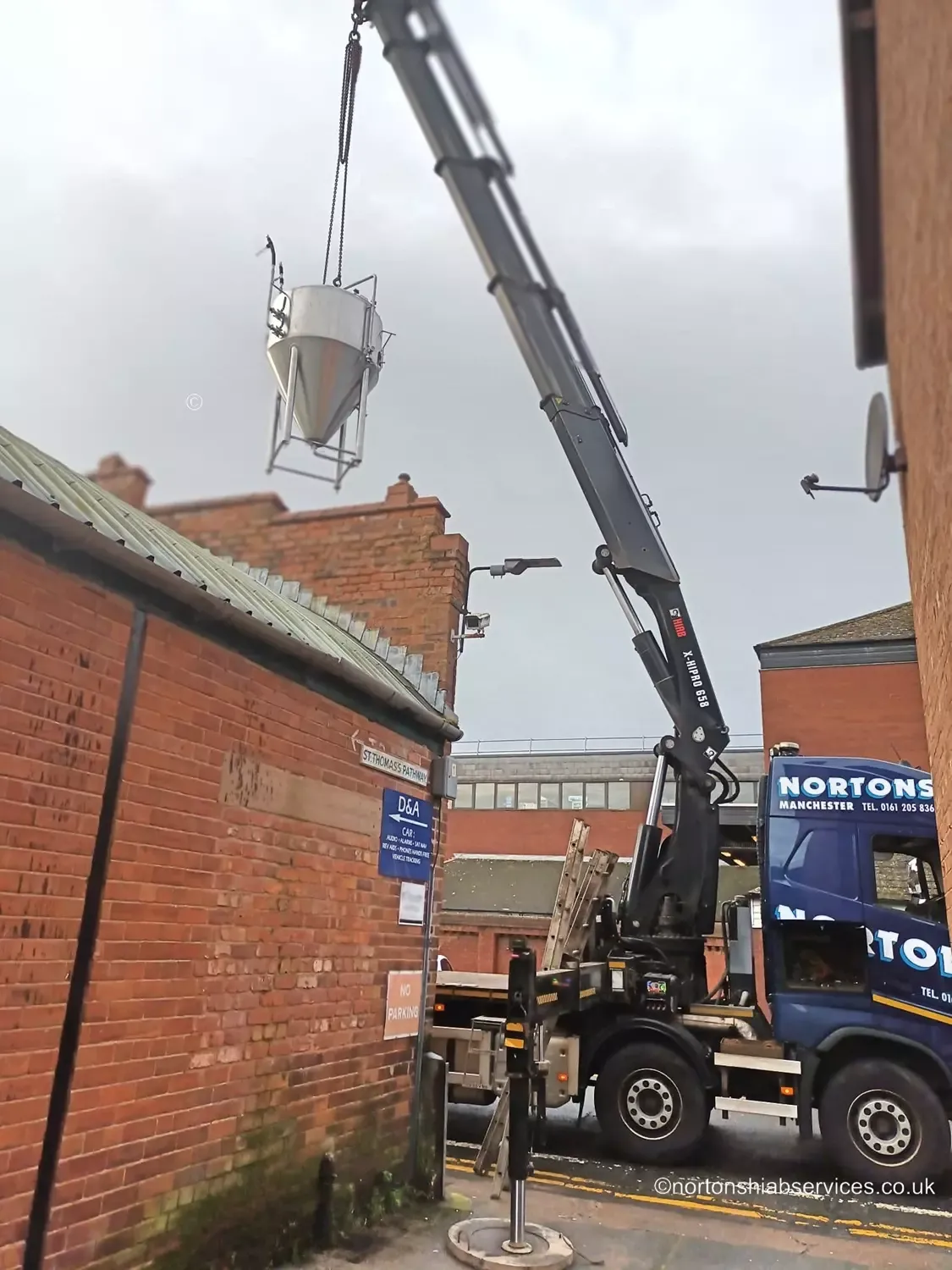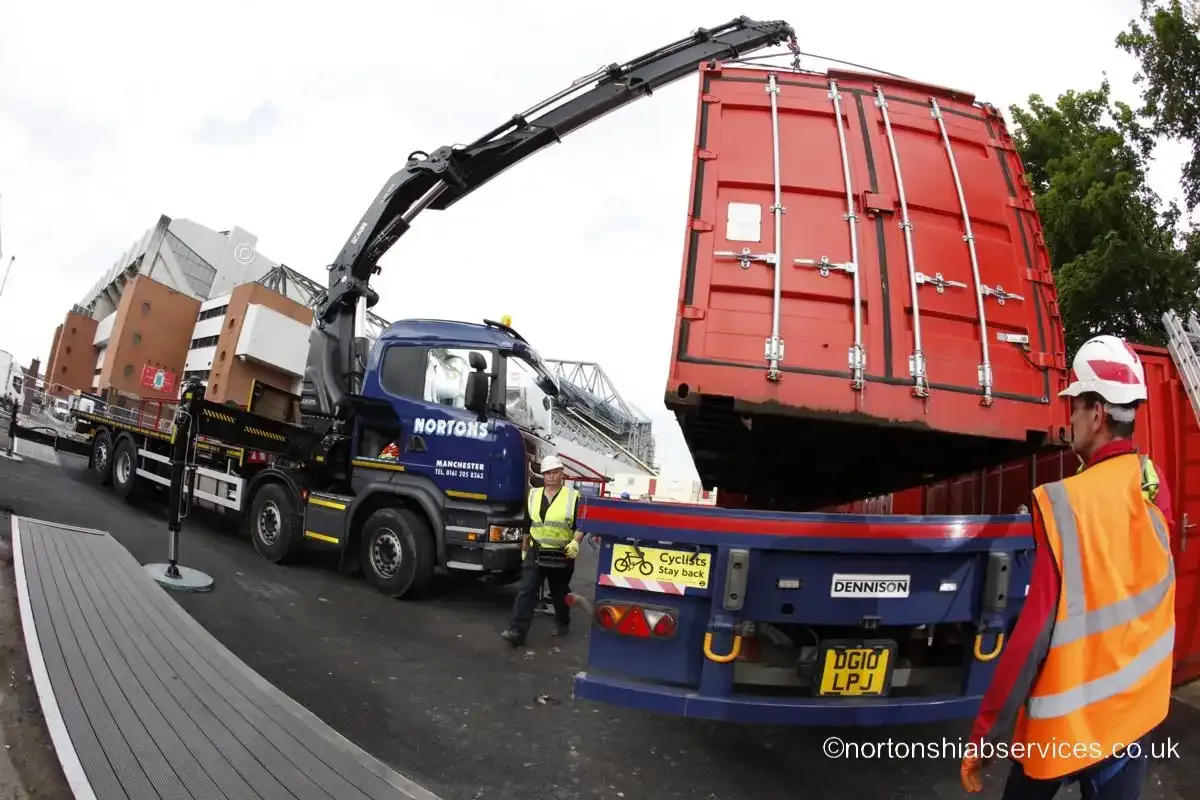
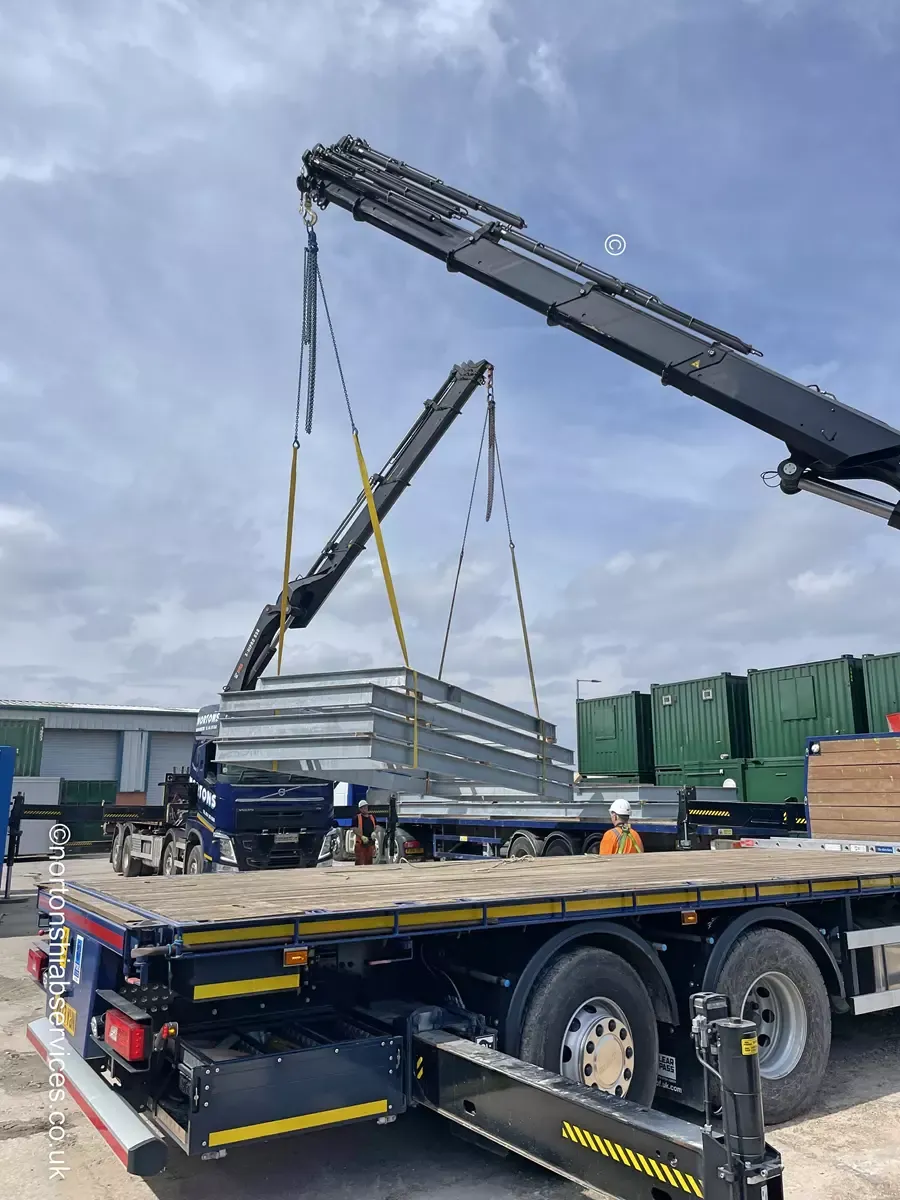
A dual lift is two cranes lifting one item at the same time. It looks like showing off. It is usually the opposite — it is what you do when a single crane would have to take the whole load at a radius where it cannot.
Why two rather than one bigger one
Length. A long, relatively light item picked at one point will bend, and a modular unit or a fabricated frame that bends is scrap. Picking it at two points, well spread, keeps it straight. That is the usual reason, and it has nothing to do with the total weight.
The other reason is access. Two lorry cranes standing at opposite ends of a load will often fit where one large mobile crane and its outrigger spread will not.
What gets harder
Everything, but three things in particular.
The load share is not fixed. As the item moves, weight shifts between the two cranes. The plan has to allow for that, which means neither crane is worked anywhere near its limit — a substantial de-rate is normal.
The cranes must move together. Different machines, different operators, different hydraulic response. If one lifts faster than the other, the load tilts and the share shifts further. This is a skill, and it is why the same pairs of drivers tend to do these.
One person is in charge. Not two. One appointed person, one banksman giving one set of signals, and both operators watching the same person. The moment there are two voices the lift stops.
How the day runs
Both vehicles on site early, positioned and levelled before anything is unstrapped. A walk-through with the site team. Slings on and checked by both operators. A trial lift of a few inches, held, checked, and only then the real one. It is slower than it looks and it is meant to be.
The 2024 dual lift, in full · Abnormal and heavy loads · How we plan lifts