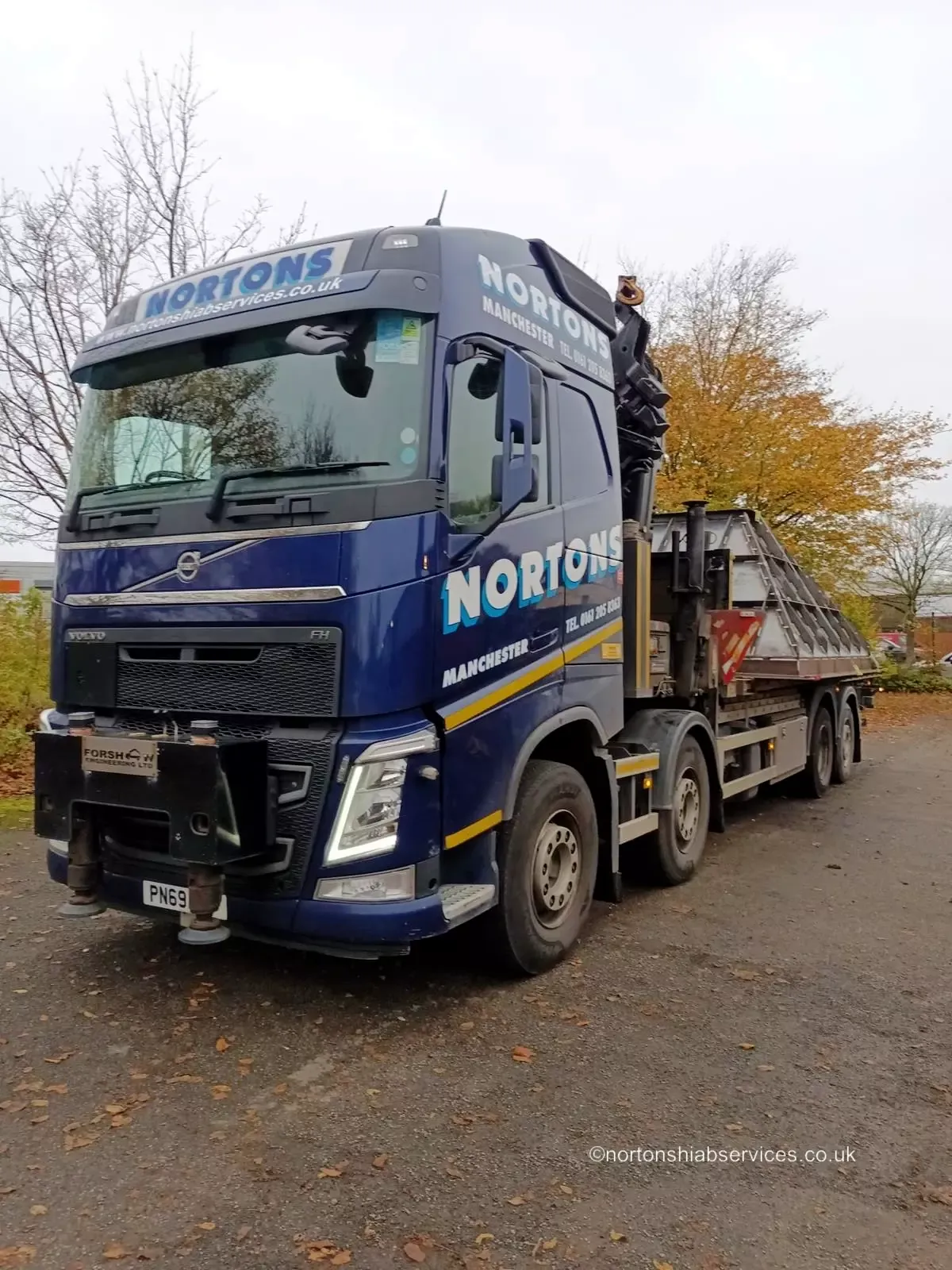
We take a lot of enquiries that cannot be answered, not because the job is difficult but because the message says "how much for a hiab". Here is what we actually need, roughly in the order it changes the answer.
1. What the thing is, and what it weighs
A twenty-foot container, a garden room, a packaged plant item, a steel beam. If you have the weight off a delivery note or a data plate, that beats an estimate every time. If you genuinely do not know, tell us that rather than guessing low — a guess that turns out to be forty per cent light is the single most common reason a lift stops.
2. Where the lorry can stand
Not where the load has to end up. Where a 32-tonne eight-wheeler, or a 44-tonne artic, can physically get to and stop. Road width, gates, height restrictions, weight limits on a bridge or a private drive, and whether it can be there at all during working hours.
3. How far the load has to travel from there
Measured flat along the ground, from where the crane will sit to where the load lands. This is the number that decides the vehicle. See the piece on reach against capacity for why.
4. What is in the way
Overhead cables, trees, a conservatory, a canopy, scaffolding, a neighbour's roof. A crane can go over most things, but only if somebody knew about them before the lorry set off.
5. What the ground is
Tarmac, block paving, hardcore, gravel, grass, a new lawn, a basement underneath. Outriggers put a great deal of force through a small area and the ground has to take it. Block paving and fresh tarmac both mark, and a customer who was not warned will not be pleased.
6. When, and how firm that is
A date and a window. If it has to be a Saturday, or out of hours, or it depends on a crane hire company finishing first, say so at the start. It is easier to plan around than to discover.
What you get back
A named vehicle, a price, and a straight answer on whether the date works. If the job is not one for a lorry crane we will tell you that too, and usually why.